When Rankings Hold Steady but AI Answers Change: A Rank Tracker Workflow for Cross-Provider Monitoring
A strange thing happens now in search teams every week. Your rank tracker says the page is fine. The target keyword still sits in position 2 or 3. Traffic might even look flat enough to avoid panic. But when someone actually checks the live answer in ChatGPT, Perplexity, or a Google AI result, your brand is gone. Or it’s present, but buried. Or the answer still cites your competitor while your page keeps its place in the classic results.
That gap trips up a lot of experienced operators because rank tracking trained us to read stability as safety. For years, that was a decent shortcut. If a page held its positions, the page usually held its chance to be discovered. Now there’s a second layer sitting on top of the old one, and the second layer rewrites the practical outcome. Position changes and answer changes are connected, sure. But they are not the same event, and they do not move in lockstep.
I’ve found that the teams adapting fastest are not throwing out rank tracking. They’re treating it as the baseline, then adding a small review habit around answer outputs. That’s the move. Not a giant new reporting stack. Not a whole new department. Just a tighter interpretation layer that catches what rankings alone miss.
If you already trust your rank tracker, good. Keep it. But add one more question: what are people actually being shown when they ask the same query across providers? That single habit changes how you diagnose drops, explain volatility, and decide when to act.
What a rank tracker still does well, and what it can’t see
Let’s give the old model some credit first. A rank tracker is still one of the cleanest ways to watch page-level movement over time. It helps you spot declines, measure gains after content changes, compare desktop and mobile patterns, and see whether a page is climbing or stalling for a keyword set. For in-house teams and consultants, that baseline is still useful because it cuts through daily noise and builds a stable record.
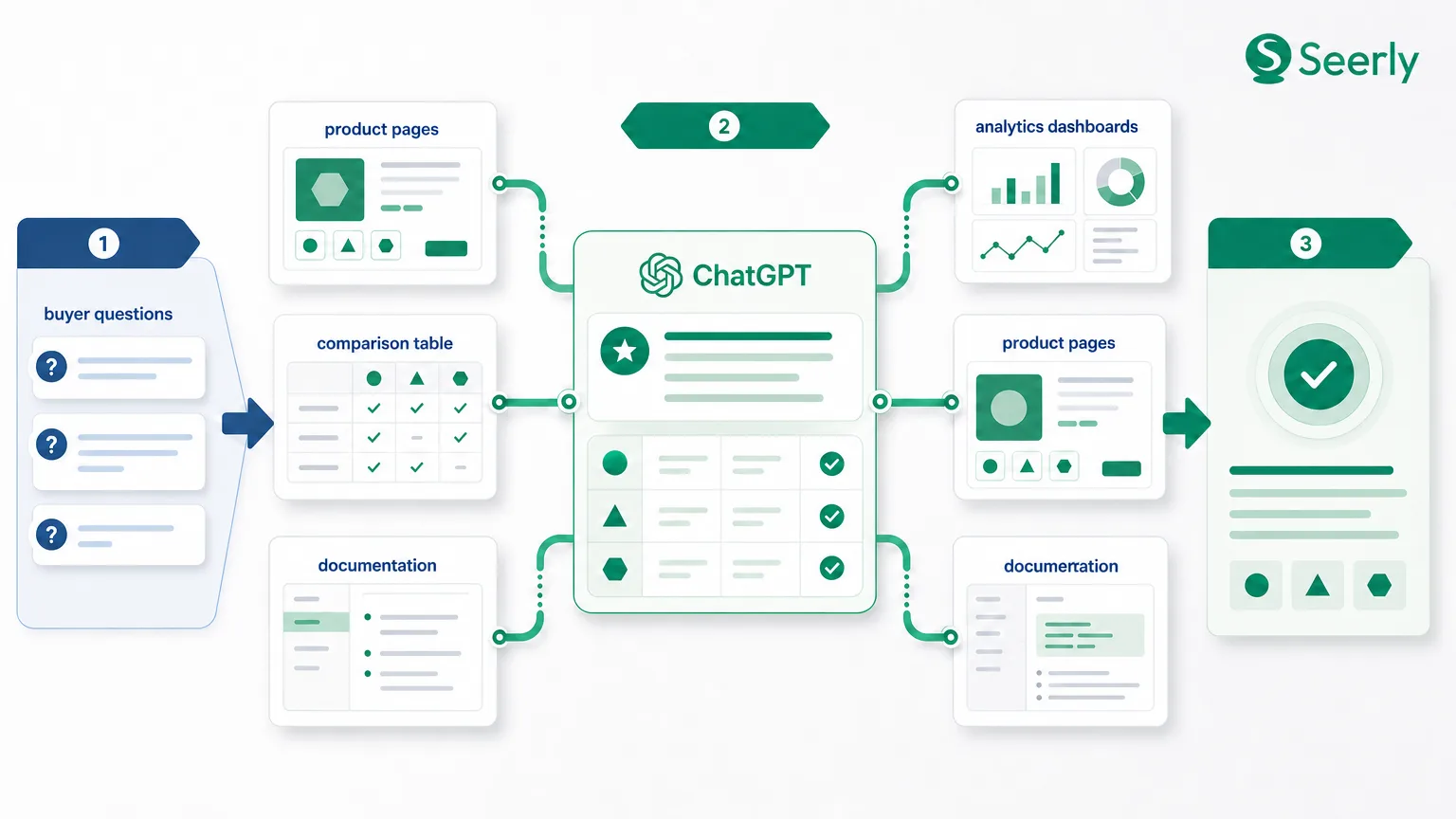
But answer-layer retrieval plays by different rules. A provider can pull from your page, summarize it poorly, cite a different source, or skip you entirely while your page rank barely moves. That’s the problem. The page has position. The answer has preference. Those are related signals, not matching ones.
Definition: A rank tracker measures where a page appears in traditional search results for a query over time. It does not automatically measure whether that page is named, cited, summarized, or favored inside generated answers.
That difference sounds small on paper. In practice, it changes reporting, triage, and content planning. A page can remain in the same search position while answer wording shifts toward fresher examples, stronger proof points, or clearer formatting from another source. You won’t catch that from rankings alone.
I’ve seen teams misread this in both directions. Some assume stable rankings mean the page is healthy. Others see answer disappearance and declare the page broken. Both reactions can be wrong. You need both views at once: the rank trend and the answer trend.
If you want a deeper comparison between old snippet logic and newer answer behavior, Seerly has a useful breakdown on featured snippet rules versus AI answer rules in Google ranking. It’s a good companion piece because the mechanics are close enough to confuse people, but different enough to cause bad decisions.
Three situations where your rank tracker can mislead you
The easiest way to understand the gap is to look at where it hurts.
Stable rankings, disappearing answer mentions
This one is the most unsettling because nothing “looks wrong” in the standard dashboard. Your page keeps ranking in the top three. Search Console may show little movement. But your brand stops appearing in generated answers for the query, or your citation frequency drops after a provider refresh.
Why does that happen? Often because the answer layer starts favoring different evidence. Maybe another source added fresher stats, tighter definitions, or a more direct section that maps neatly to the question. Your page still deserves rank on classic relevance signals, but it stops winning the summarization battle. Painful. And easy to miss.
That mismatch matters more than many teams think because users may never click through to inspect the underlying SERP. They read the answer, notice who is mentioned, and move on.
Better rankings, weak answer inclusion
Now the opposite. Your page climbs from position 7 to position 3 and everyone celebrates. Fair enough. But then someone checks the generated answer and finds your page either absent or barely reflected. The climb was real, but answer presence didn’t follow it.
I personally prefer to treat these cases as “partial wins.” The page has improved discoverability in one layer, yet the answer layer still finds the page awkward to summarize. That usually points to structure problems, soft proof, unclear entity naming, or content that ranks on breadth but doesn’t answer the question cleanly enough to be pulled into the final response.
And yes, that’s where teams can waste time. They keep chasing more rank gains when the next gain in business terms may come from tightening the page’s answerability instead.
Provider-specific drift after updates
Here’s the messiest scenario. ChatGPT still mentions you. Perplexity demotes you. Google AI starts preferring two industry publications over all vendors in the set. Same keyword. Different retrieval behavior. Different summaries. Different source preferences.
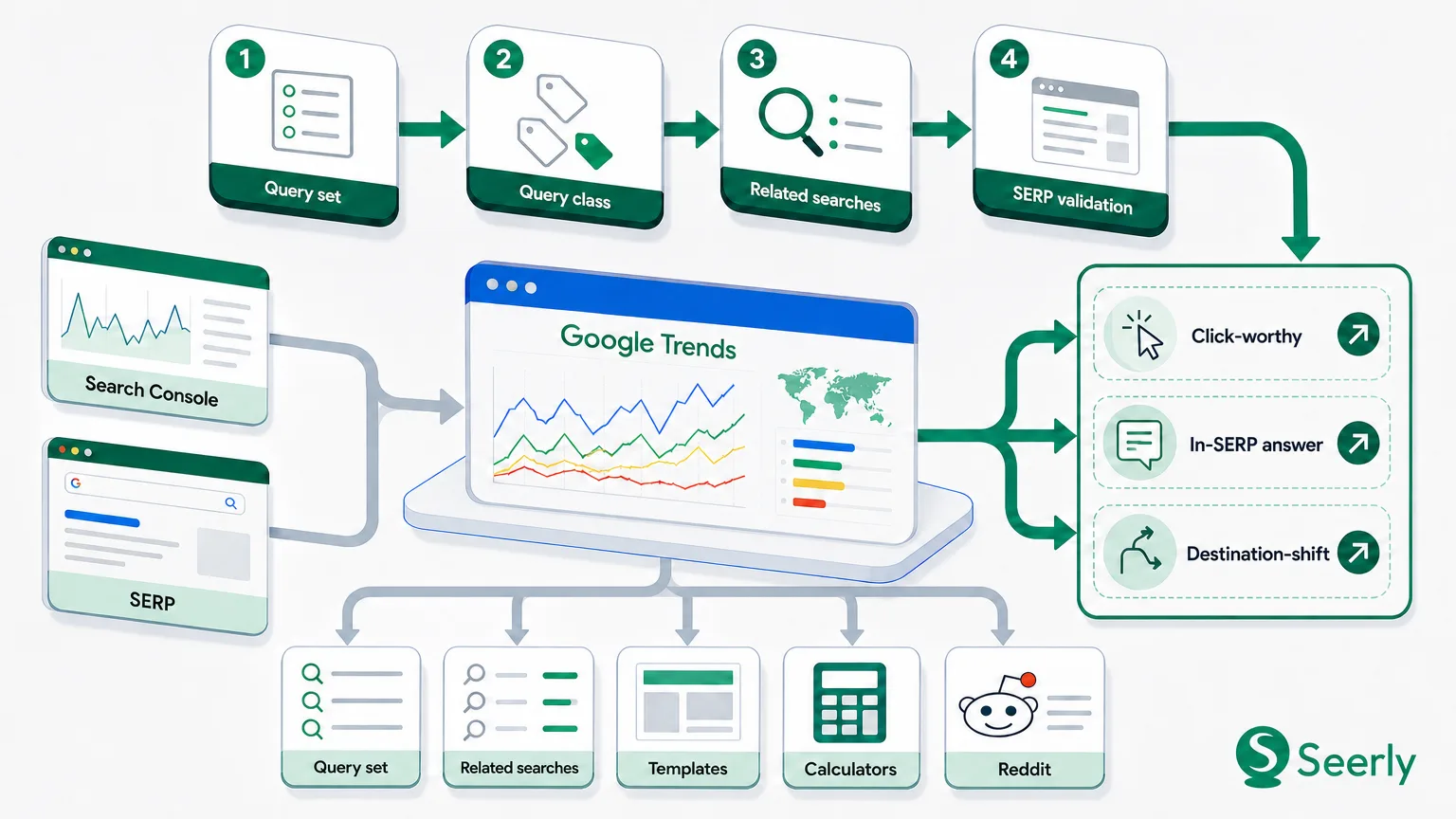
The thing is, provider-specific drift now shows up faster than many reporting cycles can catch. We’ve also noticed that chatter around Gemini updates has picked up, and that kind of platform motion tends to create more answer volatility even when tracked rankings don’t flash red. If you only read one system, you’ll miss the spread.
A rank tracker was never built to explain cross-provider answer drift. It was built to record positions. Still useful. Just incomplete.
The weekly rank tracker workflow I’d actually use
You don’t need a giant process. You need a repeatable one. Once a week is enough for most teams, with extra checks after obvious provider refreshes or major page edits.
Step 1: Review tracked rankings first
Start with the familiar view. Pull the keywords that matter, note movement by page, and flag any query where a page moved more than your normal weekly threshold. Keep this simple. The goal is not deep analysis yet. You’re building the baseline.
At this stage, I like to separate “rank stable” from “rank changed” keywords. That split matters later because a stable-rank keyword with answer volatility is the one most teams overlook.
Step 2: Snapshot answers across providers
Next, run the same keyword across the major answer surfaces you care about. For many teams, that means ChatGPT, Perplexity, and Google AI results. Capture the output on the same day if possible. Wording can drift quickly, so spread-out checks muddy the read.
What are you looking for? Not perfection. Just the practical answer outcome:
-
Is your brand present?
-
Is your page cited or clearly reflected?
-
Where in the answer do you appear - early, late, or not at all?
-
Did the provider lean on a competitor or publisher instead?
That’s enough to start.
Step 3: Note cited sources and wording drift
Now compare source preference. Write down which URLs or domains appear, then compare how each provider frames the answer. One may use your product page as proof. Another may quote a review site. Another may summarize category guidance without naming you.
Wording drift is sneaky. A provider may still “use” your page while softening or stripping the exact claims that made the page persuasive. So don’t only track presence. Track phrasing. If the wording turns vague after a refresh, you may be losing answer prominence before you lose mention share.
Step 4: Log the mismatch between page position and answer presence
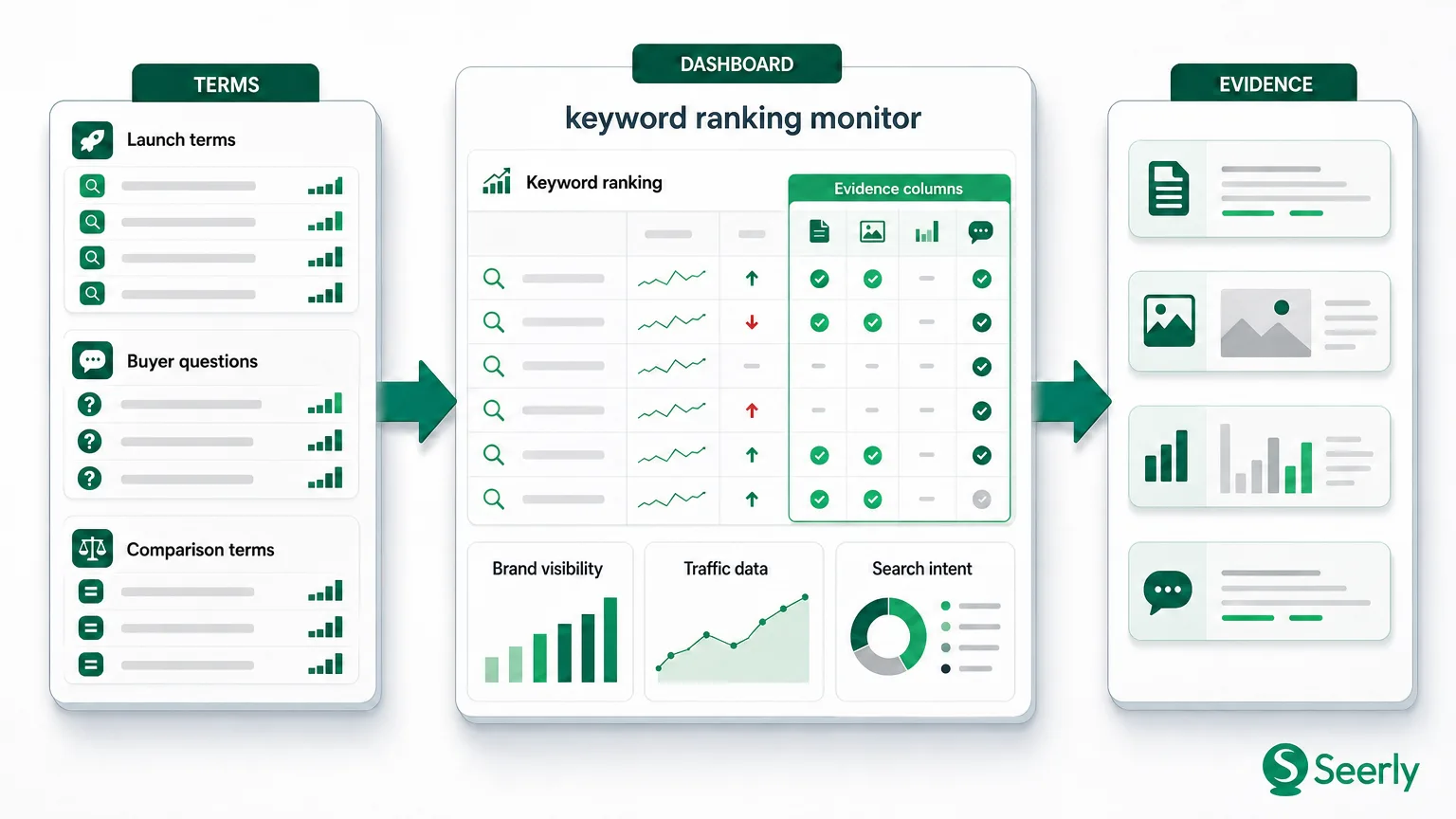
This is the step that changes decisions. Build a tiny table with four columns:
-
Keyword
-
Tracked page position
-
Answer presence by provider
-
Notes on source use or wording drift
That’s it. A lightweight sheet works fine. The point is to make the mismatch visible. A lot of teams already collect the raw pieces but never put them side by side, so nobody spots the pattern until leadership asks why “rankings look okay” while discovery feels worse.
If you want a reporting angle for that exact problem, Seerly has a useful post on what an AI visibility dashboard should show beyond rankings, traffic, and backlinks. Worth reading before you build an executive view.
Step 5: Re-check after major updates or content refreshes
Weekly is your rhythm. Event-based review is your exception. If a provider changes behavior, or your team refreshes a high-value page, check again within a few days and then once more after recrawl. Not every answer shift means your page changed in quality. Sometimes the layer above it is just reweighting sources for a bit.
Look, this part is honestly a pain. But it’s a lot less painful than rewriting a page in a panic because one answer snapshot looked bad for 24 hours.
A worked example: stable rank, weaker answer prominence
Let’s say a SaaS company tracks the keyword “customer onboarding software.” Its category page has held position 3 for six weeks. The rank tracker looks calm. No obvious issue. Then a provider refresh hits, and the team notices something odd: ChatGPT still includes the brand in a comparison, but Perplexity now cites two software review domains first, and Google AI stops naming the company in the opening answer.
That’s not a ranking problem. It’s an answer prominence problem.
The team compares outputs from the previous week and finds three differences. First, the refreshed answers now favor pages with cleaner buyer-oriented proof, such as pricing context, implementation time, and customer count. Second, the company page buries those details below a long feature block. Third, the page’s opening section speaks in product language, not decision language, so the answer layer has to work harder to extract a crisp summary.
What would I test next? Not a full rewrite. I’d start smaller.
The first round of content changes
I’d add:
-
A tighter intro that answers the category query in plain language
-
A short proof block near the top with concrete claims
-
A comparison section that maps product fit to common buyer scenarios
-
Cleaner headings that state questions directly
Notice what I’m not doing. I’m not chasing new keywords or rebuilding the page architecture in one shot. The page already ranks. The issue is that the answer layer now finds other sources easier to quote or summarize.
Then I’d wait for recrawl and rerun the same provider snapshots. If answer presence improves while rank stays flat, the diagnosis was right. If nothing changes, I’d inspect source competition more closely, especially where third-party pages are being preferred over the brand page.
There’s a related Seerly article on monitoring brand presence in Google AI chats versus search rankings that lines up well with this kind of review.
Don’t overreact: a simple escalation rule set
Most teams don’t fail because they miss the issue. They fail because they react too fast or not fast enough.
Refresh content when the answer drop repeats
If your page keeps rank and loses answer presence across two or more checks, refresh the page. Focus on clearer definitions, stronger top-of-page summaries, and direct proof. Repeated absence across providers usually points to a page that still ranks but no longer reads as the best source to summarize.
Improve proof points when your page is present but weakly used
Sometimes your page appears in the source set, but the answer barely uses your strongest claims. That usually means the provider sees the page but doesn’t trust or surface the evidence cleanly. Add customer counts if they’re real. Add dates for updated data. Pull useful facts higher on the page. Make the page easier to quote without making it robotic.
Honestly, I think this is where a lot of category pages underperform. They say enough to rank, but not enough to be selected.
Wait for recrawl when the shift follows a recent edit or provider wobble
Not every wobble deserves action. If the page changed yesterday, or if one provider flips while the others stay stable, give it a beat. Check again after recrawl. The same goes for obvious platform turbulence. A lot of noise burns teams because someone screenshots one answer, posts it in Slack, and suddenly half the room wants a rewrite. Bad idea.
Patience isn’t passivity. It’s disciplined timing.
How to report ranking visibility versus answer visibility to leadership
Most leadership teams don’t want a lecture on retrieval layers. They want a clean explanation of what changed, where it changed, and whether action is needed.
So make the split explicit.
Use two visibility lines, not one
Report:
-
Ranking visibility: where the tracked page sits in classic search results
-
Answer visibility: whether the brand or page appears in generated answers across providers
Keep those lines separate in your dashboard or weekly memo. If you merge them, the story gets muddy fast.
Add a mismatch note for high-value keywords
For the small set of important queries, include a short note like:
-
“Rank stable, answer presence down in Google AI”
-
“Ranking improved, answer inclusion unchanged”
-
“Provider drift after refresh, no page action yet”
That sentence does a lot of work. It stops people from assuming one number explains everything.
Use a practical checklist
When I’m writing this up, I keep it to five items:
-
Did page rankings move?
-
Did answer presence move?
-
Which providers changed?
-
Did source preference change?
-
Are we acting now, or waiting for recrawl?
Short. Readable. Hard to misread.
If your team still frames discovery only through rankings and traffic, the conversation in why rankings and visits can still fail to turn into pipeline may help widen the lens.
FAQ
Is a rank tracker still worth using?
Yes. A rank tracker still gives you a stable, page-level baseline for how your keywords move over time. The mistake is treating that baseline as the full discovery story. Keep the tracker. Add answer checks on top of it.
How often should I compare answers across providers?
Once a week works for most teams. Check more often after big page edits, odd provider behavior, or visible answer shifts on high-value queries.
What should I log when answers change?
Log the keyword, tracked page position, whether your brand appears in each provider, which sources got cited, and any obvious wording drift. You don’t need a huge taxonomy. You need consistency.
If my rankings improve, shouldn’t answer presence improve too?
Sometimes. Not always. A page can climb in classic results and still be a weak source for generated answers if the page structure, proof, or wording is harder to summarize.
When should I rewrite a page?
Not after one shaky snapshot. Rewrite or refresh when the mismatch repeats across checks, or when multiple providers keep preferring other sources while your rank stays stable.
One keyword is enough to prove the point
Try this with a single keyword you already track. Pull the page-level ranking. Then check the actual answers shown across ChatGPT, Perplexity, and Google AI results. Write down where your page ranks, where your brand appears, which sources get used, and where the wording shifts.
You might find perfect alignment. More often, you’ll find a mismatch that your current dashboard never surfaced.
That mismatch is where the next layer of search interpretation starts. And if you want to make that comparison systematic instead of ad hoc, especially after provider updates or content refreshes, take a look at Seerly. Learn more at seerly.app.