Featured Snippet Rules vs AI Answer Rules: What Still Helps Your Google Ranking and What No Longer Carries Over

For years, marketers treated Google ranking, featured snippets, and answer visibility as closely related goals. That made sense in a classic SERP environment: rank high enough, format the page clearly, and Google might lift your answer into the snippet box. But AI answer surfaces have changed that logic. A page can rank well, even win snippet-style placements, and still fail to become a reusable source when an AI system composes an answer from multiple documents.
That shift matters because ranking alone does not explain visibility anymore. Click patterns still favor top results, with the highest positions capturing a disproportionate share of clicks, but marketers are now competing in an environment where some users never click at all. At the same time, Google’s ranking systems still evaluate familiar signals such as relevance, quality, usability, and context, so old SEO habits are not obsolete. They are just incomplete.
The practical question is not whether snippet-era optimization still helps your google ranking. It does. The real question is which parts of that playbook still transfer when AI systems look for evidence, comparisons, and clearly attributable claims. For SEO managers and content strategists, the update is straightforward: keep the structural discipline that helped pages rank and surface, but pair it with stronger proof, cleaner entity clarity, and answer formats that make your page easy to cite.
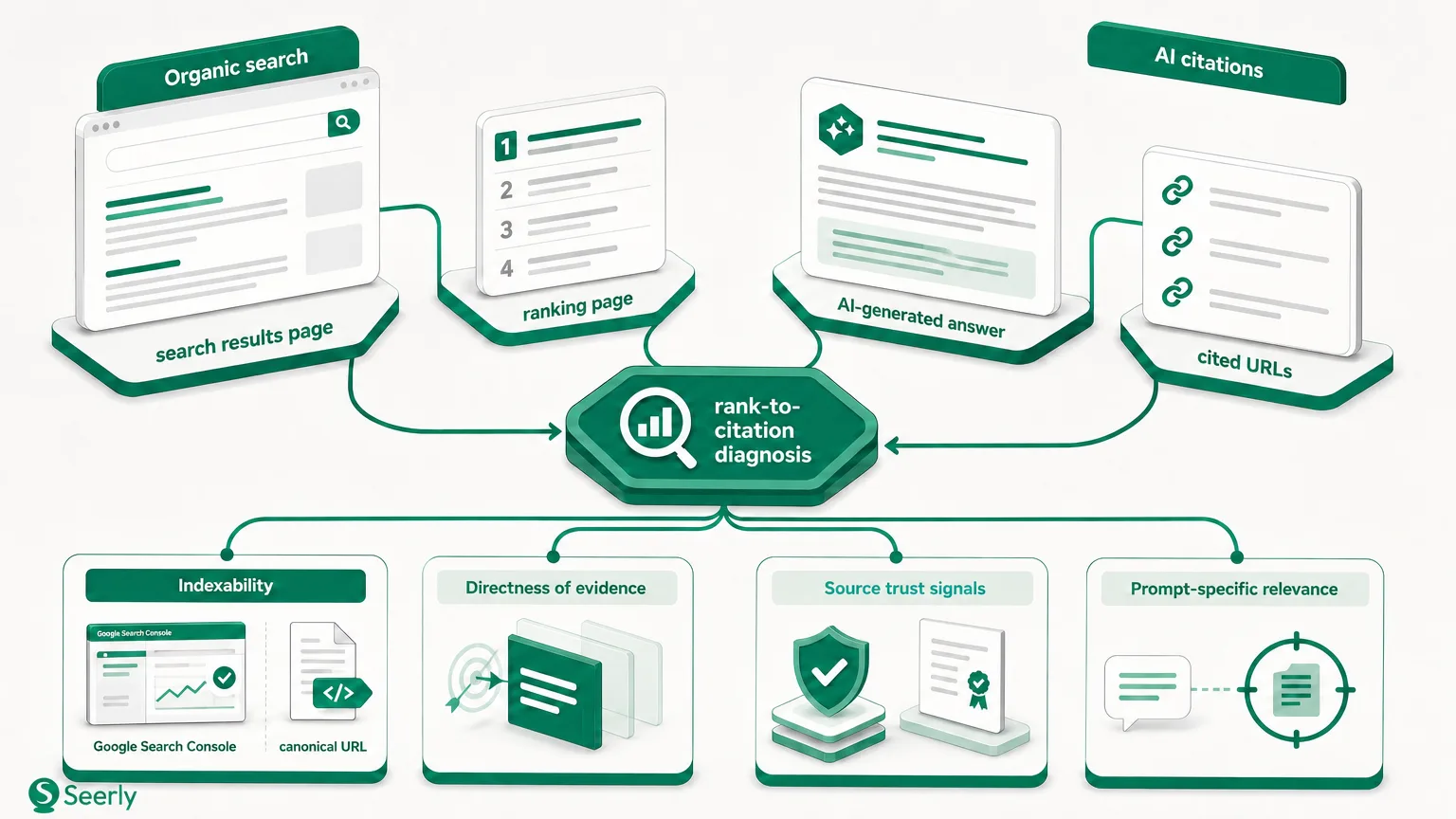
Ranking on a SERP, winning a snippet, and earning an AI citation are now three different outcomes
The easiest way to understand modern visibility is to separate these goals instead of blending them together.
OutcomeWhat it meansWhat usually helpsWhere it falls shortRanking on a results pageYour page appears competitively for a queryRelevance, content quality, links, page experience, internal linking, and search intent alignmentA strong rank does not guarantee clicks, snippets, or AI reuseEarning a featured snippetGoogle extracts a concise answer directly into SERP real estateClear definitions, direct headings, short answer blocks, lists, tablesA snippet-friendly page can still lack the depth or evidence needed for AI citationBeing cited in an AI answerAn AI system uses your page as support while synthesizing a responseVerifiable claims, comparative framing, entity clarity, source-backed detail, reusable answer modulesCitation opportunity may be lost even if the page ranks well
This distinction matters because a modern visibility program cannot be measured with one metric. Even in traditional search, rankings can rise while traffic falls because SERP layouts, intent shifts, and richer answer features absorb attention. That same mismatch becomes more pronounced in AI environments, where a page may be discoverable but not composable.
It also helps to clear up one common confusion around “page rank.” Many marketers still use the phrase loosely to mean position or authority, but Google ranking today is better understood as the result of multiple systems evaluating query-page fit, not a simple public score. And popular third-party metrics are not direct ranking inputs: Domain Rating and similar authority metrics are SEO tool estimates, not search engine ranking factors. That distinction is important when teams assume a strong domain or decent position should automatically lead to answer inclusion.
What snippet optimization still gets right
The old snippet playbook is not wrong. It is just narrower than many teams assumed. Several practices still support both google ranking and downstream answer reuse.
Checklist: concise headings that match the question
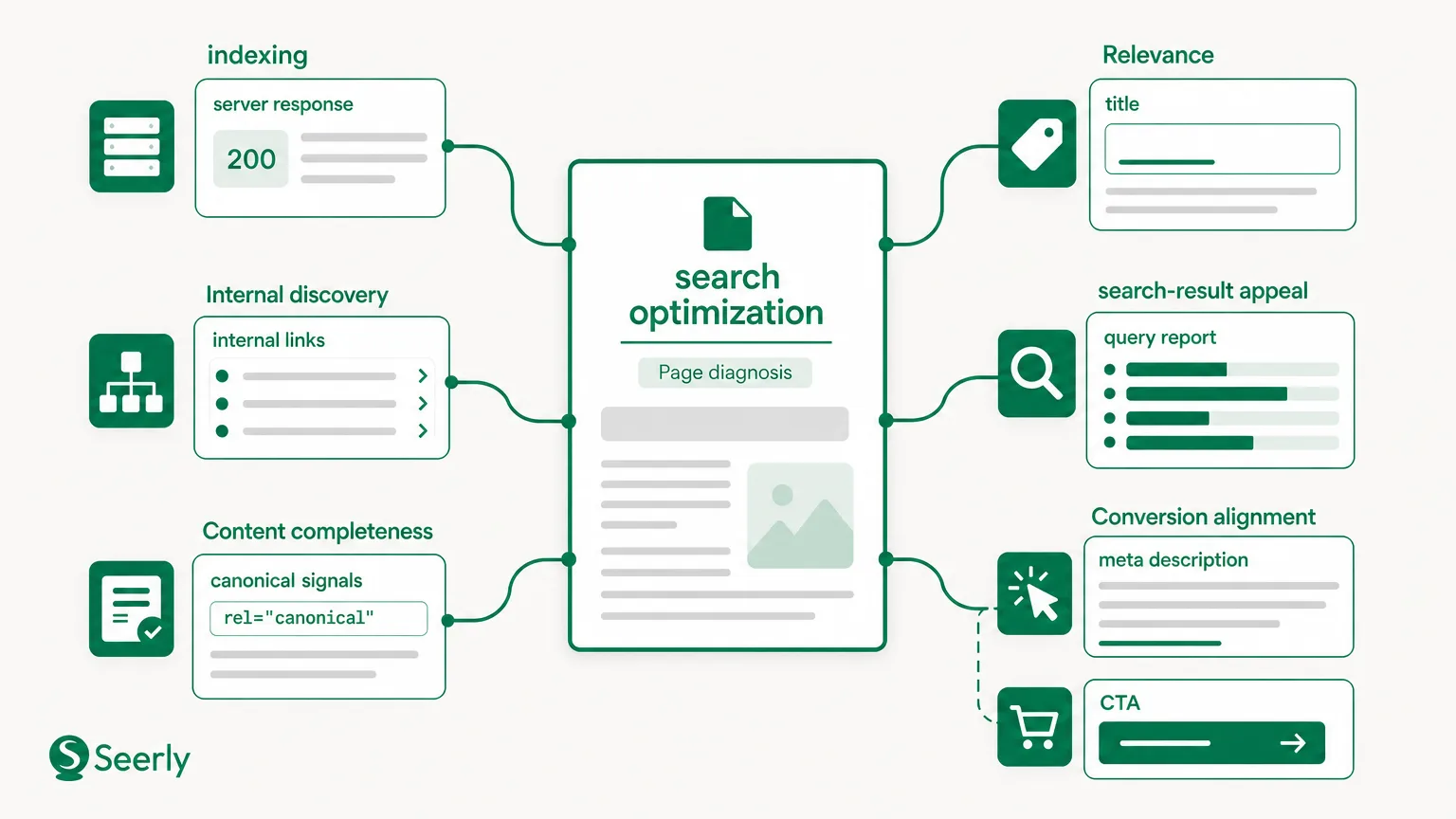
Question-led headings still work because they reduce ambiguity for both crawlers and users. If the page asks and answers a specific question in the heading structure, it signals intent quickly and improves scannability. That is still useful for ranking, because search engines evaluate topical relevance and page organization as part of content quality and usability.
The nuance is that headings should not be vague wrappers like “Overview” or “Why it matters” when the page is supposed to answer a concrete query. A heading such as “What is technical SEO?” or “How to compare CRM pricing models” gives machines a clearer retrieval target than a stylistic label.
Checklist: direct definitions near the top of the section
Featured snippets often reward concise definitions because they are easy to extract. That same pattern can still help AI systems identify the page as a candidate source, especially for introductory or definitional prompts. A direct two-to-three sentence answer under the heading remains one of the cleanest structural signals you can publish.
What changes is the standard after the definition. In the snippet era, the short answer itself could do much of the work. In AI answer environments, the definition needs supporting context, examples, limits, or evidence underneath it so the page is not just extractable but trustworthy.
Checklist: scannable bullets and tables
Bullets, numbered steps, and comparison tables remain highly effective because they compress information into reusable units. They help users understand the page quickly, and they help machines isolate distinct claims, features, or decision criteria. This is one reason many studies of ranking factors continue to emphasize the importance of strong content organization and intent satisfaction alongside technical quality and links, including evidence from large-scale SEO factor analysis.
For AI readiness, bullets work best when each item is specific enough to stand alone. “Better performance” is weak. “Reduces time-to-first-byte on mobile templates” is reusable.
Checklist: clear page intent
Pages that try to rank for everything usually become weak snippet candidates and weak AI sources. A page with one obvious job, such as defining a concept, comparing options, or explaining a process, gives both search engines and answer systems a cleaner interpretation path. That matters because search ranking systems use many signals tied to relevance and user value rather than a single master factor.
In practice, clear intent means the title, intro, headings, and examples all support the same query family. If the page shifts between education, product promotion, and unrelated FAQs, it becomes harder to extract reliably.
Where snippet logic breaks in AI answers
The bigger mistake is assuming snippet optimization is enough. In AI-driven answer surfaces, several old assumptions fail.
Myth 1: “If the page ranks well, it will probably be cited”
Good ranking improves discoverability, but it does not guarantee reusability. AI systems often synthesize from multiple sources, which means they need passages that are precise, attributable, and aligned to the exact prompt. A page can rank because it broadly satisfies intent, yet still lack the specific claim structure needed to support an answer.
This is one reason visibility teams should separate rank reporting from answer-surface monitoring. If you want to understand the gap, compare classic rankings with prompt-level presence, as discussed in how to monitor brand presence across Google AI chats and search rankings.
Myth 2: “A concise answer block is enough”
A concise answer block helps with snippet eligibility, but AI answers often need more than one sentence. They may look for corroborating detail, examples, edge cases, and comparisons. Research on retrieval-augmented generation and answer grounding has shown that generated answers perform better when systems can draw on retrieved evidence that improves factual support and answer quality.
So yes, keep the short answer block. But do not stop there. Follow it with support that explains why the answer is true and when it applies.
Myth 3: “Authority can substitute for specificity”
Brand strength helps discovery, but it cannot replace answer fitness. Some teams still lean too heavily on authority shorthand, often conflating strong brand signals with inevitable inclusion. Yet even traditional SEO guidance warns against reducing ranking to simplistic authority scores, and long lists of supposed ranking factors often oversimplify how search systems actually evaluate pages.
In AI answers, specificity usually wins over vague authority. A mid-authority page with the clearest supported explanation for a narrow prompt may be more reusable than a stronger domain publishing generic copy.
Myth 4: “If it won a snippet before, the page is future-proof”
Winning a featured snippet can signal strong structure, but it does not mean the page is durable across evolving answer interfaces. Newer AI search systems increasingly depend on source selection patterns, grounding behaviors, and prompt-specific retrieval. Recent work on search and generative answer systems points to continued shifts in how retrieval and synthesis interact in modern search experiences.
That means old winners should be audited, not assumed safe. A page built for extractability in 2019 may need proof layers and comparison framing in 2026.
Snippet-only optimization vs AI-citation-ready optimization
Consider a page targeting “what is customer data platform.”
Version A: optimized for snippets only
The page title matches the query. The H2 says “What is a customer data platform?” and the first paragraph gives a clean 40-word definition. Below that, there are three generic bullets and a short conclusion. This page may rank decently and could become snippet-eligible because it is easy to parse.
But it has obvious weaknesses. It does not distinguish a CDP from a CRM or data warehouse. It offers no evidence, examples, implementation criteria, or buyer context. If a user asks an AI system, “How is a customer data platform different from a CRM for B2B demand gen?” the page is visible but not very reusable.
Version B: revised for both snippet eligibility and AI citation readiness
The improved version keeps the same direct definition, but then adds a comparison table showing CDP vs CRM vs warehouse. It includes a subsection on when a CDP is appropriate for B2B teams, names the core data unification functions, and cites product-neutral implementation considerations. It also adds an FAQ answering adjacent prompts such as time-to-value, data governance concerns, and common misclassifications.
This revised page can still support google ranking and snippet capture because the structure remains clean. But it is much stronger for AI reuse because the page contains modular, attributable answers for multiple related prompts. It becomes not just discoverable but composable.
How content teams should decide what to change
A practical update plan starts with page triage rather than full-site rewrites.
When to update an old page
Update an old page when it already ranks, matches a high-intent topic, and has a clean core structure. If it is close to useful but thin on evidence or differentiation, revision usually beats replacement. Pages like this often need stronger examples, clearer entity relationships, and a better prompt-to-section match rather than a new URL.
When to add an FAQ block
Add an FAQ block when the core topic spawns predictable follow-up questions. This is especially useful when teams see impressions for adjacent queries but weak engagement or low answer-surface reuse. FAQ blocks can convert one broad page into a more modular source asset, provided the answers are specific and not padded with obvious filler.
When to add source-backed claims
Add source-backed claims when the page makes evaluative statements, process recommendations, or comparative assertions. If the page says something is faster, more accurate, lower risk, or better for a certain use case, support it. This is where trust signals become operational, not cosmetic. Teams thinking beyond rankings may also benefit from measuring the trust signals that matter in Google AI search environments.
When to create a dedicated category page instead
Create a dedicated category page when one article is trying to answer too many different intents at once. If the topic includes product types, use cases, comparisons, and industry variants, a structured category hub may outperform a bloated article. That approach also helps internal linking and discoverability, which remain important for search performance; if you are troubleshooting that layer, review how weak internal links can cause ranking losses even when content quality seems adequate.
FAQ
Do PageRank-style assumptions still matter for google ranking?
Broadly, yes, but not in the simplistic way many teams use the term. Links, authority, and site reputation still influence discoverability, but modern Google ranking depends on a wider mix of relevance, quality, and usefulness signals. Treat link equity as one part of the system, not the whole explanation.
Do featured snippets guarantee AI citations?
No. A snippet shows that your answer is concise and extractable for a specific query presentation. AI citation selection may demand more support, especially for comparative or evaluative prompts. Snippet success is helpful, but it is not a guarantee of answer-surface inclusion.
How can you tell if a page is visible but not reusable?
The clearest sign is when the page ranks or earns impressions but rarely appears in prompt-level answer experiences. Another sign is when the page covers a topic broadly yet lacks specific passages that answer narrow follow-up questions. In other words, the page can be found, but it cannot be easily reused as support.
Conclusion
The old snippet playbook still contributes to google ranking because structure, clarity, and intent alignment remain foundational. But in AI answer environments, those features are only the entry point. To compete for both clicks and citations, pages need evidence, specificity, and formats that make claims easy to retrieve, verify, and reuse.
A good next step is to audit five to ten high-intent pages and label them honestly: optimized for ranking only, optimized for snippets, or genuinely answer-ready. Then prioritize the pages that already perform in search and upgrade them with stronger proof, clearer comparisons, and prompt-friendly sections. If your team is building a more systematic visibility program, Seerly can help you move from basic SERP tracking toward AI-ready content and discovery analysis.