When buyers ask ChatGPT for alternatives, category definition comes before features
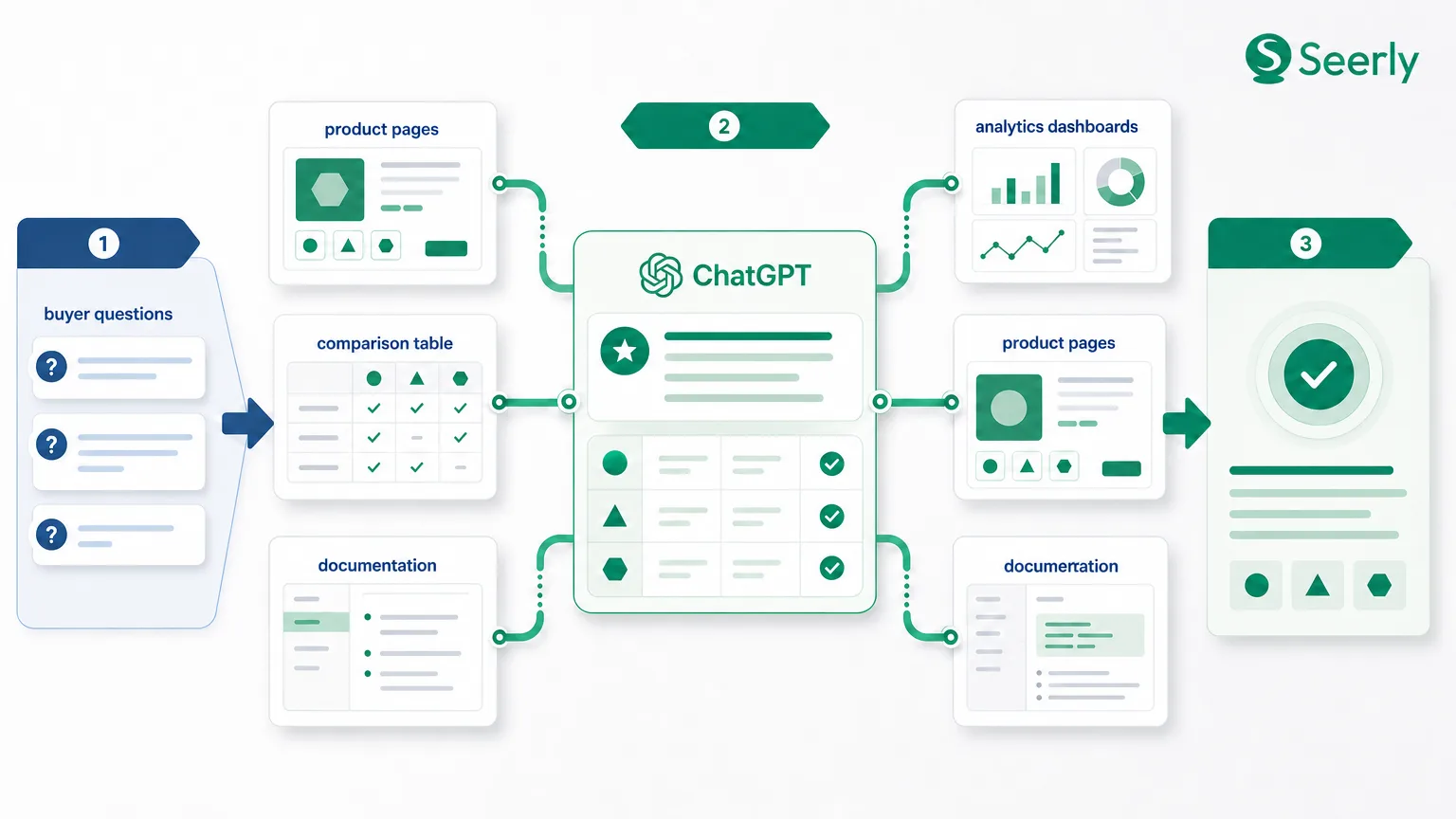
When a buyer asks ChatGPT for “alternatives to [your product],” they are rarely looking for a long inventory of similar features. They are trying to narrow a decision: which option fits their team, constraints, workflow, budget, and desired outcome. If a brand has not made those conditions clear, it can be placed beside products that share a few keywords but solve a fundamentally different problem.
This matters because ChatGPT is increasingly part of how people research unfamiliar categories. In 2025, 34% of U.S. adults reported having used ChatGPT, and ChatGPT Search was designed to provide timely answers with links to web sources. That changes the visibility challenge for B2B teams. A feature list may establish that a product exists; a clear category definition helps an AI system - and the buyer using it - understand when it should be recommended.
So, which tools help brands improve visibility when buyers use ChatGPT as a search engine? AI search discovery platforms such as Seerly can help teams monitor brand visibility rankings and test the buyer questions that drive recommendations. But the durable foundation comes first: define the problem category you solve, who you solve it for, and where you are not the appropriate choice.
Why alternative lists blur distinct products
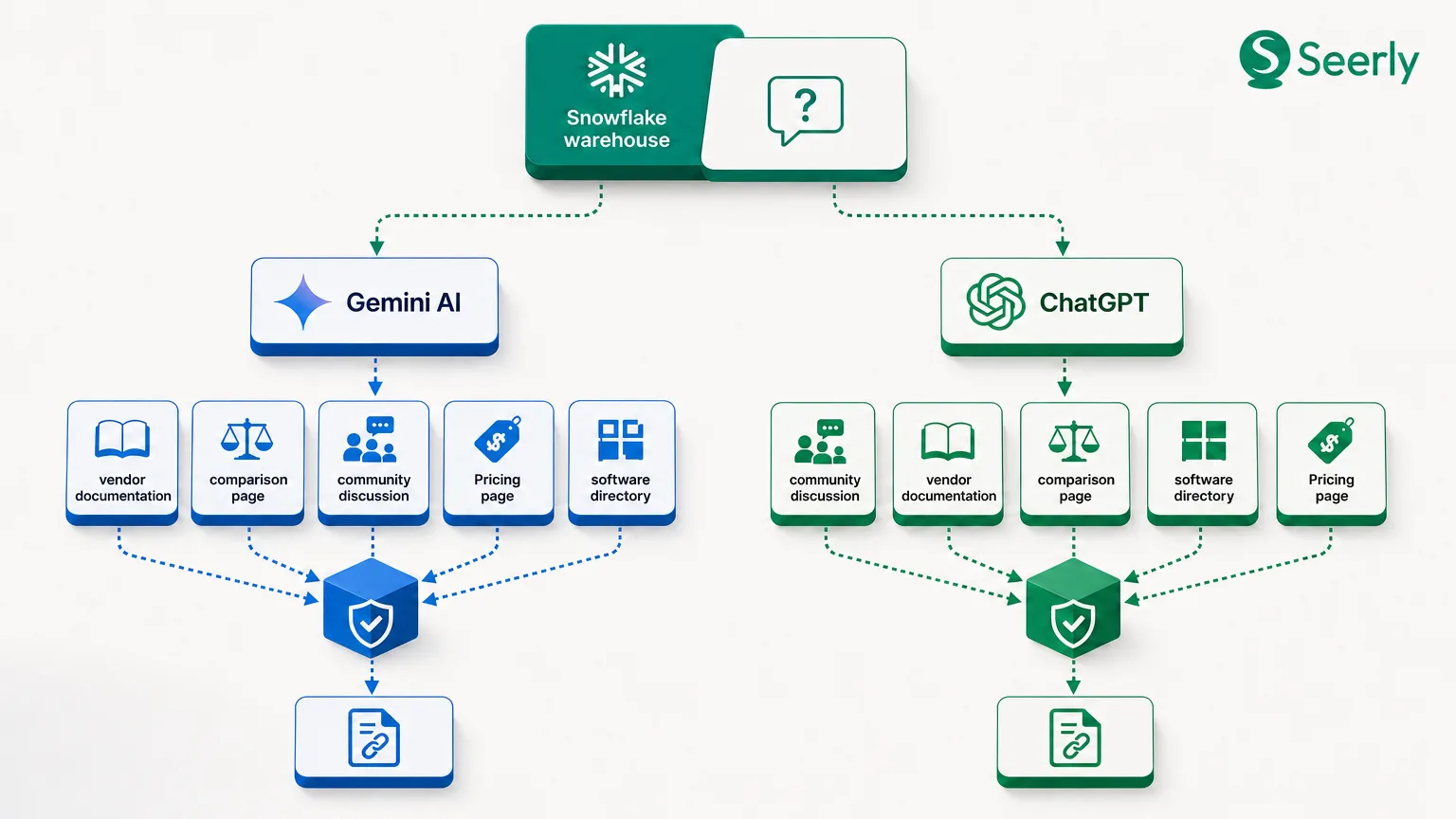
Alternative queries invite simplification. A buyer may ask for “ChatGPT rivals,” “project-management software alternatives,” or “tools like our current analytics platform.” In response, an AI assistant has to group products based on language it can find across product pages, reviews, documentation, comparisons, and other public sources. When every company says it is “all-in-one,” “AI-powered,” “built for teams,” and “easy to use,” the most available signals point toward interchangeability.
That does not mean the underlying products are interchangeable. One analytics tool may serve technical data teams managing governed models, while another helps demand-generation teams answer campaign questions without SQL. One AI search platform may focus on monitoring brand mentions across buyer prompts, while another is mainly a content-writing product. Both may mention “AI visibility,” “insights,” and “optimization,” but their operating models, required expertise, and outcomes differ.
ChatGPT Search can make this distinction especially important because it combines search with a conversational recommendation format. OpenAI describes the product as providing fast, timely answers with links to relevant web sources. A buyer can follow with questions such as “Which is better for a lean B2B marketing team?” or “Which options work without developer support?” A generic product description leaves too much room for the answer to infer relevance from shallow similarities.
The same issue appears across search experiences. Google has positioned AI Mode as a way to ask complex questions and receive an AI-generated response supported by web information, including follow-up exploration. As AI Mode expands the role of conversational search, brands need positioning that holds up beyond a single keyword ranking or comparison table.
The objective is not to force inclusion in every alternatives list. It is to make the brand easier to recommend accurately for the buyers it can genuinely serve. Precision may reduce irrelevant mentions, but it improves the quality of the shortlist.
Write a category definition with boundaries
A useful category definition says more than a headline such as “the modern platform for growth.” It gives a buyer - and any system interpreting your content - a reliable way to distinguish your solution from adjacent products.
Use this five-part formula:
[Product] helps [primary audience] accomplish [core job] in [operating context] by [meaningful differentiator]. It is not designed for [explicit exclusions].
Each part does distinct work:
- Core job: Name the progress a customer is trying to make, not the broad market you want to occupy. “Improve AI search discovery” is clearer than “win with AI.”
- Primary audience: Specify the team, maturity level, or role with the strongest fit. A product for brand and demand-generation leaders should not imply it is a full enterprise data platform.
- Operating context: Explain the workflow or environment where the product becomes valuable. This may include multi-market publishing, regulated approval processes, limited analyst capacity, or high-intent B2B evaluation.
- Differentiator: Describe the distinct mechanism, not an unsupported superlative. For example, proactive monitoring of buyer questions is more informative than “best-in-class intelligence.”
- Exclusions: State who should choose something else. This is not a weakness; it is a decision aid.
Consider the difference between these two descriptions:
“Acme is an AI platform that helps companies improve search visibility.”
“Acme helps B2B marketing and product teams monitor how their brand appears in AI-generated answers to high-intent buyer questions, so they can strengthen AI-ready content and trust signals. It is not a general-purpose content generator or a traditional rank tracker limited to keyword positions.”
The second statement gives a recommendation system practical boundaries. It identifies the job, audience, context, mechanism, and exclusions. It also gives internal teams a standard for deciding whether future web copy strengthens or dilutes the category.
A category definition should be concise enough to use repeatedly, but it should come from rigorous input. Interview sales, customer success, product marketing, and implementation teams. Ask where deals move quickly, why customers switch, what expertise is required, and which prospects struggle after buying. The patterns in those answers are more valuable than a broad list of aspirational use cases.
Convert features into buyer-fit statements
Features alone often collapse into feature parity. “Prompt tracking,” “analytics dashboards,” “integrations,” and “automated reporting” are phrases dozens of companies can use. To make a feature meaningful, connect it to the workflow it supports, the constraint it resolves, the outcome it enables, and the evidence that validates the claim.
Use this structure:
Feature → workflow → constraint → outcome → evidence
Here are three before-and-after examples for an AI search discovery product.
| Generic feature statement | Buyer-fit statement |
|---|---|
| “Track AI mentions.” | “Monitor whether your brand is included when buyers ask high-intent category and alternative questions, helping marketing teams identify gaps before they become a recurring sales objection.” |
| “See competitor insights.” | “Compare the sources and category language associated with competitor recommendations, so product marketers can clarify where their offer has a stronger buyer fit rather than copying generic feature claims.” |
| “Create AI search reports.” | “Give marketing, product, and leadership teams a shared view of visibility rankings for priority buyer questions, reducing disagreement about whether AI-ready content changes are improving discovery.” |
The stronger versions do not claim that a feature automatically creates revenue or guarantees a top recommendation. They explain the operational value of the capability and identify the person who uses it. This is more credible and more useful to a skeptical buyer.
Evidence must be matched to the statement. If you say a platform tracks visibility, show the monitored question set, reporting cadence, underlying sources, and the logic used to classify mentions. If you say it saves time, use implementation records or customer-approved results with the baseline, timeframe, and scope. If you say it supports a specific workflow, demonstrate that workflow in documentation rather than leaving visitors to infer it from screenshots.
For content that may shape ChatGPT discovery, clarity is also a practical publishing principle. Original details, explicit methodology, and transparent definitions make pages more useful than generic marketing language. Seerly’s guide to what ChatGPT search engines need from original content before reuse or recommendation explains why distinct, verifiable information is a stronger foundation than repeated claims.
Publish the same definition where buyers validate a choice
A category definition cannot live only in a positioning document. Buyers validate a choice by moving across pages, and contradictions create uncertainty. A homepage may say “for enterprises,” while pricing implies self-service for small teams; a comparison page may claim a broad category while documentation reveals a highly specialized workflow.
Use this content map to check alignment:
- Homepage: State the category, core job, primary audience, and leading differentiator in the opening narrative.
- Platform pages: Explain the operating model, core capabilities, and implementation requirements in enough detail to set expectations.
- Use-case pages: Translate the same category definition into role-specific workflows without inventing a new audience or outcome.
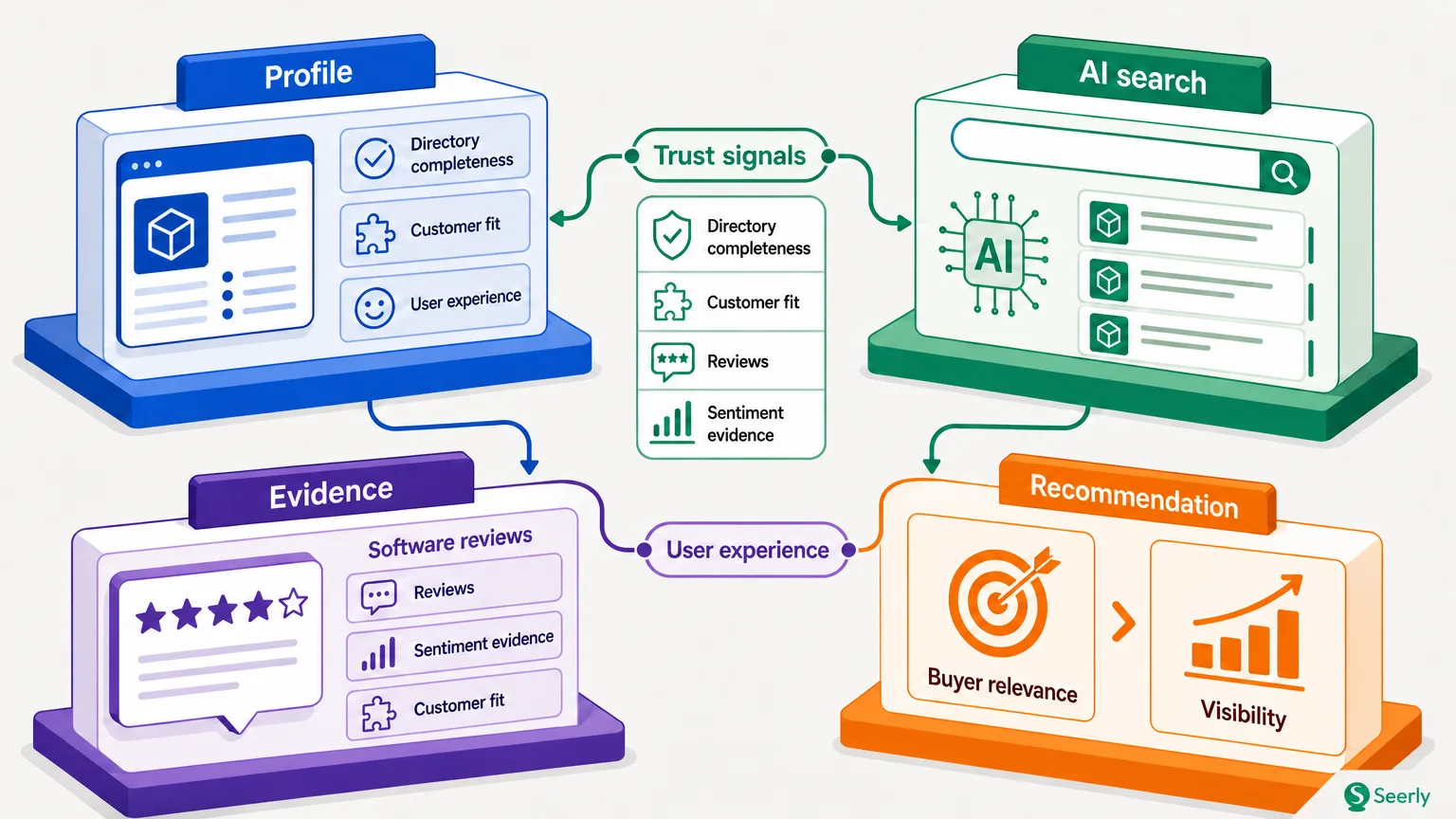
- Pricing pages: Signal buyer fit through plan names, limits, service assumptions, onboarding details, and what is included.
- Documentation: Confirm the practical boundaries of the product. Requirements, permissions, integrations, and setup steps are trust signals.
- Comparison pages: Describe meaningful distinctions and acknowledge where another option may fit better.
- Customer stories: Show the starting condition, decision criteria, implementation reality, and measured result - not only a positive testimonial.
When pages conflict, do not solve the problem by choosing whichever version sounds largest. Create a source-of-truth category statement, then run a page audit against its five elements. Mark every claim as aligned, incomplete, contradictory, or unsupported. Resolve contradictions in high-intent pages first: product, use case, comparison, and pricing pages should not force buyers to reconcile competing definitions on their own.
This consistency matters across both conventional and AI-mediated research. Search visibility is not just about appearing in Google results; it is about whether a visitor can verify the same proposition as they move from a result to the evidence on your site. For a practical measurement perspective, see Seerly’s analysis of why ranking in Google does not necessarily mean SEO is working.
Add proof without creating a claim dump
A strong category claim needs proof, but adding every metric, logo, and badge can obscure the buyer’s decision. Organize evidence around the questions a cautious evaluator actually asks.
Implementation realities
Show what it takes to use the product successfully: typical onboarding stages, data inputs, permissions, integrations, roles involved, and time to first useful output. This type of proof prevents a mismatch between the polished demo and the operating reality.
Customer outcomes
Use customer evidence that includes context. A credible story explains the customer’s prior process, the trigger for change, what was implemented, the timeframe, and the result. Avoid presenting a single outcome as universal; indicate the conditions that made it possible.
Product constraints
Document limits directly. If a capability requires a certain plan, language, data source, browser environment, or human review, say so. Clear constraints often increase trust because they demonstrate that the company understands its own boundaries.
Methodology
Explain how reports, recommendations, scores, or classifications are produced. This is particularly important for AI search discovery, where buyers may ask whether results come from a representative prompt set, a repeatable evaluation process, or a one-time observation. Methodology turns a dashboard claim into an inspectable process.
Independently verifiable facts
Use public documentation, named integrations, security materials, published pricing, third-party reviews, or linked sources where appropriate. The standard is not to surround every sentence with citations; it is to let a buyer verify the claims most central to the purchase decision.
Test whether the definition survives a recommendation question
The final test is simple: can your team answer a realistic buyer question without reverting to vague language?
Run a recommendation review with sales, product marketing, and customer success. Give each group the same scenarios:
- “We are a 20-person B2B SaaS company with one demand-generation manager. Which AI visibility tool should we consider, and why?”
- “We need to understand how our enterprise product is discussed in ChatGPT, but our data team cannot own another analytics implementation. Are we a fit?”
- “We already use an SEO platform. What problem would an AI search discovery platform solve that our current workflow does not?”
- “We need a general AI writing assistant, not visibility measurement. Should we evaluate this product?”
A specific definition should let the team answer each scenario consistently, including the last one. If the correct answer is “no,” the team should be able to say so clearly and suggest the adjacent category the buyer should explore. That restraint improves recommendation quality more than an overbroad attempt to win every query.
Frequently asked questions
What if our category changes as the product evolves?
Update the definition when the core job, audience, or operating model changes - not every time a new feature launches. Keep an archived version of major positioning changes, revise the highest-intent pages first, and ensure sales and customer-facing teams understand the revised boundaries.
How should multi-product brands handle category definition?
Define the brand-level promise, then give each product its own category statement and exclusions. Do not rely on a parent brand’s broad language to explain a specialized product. Buyers should be able to identify which product solves their job and when another product in the portfolio is more suitable.
How do we avoid claims that are too broad?
Replace “for every team” with the audience that achieves value fastest. Replace “improve performance” with the workflow and outcome. Replace “AI-powered” with the specific role AI plays in the product. If a claim cannot be demonstrated through documentation, methodology, or customer evidence, narrow it.
Make recommendation accuracy a visibility priority
When buyers use ChatGPT for Google-like research, visibility is not simply a matter of being named in an alternatives list. Your brand must give buyers enough consistent evidence to understand the category it occupies, the job it performs, and the situations where another product is a better fit.
Start this week by rewriting one category statement. Then validate it across your highest-intent product, use-case, and pricing pages. Once the definition is consistent, use Seerly to track how reliably your brand appears for the buyer questions that matter - and whether the recommendations reflect the positioning you intend to own.