SEO for Traffic Is Not Enough: Why Rankings and Visits Still Fail to Turn Into Pipeline

If you have ever looked at a page ranking near the top of Google and thought, “Why is this not producing leads?”, you are not alone. That tension sits at the center of modern SEO for traffic: teams can grow impressions, rankings, and even sessions, yet still struggle to prove that search is creating qualified demand. For heads of marketing, SEO managers, and founders under revenue pressure, that gap is not a reporting inconvenience. It is the difference between a channel being seen as strategic or expendable.
The frustration is getting sharper because search visibility itself is changing. In Seerly’s monitoring of AI search conversations, concerns around ROI measurability appeared with 100% negative sentiment across three tracked mentions on Perplexity, with the trend worsening. That matters because a number-one ranking is no longer the same thing as owning attention, persuasion, or attribution. Even in traditional search, click-through rates vary widely by query type and result layout, and organic CTR drops materially as position declines and SERP features expand. In AI-driven search, the challenge compounds again: answers can satisfy the user before your page earns the visit.
So the real question is not whether SEO for traffic still works. It does. The question is whether traffic alone tells you anything meaningful about pipeline. Usually, it does not.
Why rankings and visits diverge from pipeline
A page can win on visibility metrics while losing on business metrics for several reasons, and most of them are easy to miss if your dashboard ends at sessions.
Weak intent matching
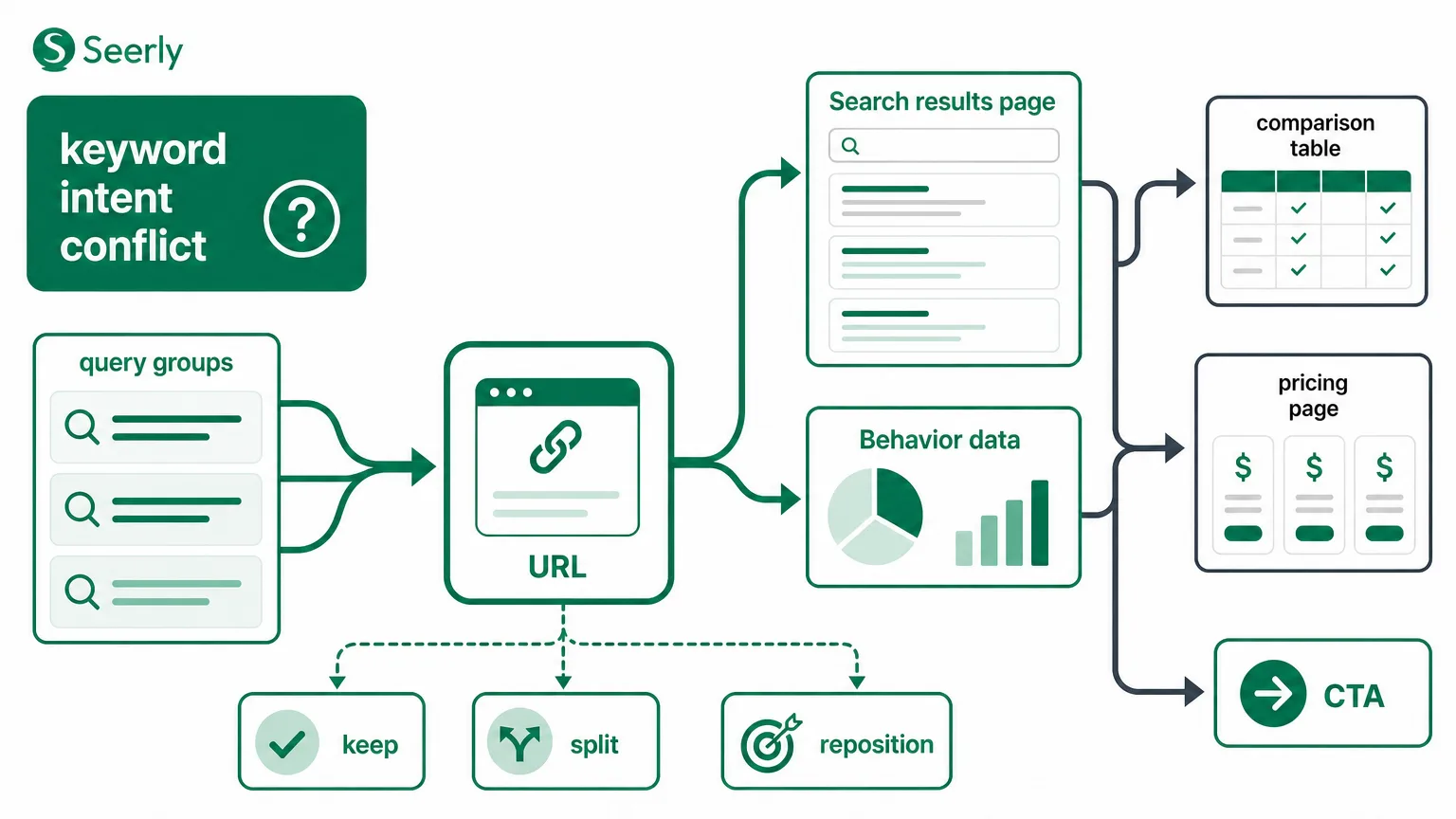
The first problem is intent mismatch. A page may rank for a high-volume informational term, but the searcher may have no buying urgency, no budget, or no near-term need. Many teams interpret top-of-funnel traffic as proof of market demand when it may only reflect curiosity. That is especially risky because traffic benchmarks vary dramatically by industry and site type, meaning a healthy-looking traffic line is often less meaningful than it appears; organic traffic expectations differ significantly across sectors, and benchmark studies repeatedly show that “more visits” is not a universal signal of strong performance.
Poor offer alignment
Even when query intent is relevant, the page may not connect naturally to a commercial next step. A guide answering a practical question may attract the right audience but fail to introduce the right proof, product category, or conversion path. In B2B and SaaS especially, SEO pages often educate well but sell weakly. Research on B2B SaaS content performance shows that search success depends not just on ranking coverage but on whether content aligns to category understanding, comparison behavior, and buying progression; top-performing B2B SaaS programs tend to build around strategic content depth and intent alignment rather than volume alone.
Unqualified traffic
Not every click is useful demand. Broad terms often pull in students, job seekers, competitors, existing customers, and out-of-market researchers. That inflates organic sessions while lowering conversion rates and lead quality. This is one reason SEO reporting can become politically fragile: it is easy to celebrate traffic gains that sales teams quietly distrust. Benchmarks may help set context, but average organic traffic levels alone do not define success because they say nothing about whether the audience can convert.
AI answer interception
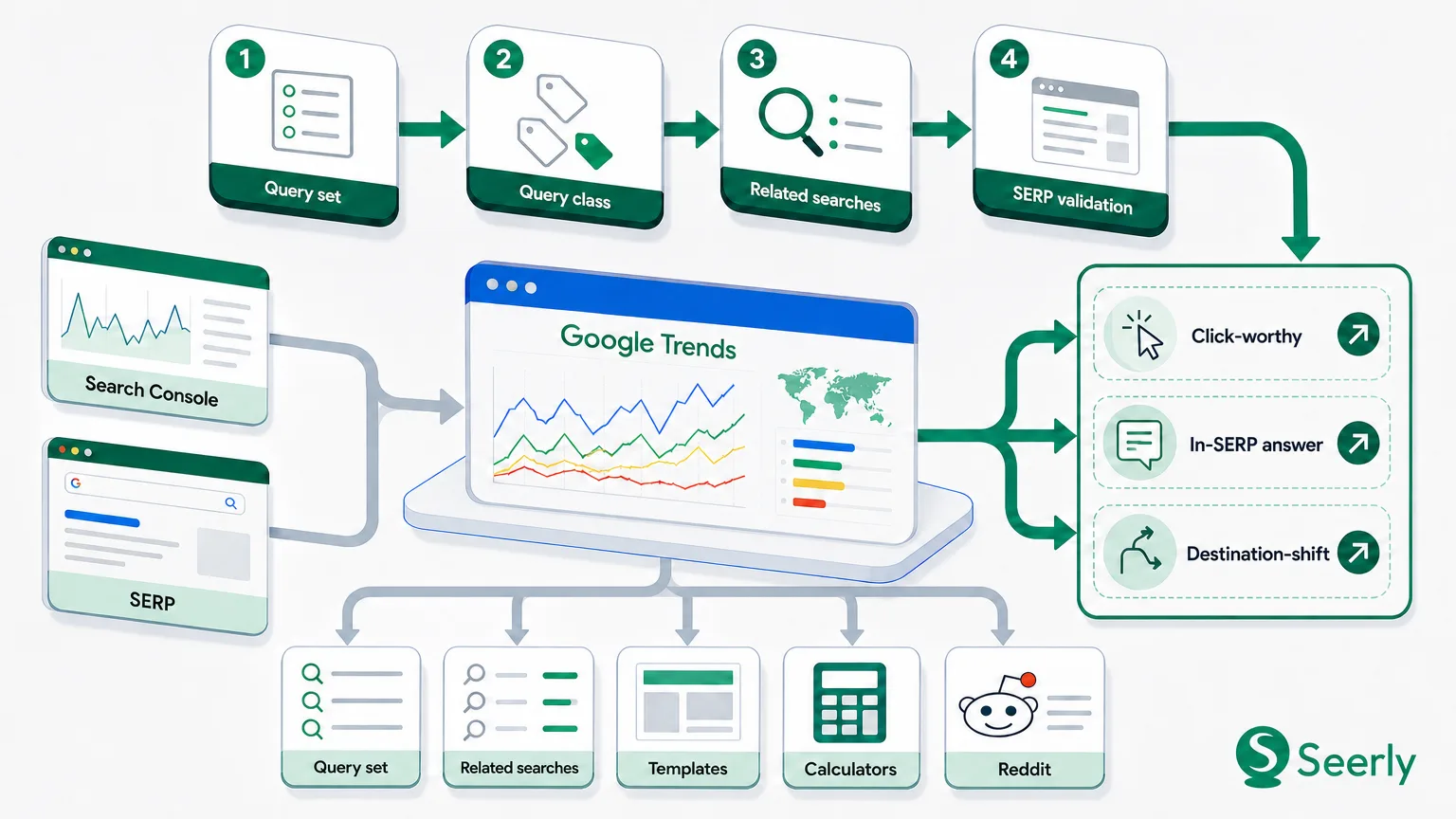
A newer cause of the traffic-pipeline disconnect is answer interception. Your content may be visible enough to inform an AI-generated answer, yet not attractive enough to earn the click. In that case, your expertise contributes to search demand capture without delivering measurable website sessions. Emerging research on LLM retrieval and citation behavior suggests that answer systems do not reward publishers the same way classic search engines do; citation and answer-generation dynamics can shift value from clicks to mentions and source inclusion. For SEO teams, that means a page may influence discovery while appearing weaker in analytics than its true market impact would suggest.
Misleading attribution
Finally, attribution often hides SEO’s contribution to pipeline. A prospect may discover your brand through organic search, leave, return later via direct traffic, and convert through branded search or a sales touch. If your reporting model only credits last-click conversions, the original SEO assist disappears. That is one reason disciplined measurement matters. Clean tagging and shared channel definitions are essential if you want to compare organic, paid, and AI-assisted discovery without double counting. Seerly’s guide to measuring organic, paid, and AI traffic together with cleaner UTM rules is useful here because it helps teams reduce false certainty in channel reporting.
The modern KPI stack for SEO for traffic
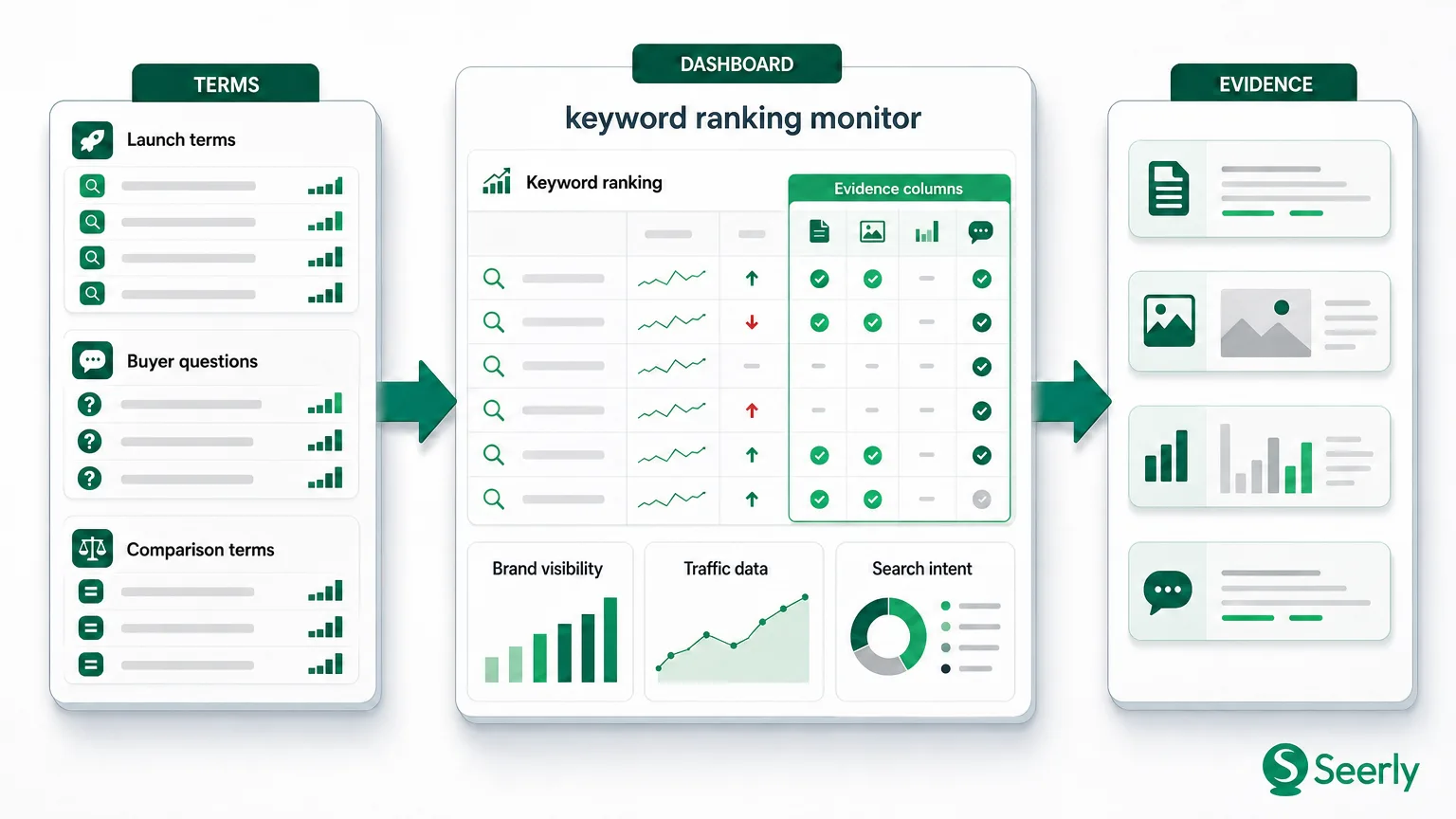
If traffic is only one layer, what should replace a traffic-first model? Not a single metric, but a stack. The goal is to separate visibility metrics from business metrics and then read them together.
1. Rankings: visibility, not victory
Rankings still matter because they show whether search engines understand and surface your pages. But they should be treated as a diagnostic metric, not a success endpoint. Ranking first for a bad query is still bad strategy. Use ranking data to assess coverage, intent fit, and volatility, especially when technical issues or internal linking changes reduce discoverability. If your team is troubleshooting visibility drops, Seerly’s article on ranking losses caused by weak internal links, not just weak content is a strong operational reference.
2. Organic sessions: evidence of demand capture
Sessions tell you whether visibility is turning into visits. They are useful, but only in context. Compare traffic against page type, query type, and funnel stage, not just against month-over-month growth. Broader benchmark reporting shows that search performance differs significantly by market and website maturity; SEO benchmarking studies consistently show wide variance in traffic share and outcomes across industries. In other words, traffic growth is meaningful only when paired with who arrived and why.
3. AI citation presence: evidence of recommendation
If users increasingly rely on AI search and answer engines, then your SEO stack needs a visibility layer beyond blue links. Are your pages cited, summarized, or recommended when category, problem, and comparison prompts are asked? This is where AI-ready websites and trust signals matter. Citation presence is not equivalent to traffic, but it is increasingly part of discovery performance. Research into AI answer quality and source selection indicates that retrieval and citation patterns are becoming a measurable layer of search visibility.
4. Branded search lift: evidence of remembered demand
When organic content works, it often increases branded demand before it increases direct conversions. Prospects may first discover a concept through non-branded search, then later search your company by name once the need becomes more concrete. Watching branded search lift helps you detect whether SEO is creating mental availability, not just anonymous visits. This is especially important in longer sales cycles where early education precedes form fills by weeks or months.
5. Lead quality: evidence of commercial fit
This is where many SEO programs get exposed. A page may convert, but what kind of conversion is it producing? Track pipeline-relevant indicators such as company size, use case match, geography, and sales acceptance rate. If SEO is generating leads that never progress, the problem is not traffic scarcity. It is targeting or message fit.
6. Influenced pipeline: evidence of business impact
The final layer is influenced revenue or pipeline contribution. This requires some operational maturity, but it is the metric executives trust most. Did the account interact with organic search content before an opportunity was created? Did SEO-assisted visitors convert faster, close at higher rates, or show stronger deal value? Visibility metrics answer “were we found?” Business metrics answer “did it matter?”
A worked scenario: high traffic, no pipeline
Imagine a SaaS company that publishes a page targeting “what is marketing attribution.” It ranks in the top three, earns 12,000 monthly visits, and appears successful in every standard SEO dashboard. But the page mostly attracts students, junior practitioners, and early-stage researchers. The call to action is a generic newsletter signup. AI answers also summarize the core definition directly in the results, which means many users never need to click through unless they want a primer. The page creates awareness, but almost no qualified pipeline.
Now compare that with a second page targeting “marketing attribution software for multi-touch B2B teams.” It gets only 900 monthly visits. On paper, it looks weaker. But the searcher is closer to a buying decision, wants vendor proof, and is evaluating solutions. If that page includes implementation detail, product comparisons, trust signals, and a CTA aligned to evaluation, it may generate a fraction of the traffic while contributing materially more revenue.
This is the core mistake in traffic-first SEO. Teams compare pages by volume instead of by business contribution. In practice, the lower-traffic page may be the better asset because it matches the right question at the right stage. If you are refining content around intent depth and semantic relevance, Seerly’s semantic SEO guide offers a practical way to think about topic coverage beyond keyword matching alone.
What teams should change next
The first change is to tighten page intent. Review whether each high-traffic page matches the stage of the buyer journey you expect it to influence. If the page is informational, stop forcing bottom-funnel KPIs onto it. Instead, measure assisted outcomes such as branded search lift or qualified return visits. If the page is supposed to generate pipeline directly, make sure the query actually carries commercial intent.
The second change is to add comparison-ready proof. Buyers do not move from search visibility to sales conversations because a page is “helpful.” They move when the page reduces perceived risk. That means examples, evidence, product fit details, use-case specificity, and trust signals that help evaluators decide whether your solution belongs on a shortlist.
The third change is to align CTAs to buying stage. A visitor researching a category problem probably will not book a demo on the first touch, but they may engage with a template, benchmark, assessment, or buyer-focused proof asset. A high-intent comparison page, on the other hand, should not bury the next step under generic educational prompts.
The fourth change is to review whether AI answers are stripping away clicks. If a page is repeatedly cited or summarized without earning visits, rethink how the content creates curiosity beyond the answer itself. Original data, proprietary frameworks, stronger proof, and experience-backed analysis increase the chance that users still need the source, not just the summary.
Finally, report progress with restraint. Do not claim that more rankings equal more ROI. Instead, show the chain: visibility improved, branded demand changed, lead quality shifted, or influenced pipeline increased. That is a more credible narrative for revenue-minded operators than celebrating raw session growth.
FAQ
Is more traffic still worth pursuing?
Yes, but only if the traffic is strategically useful. SEO for traffic remains valuable when it expands discoverability, builds category awareness, and feeds future demand. The mistake is not pursuing traffic; the mistake is treating traffic as the finished result rather than one layer of performance.
How long should SEO ROI proof take?
It depends on sales cycle length, content type, and domain authority, but direct ROI often lags behind visibility gains. Early signals usually show up first in rankings, sessions, and branded demand, while pipeline influence takes longer to accumulate. That is why executive reporting should distinguish between leading indicators and revenue outcomes instead of compressing everything into one monthly verdict.
Which signals matter most when traffic and leads disagree?
Start with intent fit and lead quality. If traffic rises while sales-qualified leads fall, the problem is usually audience mismatch, weak offer alignment, or answer interception. Then check branded search lift, AI citation presence, and influenced opportunities to see whether SEO is helping discovery in ways that your default attribution model is missing.
Conclusion
The hardest lesson in SEO for traffic is also the most important: visibility is not the same as value. Rankings, sessions, and click growth can all improve while pipeline stays flat if the page serves the wrong intent, attracts the wrong audience, or gets summarized away before the visit ever happens.
A practical next step is to audit one high-traffic page and one high-intent page side by side. Compare not just rankings and visits, but AI citation presence, branded demand, conversion quality, and influenced pipeline. If you want a clearer view of whether your brand is merely visible or genuinely being recommended in ways that support revenue, explore how Seerly helps teams monitor AI search discovery and trusted brand authority.