How to Check Backlinks That Actually Influence AI Search Visibility

If you check backlinks the same way you did five years ago, you will likely end up with a clean spreadsheet and very little clarity about why your brand does or does not appear in AI-generated answers. Traditional backlink reporting was built to explain rankings, link equity, and referring domains. It was not designed to explain why answer engines retrieve one source, compare another, and cite a third.
That gap matters because search behavior is changing faster than most reporting models. Google’s AI Overviews now reach more than 1 billion users, and marketers are under pressure to explain visibility in environments where users may never click a blue link at all. At the same time, backlink discussions remain active because teams still know links matter, even if they are less certain about what kind of link matters now. The real question is no longer “How many backlinks do we have?” but “Which external references strengthen the pages and claims that answer engines are most likely to surface?”
This guide shows how to check backlinks as a modern visibility diagnostic. The goal is not to inflate counts. It is to identify whether your backlink profile creates authority, context, and citation pathways that AI systems can recognize when assembling answers.
Why old backlink reporting misses the AI layer
Most backlink dashboards still emphasize volume metrics: total backlinks, new links this month, lost links, referring domains, and domain scores. Those numbers are useful, but they are incomplete. They tell you something about site authority and discovery, yet they do not tell you whether the links point to pages that are actually ready to be quoted, summarized, compared, or cited in AI search experiences.
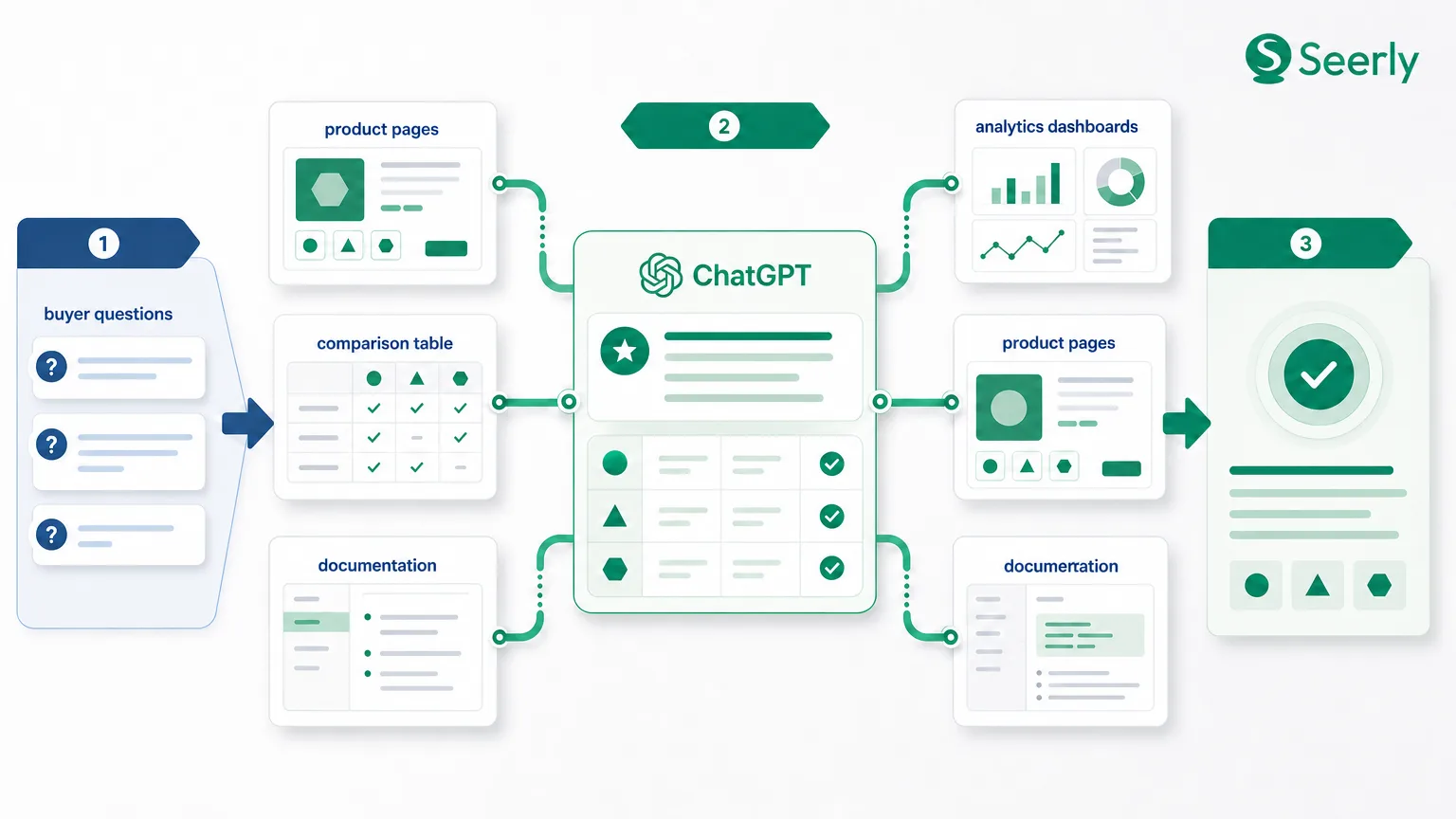
That distinction matters because the mechanics of visibility have widened. Search engines and answer engines do not just assess whether a page has authority. They also assess whether the page is topically aligned, easy to interpret, and strong enough to support direct answer generation. A backlink to a vague product page with weak summaries may help discovery, but it does not necessarily make that page citation-ready.
This is why many teams feel stuck between tactical wins and strategic uncertainty. They can see links coming in, and they may even see authority metrics rise, yet answer-engine visibility does not improve in parallel. In practice, the missing layer is destination quality. If your strongest backlinks point to pages that do not explain the brand, define the product, or answer common comparison questions, the authority signal has nowhere useful to land.
That is also why backlink audits should sit next to broader visibility measurement. Seerly has already made the case that leadership needs an AI visibility dashboard beyond rankings, traffic, and backlinks. Backlink checks still matter, but they need to be interpreted through the lens of retrieval and citation readiness, not just link accumulation.
What backlinks still do in an answer-engine world
Backlinks still matter because they remain one of the clearest ways the web expresses trust, relevance, and source relationships. Even a simple definition of a backlink as a link from one website to another understates its practical role in modern discovery systems. A good backlink does more than pass authority; it connects your brand to a context, topic, and claim.
First, backlinks help validate entity authority. If respected industry publications, research roundups, or comparison pages repeatedly mention your company in relation to a narrow topic, that pattern reinforces what your brand is known for. This is especially useful when answer systems need to identify credible providers, vendors, or resources in a category.
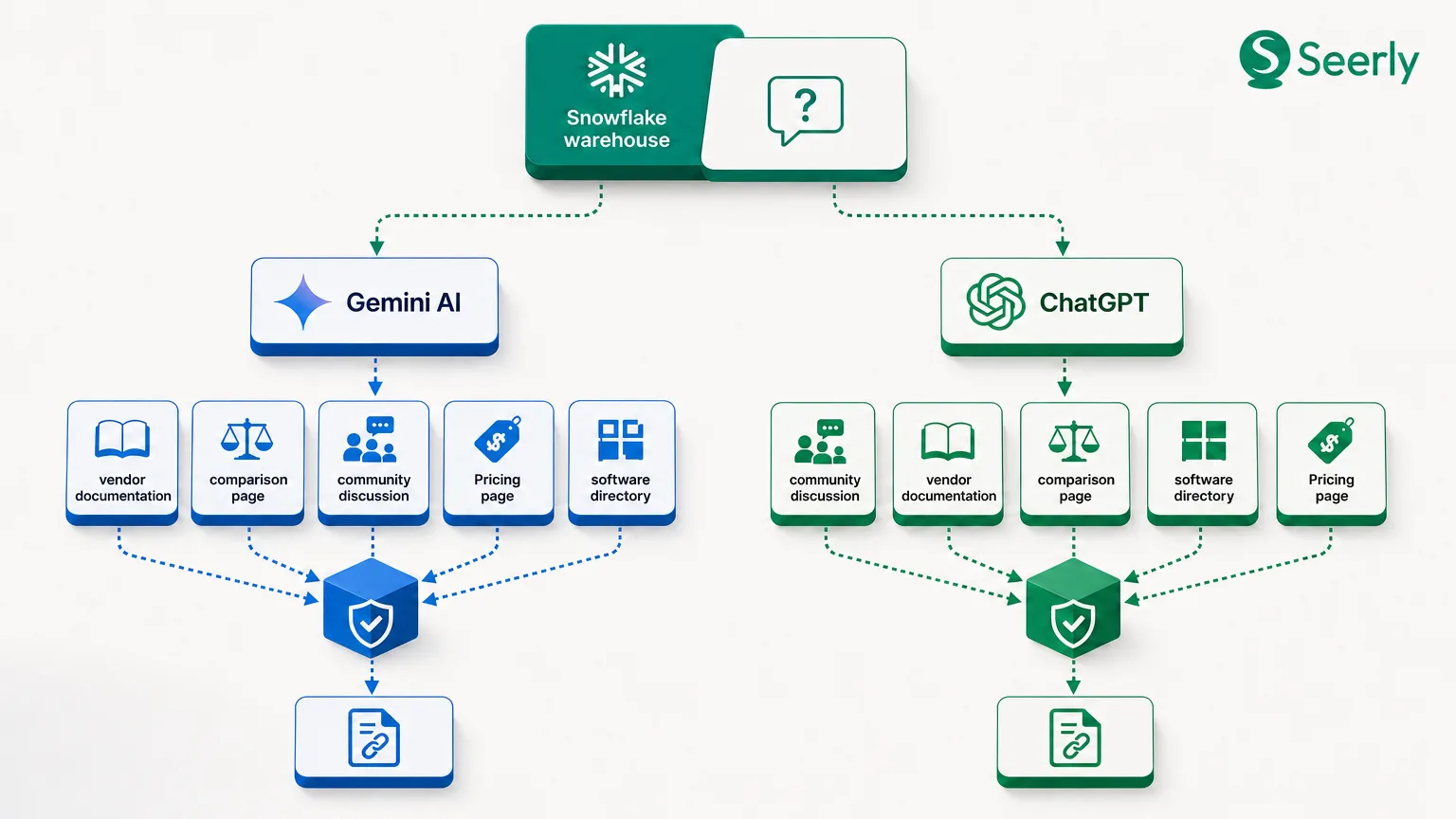
Second, backlinks reveal source relationships. A mention in a buyer’s guide, integration directory, partner page, or analyst roundup tells a machine something different about your role in the ecosystem. One link may position you as a vendor, another as an expert, and another as part of a comparison set. Those relationships can shape retrieval decisions even when the user never visits the linking page.
Third, backlinks reinforce topical trust. Search Engine Land notes that backlinks remain a strong SEO factor when they come from trustworthy, relevant sources. In an answer-engine context, relevance often matters as much as raw authority. A highly relevant editorial mention on a niche B2B site may be more useful for citation pathways than a generic high-metric mention on an unrelated publication.
The practical implication is simple: when you check backlinks today, you are not only evaluating authority transfer. You are assessing whether the web consistently associates your brand with the themes, use cases, and claims you want AI systems to retrieve.
The backlink types most likely to influence AI retrieval and citation
Not all backlinks send the same signal. A useful audit separates link types by what they communicate, not just by where they came from.
Editorial mentions
Editorial links are usually the strongest signal because they are discretionary. They appear in articles, research pieces, interviews, expert commentary, and thought leadership where an editor or author chose to reference your page. Ahrefs explains that high-quality backlinks tend to come from relevant, authoritative pages and are placed naturally in content. For AI visibility, score editorial mentions highly when they appear in topical content and point to pages with strong explanatory value.
Comparison-list inclusions
These links often appear in “best tools,” “top platforms,” vendor comparison pages, and alternatives posts. They matter because they place your brand inside a structured comparison set, which is exactly the kind of context answer engines often synthesize. Score these based on whether the source is credible, whether your positioning is accurate, and whether the linked page helps a model understand your differentiators.
Partner pages
Partner and integration links can be useful, especially in SaaS and services. They confirm ecosystem relationships and can strengthen brand legitimacy. However, they are usually weaker than editorial links unless the page includes substantive context. Score them medium by default, then raise the score if the page clearly explains the partnership and links into a relevant solution page.
Directory listings
Directories vary dramatically in value. A curated, industry-specific directory can support discovery and validation. A thin directory with little editorial control often adds noise. This is where marketers overestimate volume. Studies and roundups consistently show quality matters more than count, even though pages in top positions often have more links overall; one analysis found that the #1 result typically has materially more backlinks than lower-ranked pages, but that pattern does not mean any backlink is equally useful.
Low-value syndication
Republished content, mass guest-post networks, and broad syndication pages usually send weak signals. They may create more backlinks on paper, but they often contribute little unique context. If the source exists mainly to distribute content at scale, score it low for AI retrieval value.
Forum noise
Forum links can occasionally surface authentic brand discussions, but most are inconsistent signals. Many are nofollow, low-context, or detached from authoritative pages. They can still be worth noticing if they reveal recurring customer language or comparison themes, but they should rarely drive your strategy.
A step-by-step backlink audit for AI visibility
A modern backlink audit should connect source quality to destination readiness. The process below helps you check backlinks in a way that aligns with answer-engine outcomes.
1. Export your most meaningful backlinks
Start with referring domains and linked URLs, but do not stop there. Pull source page, anchor text, follow/nofollow status, target page, and any authority metric your tool provides. The point is not to collect every link ever earned; it is to isolate the links most likely to shape trust signals and retrieval pathways.
2. Group links by source type
Sort links into editorial mentions, comparison lists, partner pages, directories, syndication, and forums. This gives you a much better picture than a raw backlink count. It also helps you spot where your profile is skewed. A site with 500 backlinks but almost no editorial or comparison coverage may be weaker than its dashboard suggests.
3. Identify the pages linked most often
Next, look at which destination pages attract the strongest external references. Are your best links pointing to homepage, blog posts, feature pages, or outdated landing pages? This step often reveals a structural problem: authority is being earned by pages that are not built to answer buyer questions clearly.
4. Inspect anchor and topic alignment
Check whether the surrounding context and anchor text reinforce the themes you care about. If you want visibility for buyer-intent topics, but most anchors frame your brand in generic or outdated terms, that misalignment weakens your retrieval profile. The same applies when high-value links point to pages whose content has drifted away from the topic that originally earned the mention.
5. Check whether linked pages are quotable
This is the step most legacy audits miss. Open the linked pages and ask whether an answer engine could easily extract a useful summary. Does the page explain what the product or service is in the first few paragraphs? Does it include sharp subheads, clear positioning, FAQs, definitions, comparisons, or examples? If not, the page may receive authority without converting that authority into citation potential.
This is closely related to how AI systems reuse web content. Seerly has written about what search engines need from original content before they reuse or recommend it. In backlink auditing, that principle becomes operational: the link source can validate you, but the destination page must still be understandable enough to surface.
6. Compare links against priority prompt themes
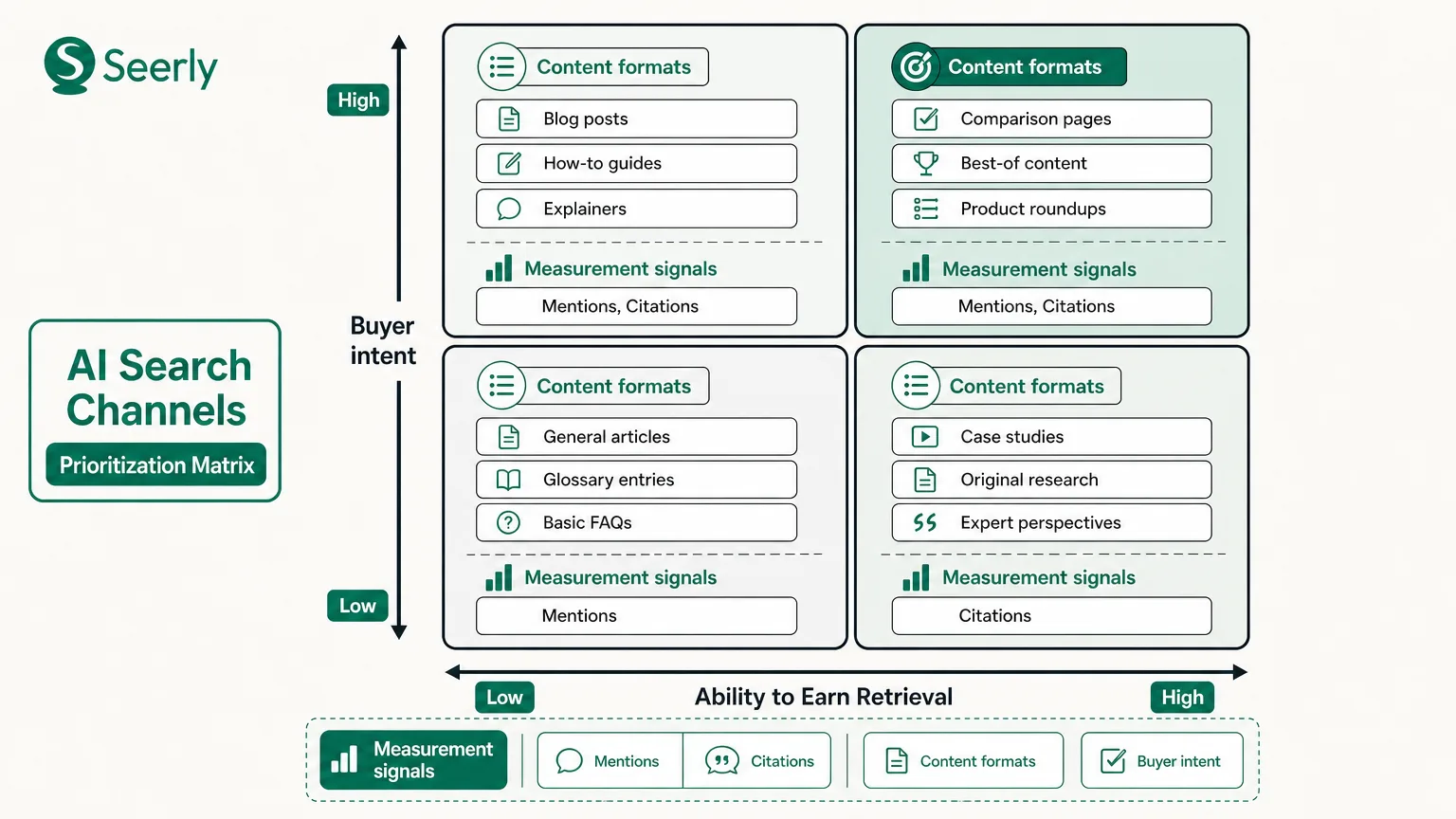
List the prompts, queries, or buyer questions that matter most to your team. Then compare those themes against your backlink profile. Do relevant external sources reinforce the same topics? If you want to appear for solution comparisons, implementation questions, or category leadership prompts, your backlink profile should support those themes with credible contextual mentions.
What to document in the audit report
Your audit should include more than counts. Document:
- Source URL and source type
- Authority and relevance assessment
- Target page
- Anchor or mention context
- Topic alignment with business priorities
- Whether the target page is citation-ready
- Whether the page includes clear summaries, FAQs, examples, and comparisons
- Remediation priority
- Recommended action: improve page, consolidate page, earn supporting mentions, or deprioritize
That structure turns a backlink report into a decision tool instead of a static SEO artifact.
Pair backlink checks with traffic and authority context
Backlinks are not enough on their own, but neither are traffic and authority scores. A useful review combines all three so you can interpret the signal correctly.
Start with authority metrics as directional indicators, not goals. Domain Rating, Domain Authority, and similar scores can help you benchmark source strength, but they are third-party abstractions. They are most useful when paired with topical fit and destination quality. A lower-scoring niche publication may be more strategically valuable than a higher-scoring general site if it places your brand in exactly the category you want answer engines to understand.
Next, review traffic context. If a linking page earns meaningful visibility and engagement, that often suggests it is a real resource rather than a dormant page built only for linking. More importantly, traffic context can reveal whether your mentions live on pages that search engines already trust enough to surface regularly.
Industry surveys also show why quality-centered review is essential. Link-building research has found that digital PR and high-quality content are among the most effective ways to earn authoritative backlinks, while broader backlink statistics continue to show that marketers who focus on relevance and editorial quality outperform volume-chasing approaches. Put differently, authority metrics and traffic can help qualify a source, but they should not overpower the core question: does this link strengthen a page and topic that AI systems can confidently retrieve?
For SaaS teams in particular, this is where backlink checks intersect with buyer discovery. Seerly’s perspective on how AI search optimization helps SaaS buyers find the right product is relevant here: visibility improves when trusted external references and clear owned content work together.
Worked example: from backlink list to content action
Imagine a B2B software company runs a backlink audit and finds something encouraging at first glance. It has earned mentions from respected comparison blogs, a niche analyst site, and two integration partners. The referring domains look strong, and the links point to the company’s product overview page.
But once the team reviews the destination page, the problem becomes obvious. The page opens with vague marketing language, does not clearly define the product category, includes no FAQ section, and lacks any short blocks that answer common buyer questions. The page is visually polished, yet it is hard to quote, hard to summarize, and hard to place in a comparison set.
In that situation, the right move is not “go build more links.” The right move is to improve the page that already has authority flowing into it. Add a precise summary at the top. Clarify product framing in plain language. Include a comparison-oriented section and FAQs. Make key use cases easy to scan. Then revisit the anchor and source context to see whether a few existing referring pages could be updated to point to the stronger version.
This approach aligns with broader reporting discipline. Instead of treating backlinks as a self-contained scorecard, treat them as inputs into page improvement. That mindset is also consistent with a more mature measurement model, similar to the reporting ideas in Seerly’s post on Google AI search reporting for founders before hiring an AI search specialist.
Reporting template: what an AI-aware backlink report should include
A useful template should help agencies and in-house teams prioritize action quickly. At minimum, include these fields:
Source quality
Assess authority, editorial standards, recency, and whether the page appears to attract real search demand. A strong source is trusted, context-rich, and topically relevant.
Linked-page readiness
Evaluate whether the destination page is easy to summarize and cite. Check for concise positioning, factual clarity, clean structure, FAQs, and answer-friendly formatting.
Topical relevance
Measure how closely the source page, anchor language, and target page align with your priority themes. Relevance should be explicit, not assumed.
Citation potential
Estimate whether the destination page contains quotable definitions, comparisons, examples, or explanations that an answer engine could plausibly reuse or paraphrase.
Remediation priority
Classify each important link-target pair as high, medium, or low priority. High priority usually means a strong source points to a weak page. That is often the fastest-win scenario in AI search discovery.
FAQ
Do backlinks still matter for AI search?
Yes. Backlinks still help establish authority, relevance, and source relationships. What has changed is how you interpret them. Instead of using backlinks only to explain rankings, use them to understand whether trusted external references support the pages most likely to be retrieved and cited.
Do teams need more links or better pages?
Usually both matter, but better pages often unlock more value from links you already have. If high-quality backlinks point to weak, vague, or outdated pages, the immediate opportunity is to improve those destinations before chasing additional link volume.
How often should you re-run the audit?
For most teams, quarterly is a good baseline. Re-run sooner after major product positioning changes, large content updates, PR campaigns, or category shifts. If answer-engine visibility is a priority, backlink review should be part of ongoing proactive monitoring rather than an annual cleanup.
Conclusion
When you check backlinks today, the real objective is not counting endorsements. It is understanding whether external references create trust signals and usable pathways into your most important pages. The strongest backlink profile is not the one with the biggest total. It is the one that consistently connects credible sources, relevant topics, and pages that are ready to be retrieved, compared, and cited.
The next step is to turn backlink findings into owned-page improvements. Start with the linked pages that attract your best authority signals, tighten their summaries, sharpen their structure, and make them more quotable. If you want a practical system for that work, explore Seerly and use Actions > Smart Audit on the pages that matter most, then track whether stronger content structure improves prompt-level visibility in Insights > Visibility.