What ChatGPT Search Engines Need From Original Content Before They Reuse or Recommend It

Teams publishing for search are facing a new problem: being indexable is no longer enough. In chatgpt search engines and other answer-driven systems, a page is not just competing to rank. It is competing to be selected, summarized, quoted, and trusted inside a synthesized answer. That changes what “good content” looks like. A page can be technically optimized, reasonably accurate, and still disappear if it offers nothing distinct for an AI system to reuse.
This shift matters because user behavior is already moving. One industry estimate found that ChatGPT had already reached roughly 12% of Google’s search volume, while another report tied ChatGPT access to a 9% drop in traditional search traffic in some contexts. At the same time, OpenAI has expanded search features and browsing behavior, making web content a more direct input to AI answers, not just a destination after the click, as described in ChatGPT Search’s live web retrieval and query fan-out behavior.
For content strategists, SEO teams, and AI-search practitioners, the practical question is straightforward: what does a source need before an answer engine is willing to reuse it? The short answer is not “more content.” It is stronger content. Original pages tend to earn more AI reuse when they combine evidence, clear authorship, quotable language, and structure that helps a machine interpret the page without flattening its meaning.
Why some pages get reused while others disappear into the average
The current debate around generic AI content often focuses on whether machines can detect machine-written text. That is the wrong frame. In practice, the bigger issue is utility. When answer engines synthesize multiple sources, generic pages are easy to replace because they repeat common claims in nearly identical language. If ten articles say the same thing with no added evidence, none of them becomes especially valuable as a source.
That helps explain why originality now matters more than sheer volume. Research on large language model browsing and tool use shows that these systems are increasingly designed to retrieve, compare, and summarize external material rather than rely only on static training data, including work on WebGPT-style browsing for question answering and later evaluations of retrieval-supported answer generation in LLM search and citation workflows. In that environment, the reusable page is the one that contributes something distinct: a better definition, a clearer comparison, a traceable source, or firsthand evidence.
There is also a trust problem. Users ask answer engines for recommendations, summaries, and judgments, not just links. That means the engine has to decide which sources feel reliable enough to compress into a single response. Pages with weak sourcing, anonymous authorship, or vague claims may still exist in the crawlable web, but they are less likely to become trusted inputs. This is one reason AI-ready websites increasingly need stronger trust signals that support recommendation-proof visibility, not just traditional ranking signals.
The five inputs answer engines seem to favor in reusable content
Named experts and visible authorship
A page is more reusable when it clearly shows who is speaking and why that perspective deserves attention. Named contributors, editor notes, SME quotes, and publication dates reduce ambiguity. They help both users and machines understand that the content reflects accountable expertise rather than recycled consensus.
This does not mean every article needs a famous name attached. It means the page should make expertise legible. If a B2B software company publishes advice on implementation timelines, the strongest version includes a product strategist, solutions engineer, or customer success lead explaining what they have observed directly. Answer engines do not need celebrity; they need attributable judgment.
Proprietary data or first-party evidence
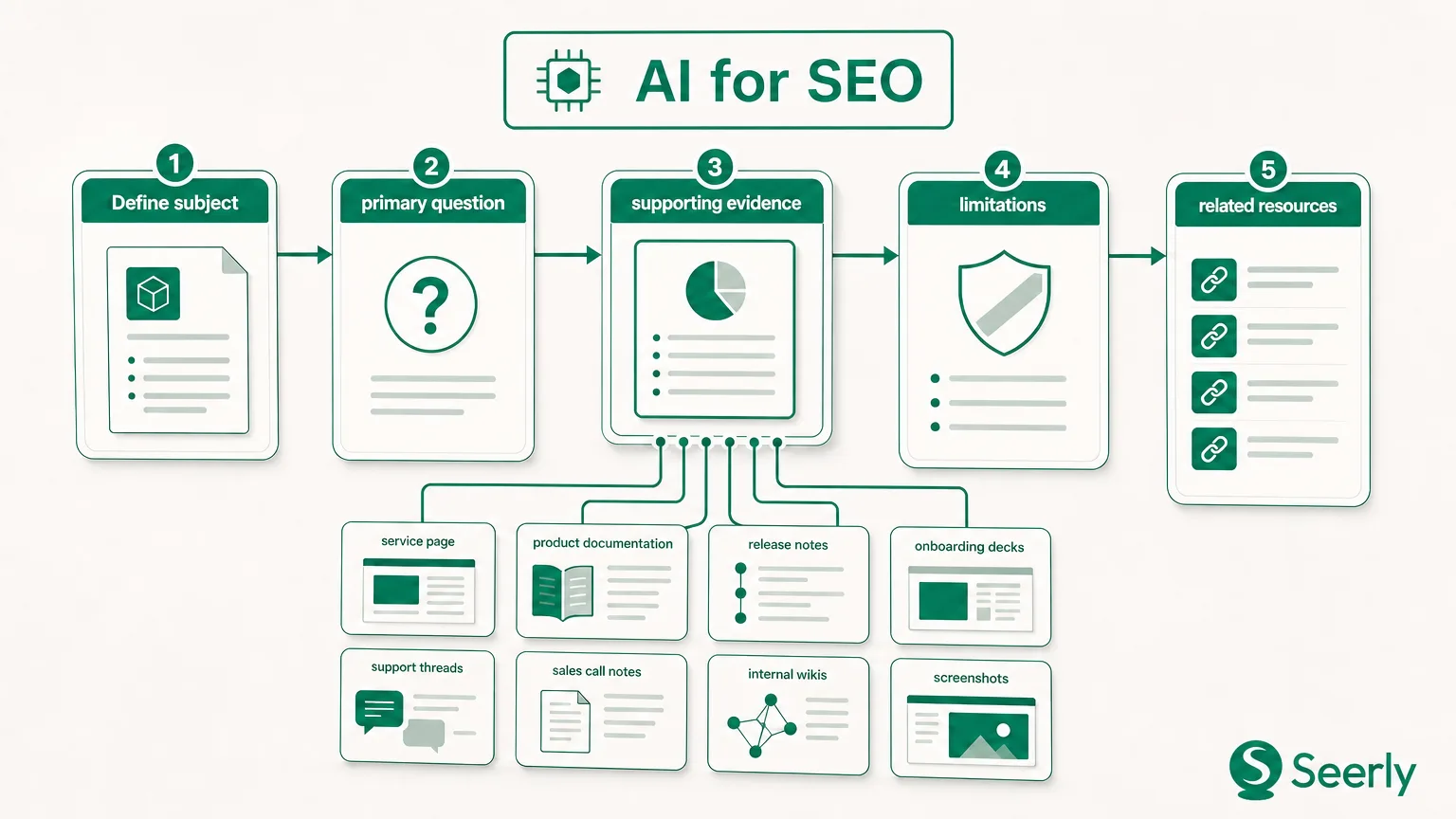
Originality is strongest when it gives the engine something it cannot find everywhere else. That could be a benchmark from internal product usage, anonymized support trends, survey results, implementation data, screenshots, test outcomes, or even a well-documented example from a real customer workflow.
The point is not that every post needs a major research study. It is that the page should contain at least one piece of evidence that raises it above commodity commentary. The concept aligns with broader discussion around generative engine optimization as a discipline focused on source usefulness inside AI answers. If your article says what everyone says, an answer engine can summarize the topic without you.
Transparent sourcing
Reusable pages make it easy to verify claims. That means linking specific assertions to credible sources, distinguishing fact from interpretation, and avoiding inflated statements that cannot be traced. OpenAI’s own documentation on browsing notes safeguards around source-supported web access and citation-aware behavior, which reinforces a simple publishing lesson: unverifiable pages are harder to trust at answer time.
Transparent sourcing also improves summarization quality. If an engine can connect a statistic, definition, or claim to a concrete source, it is more likely to carry that point forward accurately. This is especially important for high-stakes commercial topics where decisions depend on nuance rather than slogans.
Concise answer blocks
Long-form depth still matters, but answer engines also benefit from compression. A strong page often contains sections that answer a specific question in two to four sentences before expanding into detail. Those blocks act like reusable units. They make the page easier to quote, summarize, and retrieve for exact intents.
This is not about writing robotic FAQ filler. It is about editorial discipline. If your article cannot state its main point clearly in a short passage, a machine will struggle to preserve the nuance when it synthesizes the content. This is closely related to building citation-ready pages for answer engines rather than pages that bury the answer beneath vague intros and repetitive transitions.
Side-by-side comparisons
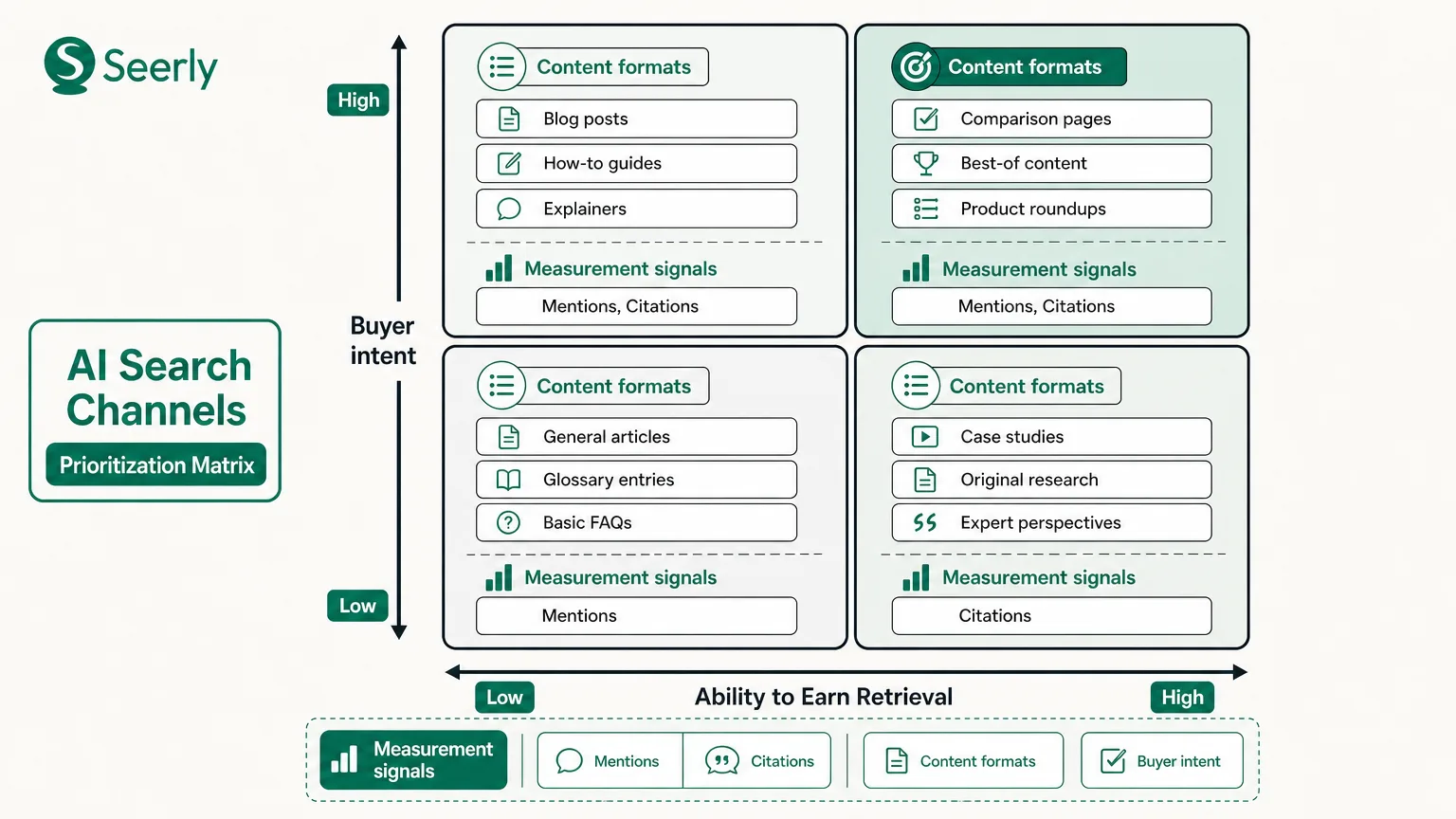
Comparison structure helps answer engines because it reduces interpretive work. Tables, criteria-based contrasts, “best for” framing, and tradeoff summaries are easier to convert into recommendation-ready answers than broad narrative prose alone. This is especially useful for product evaluation, strategic decision-making, and process design.
The reason is simple: many prompts are comparative by nature. Users ask which option is better, faster, cheaper, safer, or more appropriate. Pages that already organize information by decision criteria are more aligned with that query format. In a search environment shaped by synthesis, comparison content often has an advantage over pages that only describe one concept in isolation.
How to write pages that are easy to quote without sounding robotic
The best pages for chatgpt search engines do not read like they were written for a parser. They read like sharp editorial work with clean information architecture. The trick is to make meaning explicit without draining personality from the prose.
Start with definitions that are stable and specific. A weak definition says, “AI search is changing marketing in many ways.” A stronger definition says, “AI search is a discovery layer where answer engines retrieve, synthesize, and sometimes cite web sources directly inside generated responses.” The second version is easier to lift into an answer because it establishes scope, mechanism, and context in one passage.
Then use examples that anchor abstractions. If you advise marketers to add firsthand evidence, show what that means: a chart from onboarding data, a short expert comment explaining why churn rises after week three, or a screenshot proving how a workflow changed. Examples increase credibility while giving the answer engine a more concrete source artifact to work with.
Finally, create takeaway blocks at natural points in the article. Not a generic summary at the top, but short passages after major sections that restate the implication for the reader. This supports comprehension for humans and extraction for machines. Teams working on AI search optimization for software buying journeys often find that the most reusable passages are not the longest ones. They are the clearest ones.
Turning a generic article into a recommendation-ready page
Imagine an article titled “Best Project Management Software for Growing Teams.” The generic version uses broad headings, vendor blurbs, and copied feature language. It says every tool is “powerful,” “scalable,” and “user-friendly.” There is no visible evaluator, no criteria, and no explanation of which tool fits which team. A chatgpt search engine has little reason to rely on it because it adds no defensible perspective.
Now compare that with a revised version. The updated piece opens with a methodology section explaining that the tools were assessed by an operations lead and a RevOps manager across five criteria: onboarding time, permission controls, reporting depth, API flexibility, and total cost at 50 users. Each product section includes a two-sentence summary, a “best for” label, one key limitation, pricing context, and a sourced claim or firsthand test note.
The headings also change. Instead of “Top Features,” the article uses headings such as “Best for cross-functional teams needing fast onboarding” and “Best when advanced reporting matters more than simplicity.” That shift matters because it maps content to real decision intents. The page is no longer describing software in the abstract. It is helping a user choose.
The summary section becomes more quotable too. Rather than saying “Asana is a great option for many businesses,” it says, “Asana is the better fit when teams need quick adoption and structured task planning, but it becomes less cost-efficient as reporting and admin complexity increase.” That sentence contains a recommendation, a condition, and a tradeoff. It is the kind of passage an answer engine can reuse without fabricating missing nuance.
A reusable publishing checklist for AI-era source readiness
Before publishing, teams should review a page as if an answer engine will need to interpret it quickly and defend its reuse. First, confirm that authorship is explicit. The page should name the writer, note any editor or expert reviewer, and display a current publication or update date. That alone improves clarity around accountability.
Next, check whether the page contributes original value. There should be at least one element that is not interchangeable with competing articles: a test result, a customer pattern, a proprietary chart, a process framework, or a sharper expert interpretation. If the page could be swapped with ten similar posts and lose nothing, it is probably too generic to earn reuse.
Then review every major claim for sourcing and precision. Numbers, benchmarks, and contentious assertions should be traceable. Interpretation should be labeled as interpretation. Strong pages do not hide uncertainty; they frame it. This is increasingly important as brands build measurement frameworks for AI discovery and visibility, where source quality affects not just traffic but reputation.
Finally, assess formatting and answer completeness. Can a busy reader identify the core answer in seconds? Are there concise definitions, comparison points, and clear recommendation logic? Does the article resolve the main intent, or does it tease the answer without delivering it? Source readiness is not only about what the page says. It is about how efficiently the page can be understood and reused.
FAQ on whether originality requires new research every time
Do chatgpt search engines only favor brand-new research?
No. New research helps, but it is not the only form of originality. A page can be original because it interprets existing information better, compares options more clearly, or brings in firsthand operational insight. Many strong sources win reuse by combining public facts with expert framing that is immediately useful.
Is generic but accurate content enough?
Usually not if the topic is competitive. Accuracy is the minimum threshold, not the advantage. In answer environments where many pages say the same thing, the reusable source is the one that adds evidence, attribution, or decision logic that others lack.
Does every page need lots of citations?
Not lots, but the important claims should be supported. Overlinking weakens readability, while under-sourcing weakens trust. The goal is selective, transparent support for facts that matter to the reader’s decision.
Is this different from traditional SEO?
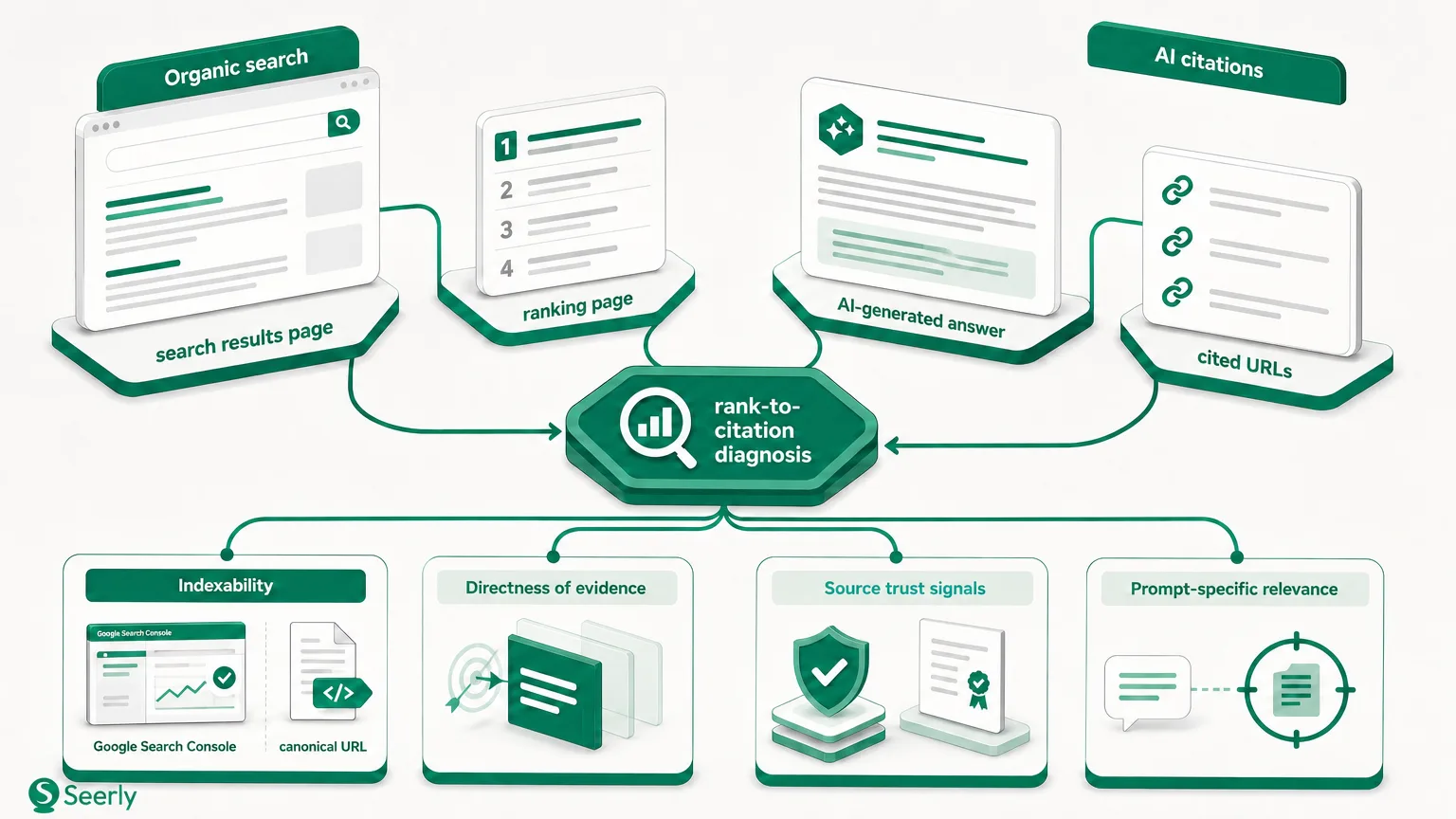
Yes, though it overlaps. Traditional SEO often rewards discoverability and relevance at the ranking stage. AI search adds a second test: whether the page is structured and trustworthy enough to be summarized or recommended inside the answer itself. That is why teams increasingly track both rankings and brand presence across AI chats versus classic search results.
Conclusion
The core lesson is simple: answer engines do not just need content to exist. They need content that is easy to trust and worth reusing. For chatgpt search engines, the pages most likely to be cited or recommended are usually the ones with visible expertise, firsthand evidence, transparent sourcing, quotable summaries, and structure built for decisions rather than filler.
A practical next step is to audit one high-intent page you already own. Tighten the authorship, add one concrete piece of evidence, rewrite key sections into clearer answer blocks, and make the recommendation logic more explicit. If you want a broader framework for building AI-ready websites and improving AI search discovery over time, explore Seerly.