Google AI Search Reporting for Founders: What to Watch Before You Hire an AI Search Specialist

Founders and lean marketing leads are getting a confusing signal from the market. On one side, AI-search job titles are multiplying, and “prompt engineer” language still creates the impression that a new specialist role is the obvious next hire. On the other, most small teams do not yet have a stable operating model for Google AI search, let alone a reliable way to judge whether a specialist would create measurable value.
That gap matters because Google is not replacing search with a single AI interface. It is layering AI-generated answers, agentic behaviors, and classic retrieval systems together, while still relying on ranking, retrieval, and trust evaluation underneath. Google’s own leadership has emphasized that classic ranking and retrieval still remain foundational in AI search, and the company continues to present AI search as an expansion of Search rather than a separate channel through features announced across its product stack at Google’s search event updates.
For startup teams, the implication is simple: before you hire an AI search specialist, define what you are actually monitoring in Google AI search. A reporting framework is more useful than a trendy job title because it tells you what visibility looks like, how often to review it, and when weak signals become a real operating problem. If you can’t answer those questions yet, the first hire is probably not the issue.
Why teams are asking for AI-search talent now
The demand is understandable. Search behavior is shifting, and so is the way brands get discovered. Research into generative search and recommendation systems keeps reinforcing the same underlying point: visibility is no longer just about one ranked blue link, but about whether systems retrieve, summarize, cite, and recommend a brand in contextually relevant answers. That is why interest in AI-search skills has grown faster than consensus around ownership.
But the hiring conversation often jumps ahead of the operating need. Founders hear that AI search is changing discovery, see examples of answer boxes and overviews, and conclude they need a specialist. Yet even critics of the current rollout note that AI-generated search outputs are still inconsistent: reporting on third-party analysis found Google AI Overviews produced inaccurate answers in roughly 10% of tested cases, echoing broader concerns about inaccurate outputs in production search experiences. If outputs vary, then the first operational need is not “someone who writes clever prompts.” It is someone who can observe patterns, document movement, and separate noise from trend.
This is especially true inside small companies, where search ownership is usually fragmented. The founder cares about category leadership, the marketer cares about pipeline, product cares about positioning, and no one owns prompt testing consistently. In that environment, a lightweight reporting layer creates alignment faster than a new title does. It gives a team shared evidence about branded presence, competitor mentions, trust signals, and citation patterns before budget gets committed to a specialized role.
What founders should monitor about Google AI Search before they hire
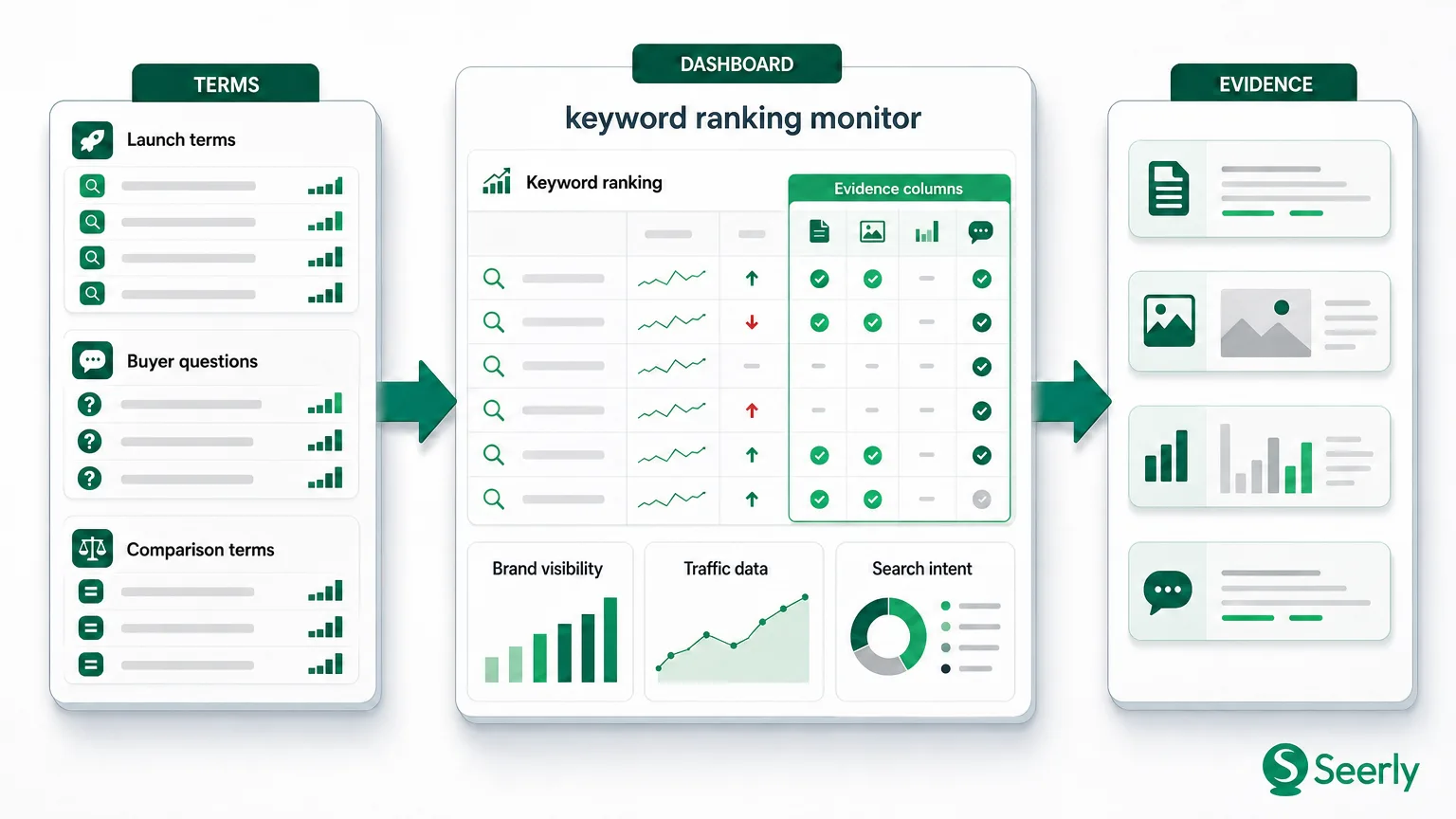
The minimum viable reporting layer for Google AI search is not complicated, but it does need structure. Think of it as a five-part observation framework that helps you understand whether your brand is discoverable, recommendable, and cited in the prompts that matter.
1. Branded presence
Start with direct branded queries. Ask whether Google AI search mentions your company accurately, whether it describes your product in the language you want associated with the brand, and whether it cites your own pages, third-party review sites, or competitors instead. This is the baseline for AI search discovery because branded prompts are where weak trust signals show up fastest.
A useful weekly record includes: whether the brand appears, whether the description is accurate, whether the answer tone is positive or uncertain, and which sources are cited. If your own pages are absent from branded summaries, that is not yet a hiring trigger, but it is a reporting trigger.
2. Category prompts
Next, monitor non-branded commercial and informational prompts in your category. These are the “best tools for…,” “top platforms for…,” and “how to solve…” queries that reveal whether Google AI search connects your brand to the problem you solve. This is where many teams overestimate performance because they only check a few vanity phrases.
A practical starting set is 10 prompts across bottom-, mid-, and upper-funnel intent. If your brand never appears in category answers, or only appears when the prompt is highly specific, that tells you more than a generic impressions chart would. It also helps you identify whether your AI-ready content is strong enough to support broader recommendation patterns.
3. Competitor comparisons
AI search compresses comparison shopping. Users can now ask a model to compare vendors, recommend alternatives, or summarize tradeoffs in one step. That means you need to know not only whether your brand appears, but how often competitors are framed as the default choice.
Track prompts such as “compare X vs Y,” “alternatives to competitor,” and “best option for [use case].” Note which brands are named first, which pages are cited, and whether your strengths appear in the answer. If a rival repeatedly owns the same use case framing, the issue may be positioning, supporting evidence, or trust signals rather than raw page rankings. Seerly’s guidance on monitoring brand presence across Google AI chats versus search rankings is useful here because comparison visibility often diverges from traditional rank tracking.
4. Sentiment and recommendation quality
Presence alone is not enough. A brand can appear frequently and still be described weakly. Monitor whether Google AI search frames your product as trusted, affordable, advanced, niche, risky, or “good for small teams.” Those sentiment cues shape click behavior and shortlist formation.
This matters because generative systems do not just retrieve facts; they synthesize reputation. In practice, that means your reporting should include a short qualitative label for each answer: positive, neutral, mixed, or negative. Over time, that gives you a directional view of whether your reputation signals are strengthening. For more on the inputs behind these patterns, Seerly has written about the trust signals marketers should measure now.
5. Regional differences
Finally, test by geography where relevant. Google AI search behavior can vary across markets, and region-specific prompts often surface different competitors, sources, or localized expectations. Even if you sell globally, your first monitoring layer should reflect your top one to three revenue regions.
This does not require enterprise infrastructure. It requires a list of prompts, a repeatable test method, and notes on where answers differ. If the UK market consistently cites review platforms while the US market cites vendor pages, your content and reputation priorities may need to change accordingly.
The weekly review workflow
A single owner should be able to run a useful Google AI search review in under an hour each week. The goal is not perfect measurement. The goal is consistent observation.
1. Review the same prompt set every week
Use a fixed list of 10 to 15 prompts split across branded, category, comparison, and use-case searches. Keep the set stable for at least a month so you can see patterns instead of random variation. If you change prompts every week, you are not building a reporting system; you are collecting anecdotes.
2. Capture the answer and cited sources
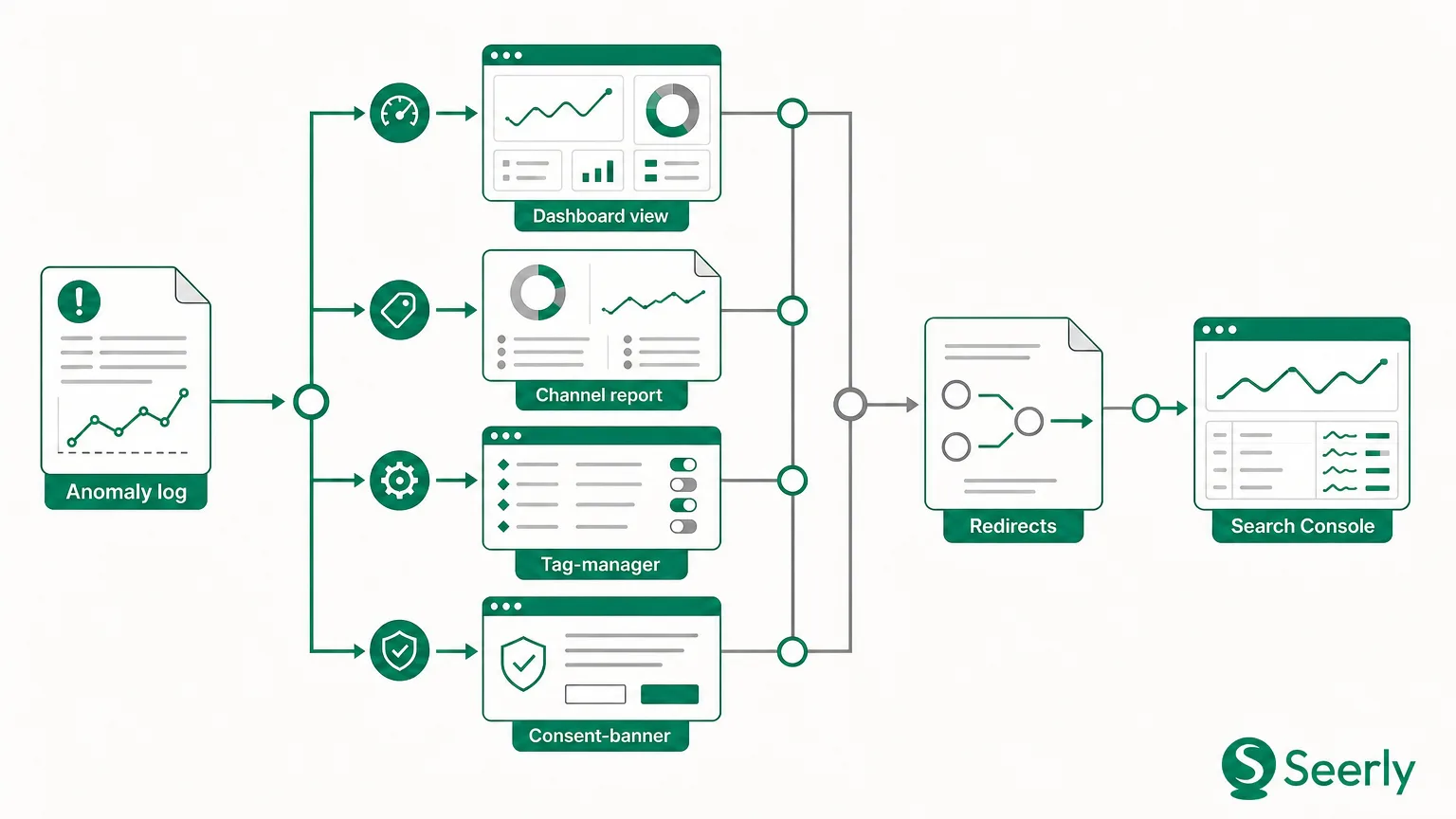
For each prompt, record whether your brand appears, how it is described, and which sources are cited. Screenshots help, but a structured sheet is better. Include fields for answer summary, brand mention status, source URLs, and whether your own domain was cited. This makes citation analysis operational instead of subjective.
3. Note competitor movement
Compare this week’s outputs with last week’s. Did a competitor appear more often? Did another brand move from an alternative mention to a primary recommendation? Did review sites or listicles replace vendor pages as the cited evidence? Small shifts here often matter more than single-query wins.
4. Log action items, not just observations
Every review should end with two to five actions. Examples include updating a priority page, strengthening an industry comparison page, refreshing product proof points, or improving third-party profile consistency. Without action logging, reporting becomes passive.
5. Share one-page findings internally
The output should be short enough for a founder or head of growth to scan in five minutes. Report on prompt coverage, notable wins or losses, citation changes, and recommended next steps. If you want a stronger measurement bridge between visibility work and business reporting, Seerly’s article on AI search performance reporting and how to prove value in AI discovery offers a useful extension.
When a generalist is enough versus when a specialist is needed
Below is a practical stage-based matrix for ownership.
Team stageTypical ownerWhat they should doWhen it’s enoughWhen it breaksPre-PMF or very early startupFounderMonitor 10 branded and category prompts weeklyLow query volume, narrow category, few competitorsMessaging changes faster than reviews can keep upEarly growth teamMarketing manager or head of growthOwn weekly checks, citation capture, and action logCore pages exist, one person can manage in under an hourMultiple regions, product lines, or aggressive competitorsScaling companySEO/content leadIntegrate AI search reporting into content, PR, and reputation workStable reporting and clear internal KPIsToo many prompts, teams, markets, or stakeholdersExpansion stageSpecialist or agencyRun systematic monitoring, testing, and reporting across marketsNeeded when visibility work becomes cross-functional and high stakesUsually justified by complexity, not hype
The key decision factor is not whether AI search sounds important. It is whether your current team can maintain proactive monitoring, interpret the findings, and turn them into execution. If one generalist can still do that reliably, you probably do not need a specialist yet.
What to include in the first internal brief
Before you write a job description or contact an agency, create a one-page internal brief. This reduces vague expectations and makes success measurable.
Internal brief checklist
-
Primary business goals tied to Google AI search
-
First 10 to 15 prompts to monitor
-
Priority regions or markets
-
Core competitor set
-
Priority pages and assets that should earn citations
-
Existing third-party profiles, reviews, or trust sources
-
Weekly owner and review cadence
-
Monthly reporting format
-
Success criteria for the next 90 days
-
Trigger point for specialized ownership
This brief matters because AI search work spans content, technical discoverability, reputation, and positioning. A vague request to “improve AI visibility” usually fails because nobody has defined which prompts matter, what trust signals need work, or what outcomes would justify the effort.
Mistakes to avoid
Myth: ranking tools alone will tell you what is happening
Reality: classic rankings still matter, but they do not fully explain AI-generated visibility. Even as Google keeps traditional retrieval systems in the loop, AI answers can synthesize from multiple sources and reshape what the user sees first. A team that only watches rank positions may miss whether it is being cited, summarized, or excluded in recommendation-style outputs.
Myth: a generic SEO job description covers AI search ownership
Reality: AI search reporting requires a broader visibility mindset. The owner needs to understand prompt sets, citation sources, brand reputation, content evidence, and competitor framing. A standard SEO brief may cover content and rankings but omit the monitoring needed for generative answer environments. Academic work on generative engine optimization and retrieval-driven visibility points to this expanding scope.
Myth: one-off AI experiments are enough
Reality: ad hoc checks produce false confidence. Research across AI-assisted search systems continues to show variability in outputs, retrieval quality, and synthesis behavior, including studies exploring how large language model search behavior shifts across tasks and benchmarks and evaluation challenges in AI-mediated search environments. That means trend detection requires repeated observation, not isolated tests.
A simple decision rule
If one person on your team can monitor 10 to 15 important Google AI search prompts weekly, capture citations, note competitor movement, and turn findings into actions in under an hour, keep ownership internal for now. If that process becomes inconsistent, expands across regions, or starts affecting pipeline, category perception, or executive decision-making, then specialist support is justified.
That is the practical rule most founders need.
The next step is simple: define your first 10 monitored Google AI search prompts and assign one weekly owner before you write a job description. When manual tracking starts to drift or the reporting layer needs to scale, Seerly can help centralize that visibility work into a more reliable system.