Publishing Isn’t Distribution: How to Monitor Whether Pages Actually Gain Search Visibility
AI-assisted publishing has changed the constraint for content teams. Producing a new landing page, comparison page, or article can now take hours rather than weeks. But faster production does not make a page discoverable, useful to a searcher, or credible enough to earn visibility in Google results and AI-generated answers.
Monitoring search visibility is crucial for ensuring that published content reaches its intended audience effectively.
That distinction matters because a page can be technically live, crawlable, and even indexed without generating meaningful impressions, rankings, or qualified visits. Google’s systems use multiple ranking mechanisms designed to surface helpful, reliable results - not simply the newest or most comprehensively optimized page. Its own guidance emphasizes that ranking is based on many signals and systems, rather than a single score a team can improve in isolation.
A keyword ranking monitor is therefore more than a chart of daily positions. For teams publishing AI-built content at volume, it should be an operating system for answering a harder question: is this page entering the right discovery pathways, for the right queries, with enough evidence that it deserves to keep earning attention?
This guide explains what to measure in the first 30 days after launch, how to diagnose a page that is indexed but invisible, and how to build a monitoring rhythm that turns publishing velocity into measurable search and AI search discovery.
Publishing is an event; visibility is a process
Publishing confirms that a URL exists. Distribution begins only when search engines can crawl, process, understand, index, test, and potentially rank that URL for relevant queries. Each stage can fail independently. A page may be blocked from crawling, canonicalized to another URL, omitted from the index, poorly connected internally, or simply outperformed by more useful and trusted alternatives.
Google describes search as a multi-stage process of crawling, indexing, and serving results. That means an “indexed” status is an important validation point, but it is not a performance outcome. Indexing indicates Google has processed a version of the page; it does not guarantee the page will receive impressions for the queries your team intended to target.
AI can compress drafting and production, but it does not automatically establish the signals that make a page worth retrieving. Those signals include a clear purpose, original experience or analysis, source support, coherent internal linking, and alignment with real search demand. A generic page that resembles dozens of existing results may be eligible for indexing yet have little reason to displace them.
This is also why traffic alone is an incomplete measure of distribution. In a 2024 analysis of U.S. Google search behavior, only 374 of every 1,000 searches resulted in a click to the open web. Search visibility can create brand exposure without an equivalent volume of site visits, particularly when search features and AI answers resolve simple queries directly in the results page.
For SEO leads and content managers, the objective is not to react to every rank fluctuation. It is to create a reliable validation loop: confirm technical eligibility, observe early query coverage, understand whether visibility is moving toward the page’s intended purpose, and make targeted improvements only when the evidence supports them.
What a keyword ranking monitor should show to monitor search visibility in the first 30 days
A useful keyword ranking monitor should connect keyword position monitoring to the page, the query, and the business purpose behind the page. Monitoring a single “primary keyword” is too narrow for newly published content, especially when Google may initially test a page across a wider set of related queries.
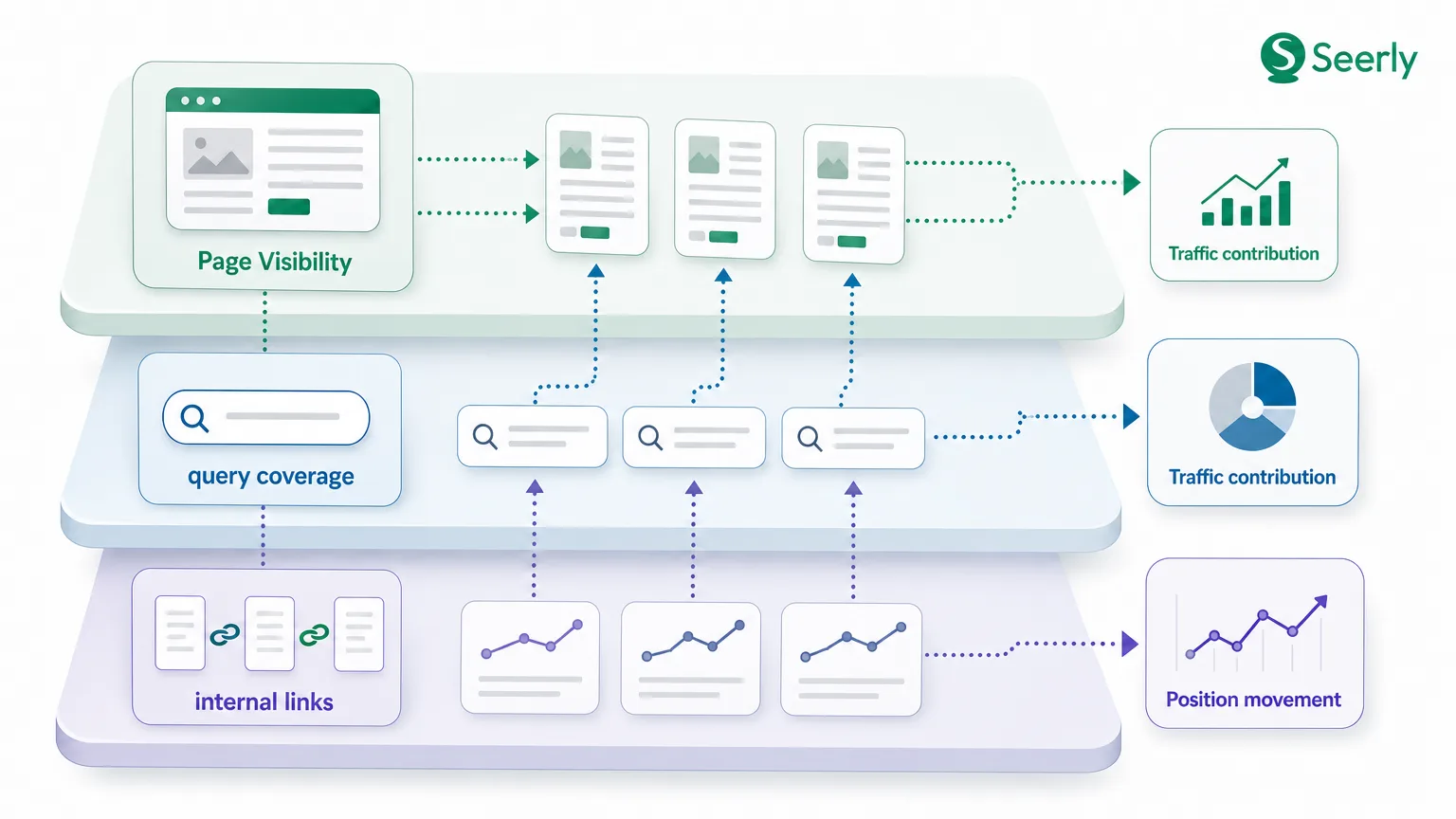
Use the first month to assess five connected signals.
1. Query coverage: which searches is the page actually eligible for?
Start with query coverage, not position. In Google Search Console, filter the Performance report to the page URL and review the queries producing impressions. Google defines impressions and clicks in Search Console according to how results are displayed and interacted with, so these measurements provide a direct view of whether the page is appearing in search at all.
For a new page, sort queries into three groups:
-
Primary-intent queries: Searches that closely match the page’s main job.
-
Supporting queries: Related questions, use cases, comparisons, or modifiers that the page can legitimately answer.
-
Off-target queries: Terms that may be semantically adjacent but indicate the page is attracting the wrong audience or being interpreted incorrectly.
A page does not need to rank first immediately to demonstrate promise. It does need to begin appearing for a coherent query set. If impressions appear only for vague, irrelevant, or brand-adjacent terms, the page may have an intent, heading, or information-architecture problem.
2. Position movement: are relevant rankings progressing?
Once a page has impressions, monitor average position directionally. A keyword ranking monitor should compare the current period with the preceding period, while keeping the page and query filters consistent. A movement from position 78 to 42 is not a commercial win, but it is meaningful evidence that the page is gaining eligibility and relevance.
Avoid treating a single daily movement as a verdict. Search results vary by location, device, user context, and result layout. Instead, assess whether a cluster of high-intent terms is gaining impressions and moving into ranges where clicks become possible. Google also recommends evaluating search changes in context when troubleshooting performance shifts, rather than assuming every movement has one isolated cause.
The useful question is: Are we gaining ground for terms that would make this page successful? If the answer is yes, preserve the core page and strengthen distribution. If rankings are stable but query relevance is poor, revise the page’s framing rather than simply adding more copy.
3. Page-level visibility: is the intended URL earning the opportunity?
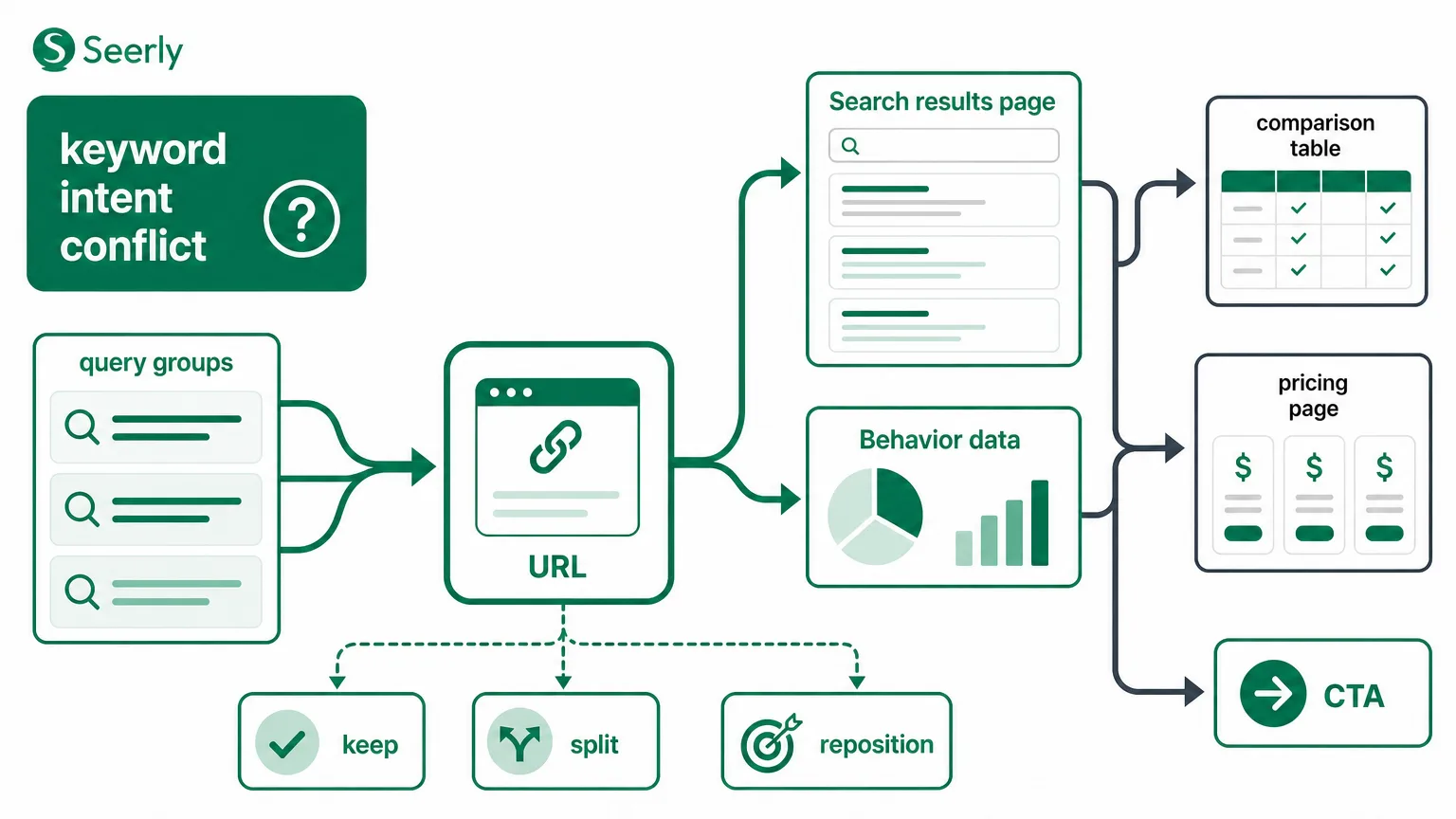
New sites and larger content libraries often face keyword cannibalization. A different URL may rank for the target query while the new page remains invisible. This can happen when two pages have overlapping page purposes, headings, templates, or internal anchor text.
Track the intended page alongside the domain-level query view. If another page receives the impressions, decide whether that page is the better asset. If it is, consolidate the new material into it or differentiate the new page substantially. If the new page is strategically stronger, reinforce its purpose through unique content, clear internal anchors, and better supporting context.
This is the practical value of a cross-provider ranking monitoring workflow: it helps teams evaluate visibility as a pattern across surfaces and queries, rather than treating one rank-tracking number as a final answer.
4. Supporting internal links: can crawlers and users find the page?
Internal links are a distribution mechanism, not an afterthought. A page buried in a sitemap or orphaned from relevant hubs has fewer contextual signals explaining what it is about and when it should be surfaced. Google’s guidance on how links help Google discover pages and understand site structure makes this operationally important: discovery is affected by the paths available to crawlers.
Monitor both the quantity and quality of supporting links. A link from a high-value category page, related product page, established guide, or glossary entry is usually more meaningful than a link placed in an unrelated footer. Anchor text should describe the destination’s purpose naturally, without repeating an exact-match keyword everywhere.
When early query coverage is weak, internal support is one of the first levers to inspect. Seerly’s guide to ranking losses caused by weak internal links offers a useful principle: do not diagnose a visibility issue as a content issue before checking whether the page has been given a clear role within the site.
5. Traffic contribution: are impressions becoming useful visits?
Clicks and organic sessions matter, but they are late-stage signals. A new page can show healthy impressions before it accumulates clicks, especially for competitive terms or results with low click-through opportunity. Monitor impressions, clicks, click-through rate, engaged sessions, conversions, and assisted conversions together.
A page that gets impressions but no clicks may need a clearer title, more specific description, or tighter alignment with the query. A page that receives clicks but produces no meaningful engagement may be promising the right topic but delivering a weak answer. A page with low traffic but strong engagement and conversion quality may be worth expanding, even before it ranks broadly.
A launch-day checklist for AI-built pages
Monitoring starts before a page is published. If launch inputs are ambiguous, the data collected after launch will be harder to interpret. Use this checklist to ensure every AI-assisted page enters measurement with a clear hypothesis.
Confirm indexing readiness
Check that the page returns a successful HTTP status, is not blocked by robots directives, has the intended canonical URL, and is included in the XML sitemap when appropriate. Use URL Inspection in Search Console to verify whether Google can access the page and to request indexing when needed. Google’s documentation on using URL Inspection to understand a page’s indexed status is especially useful when a new URL does not appear as expected.
Do not confuse an indexing request with an indexing guarantee. The request simply prompts evaluation. Your monitoring plan should record the publication date, first crawl indication, first indexed indication, and first date of search impressions.
Define one primary page purpose
Every page should have a concise statement of purpose before it goes live: “Help an SEO lead compare keyword ranking monitoring options,” for example, or “Explain how to diagnose declining visibility for a SaaS category page.” This statement becomes the standard against which query coverage is evaluated.
AI tools can generate broad content efficiently, but breadth can obscure intent. If a page tries to define a concept, compare vendors, answer every related question, and sell a product at once, it may not satisfy any one search need particularly well. Assign the page a primary intent, then identify two or three supporting intents it can credibly serve.
Make the answer visible early
Lead with a direct answer, framework, or decision guide rather than a long preamble. Use descriptive headings that reflect real questions and make the page’s organization obvious to readers and retrieval systems. The goal is not to write for a parser; it is to make the page demonstrably useful to the person who arrived with a specific problem.
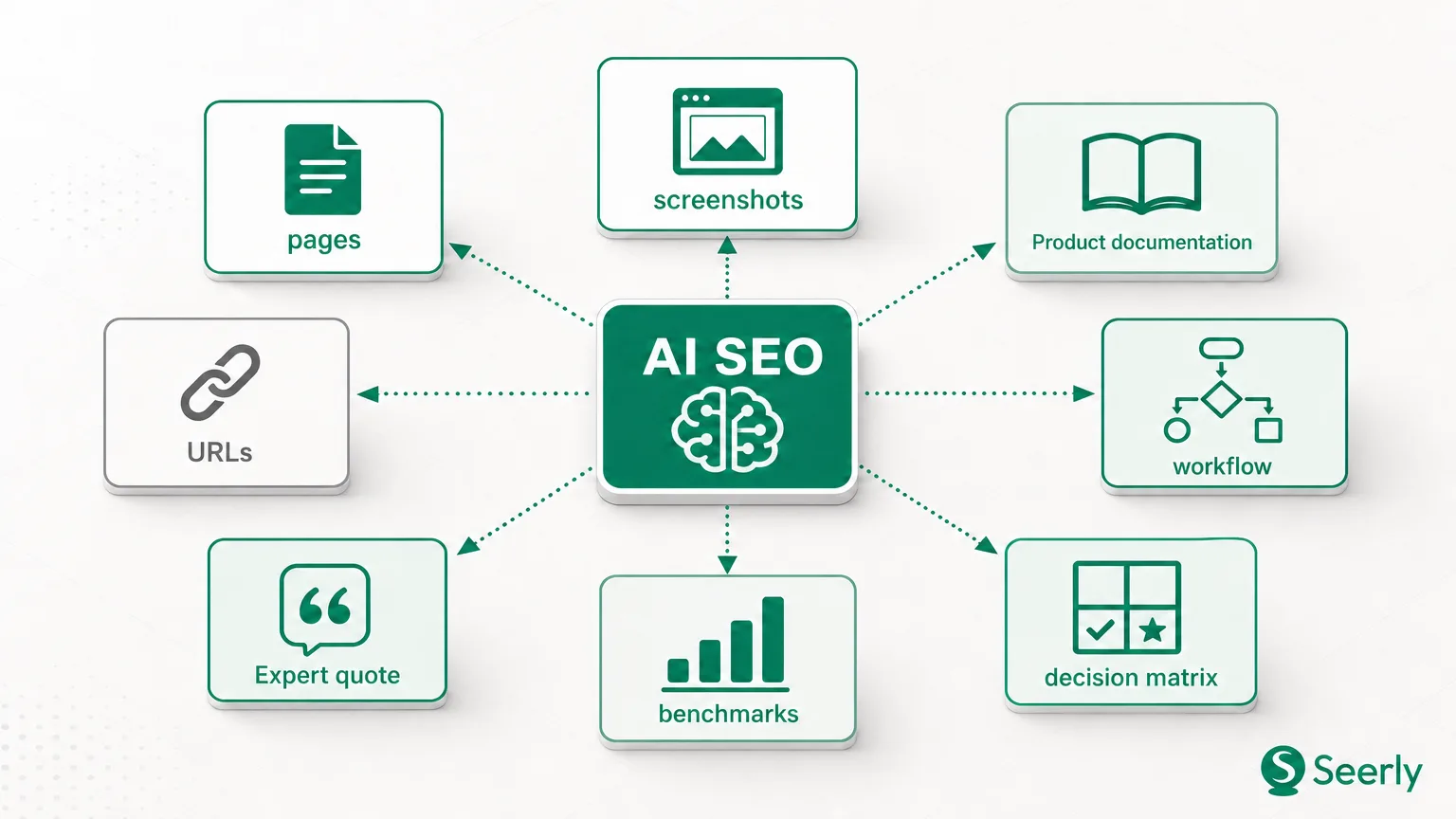
For AI-built pages, edit generic transitions, unsupported assertions, and repeated definitions aggressively. Add the practical details the model could not know on its own: your methodology, an original example, decision criteria, operating constraints, or a point of view grounded in experience.
Add evidence and trust signals
Where the page makes a factual claim, link to primary or authoritative documentation. Name the scope of any example or benchmark, and distinguish observed facts from recommendations. Google’s ranking guidance emphasizes helpful, reliable information, making source quality and clarity important parts of a page’s overall credibility.
Trust signals also improve AI search discovery. Pages that provide attributable evidence, clear entity references, and concrete explanations are easier to evaluate and cite than pages built from broad, interchangeable statements.
Build internal pathways and measurement tags
Add links from relevant pages that already receive attention, and ensure the new URL links back to useful parent and related resources. Then annotate the launch in analytics, configure the relevant conversion event, and add the target page and keyword cluster to your ranking monitor.
Do not wait for a monthly report to decide whether the page exists in your measurement system. The launch record should include the target query cluster, primary intent, expected conversion action, internal links added, baseline domain performance, and an owner responsible for the 30-day review.
Worked example: indexed, live, and still undiscovered
Consider a B2B software company that publishes an AI-assisted article titled “The Complete Guide to Revenue Operations Automation.” The page is technically sound. It is indexed within a week, contains 2,500 words, and includes numerous generic sections on workflows, technology, and reporting. Yet after 30 days, it has only 18 impressions and no clicks.
The team initially concludes that Google has not had enough time. The keyword ranking monitor reveals a more actionable diagnosis. The limited impressions come mostly from broad terms such as “revenue operations,” while the page has no impressions for the commercial and problem-focused queries it was meant to support, such as “revenue operations automation software” or “automate lead routing.”
Three issues explain the gap. First, the primary query has stronger commercial intent than the educational guide addresses. Second, the site’s existing product pages and blog articles do not link to the new guide, so it has little internal contextual support. Third, the article offers no original workflow, customer evidence, implementation criteria, or comparison insight that distinguishes it from established results.
The appropriate response is not to add another thousand words. The team should either reposition the page as a genuinely useful educational guide - with a specific workflow, templates, and source-backed implementation advice - or consolidate it into a stronger existing asset. If it remains a standalone page, the team should add internal links from relevant product and implementation content, tighten headings around validated demand, and include evidence that makes the page more useful than a generic overview.
This is why ranking in Google does not always mean SEO is working. Visibility has to be interpreted against the audience, intent, and business outcome the page was created to serve.
Build a weekly monitoring rhythm
A consistent cadence prevents two common mistakes: changing a page before it has been evaluated, and leaving a weak page untouched for months. The rhythm below gives teams a practical review model without creating a reactive editing cycle.
Week 1: validate eligibility and distribution inputs
Check indexing status, canonicalization, rendering, sitemap inclusion, and internal links. Confirm that analytics and Search Console can attribute activity to the correct URL. At this stage, the decision is usually simple: fix technical barriers immediately, but do not rewrite the page solely because it has not ranked yet.
Review whether the page has been added to relevant hubs, category pages, or contextual articles. If it has no meaningful internal links, strengthen those pathways now. This is a launch-quality correction, not a ranking reaction.
Week 2: evaluate impressions and query relevance
By week two, inspect early query coverage. If the page is receiving impressions for relevant terms, leave the core content intact and continue monitoring. If it is receiving impressions for related but mismatched searches, tighten the title, opening answer, headings, and internal anchors so the page communicates its intended job more clearly.
If there are still no impressions, revisit technical status and page purpose before assuming a quality failure. New pages, particularly on less established domains or competitive topics, can take longer to gain traction. The important distinction is whether the page has a plausible discovery pathway and a differentiated answer once it is evaluated.
Week 4: make an evidence-based decision
At 30 days, review the full picture: indexed status, impressions, relevant query share, average position trend, clicks, internal links, and engagement. Then choose one action:
-
Leave it alone when relevant impressions and positions are progressing, even if traffic is still modest.
-
Strengthen links when the page is relevant but poorly connected to authoritative pages on your site.
-
Tighten headings and opening copy when impressions come from the wrong queries or the page’s intent is unclear.
-
Add proof and specificity when the page targets the right terms but offers little that established results do not.
-
Consolidate or redirect when overlapping pages compete or demand does not justify maintaining a separate asset.
This workflow turns rank tracking into proactive monitoring. It also creates a more useful leadership view than isolated rankings, traffic, or backlinks - a principle explored in Seerly’s guide to an AI visibility dashboard built for leadership decisions.
FAQ
How soon should we expect keyword movement after publishing?
There is no universal timetable. Crawling, indexing, competition, site authority, internal linking, and query demand all affect when a page begins to appear. In the first 30 days, prioritize evidence of technical eligibility and relevant impressions over a demand for immediate top positions. A page entering the correct query set and improving gradually is often healthier than a page briefly appearing for unrelated terms.
What if the page ranks for the wrong terms?
Treat that as a diagnosis, not a victory. Review the queries, the ranking URL, page title, introduction, headings, internal anchors, and nearby content that may be shaping Google’s interpretation. If the off-target terms represent a legitimate adjacent intent, create a separate, more focused page; if not, clarify the existing page’s purpose and remove distracting sections.
What if traffic appears before rankings improve?
That can happen when a page earns clicks from long-tail queries, branded searches, referrals, newsletters, or AI search mentions that do not show up as a dramatic movement for a tracked head term. Check page-level Search Console data rather than relying only on a fixed keyword set. Also assess whether the traffic engages and converts; visits without useful downstream behavior may indicate a mismatch between the page promise and the audience arriving.
Should we track AI search visibility separately from Google rankings?
Yes. Traditional rankings remain valuable, but they do not fully explain whether your brand or content is represented in AI-generated answers and conversational search experiences. Monitor the prompts, topics, entities, and citations most relevant to your category alongside organic query performance. This gives your team a clearer view of whether content is building trusted authority across the discovery surfaces that matter.
Turn your next launch into a visibility test
AI-assisted publishing can increase output dramatically. Without distribution monitoring, however, teams may simply create a larger inventory of pages that are live but never meaningfully discovered.
Audit one recently published AI-assisted page before producing the next batch. Document its publication date, indexed status, relevant query coverage, position movement, internal links, impressions, clicks, and engagement signals over 30 days. Then use the evidence to decide whether to preserve, strengthen, refine, or consolidate it.
Seerly helps teams connect publishing velocity to measurable visibility outcomes across search and AI discovery - so content operations build trusted authority, not just more URLs.