What Key Word Research Actually Helps You Choose the Right AI Marketing Tools

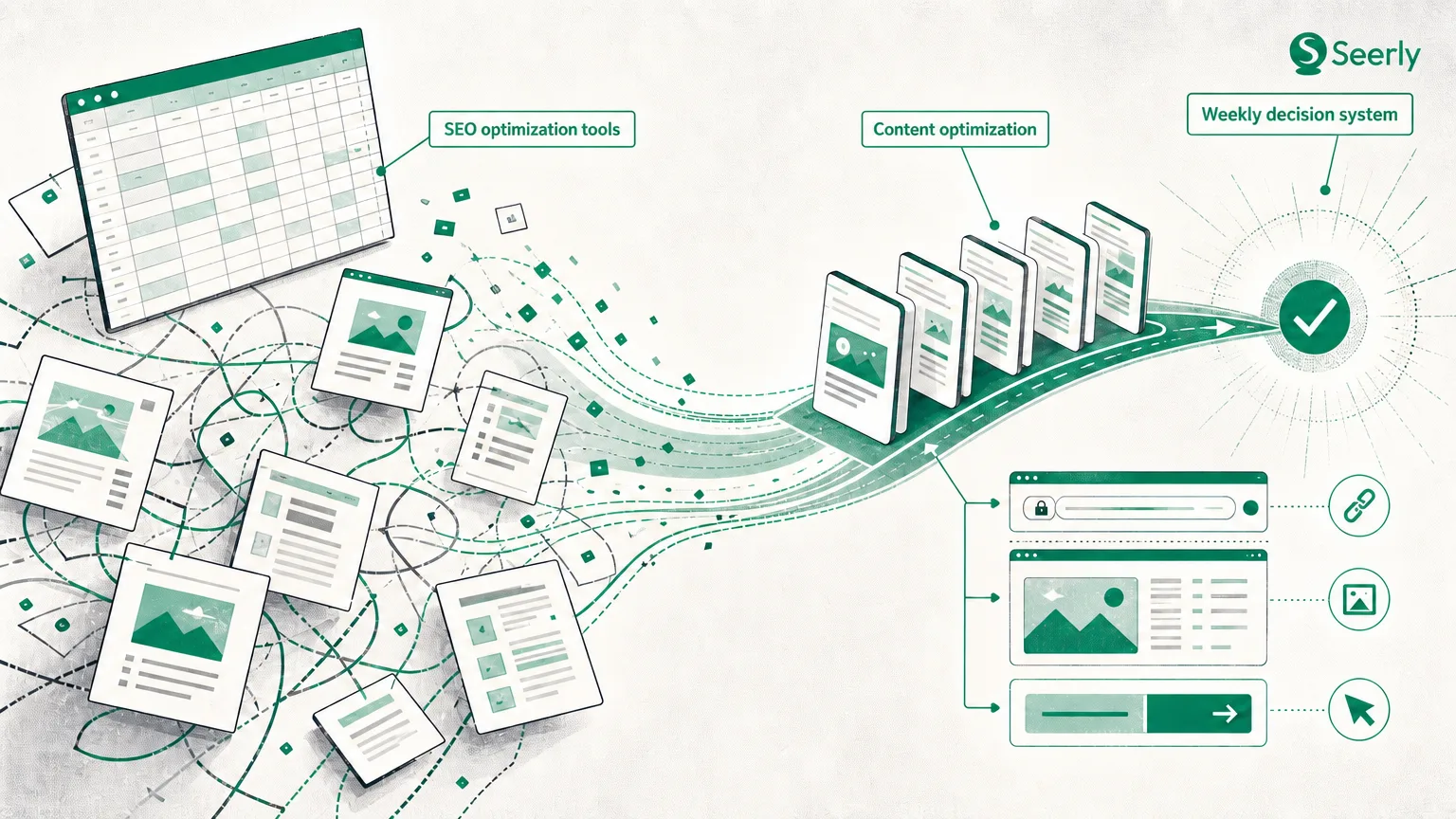
If you are a lean SaaS marketing leader, founder, or consultant, the hardest part of buying AI marketing software is rarely finding options. It is narrowing them down. Search for almost any software category and you will run into giant “best tools” lists, comparison grids, and Reddit threads full of conflicting opinions. The result is not clarity. It is stack bloat.
That is why key word research matters here in a more practical way than many teams realize. Used well, it is not just a content planning exercise. It is a decision tool for understanding what jobs your team actually needs software to do, what reporting gaps matter most, and where a new platform would genuinely improve visibility. In its broadest sense, keyword research is the practice of identifying the terms people use to search for information, products, or services. For software buyers, that same logic can be turned inward: what questions are you trying to answer every week, and what signals do you need a tool to surface?
This shift is timely because the SEO and AI discovery market is expanding fast. One industry roundup projects global SEO spending to reach $146 billion by 2025, while another notes that 68% of online experiences begin with a search engine. As AI search, answer engines, and monitoring products multiply, teams are buying into categories before defining the reporting need. Good key word research helps reverse that pattern.
Why tool buyers get stuck in comparison noise
The current market is full of buying signals but short on decision structure. On community forums, “best AI tools” and “tool stack” discussions attract attention because buyers know their current workflows are changing. In the brief behind this article, two Reddit discussions drew 62 and 26 upvotes respectively. That matters less as a social proof metric and more as a signal of shared frustration: people are actively comparing tools, but they still do not have a clear framework for deciding what belongs in the stack.
This confusion is amplified by the fact that SEO is already crowded and measurable enough to tempt overbuying. Studies regularly show that SEO leads have a 14.6% close rate compared with 1.7% for outbound leads, which makes search software feel easy to justify. At the same time, broad SEO platforms, AI visibility tools, content optimization products, rank trackers, and analytics overlays often promise adjacent value. Without a disciplined approach to key word research, teams end up treating every new category as a must-have rather than asking whether it answers a reporting question they cannot solve today.
For practical buyers, the issue is not whether AI for SEO or SEO AI tools are useful. Many are. The issue is that comparison content tends to organize the market by feature abundance, while lean teams need to organize it by decision usefulness. If a tool cannot change what you publish, what you monitor, or how you report performance to leadership, it may be impressive without being necessary.
The wrong way to do key word research for software selection
Most teams make the same mistake: they start with head terms. They search phrases like “best SEO tools,” “best AI marketing tools,” or “top rank tracking software,” then read roundups built to capture broad commercial intent. That method feels thorough, but it often drives shallow decisions.
Vanity-keyword research
Vanity-keyword research starts with volume and category labels. It prioritizes broad phrases, high-traffic roundups, and feature matrices with dozens of vendors. This approach is useful if your goal is to map the market at a high level. It is far less useful if your goal is to choose two or three tools that fit a real workflow. Broad terms collapse different needs into one bucket, so tools built for citation monitoring, content ideation, rank tracking, traffic analysis, and reporting can all look interchangeable.
It also creates budget overlap. If you buy one platform because it ranks for “AI SEO software” and another because it appears on a “best keyword rank tracker” list, you may be paying twice for dashboards your team never uses. Research summaries often claim that more than 90% of web pages get no organic traffic from Google, which should already caution buyers against vanity thinking. Visibility only matters when it connects to the pages, queries, and reporting loops that drive decisions.
Workflow-driven research
Workflow-driven research begins with the team’s recurring questions, not with market categories. Instead of asking, “What is the best AI tool?” you ask, “What do we need to know every Monday to decide what content to update, what competitors to watch, and what discovery channels to report on?” That change immediately narrows the field.
A workflow-driven approach also aligns better with how modern search performance is measured. Organic search still matters enormously, with sources estimating that 53% of all website traffic comes from organic search. But the tools you need depend on whether you are validating rankings, monitoring AI citations, checking traffic quality, or comparing share of visibility. The category term alone does not tell you which platform fits.
The right framework: use key word research to define the reporting job
The most useful key word research for software selection is operational. It helps you identify the language behind the jobs your team needs done, then match tools to those jobs.
Step 1: List the weekly questions your team must answer
Start with the questions that show up in meetings every week. Examples include:
-
Which priority keywords moved up or down?
-
Are we being cited in AI-generated answers?
-
Did traffic changes come from rankings, referrals, or brand demand?
-
Which competitors are appearing in discovery channels where we are absent?
-
Which pages deserve refreshes based on visibility and conversion potential?
This step matters because it prevents you from buying “coverage” you do not need. A tool should exist in your stack because it answers a repeated business question.
Step 2: Translate each question into a keyword and reporting category
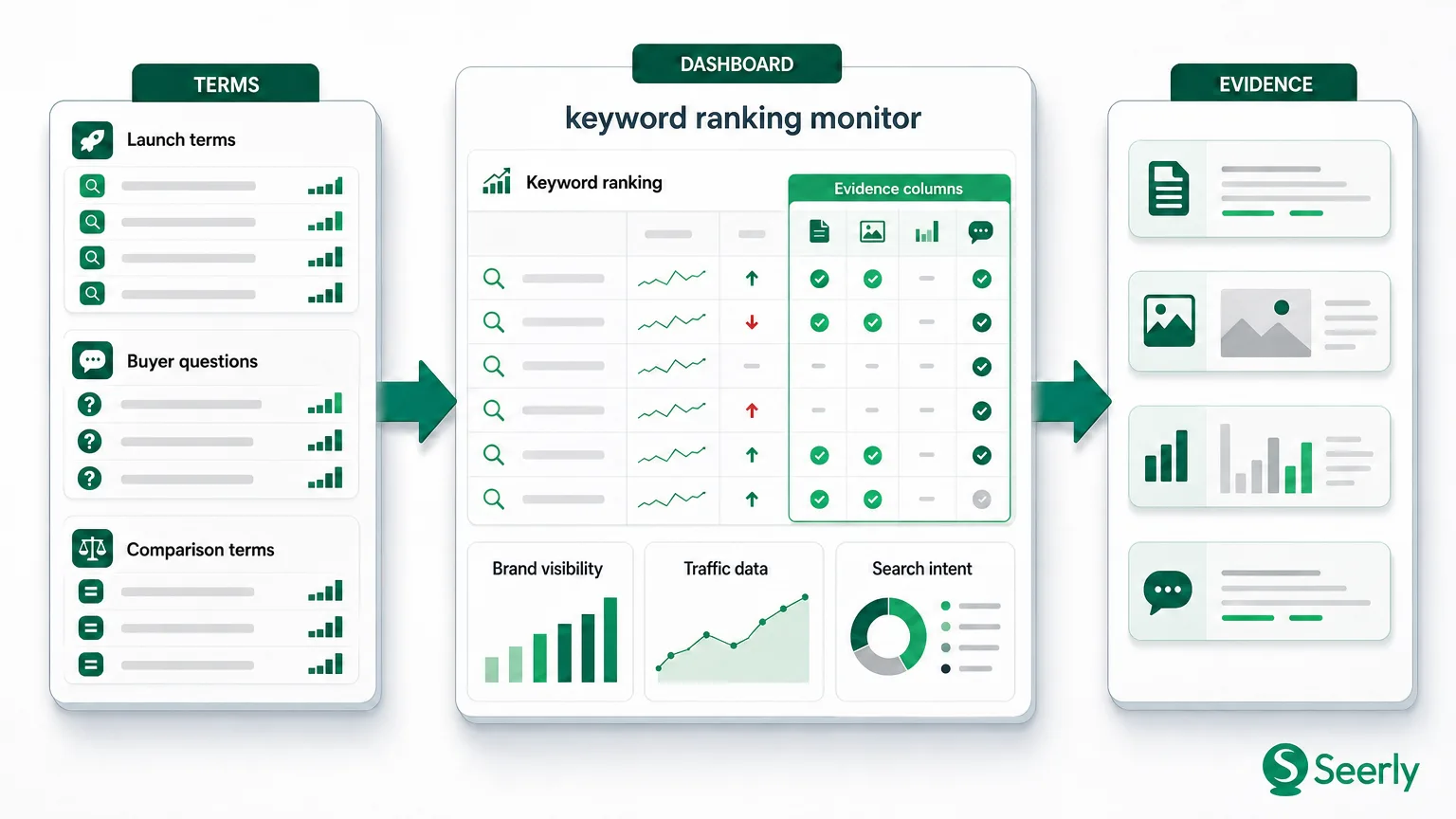
Now group those questions into categories such as keyword ranking checks, AI citation monitoring, traffic validation, and competitive comparisons. This is where key word research becomes strategic. You are not just collecting search terms; you are identifying the language and scope of the reporting jobs.
For example, “AI for SEO” and “SEO AI” are not useful categories by themselves. They are umbrella labels. What matters is whether the team needs forecasting, optimization suggestions, answer-engine citation tracking, or straightforward rank reporting. If the category name is broader than the reporting need, you will likely overbuy.
Step 3: Separate must-have signals from nice-to-have features
Most bloated stacks come from treating every feature as a core requirement. Instead, define which signals must influence an action. A must-have metric is one that changes what your team does next. If a citation monitoring report would alter your content brief, it is core. If a flashy competitor dashboard never changes a decision, it is optional.
This is also where teams should review what they already trust. If your analytics stack already handles traffic validation well, you may not need another platform for that layer. If your existing rank tracker is stable but you lack AI discovery data, your next buy should fill that specific blind spot.
Step 4: Map tools to jobs, not to categories
Once the reporting jobs are clear, shortlist tools based on the exact job they serve. One tool may be excellent for keyword ranking checks but weak on AI visibility. Another may surface citations well but offer little workflow support for broader SEO reporting. The right choice is the one that closes a meaningful gap with the least overlap.
This is also a good point to review whether your team needs better keyword organization before it needs another dashboard. Strong clustering can reveal overlapping intents, reporting themes, and content gaps. For teams refining large query sets, keyword clustering with the Leiden method offers a more structured way to group terms around actionable patterns.
A practical shortlist model for a lean SaaS team
Consider a SaaS company with a head of marketing, one content marketer, and a freelance SEO consultant. They already use Google Search Console, a general analytics platform, and one legacy rank tracker. Now they are considering three new tools: an AI visibility monitor, an all-in-one SEO suite, and a content optimization platform.
Using workflow-driven key word research, they classify their reporting needs into four jobs: weekly rank checks for high-intent keywords, AI citation monitoring for commercial queries, traffic validation across landing pages, and monthly competitor comparisons.
Here is how the shortlist model works:
Keep
They keep the legacy rank tracker because it already answers a real weekly question: are their bottom-funnel terms moving? Replacing it would create migration work without improving decision quality.
Combine
They combine AI visibility monitoring with keyword analysis if one platform can connect discovery gaps to actual query groups. This is where a dedicated system such as Seerly’s keyword research platform becomes useful. Instead of maintaining separate spreadsheets for keyword sets and AI monitoring hypotheses, the team can organize discovery opportunities around measurable search themes.
Replace
They replace the all-in-one SEO suite candidate because too many features duplicate tools they already trust. The suite looked compelling in roundups, but once mapped to reporting jobs, it adds more interface than insight.
Ignore
They ignore the content optimization platform for now. It may be valuable later, but their immediate blind spot is not on-page guidance. It is knowing where AI discovery is weak and whether that weakness affects high-value queries. A platform that does not change this quarter’s decisions can wait.
This model is simple, but it is effective because it forces every tool to justify itself through reporting value. Teams that want a more grounded view of AI discovery can also review how AI search optimization helps SaaS buyers find the right product, especially when comparing visibility signals across channels.
A decision checklist for founders and heads of marketing
Before buying another SEO or AI monitoring tool, ask the following:
-
Which reports do we already trust enough to act on without debate?
-
Which reporting gaps slow down weekly content or demand-generation decisions?
-
Do we need keyword ranking checks, AI citation monitoring, traffic validation, or competitor benchmarking most urgently?
-
Which current tools overlap in function but not in decision value?
-
Are we buying a category because it is trending, or because it closes a measurable blind spot?
-
Which dashboards are reviewed regularly, and which ones are opened only during renewal season?
-
If a new tool performs well, what specific content or reporting action would change?
-
Where are AI visibility blind spots affecting commercial discovery or buyer education?
-
Do we need broader feature coverage, or a narrower tool with better signal quality?
-
Which software decisions will affect content priorities, reporting cadence, and budget allocation over the next two quarters?
A checklist like this sounds basic, but it guards against a common mistake: using market excitement as a proxy for operational need. With search behavior evolving and buyers discovering brands across more surfaces, discipline matters more than ever.
FAQ
Should keyword volume alone drive tool choice?
No. Search volume can help you understand market interest, but it should not be the primary basis for selecting software. High-volume category terms often hide very different use cases underneath them. Tool choice should be driven by which platform best answers your team’s recurring reporting questions and closes the most important visibility gap.
Do AI SEO tools replace traditional rank tracking tools?
Usually not completely. AI SEO tools and visibility platforms can add new layers such as citation monitoring, answer-engine coverage, or content gap discovery. Traditional rank tracking still matters when you need consistent keyword position reporting over time. For many lean teams, the right stack is a combination of stable rank measurement and targeted AI visibility insight rather than a total replacement.
How can you tell when a visibility platform adds something genuinely new?
Ask whether it reveals a blind spot that your current analytics, Search Console, and rank tools cannot surface. If it helps you identify missing citations, compare competitor presence in AI-driven discovery, or connect reporting gaps to actionable keyword groups, it may be additive. If it mostly reproduces metrics you already have in a different interface, it is probably overlap.
Conclusion
The most effective key word research for tool selection does not begin with search volume or giant vendor lists. It begins with the questions your team needs answered every week and the reporting gaps that block informed decisions. Once you define those jobs clearly, it becomes much easier to classify tools into keep, combine, replace, or ignore.
Before you buy another platform, map your reporting questions first. Then evaluate which gaps are truly uncovered across SEO, AI visibility, and monitoring. If you want a clearer way to organize those needs and turn raw discovery data into actionable intelligence, explore Seerly to identify where visibility gaps are real, measurable, and worth solving.