What keyword density checks can still reveal in an AI-search workflow
A content lead opens a 2,000-word guide that should answer a buyer’s question about enterprise reporting. The page contains expert quotes, a clean product comparison, and several useful examples. Then an SEO keyword density checker flags that the page’s core phrase appears only once, buried in the fourth paragraph.
Should the writer add the phrase 15 more times? No. That would make the copy worse.
But should the team ignore the result? Also no. The low count may reveal that the page never names the concept plainly, uses five competing labels for the same thing, or has wandered from the question readers came to solve. Those are content problems, not percentage problems.
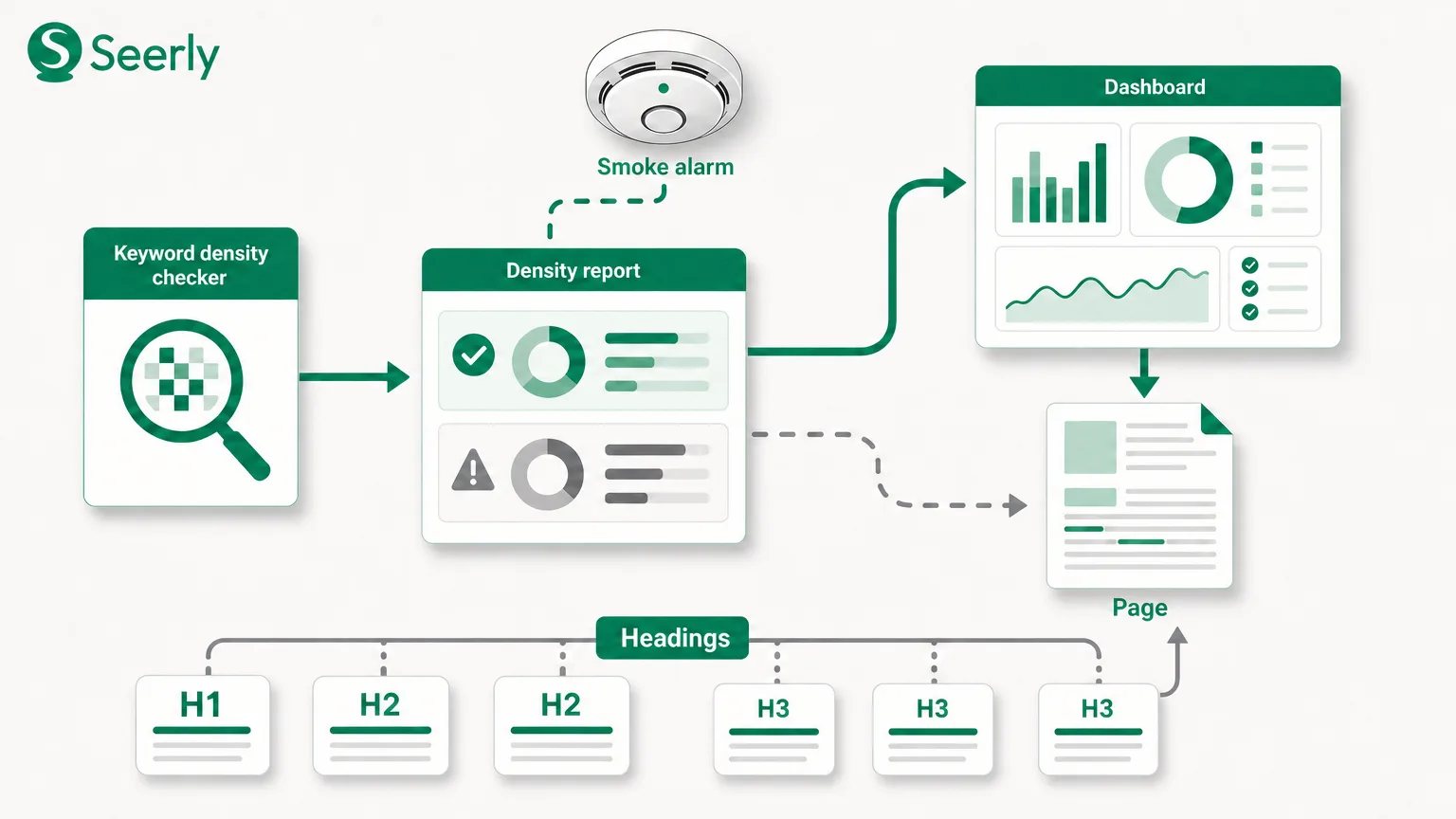
A keyword density checker is useful when treated like a smoke alarm. Smoke alarms don’t diagnose the source of a fire, and they certainly don’t tell you how to renovate a kitchen. They tell you to look. For teams responsible for technical SEO, helpful content, and AI-search discovery, that distinction matters more than it did a few years ago.
The practical standard is simple: use language repetition as a diagnostic clue, then review coverage, clarity, and evidence before editing. That approach avoids both keyword stuffing and the equally unhelpful habit of treating topical clarity as irrelevant.
What a keyword density checker can and cannot tell you
Keyword density is the percentage of words on a page that match a selected term or phrase. A phrase appearing 10 times in a 1,000-word article has a density of 1%.
That calculation is easy. The interpretation is where teams get into trouble.
| Myth | Reality |
|---|---|
| A “good” percentage will improve rankings. | No universal target percentage exists. A count can flag patterns, but it can’t prescribe copy. |
| A low count proves a page lacks relevance. | A page may use accurate synonyms, answer the topic clearly, and still have a low exact-match count. |
| A high count proves topical authority. | High repetition may signal awkward writing, thin coverage, or a phrase repeated in boilerplate. |
| The score predicts AI-search mentions. | Language frequency alone cannot predict whether an AI answer uses, mentions, or cites a page. |
Google’s public guidance describes ranking as a process that considers many signals and systems, not a single on-page formula such as keyword frequency. Its explanation of ranking results is a useful antidote to score-chasing because it frames relevance around the whole query and page context.
The reverse error is more subtle. Some teams hear “keyword density is outdated” and stop checking terminology altogether. Then a page about “pipeline reporting” calls it revenue intelligence in one section, sales analytics in another, and forecasting visibility in a third. Each phrase may be defensible. Together, they can leave readers unsure what the article is actually about.
I’ve found that the more polished a draft looks, the easier it is to miss this kind of drift. Smooth prose can hide a fuzzy subject. A density report gives the reviewer one odd little prompt: “Are we naming the thing people need named?”
When is a keyword density check worth running?
Run a keyword density checker after a real draft exists, not before anyone has written a sentence. The report works best as a quality-control pass near editing, during a refresh, or when a page loses traction after an otherwise sensible site change.
Look for four situations.
-
A core concept may be missing. If the page targets “keyword density checker” but uses only vague phrases such as “word analysis,” readers may not know that the article answers their question. The fix might be one direct definition near the top and a more accurate H2. It is not a mandate to repeat the exact phrase in every block.
-
The terminology keeps changing. In-house teams often inherit drafts from product marketing, freelancers, and subject specialists. Each contributor uses their preferred label. A report that surfaces competing terms can start a valuable editorial conversation: which phrase is primary, which labels need definitions, and where should a synonym appear only once?
-
A phrase dominates the page. Over-repetition is still worth catching because it often feels bad to read. Google’s spam policies explicitly identify repeating words or phrases in a way that feels unnatural as keyword stuffing. More importantly, customers notice it before any crawler does.
-
The page has drifted from its audience question. A guide can begin with a practical question and slowly become a feature inventory. When core language disappears from headings, examples, and conclusions, the density result may expose that shift. The reader asked, “How do I check keyword use?” and received a tour of unrelated platform capabilities. Not ideal.
A keyword density checker free option can handle this first pass. Paid tools may add phrase extraction, competitor views, and content auditing, but a fancier dashboard does not turn a count into a verdict. The team’s editorial judgment still carries the real weight.
A before-and-after review without chasing a percentage
Here’s a familiar draft pattern. A software company publishes a page titled “How to improve content performance.” The draft contains 1,600 words, yet “keyword density checker” appears twice. The reviewer’s first impulse is to put the phrase into every H2. That is how bad pages happen.
Instead, read the page as a reader would.
Before: broad language with no stable subject
The opening says, “Content teams need better ways to assess their writing.” A later section talks about “term ratios.” Another calls the process “phrase balance.” There is no definition, no example of a report, and no explanation of what a writer should do after seeing one.
The low density is not the problem. The missing conceptual anchor is the problem. The page has no stable name for the task it wants to teach.
After: a clearer route through the page
A better version starts by defining a keyword density checker in plain language. Then it uses a heading such as “When a keyword density checker flags a real issue,” followed by a worked example that compares accidental omission with over-repetition.
The writer adds an internal link to a related resource on rebuilding keyword clusters for AI Overviews, because readers who need terminology clarity often need topic-coverage clarity too. A short example shows how a writer might replace seven redundant instances of “best keyword density checker” with a definition, a use case, and a phrase that names the reader’s actual task.
Then the page earns trust with evidence. If it makes a factual claim about a tool’s method, it should explain the method or link to a primary source. If it says a page is useful for a particular audience, it should show that through a relevant example rather than announce it.
Notice what did not happen: nobody set a 1.5% target. Headings, definitions, examples, internal links, and supporting evidence did the work. The count merely pointed to a muddy draft.
An SEO keyword density checker is only one stage of readiness
Language review belongs in a staged workflow. A page can use terminology beautifully and still fail because crawlers cannot access it, its claims have no evidence, or its reporting never checks what happens after publication.
Start with the technical layer:
-
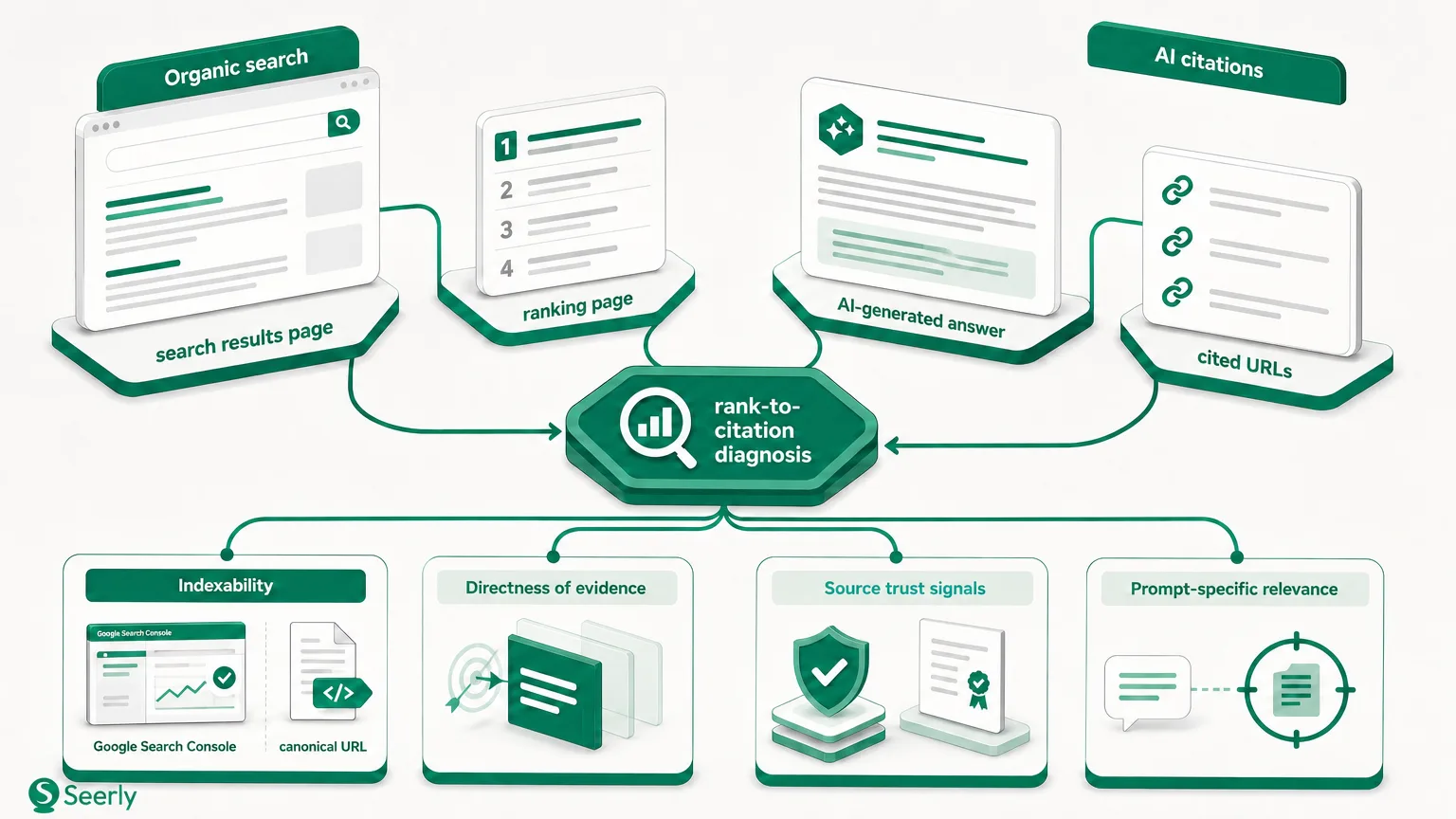
Confirm crawlability and indexability. Check that the page returns a usable status code, isn’t blocked by robots directives, and has the right canonical signals. Google’s SEO Starter Guide covers the basics of helping Google find and understand content. A density score has zero insight into any of them.
-
Make the answer easy to locate. Put the definition close to the beginning, write headings that describe the actual subtopic, and keep claims specific. A reader and a retrieval system should not have to infer the main point from decorative copy.
-
Add structured data where it fits the page. Product, article, FAQ, and breadcrumb markup can clarify page entities when the markup reflects visible content. Don’t add schema as confetti. It should match what a visitor can verify on the page.
-
Check evidence and then monitor outcomes. Link important claims to reputable sources, include author expertise where it matters, and track organic performance alongside AI-search visibility. Seerly’s guide to building an AI visibility and organic traffic reporting model is useful when teams need one measurement view rather than a pile of disconnected screenshots.
That sequence has a practical implication. A keyword density checker tool belongs after content drafting and before publishing, while monitoring continues after publication. Treating the report as the entire workflow confuses a spelling check with editorial review.
What should a human reviewer do with a warning?
Tools can count strings. They can’t reliably judge whether a medical claim needs expert review, whether an example answers the right buyer question, or whether a synonym will confuse a first-time reader. Someone has to make that call.
Use this decision tree during review:
Does the page name the primary concept clearly in the title, opening, and at least one meaningful heading?
-
No: edit with high confidence. Add a direct definition or repair the heading structure. Read the revised passage aloud. If it sounds forced, the phrase probably doesn’t belong there.
-
Yes: ask whether the density result reveals inconsistent labels or missing subtopics. If so, make a targeted edit with medium confidence. The issue may be editorial rather than search-related.
-
No inconsistency, no repetition, and the page answers the question well: take no action. Record the result and move on.
Does the report show unusually high repetition?
-
Yes, and the sentence sounds clunky: edit with high confidence. Replace redundant exact matches with clear pronouns, precise nouns, or a well-defined synonym.
-
Yes, but the count comes from navigation, legal copy, product tables, or quoted source material: take no action on the body copy. Review the extraction settings first.
-
Not sure whether the phrase is technically accurate: send the passage to a subject-matter reviewer. That is a low-confidence language finding and a high-value accuracy check.
Document the decision in the content ticket: clarity, coverage, over-repetition, or no action. Include the reason and the reviewer’s confidence level. Six months later, when somebody asks why an exact phrase appears only twice, your team won’t have to reconstruct the decision from memory. This part is honestly a pain, but it saves time during refresh cycles.
Can a keyword density score predict an AI answer mention?
No. A score cannot predict whether an AI-generated answer will mention, quote, or cite a page.
AI-search systems can vary by prompt, location, model behavior, source availability, and the specific claim a user asks about. A page with a tidy density score may lack original evidence. Another page may name a term only a few times yet contain the clearest sourced explanation available. Frequency alone doesn’t settle that contest.
Does a free checker have less value than a paid tool?
Not for the core diagnostic. A keyword density checker free report can spot omissions and repetition just fine. Paid products may save time on larger sites or combine related reports, but the useful question stays the same: what does the pattern tell us to inspect?
Should every page include the exact target phrase in an H2?
No. Use the exact phrase when it makes the heading clearer, as it does in a guide about a keyword density checker. On a page where the phrase would make the heading stiff, choose the wording readers would naturally use. Clarity beats ritual.
Can an SEO keyword density checker measure topical coverage?
Only indirectly. It can show whether selected phrases appear, but it cannot confirm that the page defines terms accurately, handles objections, or includes the evidence needed to support its claims. Use topic research, subject expertise, and manual reading for that work.
What should teams monitor after editing?
Monitor search impressions, clicks, query patterns, page engagement, and AI-search visibility for the questions that matter to the business. When tools disagree, use a documented manual review process rather than trusting the loudest score. Seerly has published a practical workflow for reviewing website audits when AI SEO tools disagree.
Pick one important page this week. Run a keyword density check, then label the finding as clarity, coverage, over-repetition, or no action. Make only the edits that diagnosis supports. A percentage is a prompt to investigate, not an instruction to write like a spreadsheet.
Learn more at seerly.app.