How to turn first-party expertise into content AI systems can verify
A content lead opens a high-value service page and sees all the familiar ingredients: confident headline, tidy benefit bullets, a few reassuring adjectives. The page sounds good. Yet when someone asks an AI search tool, “Who offers this service, how does it work, and what are the limits?”, the answer may skip the brand entirely or describe it inaccurately.
That gap is uncomfortable because it exposes a hard truth about AI for SEO. Publishing more AI-written copy does not create stronger source material. It can make a site noisier, faster. What AI systems and human buyers can work with is a page containing named things, direct answers, verifiable process details, current documentation, and proof that has a clear owner.
Search behaviour is moving in that direction. A Pew Research Center study found users clicked traditional search-result links on 8% of visits with an AI summary, compared with 15% of visits without one. Meanwhile, Adobe reported that traffic to US retail sites from generative AI sources rose 1,200% year over year. Those figures do not predict what any one company will see. They do make a sensible case for treating your website as a maintained evidence base.
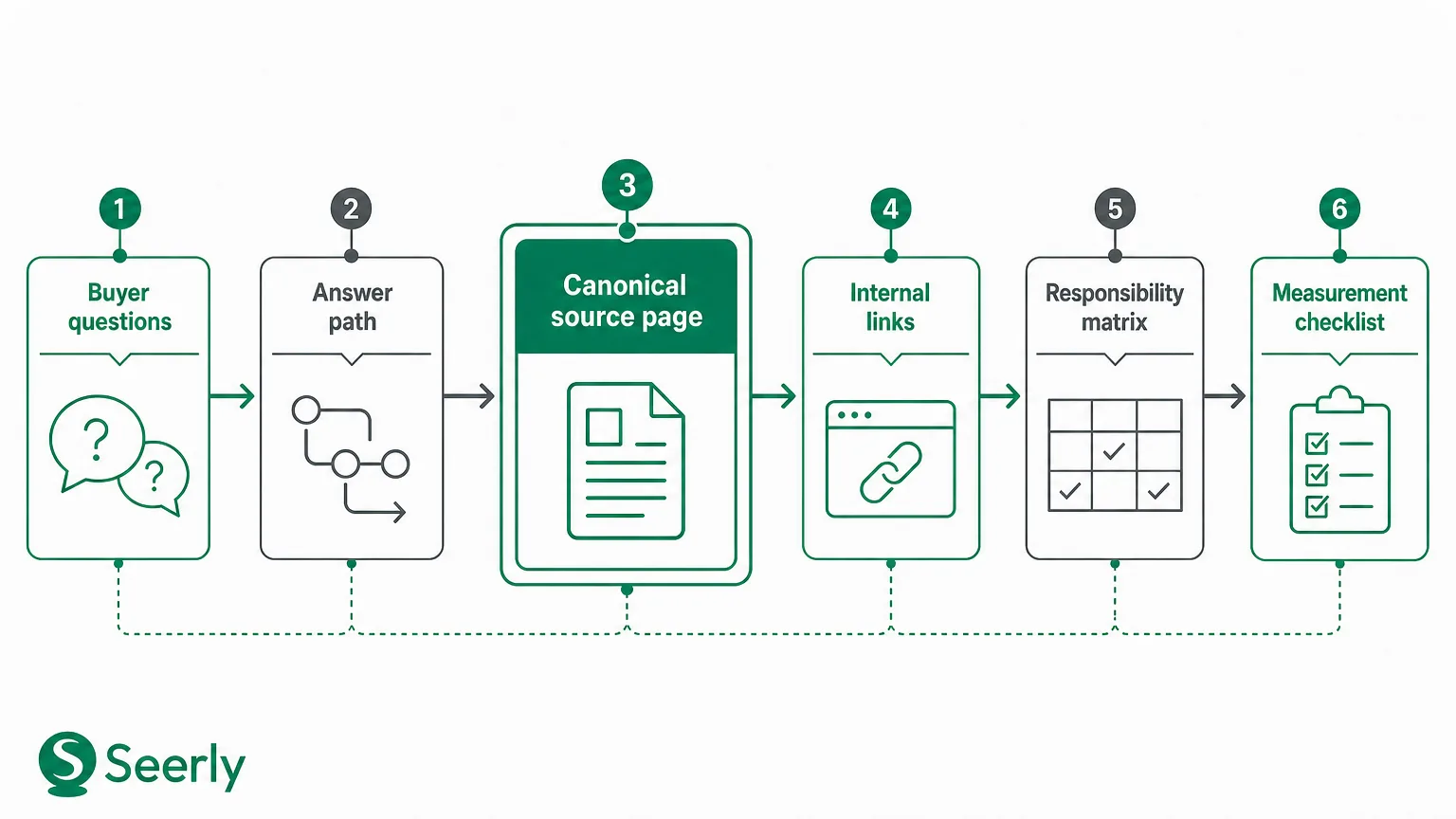
Here’s the practical work: turn what your company knows into pages that state it plainly, test how AI answers use that material, and fix the gaps. No ranking promises. No black-box folklore. Just better source material.
What makes a page useful as evidence rather than another marketing claim?
A claim tells a reader what you want them to believe. Evidence lets them inspect why it might be true. The distinction sounds fussy until you review a service page written mostly in marketing language. Then it becomes painfully obvious.
Consider a fictional page for a conversion-rate optimisation consultancy. Its original opening says: “We help ambitious brands unlock growth through tailored experimentation.” Nothing there identifies the service’s scope, method, expertise, or conditions. An AI system has little to retrieve beyond a generic category label. A prospective buyer has little to compare.
Now revise it:
Conversion-rate optimisation for B2B SaaS teams. We review analytics and customer journeys, form test hypotheses with your team, and run experiments on agreed high-traffic pages. Engagements begin with a two-week diagnostic. We do not guarantee conversion lifts, and we do not run tests where traffic volume cannot support a reliable decision. Our methodology is maintained by Maya Chen, Head of Experimentation, and was last reviewed in February 2026.
The revised version makes several small but meaningful moves. It names the audience, explains the method, places a boundary around the work, identifies a responsible expert, and dates the information. None of that is glamorous. It is far more useful than “tailored growth.”
Definition: A sourceable page is a page that states a defined fact, method, boundary, or proof point in language a reader can locate, assess, and trace to a responsible source.
The proof itself must match the claim. If your page says a product integrates with a system, list the supported system, the integration method, and any plan requirement. If a consultant has expertise in a field, name the person and link to a bio, publication, or talk where your company can stand behind the statement. Vague superlatives create fog. Details clear it.
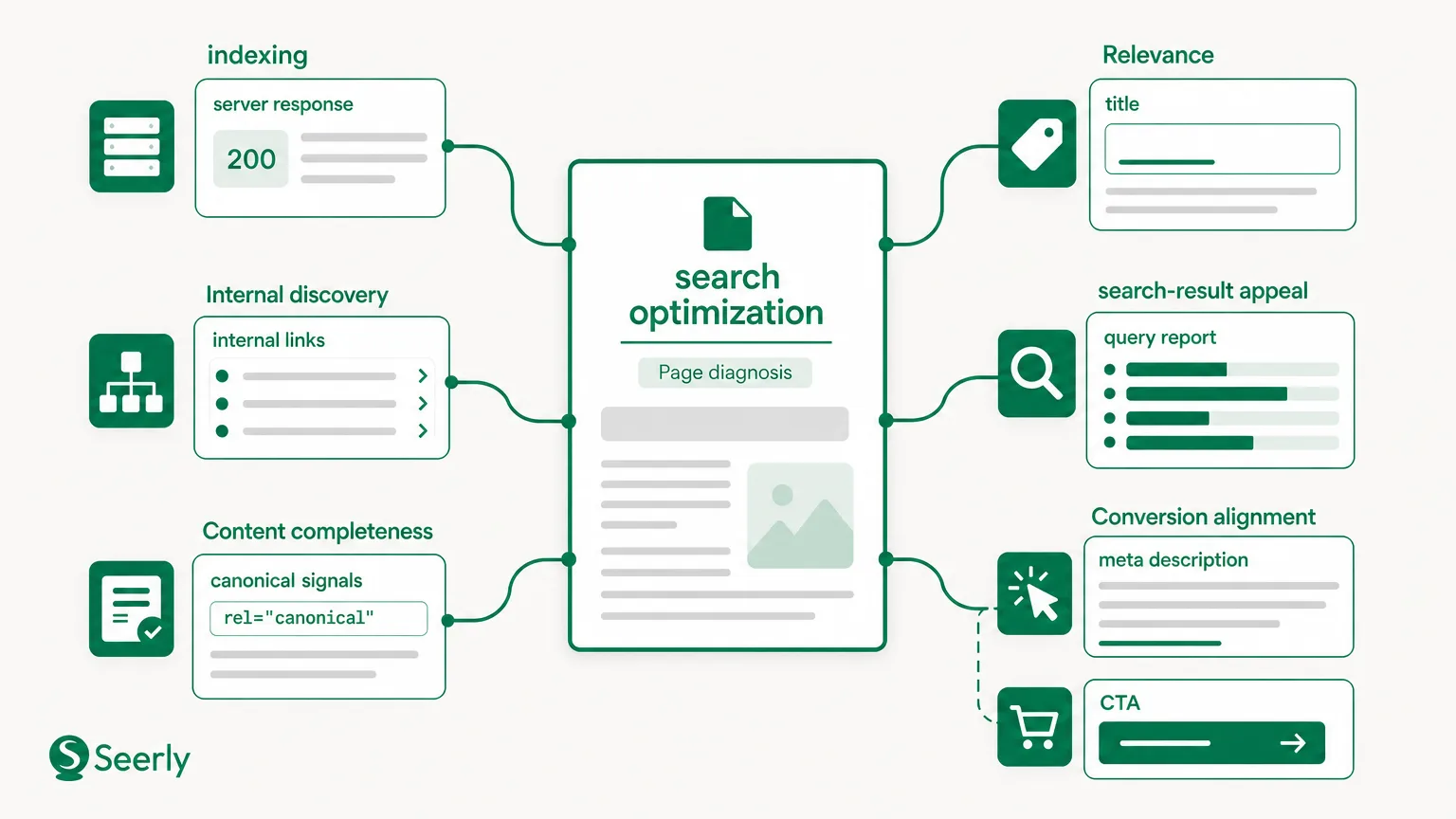
Google’s own guidance says that the same SEO basics apply to AI features in Google Search, rather than prescribing a separate trick for appearing in AI-generated responses. That points teams back toward useful information architecture, crawlable pages, and content that earns trust on its own terms.
Which first-party materials should become publishable evidence?
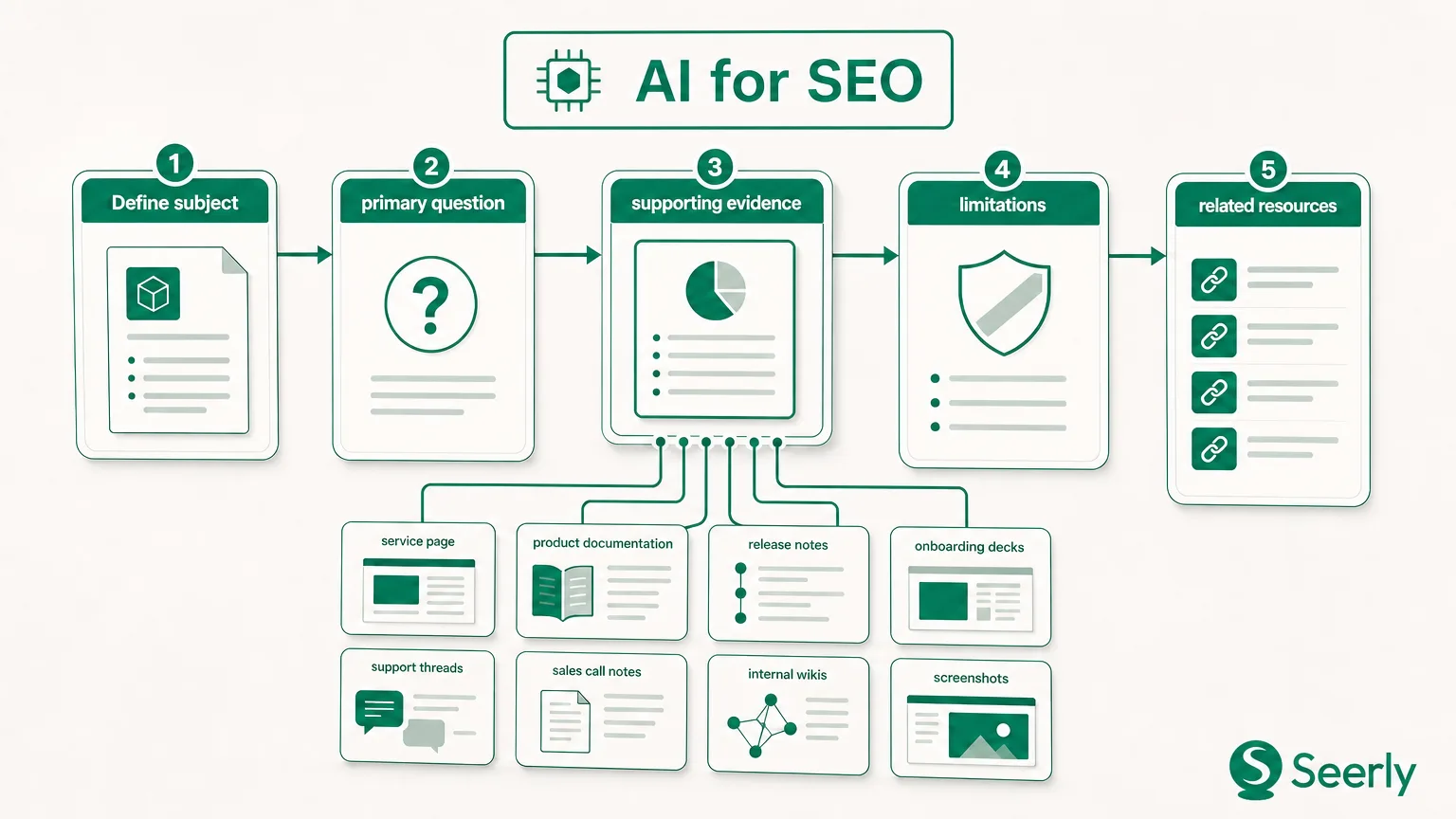
Most teams already have more raw material than their public site reveals. It lives in onboarding decks, support threads, release notes, sales call notes, internal wikis, and the head of product’s memory. The job is not to dump all of it onto a webpage. The job is to identify stable facts that a company is willing to publish, explain, and maintain.
Start with an inventory meeting. Bring the content lead, a product or service owner, and someone who handles customer-facing questions. Ask a blunt question: if a prospect challenged every statement on this page, what internal document or accountable person would settle it?
Build the inventory around these materials:
-
Product documentation and release notes. Record what a feature does, the user it serves, the conditions under which it works, and the release date. Screenshots help when they clarify a workflow, though they should not replace written explanation that remains searchable and accessible.
-
Process explanations. Describe how delivery happens from first input to final output. A service page might explain discovery, data access, review points, and handoff. A product page might explain setup, permissions, and what happens when data is missing.
-
Named expertise and proof. Link claims to real people, published methods, approved customer stories, or attributable research. Customer proof needs permission and context. A logo wall with no explanation tells a thin story.
-
Pricing and scope boundaries. State starting prices when your commercial model permits it, or explain what drives price. Set out exclusions too. Boundaries prevent the common problem where an AI answer promises work your team does not sell.
-
Update records. Every material item needs a review date and an owner. The owner is not always the writer. For product facts, it may be a product manager; for policy claims, legal or compliance may own the final wording.
I’ve found that the awkward parts of this exercise are often the most productive. Teams discover that two departments describe the same service differently, or that a “standard” process has quietly changed. Better to catch that on a draft page than in an inaccurate answer.
A practical AI for SEO editorial template
A good expert page reads cleanly because it answers the obvious questions in a usable order. Writers sometimes hide the answer beneath scene-setting copy because they fear being repetitive. Don’t. Direct language is easier for readers to scan and easier for systems to retrieve.
Use the following sequence when building or rebuilding a page:
-
Define the subject in the opening. Name the product, service, framework, or policy and state who it is for. Use the terms your sales, support, and product teams use consistently. If two labels refer to different things, say so.
-
Answer the primary question early. A service page should state what the service includes. A feature page should state what the feature does. Keep the first answer short, then expand beneath it with the operational detail a serious buyer will ask for.
-
Show the supporting evidence. Explain the method, link to documentation, name the qualified people involved, and add approved proof. A table can help with plans, eligibility, integrations, or timelines, especially when prose starts to feel slippery.
-
State limitations without flinching. Tell readers what the service does not include, which inputs it needs, and where results vary. Honest limits make the rest of the page more believable. They also reduce support friction later.
-
Connect related resources. Link to setup guides, policy pages, glossary entries, or product demonstrations. For instance, a video SEO page with a transcript and clear product context can answer adjacent questions that a core service page should not try to carry alone.
A page’s headings should reflect its actual contents, not internal campaign language. “How implementation works” helps a reader. “Experience the difference” does not tell anyone what lives below the fold. Look, the writer’s role here is closer to an interviewer and editor than a copy-polisher. Pull the facts out. Put them in an order that survives scrutiny.
Google also advises site owners to focus on accuracy, quality, and relevance when publishing generative AI-assisted content. Drafting help is fine. Letting a model invent product capability, customer proof, or expert opinion is not.
Test the brand answer, not only the page
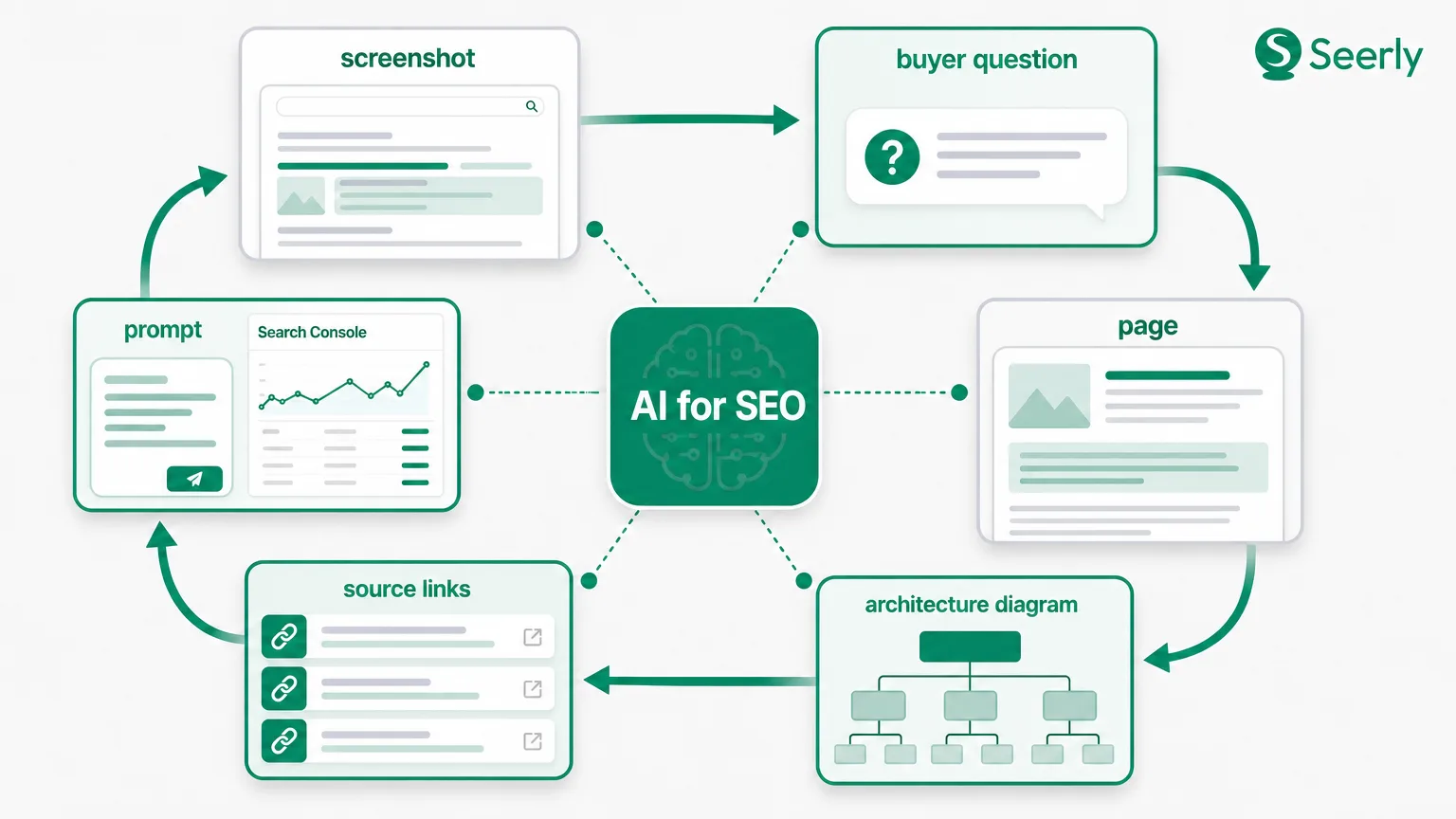
Publishing is the midpoint. Once a page is live, test how the brand appears in the questions people actually ask. A monthly prompt review will reveal confusion that standard rank tracking cannot see, such as an answer that names your company but assigns it the wrong capability.
Set up a simple prompt-testing loop. Keep the prompts stable for a review period, record the date and product version, then compare answers across the AI search experiences your audience uses. Avoid leading prompts that feed the answer to the model. “What does Company X do?” is more revealing than “Does Company X offer enterprise migration support?”
Your worksheet might contain four columns:
| Prompt | Expected facts | What the answer said | Follow-up action |
|---|---|---|---|
| “What does [brand] do?” | Category, named service, intended user | Check for wrong category or vague description | Improve opening definition |
| “How does [brand] handle [process]?” | Steps, required inputs, exclusions | Check whether the process is omitted | Add or revise process section |
| “What are [brand]’s pricing limits?” | Published pricing or pricing drivers | Check for invented price claims | Add scope and pricing language |
| “Who is responsible for [method]?” | Named expert and qualification | Check attribution | Update author or expert profile |
Then review the links and sources used in the answer where the interface exposes them. Is your page present? Does the cited page support the sentence beside it? Is an old page outranking a newer, more accurate explanation? The answer may change between runs. That volatility is why one screenshot proves very little.
Keep a change log with the prompt, output date, page changes made, owner, and next review date. A quarterly review that reconciles AI visibility with organic traffic and SEO data can stop teams from celebrating a mention that produces no useful business signal, or panicking over one missed answer. Measurement needs context.
When a sourceable page gets old, what should change?
Outdated information causes a special kind of damage. A missing page leaves a question unanswered. An old page answers confidently, which can carry old pricing, retired features, or expired policy language into future responses. Not ideal.
Maintenance works best as a recurring editorial task, not a rescue mission after something goes wrong. Put review dates in your CMS if possible, and assign each page to the person closest to the facts. Content teams can coordinate the process, but they should not guess when a technical detail or contractual position changes.
Check these areas during each review:
-
Releases and integrations: Confirm feature names, supported platforms, plan access, screenshots, and setup steps. Retired terms should redirect to current documentation or carry a plain-language note explaining the change.
-
Policies and scope: Recheck privacy, data handling, service exclusions, eligibility rules, and pricing language. Legal wording often changes in small ways that have large practical consequences.
-
Evidence expiration: Revisit customer stories, product metrics, certification claims, and expert bios. If a source no longer reflects reality, remove it or replace it. Old proof is not harmless proof.
-
Internal ownership: Confirm that the named reviewer still works on the subject and knows they own the page. A last-updated date without a responsible person is decoration.
There is a useful tension here. Frequent edits without a reason can create churn, yet leaving pages alone because they still “look fine” creates quiet risk. Publish updates when facts change. Log what changed and why. Then test the prompts again.
Frequently asked questions
Can AI-written content help with AI for SEO?
It can help with research organisation, outlines, editing, and variations of approved copy. It should not become the source of product facts or customer claims. Google warns against using generative AI to produce many pages without adding value for users, which is a useful line to keep in mind when content volume starts outrunning subject expertise.
Should every page include pricing and limitations?
No. Some pages serve early research and do not need commercial detail. But high-intent service, product, and comparison pages should state enough about price drivers, eligibility, and exclusions to prevent a misleading interpretation. Silence often gets filled with assumptions.
How often should prompt tests run?
Run them after a major page, product, or policy update, then on a recurring schedule that matches how quickly your information changes. Monthly is a practical starting rhythm for many teams. High-stakes claims may need closer review.
Do structured headings guarantee an AI mention?
No. Clear structure improves retrieval and reader comprehension, but no page controls whether an AI system selects it in a given answer. Treat prompt performance as an observation to investigate, not a promise attached to a publishing checklist.
Start with one page that matters
Pick one service page that sales teams send often, prospects misunderstand, or competitors describe better than you do. Audit every claim. Ask where it came from, who owns it, and whether a reader can see the method or boundary behind it. Then publish the missing evidence.
Afterward, run recurring prompt tests and log what changes. Seerly’s guide to validating AI-assisted SEO gains can help shape that review habit. The work is less flashy than generating another hundred articles, but it builds something sturdier: a public record of what your brand actually knows and does.
Learn more at seerly.app.