When AI SEO Tools Disagree: A Manual Review Workflow for Website Audits
An AI audit can tell you a page is well optimized while another tool labels the same URL “thin,” poorly structured, or in need of a major rewrite. For consultants, agencies, and in-house teams, the danger is not disagreement itself - it is turning unverified output into a stakeholder recommendation.
The need to verify AI-generated SEO audits is becoming more visible. A Seerly trend-finder observation on Reddit found a discussion around “how to verify AI SEO audits” receiving 274 upvotes, alongside wider skepticism about recommendations that may reflect hidden self-promotion rather than page-level evidence. That skepticism is healthy: a credible web SEO analysis should show why a change matters for a specific URL, not simply produce a longer checklist.
Treat AI audits as draft inputs. Your final decision should come from a repeatable review that validates technical evidence, page intent, unique proof, and the page’s potential to be reused in search and answer experiences.
Why AI SEO Audits Reach Different Conclusions
Most audit tools examine overlapping signals, but they do not assign the same weight to those signals. Some prioritize on-page text and keyword coverage; others focus on crawlability, internal linking, structured data, or performance. A tool may also be working from a limited crawl, an outdated index, or a generic page-type model that does not understand the commercial purpose of your page.
Here are the most common conflicts you will encounter when you check website SEO.
-
“Thin content” versus “good heading structure.” One tool may judge a 600-word landing page as insufficiently comprehensive, while another approves its H1, H2 hierarchy, and metadata. Neither conclusion establishes whether the page answers the visitor’s real question. Content length is only a proxy; the more useful question is whether the page resolves the decision, problem, or comparison implied by the query.
-
“Add more keywords” versus “clean up links.” Keyword-focused tools may recommend expanding topical coverage, while technical crawlers flag orphaned pages, weak anchor text, or broken internal paths. Both can be valid, but internal links often determine whether a strategically important page is discoverable and understandable in the context of the wider site. For a deeper diagnostic, review how weak internal links can cause ranking losses even when content is strong.
-
“Page speed is good” while traffic is flat. A page can meet performance thresholds and still fail to earn visibility or conversions. Google explains that page experience includes multiple aspects of the user experience and is not a single site-wide score; Core Web Vitals measure loading, interactivity, and visual stability, but they do not prove that a page meets search intent or offers a differentiated answer.
The practical lesson is simple: audit scores are diagnostic clues, not instructions. Before editing, establish which recommendation is supported by observable evidence and connected to the page’s business objective.
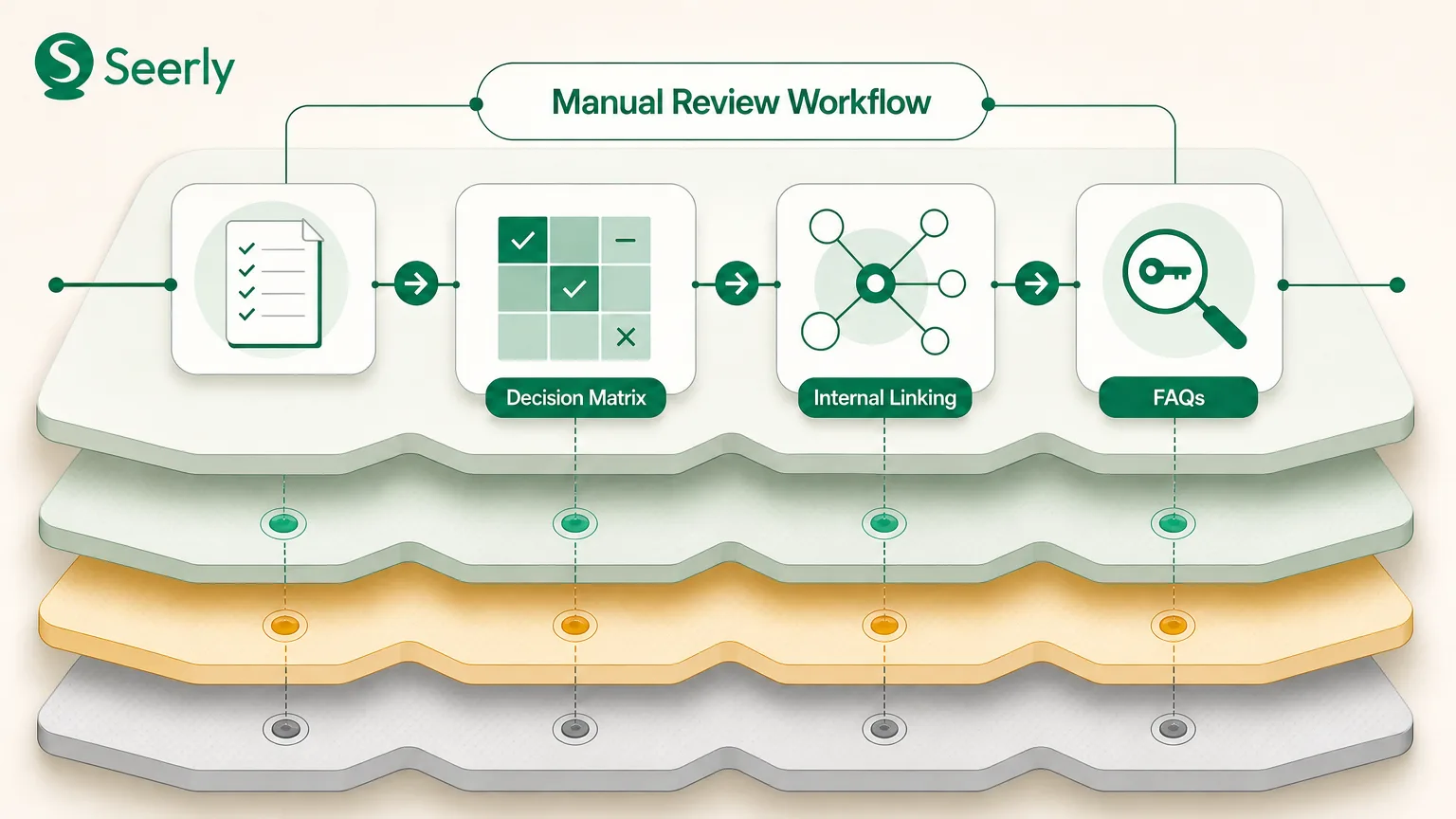
The Five-Step Manual Review Workflow
1. Confirm the page’s real target question
Start with the query or query cluster the page is meant to serve. Do not rely solely on the primary keyword recorded in a content brief. Review Search Console query data, the page’s title and headings, conversion path, and the questions sales teams hear from prospects to determine what the visitor is actually trying to accomplish.
A product category page may target a broad discovery question, while a comparison page serves a shortlisting decision and a help article resolves a specific task. Google’s SEO Starter Guide emphasizes creating helpful, reliable, people-first content, which means a page should be assessed against its intended audience need - not a generic recommendation to add sections or repeat terms.
2. Compare the page structure with search and answer intent
Next, examine the live search results and relevant answer-engine prompts for the target question. Identify the answer formats users encounter: definitions, step lists, comparison tables, pricing context, implementation detail, or expert evidence. Then compare those formats with the page itself.
This is where many SEO audits stop too early. A page may have technically correct headings but use them to describe company features instead of answering the question a buyer asked. Create a short gap list: missing direct answer, missing comparison criteria, missing process explanation, or missing proof. For guidance on preserving brand depth while improving answerability, see how to write pages answer engines can quote without flattening your brand voice.
3. Check for unique proof, not just topical coverage
AI tools are effective at spotting missing subtopics, but they cannot reliably determine whether your page contains evidence that competitors do not have. Review the URL for original data, product documentation, expert methodology, customer outcomes, screenshots, sourceable definitions, and clearly stated limitations.
A page with complete keyword coverage but no proof is easy to imitate and difficult to trust. Conversely, a shorter page can be highly useful when it includes a verifiable process or a specific conclusion supported by experience. This is especially important for AI-ready websites, where trust signals help systems distinguish substantive sources from generic summaries.
4. Inspect internal linking and summary formatting
Check whether the page is linked from relevant hub pages, solution pages, related articles, and navigation paths. Use descriptive anchors that explain the destination rather than vague labels such as “learn more.” Google’s technical requirements state that pages generally need to be accessible to Googlebot and return a successful HTTP status to be eligible for indexing; crawlability and indexability are foundational requirements.
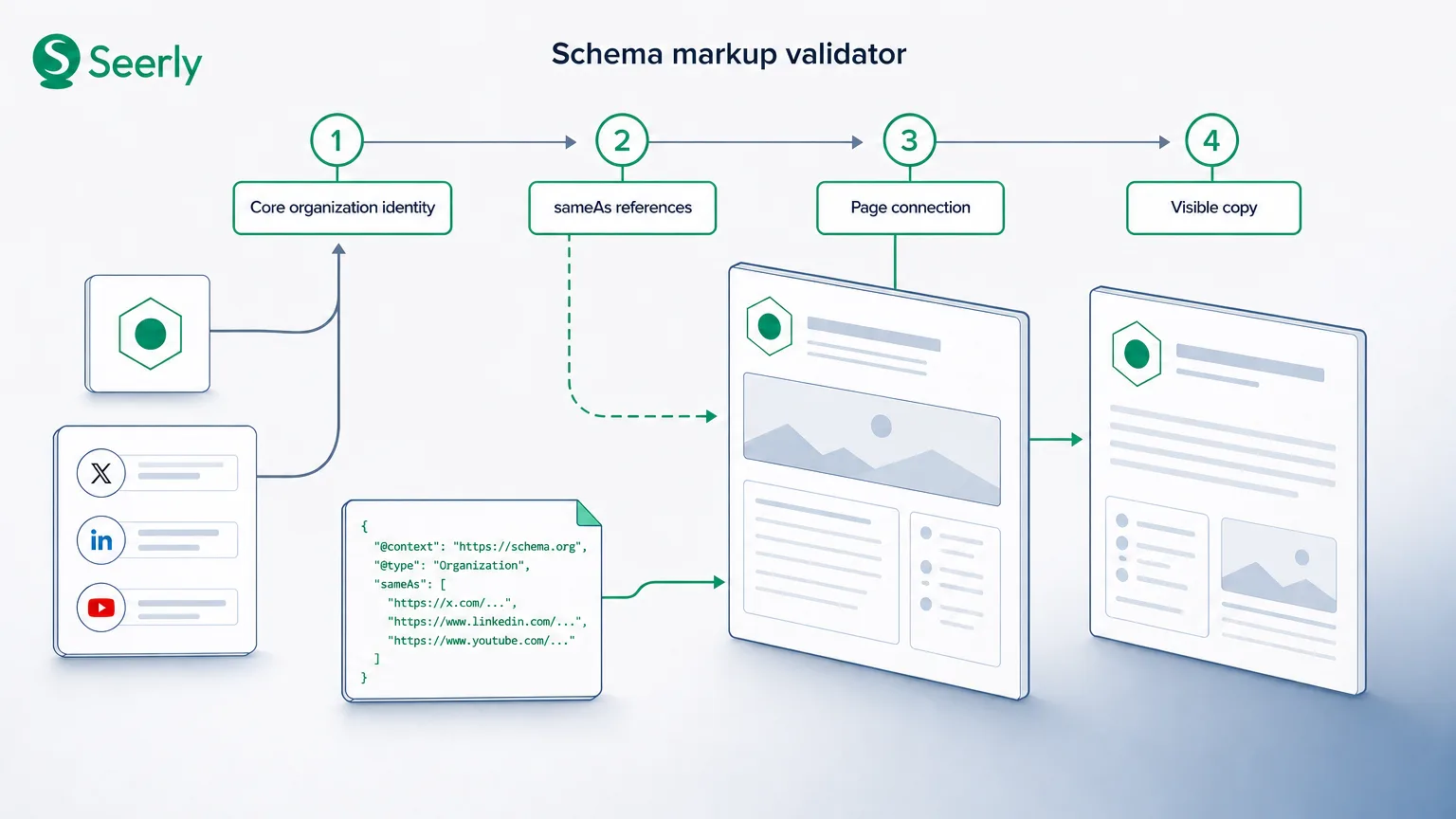
Then inspect the page’s formatting. Place the direct answer near the relevant heading, use scannable sections, and add concise summaries before detailed explanation. This does not guarantee retrieval in an AI response, but it gives both readers and systems a clearer passage to interpret. If the content describes an entity, product, event, or other supported type, validate that structured data helps Google understand page information, while remembering that markup alone does not guarantee a rich result.
5. Separate AI-retrieval potential from SEO hygiene
Finally, classify the recommendation. A broken canonical, blocked resource, invalid structured data field, or inaccessible internal link may be an urgent technical fix. A suggestion to add 12 semantically related keywords, however, may be routine hygiene with little effect on rankings, answer reuse, or conversion quality.
Ask one question: “Would this change make the page more accurate, easier to interpret, or more useful for the target question?” If the answer is no, do not prioritize it merely because an audit tool assigns it a high severity label. This proof-first approach is central to evaluating AI visibility and SEO advice.
Example: A Page That Passes but Still Misses the Answer
Imagine a B2B software page titled “Platform A vs. Platform B.” A generic audit gives it a strong score: the title is present, headings are ordered correctly, images have alt text, and the page loads quickly. The tool recommends only minor keyword additions.
Yet the page opens with brand messaging, follows with long product descriptions, and never provides a direct comparison. It does not state who each product is best for, distinguish pricing models, identify implementation tradeoffs, or summarize the key decision in a concise table. A buyer - and an answer engine - must assemble the comparison from scattered paragraphs.
The better revision is not necessarily a longer one. Add a short, evidence-based answer immediately below the introduction: “Choose Platform A when X matters most; choose Platform B when Y is the priority.” Follow it with a comparison table, documented criteria, and links to supporting implementation or pricing pages. The generic audit may have passed, but the practical website SEO review reveals the real gap: the page lacks an extractable, trustworthy answer.
Use a Decision Matrix Before Editing
To prioritize SEO audit recommendations, score every proposed change across three dimensions: confidence, expected impact, and misinformation risk. Confidence means you can verify the issue in the live page, crawl data, analytics, or documentation. Expected impact means the change plausibly improves discovery, clarity, conversion, or trust. Misinformation risk asks whether acting on the recommendation could make the page less accurate, less useful, or less aligned with the brand’s actual offering.
| Decision | When to use it | Example |
|---|---|---|
| Act now | High confidence, material impact, low risk | Repair a broken internal link to a revenue-critical page or add a missing direct answer to a comparison page. |
| Test first | Plausible impact, but uncertain evidence or tradeoffs | Add a concise answer summary, revise a section order, or introduce a comparison table and monitor engagement, rankings, and AI search visibility. |
| Ignore | Weak evidence, low relevance, or high misinformation risk | Repeat keywords unnaturally, add irrelevant sections for word count, or claim capabilities the product does not support. |
Do not let “high priority” labels override this framework. Severity scores are generated from a tool’s rules; business priority comes from the relationship between the page, the audience question, and the evidence available.
FAQs
How often should teams run SEO audits?
Run focused SEO audits whenever you publish important pages, change templates, experience a visibility decline, or update a core product narrative. For broader technical reviews, the appropriate cadence depends on site size and release velocity. A fast-changing ecommerce or SaaS site needs more frequent monitoring than a small, stable documentation site.
How long should we wait after making changes for a re-crawl?
There is no fixed timeline. Google’s documentation notes that crawling and indexing depend on multiple factors, so a page can be discovered quickly or take longer depending on crawl demand and site conditions. Validate the implementation immediately, request indexing where appropriate, and monitor Search Console and server behavior before drawing conclusions from ranking movement.
Should we compare AI audit providers before editing a page?
Yes - but compare their evidence, not their scores. Two or three providers can help surface blind spots, particularly across technical SEO, content structure, and internal linking. Edit only after your review confirms the issue and identifies the likely outcome; otherwise, multiple tools can create the illusion of consensus around a weak recommendation.
Apply the Workflow Before You Share the Audit
The strongest SEO audits do not produce the longest task list. They help teams make defensible decisions about what improves visibility, trust, and answer quality - and what does not.
Apply this workflow to one high-value page before circulating any AI-generated audit deck to stakeholders. In Seerly, use Actions > Smart Audit to check structure, then use Actions > Content to plan missing support pages that strengthen topical coverage and internal paths. Visit Seerly to build a more evidence-led approach to AI search discovery and website authority.