How to Use a "Rich Result Test" to Make Pages Easier for AI Engines to Parse

When a page fails to appear in rich results, many teams assume the problem is purely technical. They check whether schema exists, paste a URL into a validator, and move on if no critical errors appear. But that workflow is too narrow for modern search visibility. A page can pass a rich result test and still be difficult for search engines and AI systems to interpret, summarize, or cite with confidence.
That matters because structured data is no longer just about winning a visual enhancement in search. It is part of a broader machine-readability layer. When your page clearly connects visible content, entity details, and schema markup, you reduce ambiguity. That makes it easier for systems to understand who you are, what the page is about, and which answers are safe to reuse.
For marketers, SEO leads, and content teams, the practical question is not “Do we have schema?” It is “Can machines reliably parse this page, validate its claims, and extract the right answer from it?” This guide walks through a hands-on process for using a rich result test as a visibility workflow, not just a technical spot check.
Why schema matters beyond blue links
Schema markup helps machines interpret page meaning in a more structured way than plain HTML alone. It can clarify whether a page describes a product, an organization, a service, a review, or a frequently asked question. That extra context can support rich results in search, but its broader value is that it gives automated systems cleaner signals to work with when deciding how to classify and reuse a page.
For AI search environments, that machine-readable clarity matters even more. These systems often need to identify entities, map relationships, and extract concise answers from a page that may contain marketing language, navigation clutter, and mixed intent. Schema does not force an AI engine to use your content, but it can reduce confusion around basic page facts. In practice, that means less guesswork about your brand name, offering, FAQs, or business details.
This is also a meaningful content operations gap. Seerly’s own editorial direction has identified schema validation and checklist-style implementation guidance as an area where demand is growing and practical education is still thin. That is consistent with what many teams experience internally: they know structured data matters, but they lack a repeatable process for testing it against real discoverability goals.
The important nuance is that schema is not a substitute for good page construction. It works best when paired with visible headings, concise answer blocks, accurate entity details, and consistent on-page language. A rich result test is useful because it helps surface whether the structured layer is reinforcing that clarity or undermining it.
What a rich result test actually tells you
A rich result test is often treated as a yes-or-no diagnostic, but it really answers several different questions at once. If you do not separate those questions, you can misread the result and overestimate how ready a page is for search or AI reuse.
Schema presence, schema validity, and page usefulness are not the same thing
Schema presence means some structured data exists on the page. That alone does not tell you whether it is complete, eligible, or aligned with the visible content.
Schema validity means the markup is syntactically correct enough for a tool to parse and evaluate. This is where a rich result test is most helpful. It can identify malformed fields, missing recommended properties, unsupported markup types, and errors that block eligibility.
Page usefulness is a higher bar. It asks whether the page itself gives search engines and AI systems enough trustworthy, consistent, visible information to quote or summarize. A page can be technically valid yet still weak because the visible copy is thin, the FAQs are vague, the organization details are incomplete, or the structured fields do not match what users see.
That distinction is critical. Passing a validator means “your code is readable.” It does not automatically mean “your page is reusable.”
What the tool is good at, and what it cannot prove
A rich result test is good at surfacing implementation issues. It can help you confirm whether Google can detect eligible structured data types, whether required fields are missing, and whether errors are likely preventing enhanced result eligibility. That makes it an efficient first diagnostic layer for live pages.
What it cannot prove is whether your page deserves to be extracted as an answer. It cannot tell you if your page explains the topic clearly enough, if the page hierarchy is intuitive, or if your brand details are current across the entire site. It also cannot judge whether the markup is strategically useful for the page’s purpose. A technically acceptable FAQ block with weak, generic questions may still add little value for AI-ready visibility.
So the best way to use a rich result test is as an implementation checkpoint inside a broader content quality review.
A step-by-step workflow for auditing one page
The most effective audit process starts with one page that already matters to the business. This keeps the work tied to revenue, visibility rankings, and brand authority instead of turning into abstract cleanup.
1. Choose a high-value page
Start with a page you would most want search engines or AI systems to summarize accurately. That might be a product page, a core service page, a pricing explainer, or a high-intent FAQ resource. If the page drives conversions or shapes brand perception, it should be audited first.
Avoid starting with a low-stakes blog post just because it is easier. Your first rich result test workflow should focus on the URLs where improved machine understanding could meaningfully affect discovery, trust signals, or citation likelihood.
2. Inspect the visible page elements before checking markup
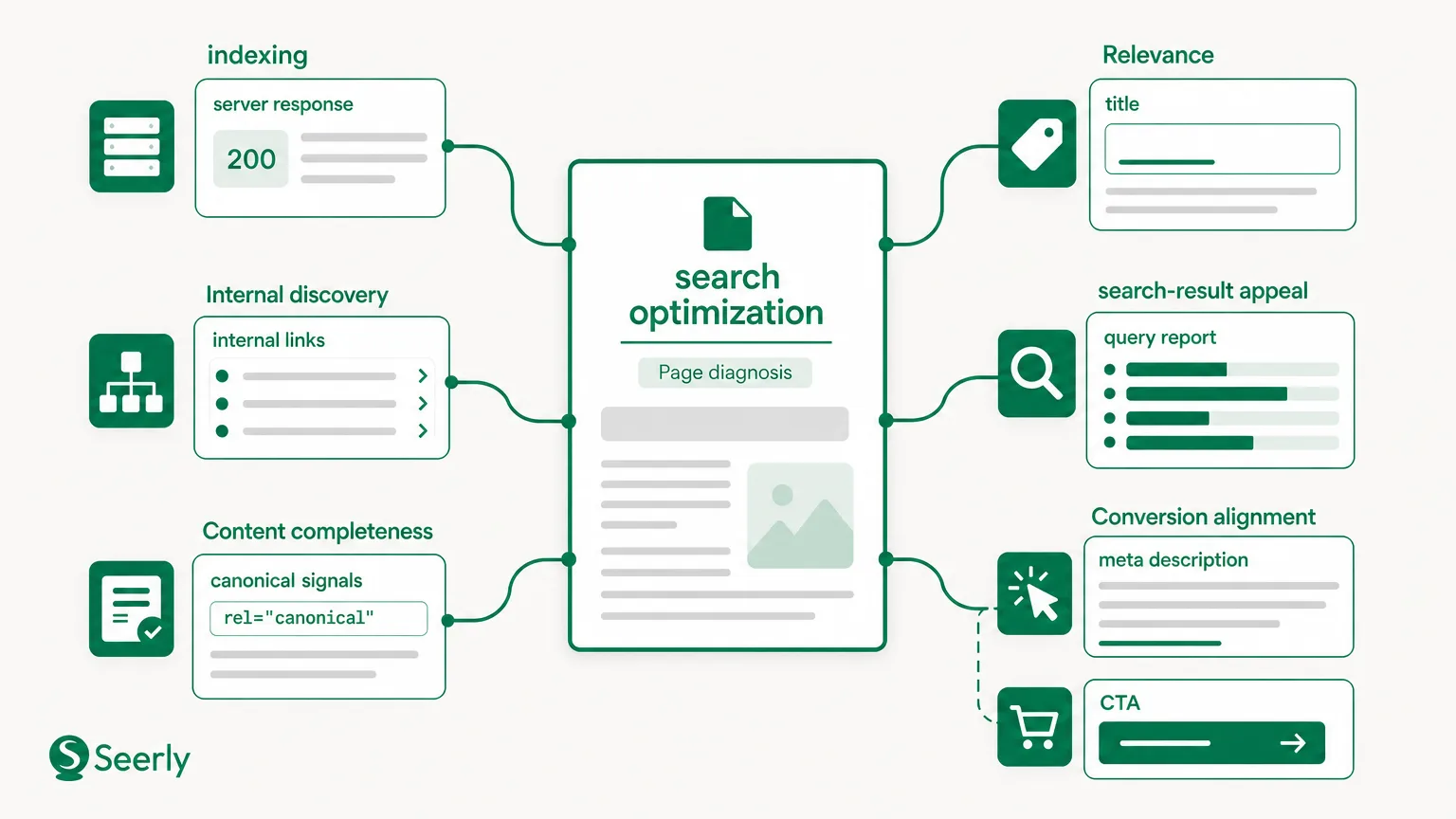
Review the page like an external parser would. Is the main topic obvious from the H1 and opening copy? Does the page clearly name the organization, product, or service? Are definitions, benefits, and FAQs written in direct language, or buried in promotional text?
This step matters because structured data should reinforce visible truth, not invent it. If the visible page is vague, fragmented, or inconsistent, adding more markup will not solve the core readability issue.
3. Run the rich result test on the live URL
Use the live page version rather than relying only on code snippets in staging documents. A live-page test shows what an actual crawler can detect after scripts, templates, and deployment quirks are involved. This is often where teams discover that valid schema in a development file never made it to production correctly.
Document the result carefully. Note which structured data types are detected, which errors appear, and whether warnings indicate missing recommended properties. If nothing is detected, that is not just a markup problem. It may point to rendering, placement, or implementation gaps.
4. Identify missing, malformed, or unsupported fields
Next, review the findings field by field. Look for absent required properties, invalid values, duplicated entities, and markup types that do not match the page’s real content. A service page marked as a product, for example, may technically exist but create classification confusion.
This is the stage where a validator earns its keep. It gives your team a concrete list of technical fixes instead of general assumptions. But do not stop at the tool output. Ask whether each schema type belongs on that page in the first place.
5. Compare structured fields to visible claims
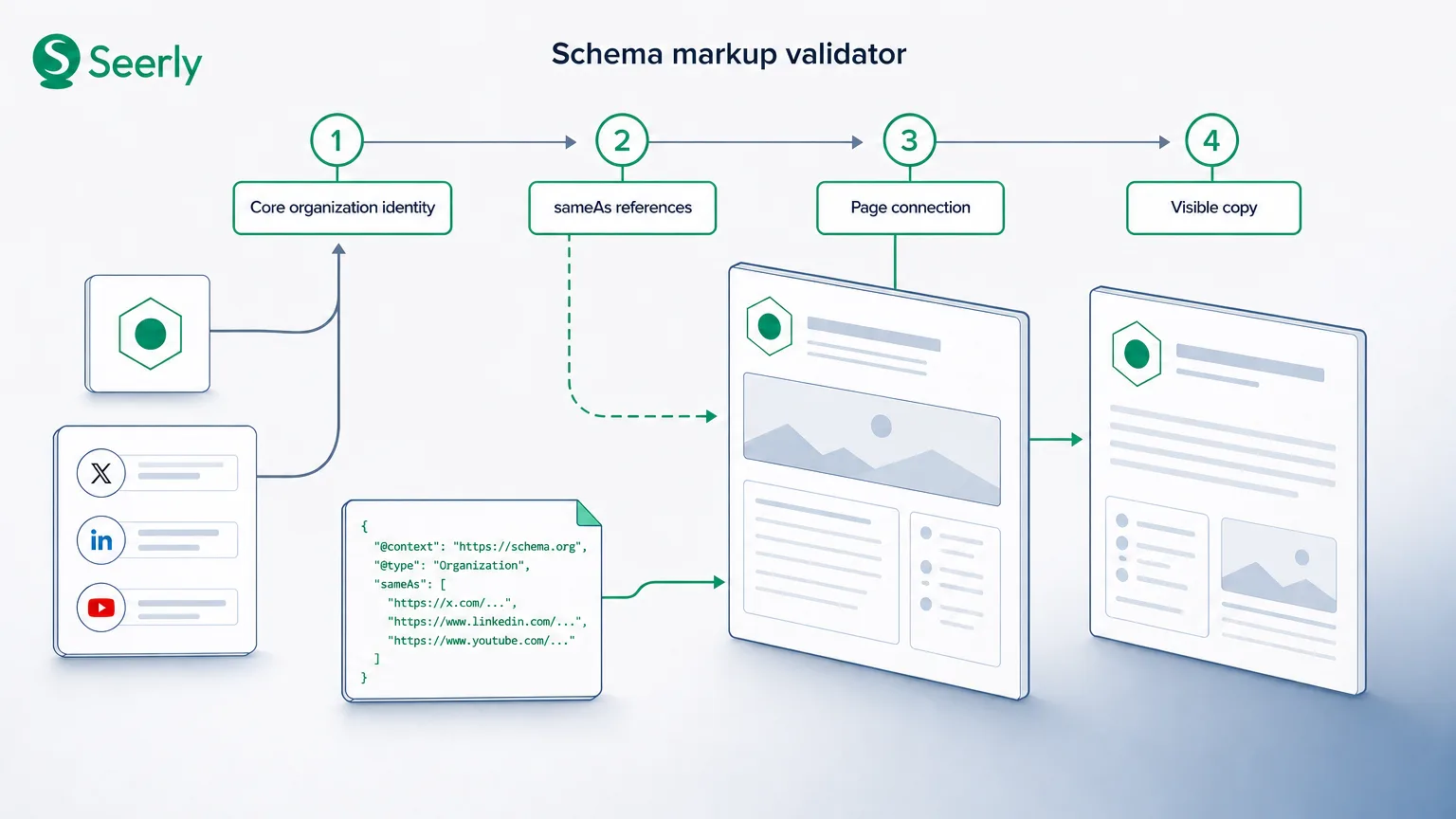
Now compare the markup to what users actually see. If the schema references an organization phone number, address, rating, or FAQ answer, those elements should be visible and current on the page. If they differ, the issue is not cosmetic. It weakens trust and can reduce confidence in the page as a machine-readable source.
This is one reason AI-ready websites tend to perform better when content and technical teams collaborate. Structured data is only as trustworthy as the source content feeding it.
6. Log fixes by impact and owner
Turn the audit into an action list. Separate fixes into immediate technical corrections, content clarifications, and page-structure improvements. Then assign ownership. Development may handle malformed JSON-LD, while content or SEO may need to rewrite answer blocks or expand entity details.
Without ownership, schema review becomes a one-time exercise. With ownership, it becomes part of proactive monitoring and data-driven management.
The markup types that most often affect AI readability
Not every page needs every schema type. The goal is not maximum markup volume. The goal is lower ambiguity.
Organization details
Organization markup helps establish foundational entity information such as brand name, URL, logo, and contact details. This matters because inconsistent company identity across pages can make automated interpretation harder. If one page lists an outdated phone number or old legal name, it introduces avoidable friction.
FAQ content
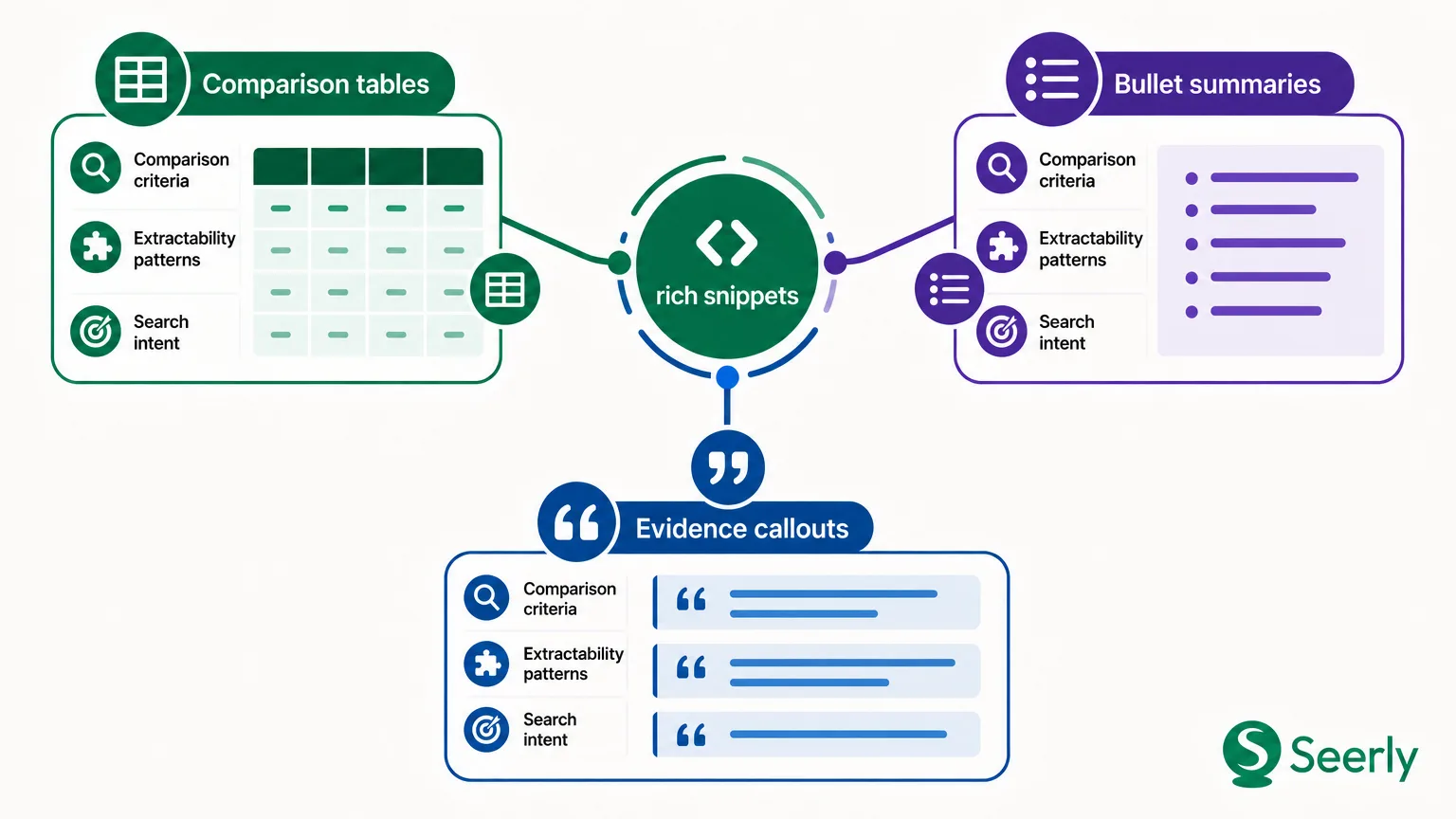
FAQ markup can be useful when the questions and answers are genuinely present on the page and written clearly. This is especially valuable for answer extraction because it packages concise user questions with direct responses. But weak FAQ sections filled with broad, repetitive questions rarely help. The content must still deserve to be reused.
Product or service context
Pages describing a product or service benefit from markup that clarifies exactly what is being offered. That helps machines distinguish between a category page, a feature page, and a commercial offer. It also reduces the risk that a page is interpreted too generally when it is actually transactional or solution-focused.
Review signals, where appropriate
Review-related markup can support trust signals when it reflects visible, supportable content. The key phrase there is “when appropriate.” If the page does not actually present reviews or ratings clearly, forcing review markup into the code creates mismatch rather than clarity.
Page-level consistency
This is less a single schema type than a discipline. The page title, H1, body copy, FAQs, and structured data should all describe the same thing in compatible language. For teams working on AI search discovery, that consistency often matters as much as the markup itself. It is similar to the broader maintenance discipline discussed in a 90-day search performance loop: visibility compounds when technical accuracy and content clarity are reviewed together over time.
Worked example: before-and-after page cleanup
Imagine a software company’s service page for “AI search visibility audits.” The page has decent written copy, but the implementation is patchy. There is Organization schema with an outdated logo URL, FAQ markup with only one vague question, and no clear service-level context in the structured data. On the visible page, the opening paragraph talks generally about “digital growth,” while the H1 mentions AI search audits and the footer lists a different support email than the schema.
A rich result test on this page might not show a catastrophic failure. It may detect some valid markup and only a few warnings. On paper, the page looks mostly fine. In practice, it is sending mixed signals. The brand entity is incomplete, the service itself is underdefined, and the FAQ content is too weak to help a machine extract a confident answer.
After cleanup, the page looks different in both visible and structured layers. The introduction explicitly defines the service. Organization details match the footer and contact page. The FAQ section is expanded into specific, user-centered questions such as what an AI visibility audit includes, how long it takes, and what deliverables are produced. The structured data is updated so that the service context, organization identity, and FAQ elements align with the page copy.
At that point, the next rich result test is more than a technical recheck. It becomes confirmation that the page is now easier to parse because the schema and visible content are telling the same story. This is the same strategic principle behind AI search optimization for SaaS buyers: clearer structure improves the odds that automated systems understand what the page offers and when to surface it.
Common mistakes that make a page pass tests but still underperform
One of the most common mistakes is mismatched visible content and markup. Teams update schema templates but forget to revise the page copy, or vice versa. That creates friction because crawlers can detect one claim in structured data and another in visible text.
Another issue is outdated business details. Old addresses, logos, support emails, or product names may not trigger a fatal validator error, but they erode consistency. For AI systems trying to build a reliable entity profile, stale details are a serious quality problem.
A third issue is thin answer blocks. Even with valid FAQ markup, answers that are too short, vague, or promotional provide little extraction value. If the response does not clearly answer the question, the structured wrapper does not rescue it.
Teams also underperform when they leave out supporting context. A page may mention a service but fail to explain who it is for, what it includes, or how it differs from adjacent offerings. Without that context, structured data can identify a content type but still leave the meaning fuzzy.
Finally, there is overusing markup unsupported by the page. This often happens when teams treat schema as a ranking trick rather than a clarity framework. Markup that exaggerates what the page contains may pass a basic test, but it does not improve machine trust.
If your team is already reviewing off-page trust and authority factors, this on-page audit should sit beside that work. Seerly’s guidance on checking backlinks that influence AI search visibility reflects the same principle: trust signals are strongest when technical, content, and authority layers support one another.
A simple implementation checklist teams can reuse every month
A monthly review process keeps schema from drifting out of sync with the site. That is especially important for fast-moving brands updating offers, pricing language, FAQs, and product positioning.
First, select five to ten priority pages based on business value and expected visibility. Review whether those pages still reflect the current offer, entity details, and user questions. Then rerun a rich result test on the live URLs, not just template files, and log any new warnings or missing fields.
Next, compare visible content to structured data side by side. Confirm that names, descriptions, contact points, FAQs, and offer details match. Record discrepancies in a central document with page URL, issue type, severity, fix owner, and completion date. This creates accountability and prevents the same issues from resurfacing each quarter.
Finally, build a simple ownership model. SEO or content strategy can define page intent and schema priorities. Development can manage implementation. Brand or operations can verify organization-level details. That small governance layer is often the difference between a one-off fix and a durable AI-ready website practice.
FAQ
Does every page need schema markup?
No. Every page needs clarity, but not every page needs the same markup depth. Focus first on pages where stronger machine understanding could affect discoverability, conversion, or brand trust. High-value commercial and informational pages usually deserve priority.
How often should I rerun a rich result test?
Rerun it whenever a page template changes, when key content is updated, and during a recurring monthly or quarterly audit. Schema issues often appear after redesigns, CMS changes, or content edits that were not coordinated with implementation.
What should I fix first if resources are limited?
Start with pages that matter most to revenue or brand perception. On those pages, fix critical errors first, then resolve mismatches between visible content and markup, then improve weak answer blocks and entity details. Accuracy and consistency usually create more value than adding new schema types.
If a page passes the test, is the job done?
No. A passing result means the markup is readable enough for the tool. It does not guarantee that the page is strong enough for answer extraction, citation readiness, or rich result visibility. You still need to assess clarity, completeness, and trust signals on the page itself.
Conclusion
A rich result test is most useful when you stop treating it as a final verdict and start using it as part of a visibility workflow. It can tell you whether structured data exists, whether it is valid, and where technical errors are blocking eligibility. But real performance comes from combining that validation with strong visible content, accurate entity details, and page structures that machines can parse without ambiguity.
The best next step is simple: audit your five most important pages first, especially the ones you expect search engines and AI systems to summarize most often. Then track whether cleaner markup and clearer page construction lead to stronger visibility signals over time. If you want a more systematic way to monitor that progress across your site, explore Seerly as part of your ongoing AI search discovery workflow.