How public content shapes AI search discovery and what brands should review first
A buyer asks Google whether your platform supports a specific integration, serves a regulated industry, or has a particular pricing model. The answer they receive may reflect your current website - but it may also echo an old directory description, a partner announcement from three years ago, a review thread, or documentation that no longer matches the product.
This is the practical challenge of Google AI search. AI-assisted results can synthesize information from multiple public sources, so a brand’s discoverability and credibility depend on more than the pages its marketing team publishes today. Google has stated that its AI search experiences are designed to help people ask more complex questions and explore information through follow-up queries, increasing the importance of having clear, accurate source material available across the web.
For marketing and brand teams, the goal is not to reverse-engineer one answer or chase every mention. It is to maintain an accurate, evidence-backed public record that helps buyers find consistent information when they research your company. This guide provides a governance process to map that record, prioritize risks, test real buyer questions, correct the right sources, and measure whether representation is becoming more accurate over time.
Map the public sources that can define a brand narrative
Your website is usually the strongest place to establish an authoritative brand narrative, but it is not the only place buyers encounter. Google’s guidance for succeeding in AI search remains rooted in fundamentals: useful, reliable content; accessible pages; and the technical basics that enable Search to understand and surface content. In practice, that means the public record around your brand needs the same discipline as the website itself.
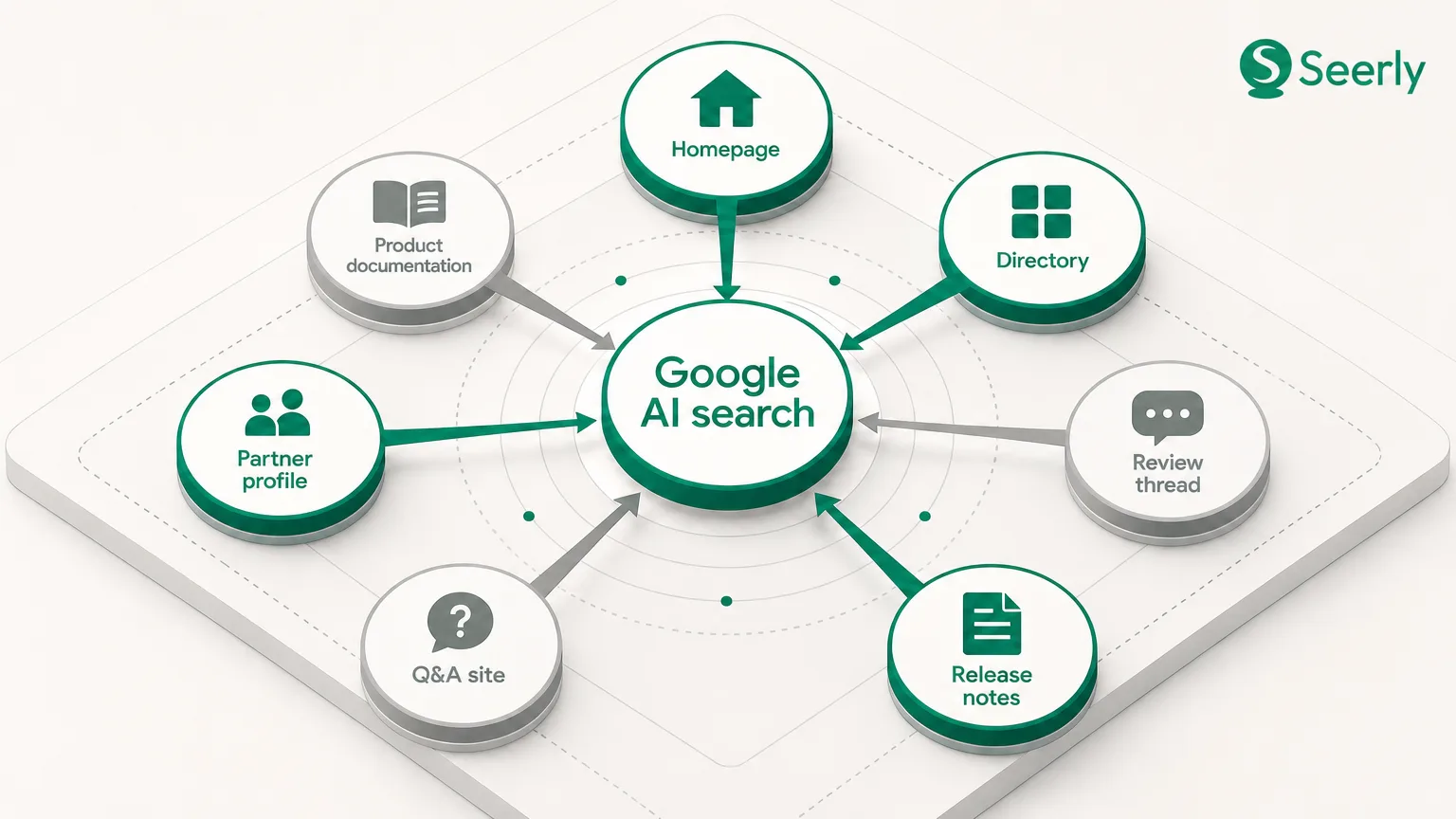
Start by creating a source inventory. Do not begin with an exhaustive search for every mention. Instead, build a list of the source types most likely to answer a buyer’s high-value questions about what you sell, who it is for, how it works, and whether it is credible.
Owned pages and product documentation
Review your homepage, solution pages, industry pages, pricing information, comparison pages, help centre, release notes, case studies, and old campaign landing pages. Older pages are especially important because they may remain indexable, linked from other sites, or visible in internal site search even after the marketing team has moved on.
Documentation deserves its own review because it often contains the most precise product claims. Check integration lists, supported features, limits, setup requirements, security information, and deprecation notices. If the sales site says one thing while documentation says another, buyers - and potentially AI-generated responses - have conflicting evidence to work with.
Directories, listings, and partner profiles
Third-party listings are often concise, structured, and built around the exact categories buyers use when evaluating vendors. Inventory major software directories, industry associations, app marketplaces, local business profiles where relevant, recruitment pages, and company databases. Record the company description, category, pricing language, feature list, logo, website URL, and the date the listing was last verified.
Partner pages can be equally influential. A technology partner may describe an integration that has changed, a reseller may preserve an outdated positioning statement, or an agency profile may list services you no longer provide. These pages can be credible in a buyer’s eyes because they appear independent, even when the description originated from a past co-marketing brief.
Reviews, media, and public discussion spaces
Customer-review sites, editorial coverage, podcasts, conference materials, community forums, Reddit threads, public social posts, and Q&A sites can all shape the context around your brand. They should not be treated as equivalent sources: a dated opinion in a discussion thread is different from a factual error in a widely used directory. Still, both can reveal language, concerns, and historical claims that buyers may encounter repeatedly.
Add each source to a working inventory with five fields: URL, source type, key claim, last-known update date, and whether the claim is owned or externally controlled. This creates a usable baseline for AI search visibility work. It also prevents a common failure mode: reacting to whatever appears in one AI response without knowing whether that claim is isolated or part of a wider public pattern.
Separate high-risk claims from harmless historical references
Not every old statement needs correction. A 2019 announcement about a funding round may be historically accurate and commercially irrelevant. By contrast, a current directory profile stating that your product lacks a now-core capability can create avoidable friction at exactly the point a buyer is narrowing a shortlist.
Use a six-factor prioritization framework to assess each claim. Score every factor from one to five, then sort items by total score and discuss the top group in a cross-functional review.
| Factor | What to assess | High-risk signal |
|---|---|---|
| Buyer impact | Could this affect evaluation, trust, or purchase decisions? | It concerns core capabilities, compliance, price, availability, or target customer |
| Factual accuracy | Is it demonstrably true today? | It is false, misleading, or missing essential context |
| Freshness | Does the age of the statement create a current misunderstanding? | The product, policy, or market position has materially changed |
| Ownership | Can your team directly edit the source? | A high-authority third party controls it and has no obvious update process |
| Likelihood of repetition | Is the wording copied, syndicated, or often repeated? | It appears across listings, articles, and partner pages |
| Ability to substantiate | Can you support the corrected version with evidence? | The team lacks approved documentation, proof, or a clear owner |
Worked example: an outdated integration claim
Imagine a B2B software company whose old partner page says, “The platform integrates with CRM A only through custom development.” That statement may have been accurate in 2022. The company now offers a native integration, but its directory entry, two partner profiles, and a customer review still repeat the earlier limitation.
This claim should receive a high score. It has direct buyer impact because integration capability can affect whether a prospect books a demo. It is factually outdated, likely to recur because several public sources use similar language, and easy to substantiate through current documentation and product release notes. The remediation priority is not merely to make a better AI answer appear; it is to make the public evidence consistently reflect what buyers can verify.
By comparison, an old media article calling the company a “startup” may be harmless if the term does not distort current capabilities or trust. Preserve historical context where appropriate. Governance is about correcting material inaccuracies, not attempting to erase every trace of the company’s past.
Test the questions buyers actually ask
A single Google AI search result is not a definitive audit. Responses can vary by query wording, user context, location, time, and the information available to the system. Treat testing as a structured observation process that helps your team identify recurring claims and source gaps - not as proof that one wording will always appear.
This matters because AI summaries can change how people interact with search results. In a 2025 study of U.S. Google users, Pew Research Center found that users clicked a traditional result on 8% of visits with an AI summary, compared with 15% of visits where no AI summary appeared. That does not mean every buyer avoids websites, but it does raise the value of ensuring the information in the discovery experience is accurate before a visit occurs.
Build a small buyer-question set
Begin with 10 to 15 questions collected from sales calls, search query data, customer-success conversations, product demos, and competitive research. Focus on questions that can materially change evaluation. A useful set usually includes category, use case, comparison, trust, implementation, and limitation questions.
For example, a brand might test:
- “What is [Brand] used for?”
- “Is [Brand] suitable for enterprise teams?”
- “Does [Brand] integrate with [system]?”
- “What are alternatives to [Brand] for [use case]?”
- “Is [Brand] compliant with [relevant requirement]?”
- “What do customers say are the limitations of [Brand]?”
Use the language buyers naturally use rather than only branded marketing terminology. Researching AI buyer questions through Google Trends can help teams distinguish broad category curiosity from the specific questions that signal evaluation intent.
Record observations and preserve evidence
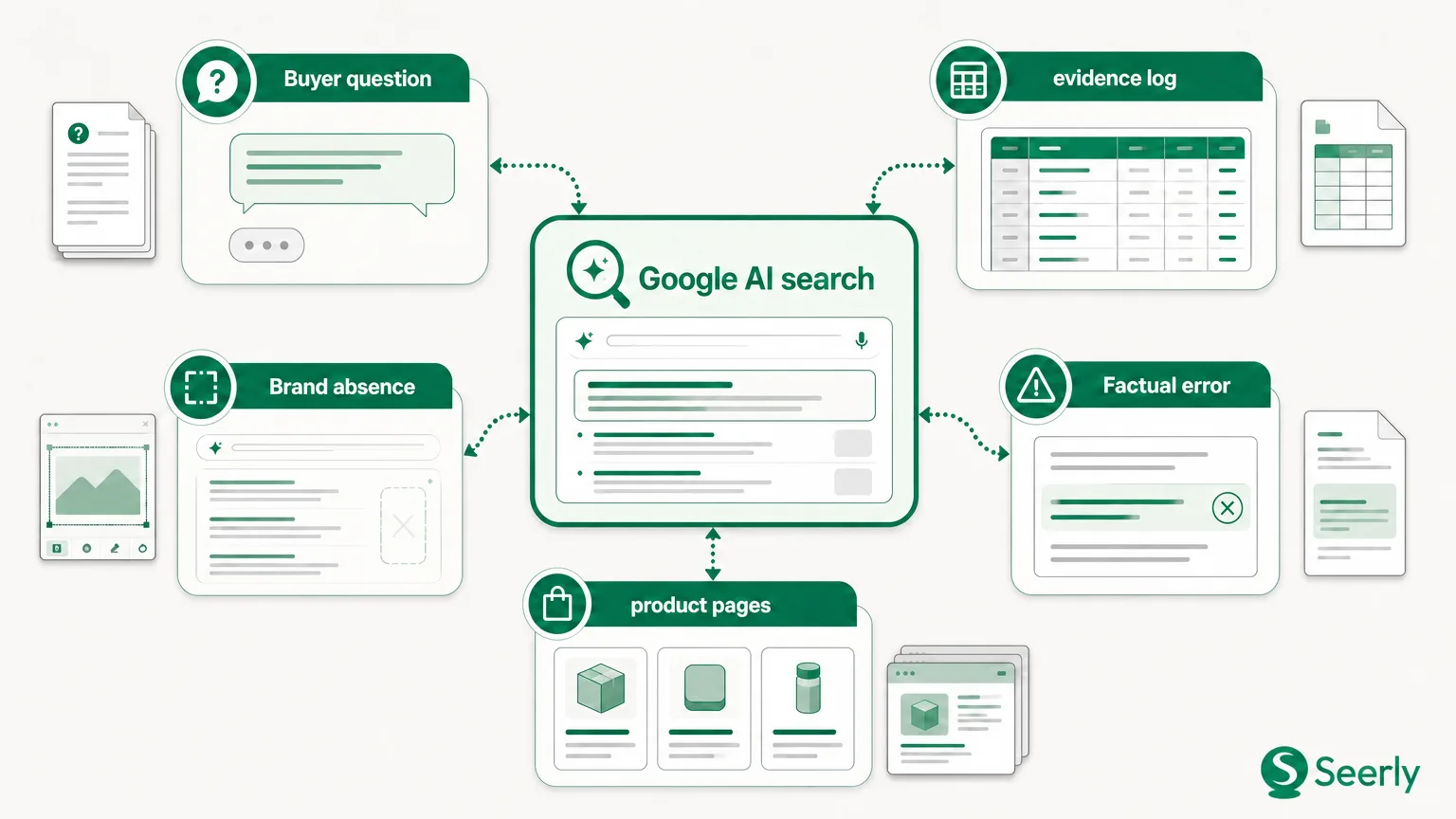
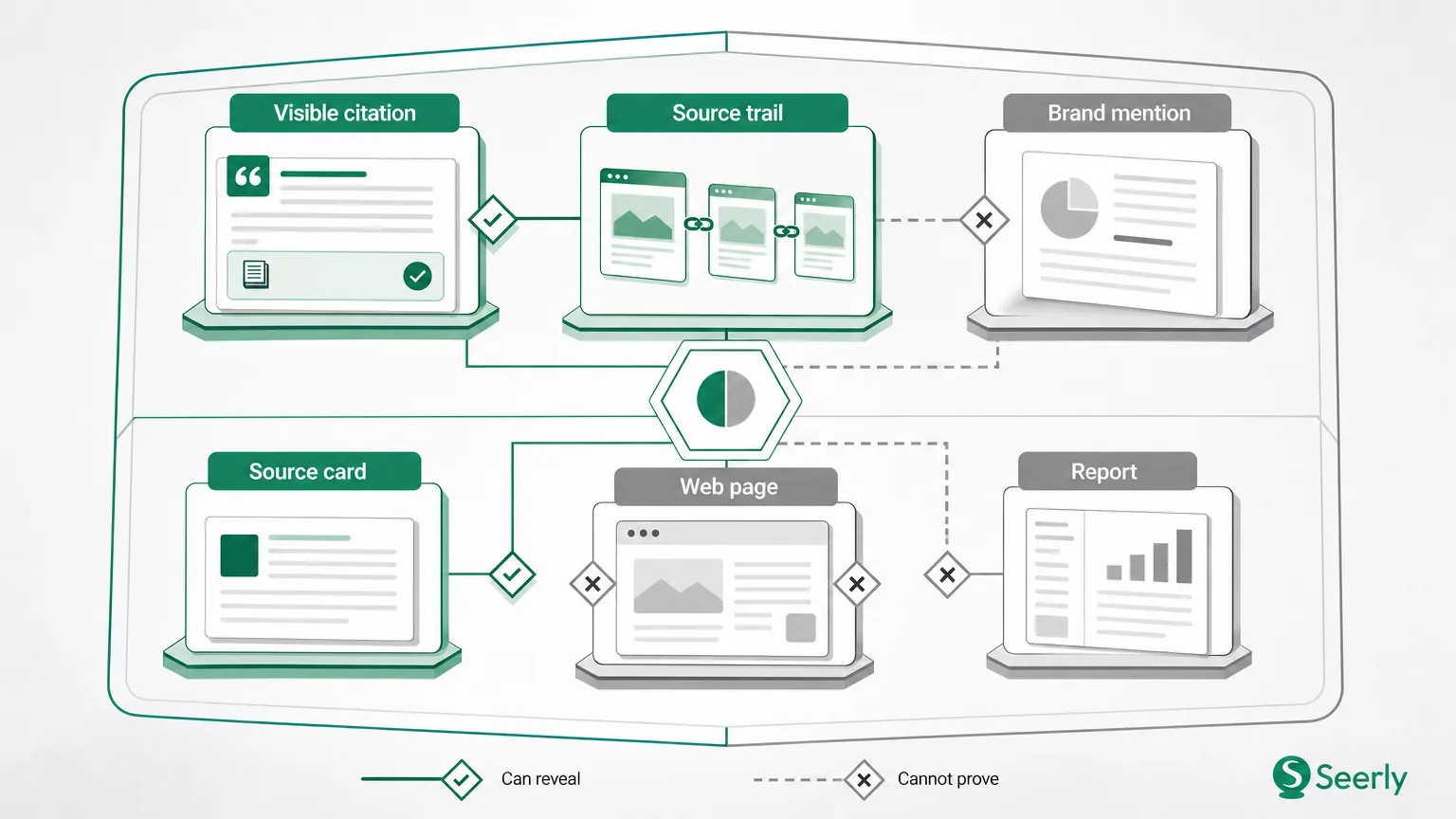
For each query, record the date, query wording, answer text relevant to the brand, cited or linked sources where shown, positive and negative claims, and screenshots or exports permitted by your internal process. Add a column for confidence: “repeated across tests,” “appeared once,” or “requires further review.”
Then compare claims across the full question set. Look for statements that recur in multiple answers, appear across different buyer questions, or consistently point to the same external source. Those patterns are more actionable than a single surprising response. They show where the public narrative may be coherent, incomplete, or contradictory.
Google advises site owners that there are no special technical requirements or separate markup needed to appear in its AI features beyond the existing eligibility and content fundamentals for Google Search. That is another reason to avoid narrow “AI-only” fixes. Strong source content, understandable pages, and verifiable claims remain the practical foundation.
Fix the source rather than only reacting to the answer
When an AI-assisted answer repeats an outdated or unsupported statement, begin with the evidence behind it. Attempting to influence the phrasing of an answer without improving the underlying record creates a fragile process. The more durable approach is to correct, clarify, or supplement the source material that a buyer can independently inspect.
Use the following decision path for each prioritized claim.
If the claim is on an owned page
Correct the page, then check for duplicates across your site. Update the visible copy, structured details where relevant, supporting documentation, and any internal links that still lead users to obsolete information. If the page must remain for historical reasons, add accurate context rather than silently leaving a misleading statement live.
Where a claim is consequential - such as security, compliance, pricing, performance, or availability - publish evidence that can withstand scrutiny. That may include a current policy, technical documentation, methodology, release note, or approved customer case study. Clear original evidence also supports the broader principle behind content that gets cited in AI answers: useful information should be specific, attributable, and easy to validate.
If the claim is in a directory or partner profile
Identify the source owner and follow its correction process. Provide precise replacement copy, the destination URL for substantiation, and a concise explanation of what changed. Avoid sending vague requests such as “please update our listing”; they create work for editors and increase the chance that an incomplete revision is made.
For partner materials, involve the relationship owner. A partnership manager, customer-success lead, or product alliances contact may be better placed than marketing to explain the change and secure an update. Keep a record of the request, the requested wording, the date submitted, and whether the page was updated.
If the claim is in independent coverage or public discussion
Do not try to treat independent opinion as a factual error simply because it is unfavorable. First distinguish between an opinion, a historical statement, an unverified allegation, and a demonstrably false claim. If a correction is appropriate, contact the publisher with evidence and a narrowly scoped request.
When you cannot control a source, document it as an external risk and strengthen the authoritative information you do control. For example, if old reviews describe a former limitation, publish a dated product update that explains the change, update documentation, and ensure customer-facing teams can discuss it consistently. The objective is not to suppress conversation; it is to ensure buyers can find current, substantiated context alongside it.
Assign owners and review intervals
Public narrative management fails when it becomes “marketing’s problem” without product knowledge, legal guardrails, or operational follow-through. Assign a clear accountable owner for the programme - usually a brand, content, or digital marketing lead - while distributing subject-matter responsibility to the teams best qualified to validate claims.
Marketing should maintain the source inventory, coordinate testing, report narrative risks, and manage owned-page updates. Product should validate capability and roadmap-related statements. Customer success should contribute recurring implementation questions and customer misconceptions. Legal or compliance should review regulated claims, contractual wording, and sensitive corrections. Subject-matter experts should approve evidence for technical, security, medical, financial, or industry-specific statements.
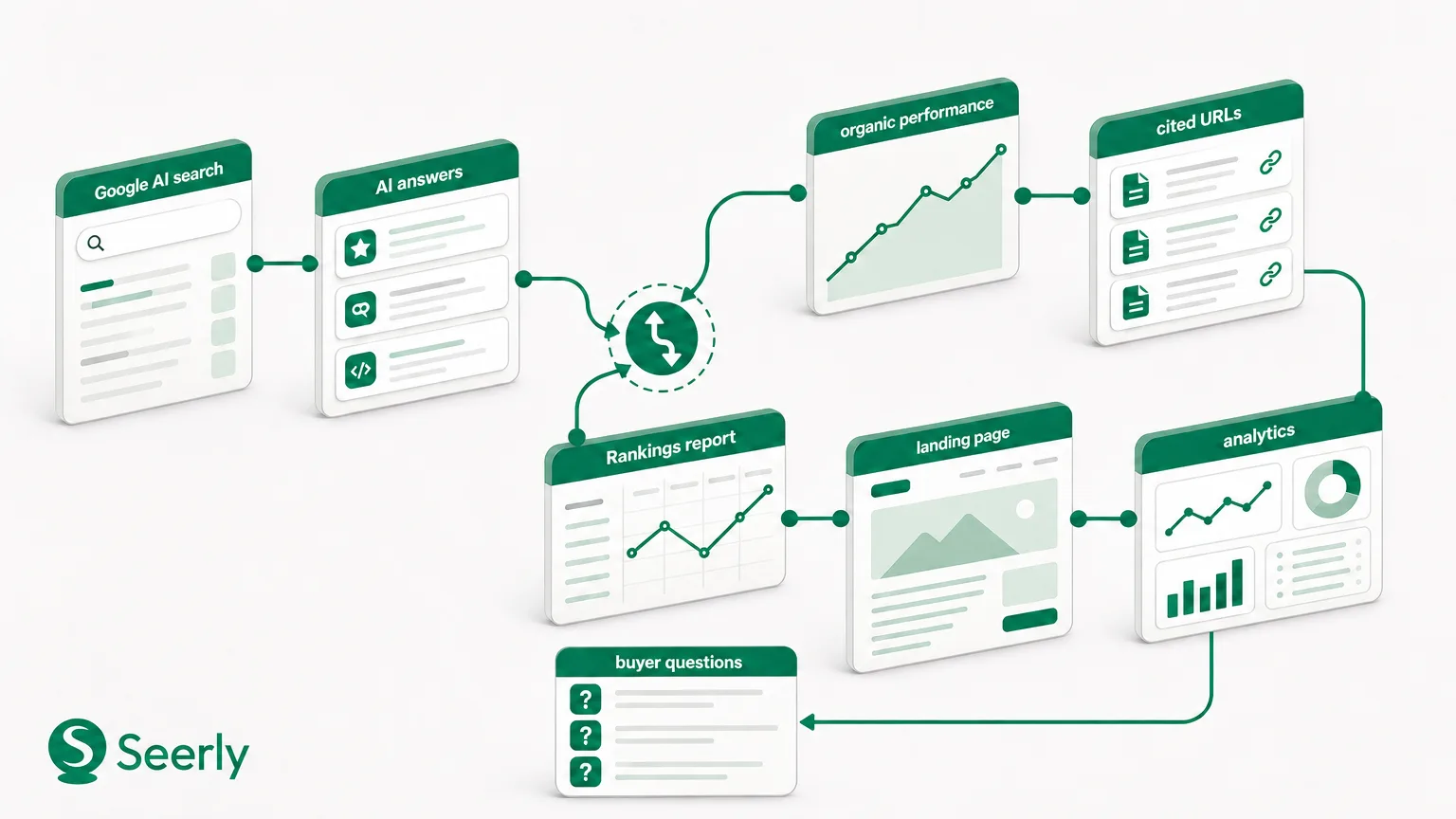
Set review intervals based on change velocity and buyer impact. Review core brand, pricing, product, and compliance claims quarterly at minimum; review after launches, acquisitions, migrations, major policy changes, or partnership changes; and conduct a broader source inventory refresh every six to twelve months. A repeatable 90-day search maintenance loop can make this work operational rather than reactive.
Measure whether narrative cleanup is improving discoverability
Narrative cleanup should be measured as representation quality, not as a promise of immediate traffic or visibility gains. Google’s AI search experiences continue to evolve, and no team can responsibly guarantee a fixed answer placement. What teams can measure is whether their public evidence is becoming more accurate, complete, consistent, and easier to verify.
Create a monthly or quarterly scorecard with five indicators:
- Recurring claim accuracy: the share of repeated buyer-relevant claims that are accurate, current, and supported.
- Source coverage: the percentage of priority source inventory reviewed and verified within the agreed interval.
- Citation or source presence: the number of priority buyer questions where owned authoritative content is visible, linked, or otherwise represented in the observed result set.
- Sentiment and context: changes in whether recurring descriptions are positive, neutral, negative, or incomplete - and why.
- Unresolved-risk items: the count, severity, source owner, and age of open issues that cannot yet be remediated.
These indicators give leaders a more defensible picture than a single ranking-style metric. They also reveal whether the team is improving the inputs it controls. For broader context, Google has continued expanding AI Overviews and AI Mode capabilities, while emphasizing that Search remains a route to content across the web - not a separate channel detached from normal web publishing.
FAQ
Does correcting one page change Google AI search immediately?
No. Updating an owned page improves the accuracy of a source you control, but it does not guarantee that an AI-assisted response will change immediately or use that page. Search systems need time to recrawl and reassess content, and responses may vary by query. The right measure is whether the corrected claim is supported consistently across the public record over repeated reviews.
Should brands remove all old content?
No. Remove, redirect, or revise content when it is inaccurate, misleading, duplicative, or no longer useful. Retain historical content when it has clear archival value and is properly contextualized. A dated announcement can be valid history; it becomes a discovery risk when readers could reasonably mistake it for a current product or company claim.
Who should approve public claim corrections?
Approval should match the claim’s risk. Marketing can often approve routine positioning and factual page maintenance, while product should validate feature claims and legal or compliance should review regulated, contractual, security, or high-stakes statements. The important point is to define this workflow before an urgent correction is needed.
Build the public record buyers deserve to find
AI-search readiness starts well before a buyer sees an AI-generated answer. It starts with the distributed record your company has created across websites, documentation, partner ecosystems, directories, reviews, media, and public discussion. The more accurate and evidence-backed that record is, the better equipped buyers are to understand your brand on their own terms.
Choose one high-value buyer question this week. Inventory the sources that could shape its answer, identify every claim your team cannot support today, and assign an owner and due date for each remediation item. To turn that process into an ongoing visibility practice, explore how Seerly helps teams monitor AI search visibility.