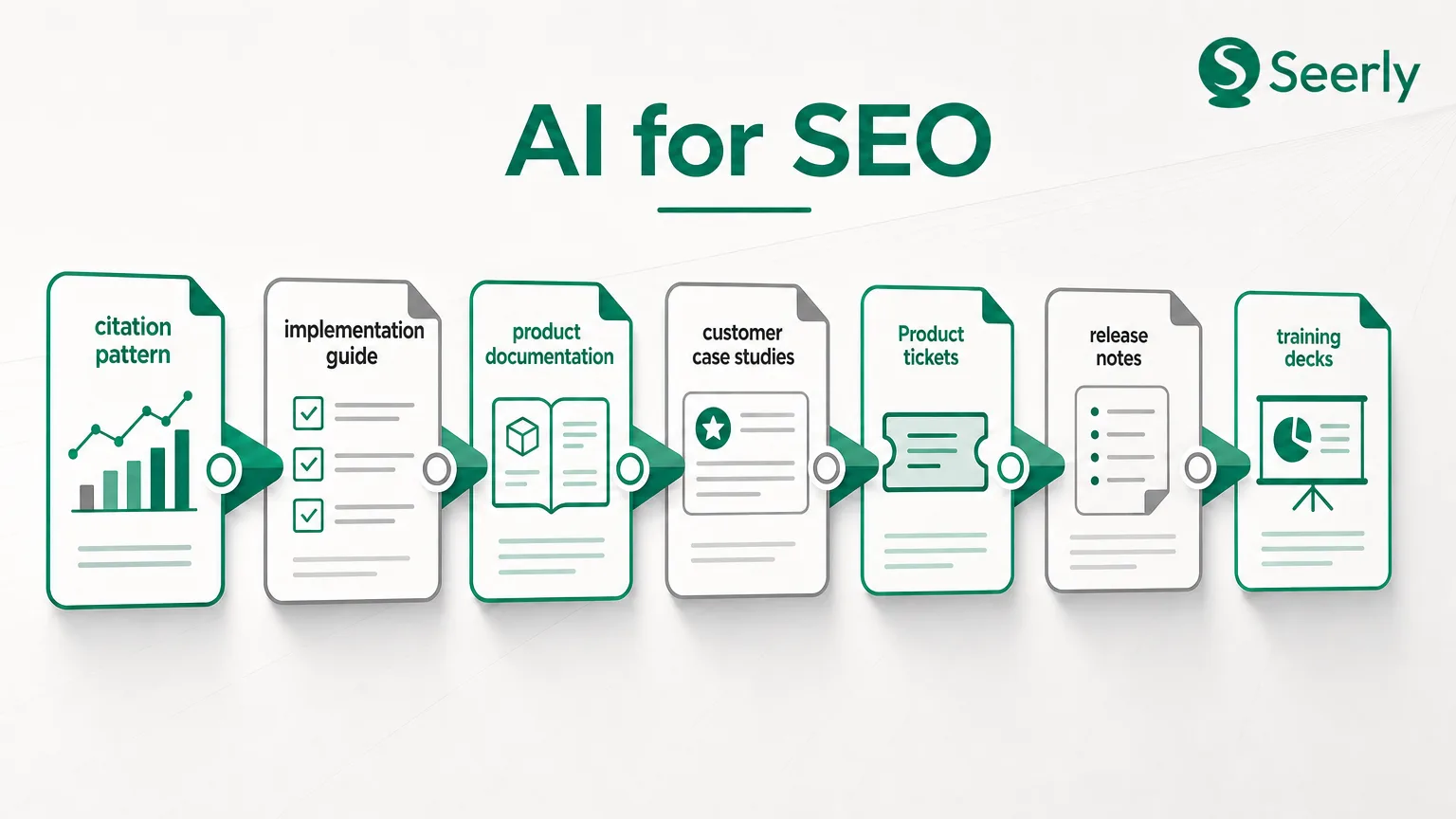
Content That Gets Cited: How to Structure Pages for AI Answers
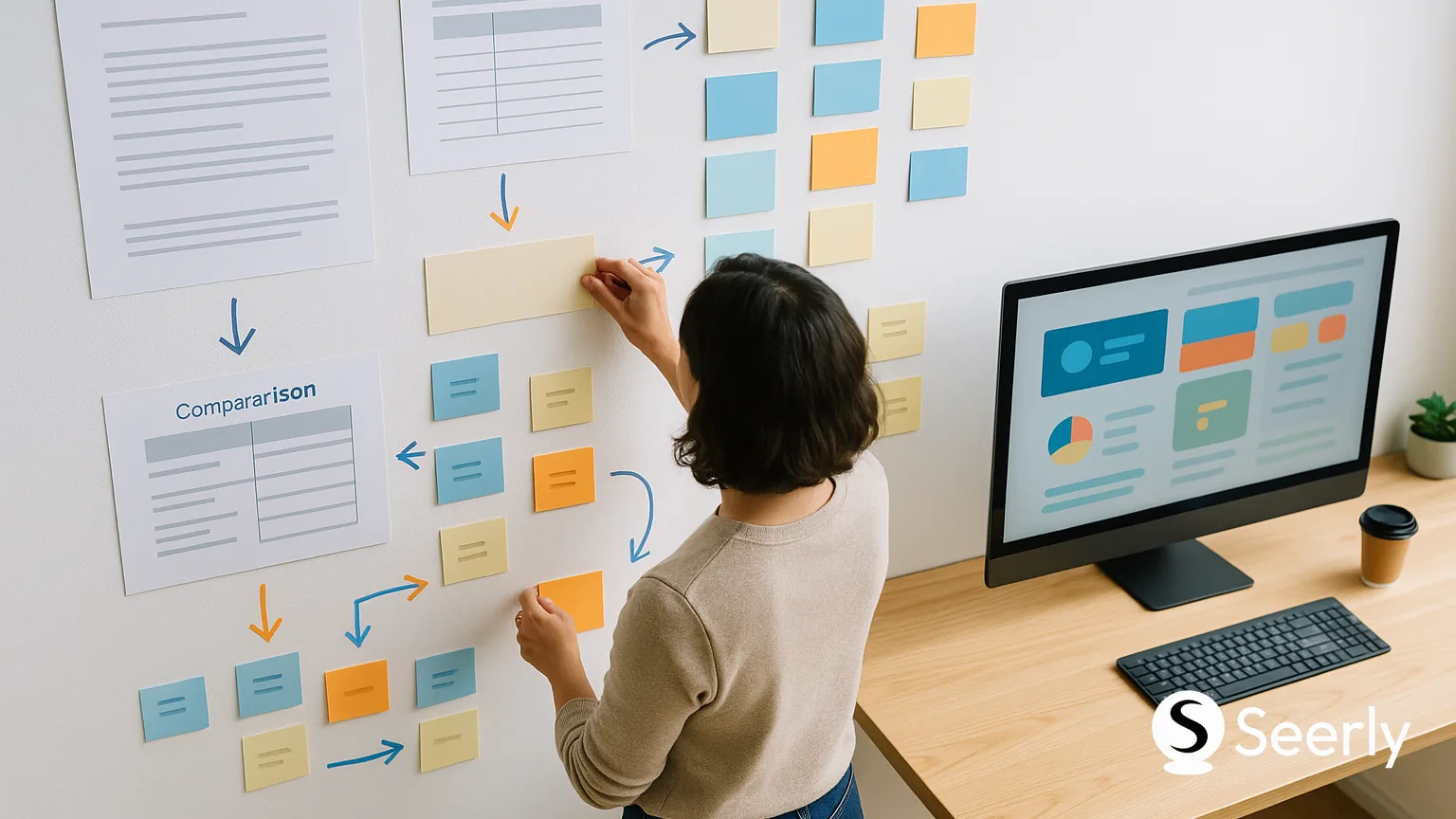
Why strong writing still disappears in AI answers, and how content teams can rebuild pages so facts are easier to find, compare, and quote.
A weird thing is happening in content teams right now. Pages that would have ranked fine a year ago, pages with clean copy, decent keyword targeting, and polished design, still fail to show up when someone asks an AI assistant a direct question. The team looks at the page and thinks, “But the answer is in there.” And they’re right. It is in there. It’s just buried under positioning copy, soft claims, and loose structure.
I’ve seen this more than once while reviewing how teams use search engine optimisation tools. The tool stack gets blamed first. People ask whether they need a better writer, another content brief platform, or a new workflow for answer engine optimization. But the page itself is often the issue. Not bad content. Bad extraction.
That difference matters more than people admit. AI systems don’t read like loyal buyers reading a homepage. They scan for pieces they can trust, isolate, compare, and restate. A page can persuade a human and still be lousy for AI citations. That’s the uncomfortable part.
If you manage briefs, templates, glossaries, or editorial standards, the job has changed. You’re not only publishing for rankings or conversion paths now. You’re designing pages for retrieval and citation too. And yes, that changes how content optimization for seo works in practice.
Why good pages still miss AI citations
A lot of vendor pages were built to guide a narrative. Fair enough. Marketing pages usually lead with emotion, differentiation, then a proof point somewhere lower down. Humans can follow that path. AI systems often don’t.
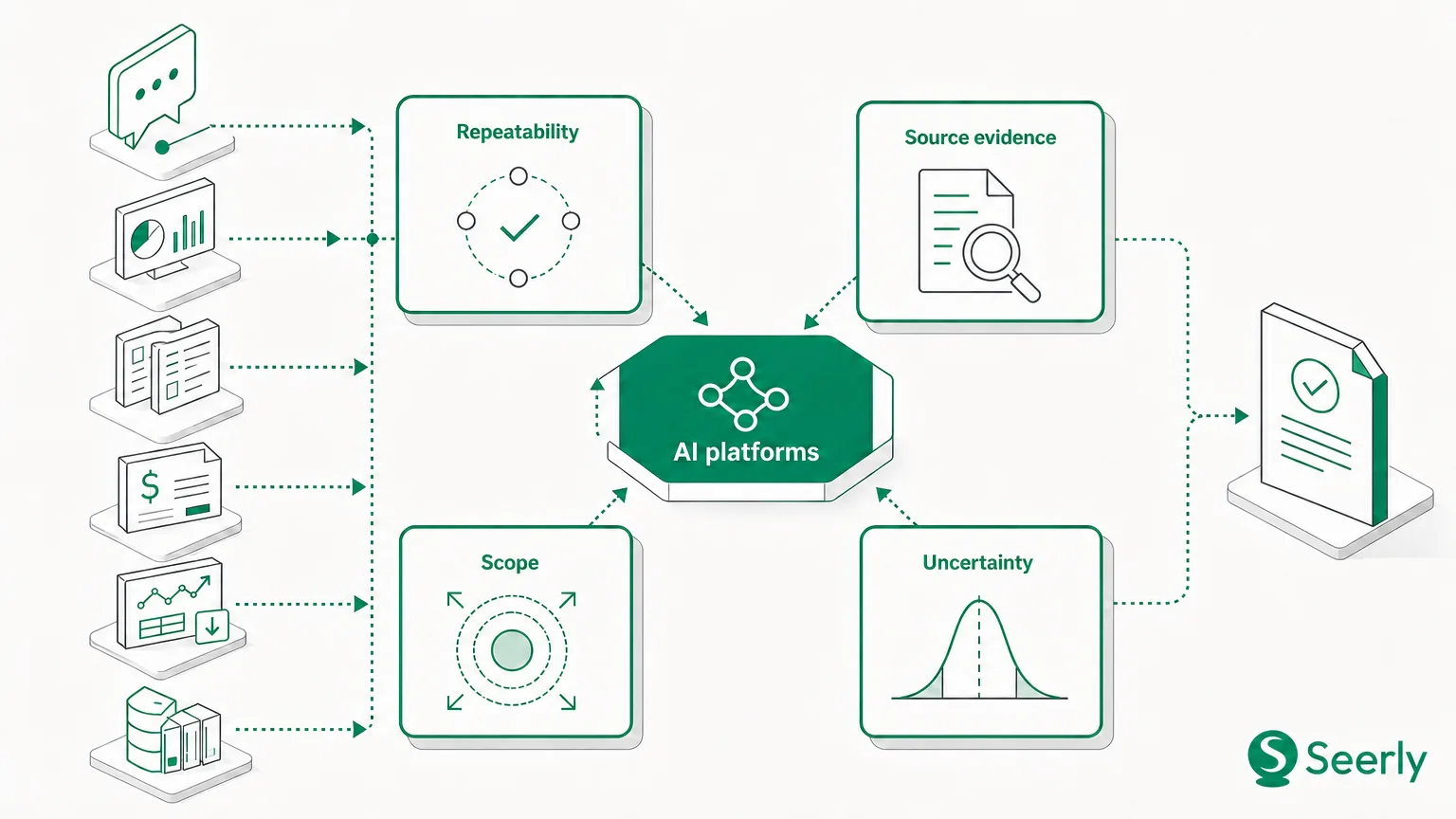
The research is starting to point in the same direction. One study of 102 brands across five engines found that visibility in AI answers varied sharply by engine and wasn’t explained by traditional rankings alone, which tells you AI visibility has its own rules and blind spots. Another benchmark report found that pages cited by AI answers often had clearer factual formatting and stronger query-to-answer alignment than pages written mainly for persuasion.
Look at a common SaaS page and you’ll spot the problem fast. The product category is vague. The main claim has no source. Definitions are implied instead of stated. A feature list exists, but no section clearly answers “What is this tool?”, “Who is it for?”, or “How is it different from alternatives?” So an answer engine has to infer too much.
That’s where many teams get stuck. They’re publishing content that sounds smart but acts slippery. And slippery content rarely earns AI citations.
Persuasive copy and extractable copy are not the same
A sentence like “We help teams win in modern search” sounds fine on a landing page. But what can an AI system quote from it? Not much. Compare that with: “Seerly is an AI search visibility platform that tracks brand mentions, citations, and prompt coverage across answer engines.” Now there’s a category label, functional description, and quotable language.
The thing is, a lot of old-school SEO habits trained us to avoid repetition and write with flow. Humans like flow. Machines like clarity. You need both. That tension sits at the center of answer engine optimization.
Unsupported claims are dead weight
Claims without proof now create two problems. A reader may doubt them, and an AI system may skip them. TechRadar’s reporting on AI search has also pointed to trust and verification becoming bigger factors in brand visibility, especially when engines decide what sources are safe to surface.
So yes, “fast,” “accurate,” and “leading” copy still fills the web. But if those words don’t sit next to evidence, they don’t travel well.
The anatomy of citation-friendly content for search engine optimisation tools
Once you stop asking “How do we sound better?” and start asking “How do we become easier to quote?”, page structure gets simpler. Not easier to write, maybe. But simpler.
A citation-friendly page usually contains a few repeatable building blocks.
1. Start with a summary block
Put a short answer near the top. Two to four sentences. Name the thing, state what it does, and define the use case. If the page is about a platform in the search engine optimisation tools category, say so plainly.
Definition: A citation-friendly summary block is a short section near the top of a page that states what the page is about, who it serves, and the main factual takeaway in direct language.
That block does a lot of work. It helps readers orient themselves, and it gives answer engines a clean chunk to extract without digging through brand copy.
2. Label the product or topic with zero ambiguity
Don’t make the engine guess whether you’re a platform, workflow app, agency, or category guide. Product/category labeling matters because comparison questions depend on it. If someone asks for alternatives, use cases, or differences, the engine needs a clean noun phrase to work with.
Honestly, I think this is where many pages quietly fail. Teams obsess over tone and underinvest in naming.
3. Pair each claim with nearby proof
If you say a tool tracks prompts across models, show the models. If you say your method improves coverage, explain how you measured it. Research into what drives AI citations has found structured evidence and explicit support matter more than broad promotional language.
Put proof right next to the claim. Not ten scrolls later.
4. Use comparison tables where the query implies comparison
A lot of AI prompts are hidden comparison prompts. “Best tools,” “difference between,” “how does X compare,” “what should I use.” If your page discusses options, don’t force the reader or the model to stitch it together from prose.
A simple table works:
| Tool | Primary use | Best for | Evidence on page |
|---|---|---|---|
| Seerly | AI visibility tracking | Teams measuring citations and prompt coverage | Methodology, metrics, examples |
| Clearscope | Content grading | Teams improving on-page content depth | Optimization workflow, scoring |
| Semrush | Broad SEO suite | Teams managing search across many functions | Keyword, backlink, audit coverage |
Even review coverage tends to reinforce this distinction. TechRadar’s Clearscope review frames it as a focused content tool, while its Semrush review presents a broader search platform.
5. Add glossary entries and FAQs where confusion is likely
If your page uses terms like AI visibility, prompt coverage, citation share, or answer engine optimization, define them in place. Don’t assume shared vocabulary. Small glossary sections reduce ambiguity, which makes extraction easier.
And FAQs still help, when they answer real objections instead of padding the page.
A before-and-after rewrite of a typical vendor page
Here’s the kind of page I mean.
The original version opens with a polished headline: “Grow your presence in the future of search.” Then it follows with a subhead about helping brands adapt. Three feature cards appear. A testimonial shows up. Somewhere lower down, there’s a sentence saying the platform tracks citations across AI engines. Useful? Yes. Easy to cite? Not really.
Now watch what changes when you rebuild it for answer readiness.
Before: soft positioning, hidden facts
The product category isn’t named clearly. The use case sits behind abstract phrasing. No section answers direct questions. The proof is scattered. A human can piece it together. A model may not bother.
That’s not a writing failure. It’s a content design failure.
After: explicit structure, quotable units
Rebuilt version:
-
Top summary block
“Seerly is an AI search visibility platform for content and brand teams. It tracks citations, mentions, and prompt coverage across answer engines so teams can measure how often their content appears in AI-generated responses.” -
Direct definition section
“What is AI search visibility?” followed by a concise explanation. -
Capabilities with proof
Each capability gets one claim and one evidence point close together. -
Methodology section
Explain how coverage is measured, what counts as a citation, and what prompts were tested. -
Comparison table
Clarify how the platform differs from classic SEO suites or content scoring tools. -
FAQ
Answer the practical objections buyers and editors actually have.
That’s a very different page. It’s still persuasive. But now it’s also extractable.
I’d also add a link to a deeper explainer when the page touches adjacent concepts. A strong example is Seerly’s own piece on content optimization for AI engines, which works well as supporting context instead of forcing every page to carry every explanation.
Reusable editorial templates that make AI visibility easier to earn
Most teams don’t need a new philosophy deck. They need page blueprints. The more I looked at this, the more I realized the real bottleneck wasn’t creativity. It was repeatability.
Comparison post template
Use this when the page compares tools, methods, or categories.
Include:
- A one-paragraph answer at the top
- Who each option fits
- A dated comparison table
- Clear criteria
- A short methodology note
If you publish “Seerly vs Clearscope,” don’t bury the basis of comparison. State whether you’re comparing content scoring, AI visibility tracking, or editorial workflows. Big difference.
Category page template
This suits terms like search engine optimisation tools or answer engine optimization software. Start with a category definition, then list the core subtypes. After that, explain how buyers should evaluate them. Finish with a comparison snapshot and FAQ.
That structure matters because category queries often feed both search results and AI summaries. Seerly’s article on AI search optimization tracking and visibility is a useful model for connecting category education with measurement logic.
Methodology page template
A lot of teams skip this. Bad idea.
If you publish studies, benchmarks, or proprietary data, build a page that spells out:
- sample size
- date range
- sources reviewed
- scoring logic
- limits of the analysis
Academic work on citation prominence in professional SEO markets suggests visibility in generative answers depends partly on how clearly source credibility and topic fit come through. Methodology pages help with exactly that.
Glossary page template
Glossaries aren’t glamorous, but they’re quote magnets when done well. Use one term per page or a tightly grouped set of terms. Open with a plain-language definition, then add examples, related terms, and one “how it’s measured” note if relevant.
If your team keeps debating wording in briefs, that’s your cue. Build the glossary.
What to measure after publishing
A page rewrite can fail in rankings and still win in AI answers. Or the reverse. So if your dashboard only tracks classic rank movement, you’ll miss the point.
Here’s the numbered process I’d use:
-
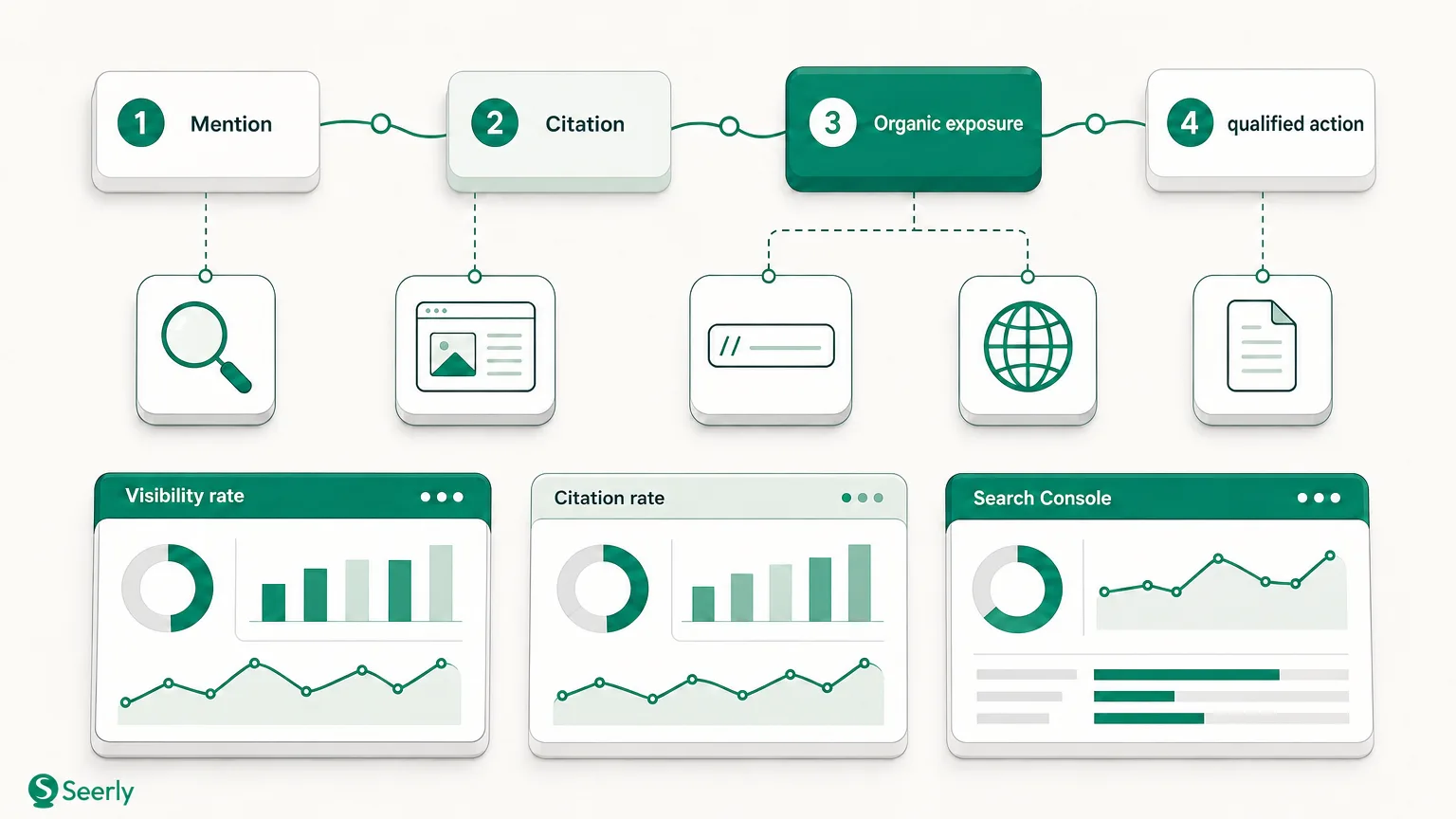
Track citation presence for target prompts
List the prompts that matter most, then record whether your page gets cited, summarized, or ignored. Use the same prompt set each week. -
Measure answer inclusion, not only link clicks
If the page gets referenced in answers, that’s movement, even if referral traffic lags. Some of that value shows up earlier in brand recall than in sessions. -
Review prompt coverage by topic cluster
Don’t ask only “Did we appear?” Ask where you appeared. Definitions? Comparisons? Product recommendations? Different structures win in different prompt types. -
Compare pre- and post-restructure extraction quality
Can someone summarize your page in two sentences without guessing? Can they pull a comparison point fast? If yes, your content design improved.
A broader 2026 benchmark on AI visibility reported that structure and source clarity correlated with better presence across generative surfaces, while vague commercial pages struggled to show up consistently. That lines up with what many content teams are already seeing in practice.
If you want a framework for monitoring these shifts, Seerly’s write-up on AI visibility metrics is worth reading. It helps separate vanity numbers from the stuff that actually tells you whether your page is becoming easier to retrieve and quote.
FAQ
Does AI-friendly structure hurt conversions?
Not if you do it well. Clear summaries, explicit definitions, and nearby proof often reduce friction for human readers too. People don’t hate clarity. They hate bloated pages that repeat themselves without saying anything.
How much repetition is too much?
Repeat the facts that matter. Don’t repeat slogans. If your product category, use case, and proof point appear in the summary, feature section, and FAQ, that’s usually fine. Readers scan. Models extract. A little repetition helps both.
Does every page need FAQs?
No. Add FAQs where objections or ambiguity exist. A thin FAQ added for ritual reasons won’t help much. A sharp FAQ that answers “who is this for?” or “how is this measured?” often does.
Does every page need schema?
No again. Schema can help machines interpret a page, but it won’t rescue weak structure. Start with clear content blocks, direct definitions, and evidence tied to claims. Then add markup where it fits.
Are classic SEO tools enough for answer engine optimization?
Sometimes yes, often no. Traditional suites help with ranking inputs, content audits, and keyword research. But answer engine optimization asks a different question: can a model extract a trustworthy answer from your page quickly? That’s why teams increasingly pair classic platforms with tools and workflows focused on AI visibility and citation tracking.
Pick one high-value page this week. Not ten. One.
Rewrite the top section so the product or topic is named clearly. Add a direct definition. Move proof next to every claim. Put in a comparison table if the query calls for one. Then test whether the new version is easier to summarize, quote, and differentiate.
That exercise tells you more than another abstract discussion about the future of content. And if you want more thinking on how teams can track and improve that shift, learn more at learn more.