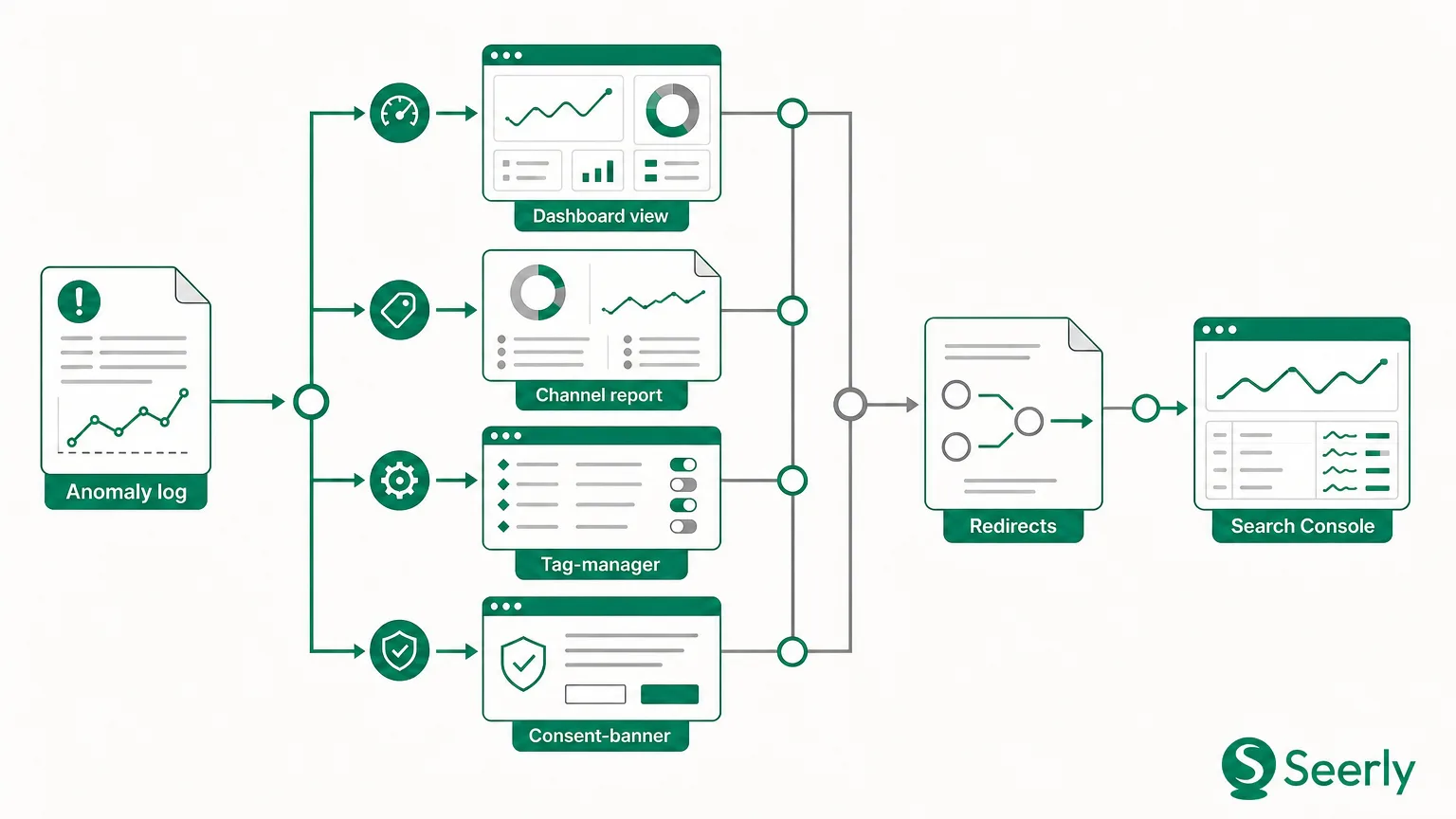
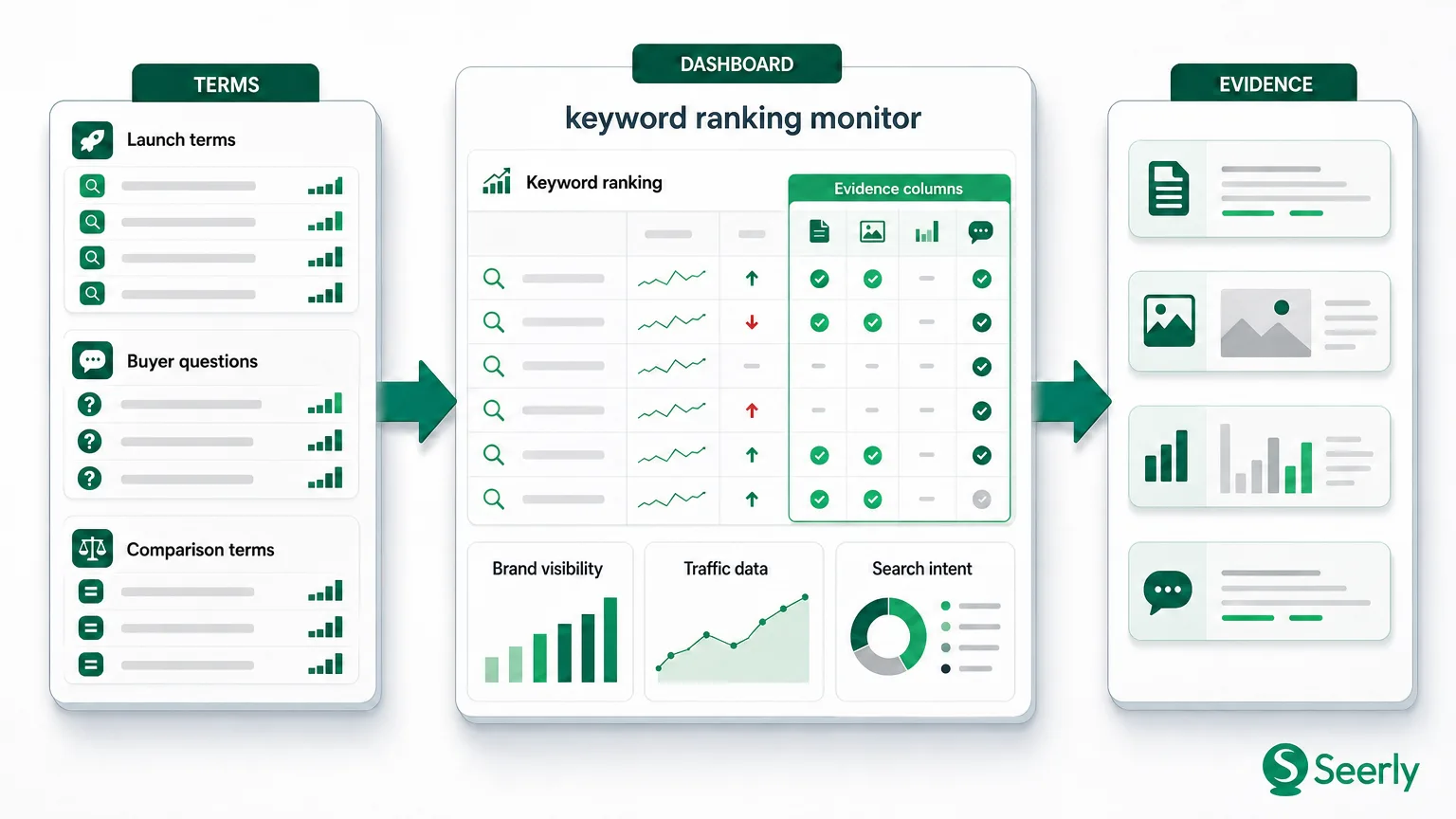
Search Engine Optimization Advice You Can Verify: A Proof-First Framework for Evaluating AI Visibility Claims

Trust in SEO advice is under pressure, especially when that advice is wrapped in bold claims about “AI visibility.” Buyers are seeing more polished screenshots, more confident attribution, and more vendor language that suggests a direct line from one optimization change to being cited in generative search. At the same time, the field itself is expanding fast enough that even the terminology is still settling; search engine optimization now overlaps with areas often described as generative engine optimization and AI search visibility. That combination - high commercial pressure and unclear standards - is exactly why marketing leaders need better ways to test what they are being told.
The skepticism is not irrational. SEO remains important because organic search still drives measurable business value, and click distribution is still highly uneven, with top-ranking positions earning a disproportionate share of clicks. But the leap from “SEO matters” to “this vendor can reliably move your brand inside AI answers” is where weak evidence often enters. Google itself continues to stress creating helpful, reliable, people-first content, while recent search volatility, including the March 2026 core update changes, reminds buyers that visibility claims need context, not just snapshots. Good search engine optimization advice should therefore be testable, source-aware, and repeatable enough that your team can challenge it before you budget around it.
Why distrust is growing around SEO advice about AI visibility
The proof-first conversation is growing because many AI visibility claims are being sold like product placements rather than performance evidence. In practice, that means buyers are shown a favorable answer from one prompt, on one day, in one interface, and asked to accept it as proof of strategic mastery. Yet even broad industry coverage now frames AI search as a developing discipline where brand visibility is being reshaped by agentic and generative search behaviors, not as a channel with universally accepted reporting standards.
There is also a structural reason distrust is increasing: AI answer systems can vary by prompt wording, source retrieval, freshness, geography, account state, and model version. That makes one-off screenshots especially fragile. Research attention around AI search and optimization is accelerating, but it is still a fast-moving area where new evaluation questions are emerging around how systems retrieve, cite, and synthesize information. For buyers, the implication is simple. If evidence cannot survive basic replication, it is not yet strong enough to anchor a major SEO decision.
A checklist of red flags in weak AI visibility claims
Before reviewing any proposal, social post, or case study, use this checklist to spot warning signs. Weak search engine optimization advice often reveals itself not through one dramatic flaw, but through missing context around how the result was produced.
1. Screenshots without the original prompt
A screenshot of an AI answer without the exact query is incomplete evidence. Small wording changes can alter retrieval, ranking, and citations. If a vendor cannot show the original prompt, follow-up prompts, and testing conditions, your team has no way to verify whether the output was representative or engineered for display.
2. Rankings with no business outcome attached
A position gain may matter, but not every visibility gain is commercially meaningful. If a report celebrates movement without tying it to qualified traffic, assisted conversions, pipeline contribution, or at minimum meaningful discovery metrics, it is probably overselling the outcome. Search visibility should be translated into business impact, not treated as an end in itself.
3. Cherry-picked answers instead of sample sets
One positive answer proves almost nothing. Reliable evidence should show patterns across multiple prompts, dates, and engines. If a case study includes only the best result while ignoring neutral or negative outcomes, it is presentation, not validation.
4. No source citations or source inspection
If the claim is “we got you cited,” the obvious next question is: cited from which pages, under what content conditions, and with what consistency? Without transparent source review, buyers cannot tell whether the brand was truly selected because of relevance and authority or simply surfaced in a narrow test case.
5. No timeline for crawling, indexing, or recrawling
Visibility claims need time context. A page may have been updated recently, but if the underlying systems have not recrawled or reprocessed it, the claimed improvement may be unrelated. Likewise, if a page was already gaining traction before the intervention, the vendor may be claiming credit for a trend already underway.
The five tests buyers should run before trusting SEO advice
The best search engine optimization advice can be audited. These five tests give marketing leaders a practical framework to evaluate whether an AI visibility recommendation is real, testable, and worth acting on.
1. Verify the original prompt
Start by asking for the exact prompt that produced the showcased answer. Then ask whether the test included variations, such as branded versus non-branded phrasing, short versus detailed prompts, and buyer-stage differences. If the answer only appears under a highly specific prompt that ordinary users are unlikely to type, the result may not support the strategic claim being made.
Next, rerun the prompt internally. Use the same wording, and document the date, interface, account state, and any personalization conditions that might matter. If the result cannot be reproduced even once, confidence should fall sharply. If it can be reproduced but only under narrow circumstances, the recommendation may still be useful - but it should be treated as limited, not generalized.
2. Inspect the cited sources
The second test is to examine what the AI system actually cited or appeared to rely on. If a brand shows up in an answer, determine whether the cited page is current, relevant, and genuinely aligned with the prompt. This is where many flashy claims weaken: the mention may come from a third-party listicle, a stale comparison page, or an isolated reference rather than from the brand’s own authoritative content.
This source-level review matters because Google and other search systems continue to reward signals tied to helpful, people-first content with clear expertise and trust signals. It also helps distinguish durable visibility from accidental inclusion. For teams building repeatable evaluation habits, Seerly’s guidance on what makes a website citation-ready for answer engines and the citation mechanics behind AI search visibility offers a useful lens for checking whether the source quality actually supports the claim.
3. Compare results across engines and answer systems
Do not accept a single-engine success story as broad proof. If the recommendation is supposed to improve “AI visibility,” test it across more than one environment where possible. A result that appears in one answer system but disappears elsewhere may still be real, but it should be framed as platform-specific rather than universal.
This comparison also reveals whether the vendor understands differences in retrieval behavior instead of flattening them into one narrative. Industry reporting already suggests AI search is opening new channels of discovery, including claims that AI-crawled sites can generate significantly more human traffic, but traffic growth claims alone do not prove broad answer-engine strength. Cross-system consistency is much stronger evidence than a single favorable environment.
4. Look for before-and-after consistency
Any trustworthy recommendation should include a baseline and a post-change view measured over time. Ask what the brand looked like before the optimization, how often it appeared, for which prompt clusters, and whether the same prompts were checked again after implementation. If the “after” view uses a different set of prompts or a different reporting window, the comparison may be invalid.
Consistency matters because SEO performance can move for many reasons unrelated to the intervention. Search demand changes, competitors update pages, models refresh, and core algorithm shifts can all alter visibility. The broader SEO landscape remains volatile enough that organic search performance statistics vary widely by industry and benchmark set, which is exactly why before-and-after evidence must be methodologically clean. If a team cannot explain the baseline, you should not trust the claimed lift.
5. Separate ranking gains from citation gains
This final test is often the most revealing. Traditional ranking improvements and AI citation improvements are related, but they are not identical. A page can rank better in classic search without becoming a commonly cited source in AI answers. Likewise, a brand might appear in an answer because of third-party references even if its own pages are not ranking particularly well.
Ask the vendor to break those outcomes apart. What improved in classic organic search? What changed in citation frequency, source inclusion, or answer presence? And how were those measured separately? If all outcomes are merged into one success story, you cannot tell which mechanism actually worked. Seerly’s article on monitoring brand presence in Google AI chats versus search rankings is a practical reminder that these are distinct visibility layers and should be evaluated that way.
Worked example: evaluating a vendor case study
Imagine a vendor posts a screenshot showing your competitor named in an AI answer for “best analytics platform for mid-market SaaS,” followed by the claim that its framework drove a 300% visibility gain. A marketing leader reviewing this should not start by debating the strategy. The first step is to request the exact prompt, date, interface, and sample size behind the result.
Next, inspect the cited sources. If the answer pulls from a recent comparison page, a product documentation hub, and two reputable third-party mentions, that is more credible than a lone directory listing. Then rerun the same prompt, plus several close variants such as “top BI platform for SaaS teams,” “analytics software for revenue ops,” and “best data visualization tool for growing SaaS.” If the competitor appears in only one out of ten checks, the claim is weak. If it appears repeatedly, confidence improves.
After that, compare engines where appropriate and ask for the baseline. Was the competitor absent before the content changes, or merely undercounted? Did the vendor measure only one answer environment? Finally, split the outcome into ranking and citation effects. If classic rankings improved for a product comparison page but AI citations did not move consistently, the recommendation may still have SEO value - but it should not be marketed as decisive AI visibility proof. That distinction is what disciplined search engine optimization advice looks like in practice.
Good evidence vs. polished product placement
Good evidence is transparent about prompts, sources, sampling, and timing. It shows what changed, what did not change, and what remains uncertain. It allows a third party to reproduce at least part of the finding. It also connects visibility to business value, even if the business result is early-stage and directional rather than final.
Polished product placement does the opposite. It substitutes aesthetics for method: a clean screenshot, a bold percentage, a vague claim about “AI search domination,” and no explanation of how the result was produced. It often borrows authority from the broader importance of SEO - well established in definitions of search engine optimization as the process of improving visibility in search engines - while skipping the burden of proof for the specific claim at hand. If a buyer cannot audit the path from recommendation to reported outcome, the safest assumption is that the evidence is incomplete.
FAQ
Can small teams run these checks themselves?
Yes. A small team does not need a large research function to apply this framework. Most of the work is procedural: save the prompt, record the date, inspect cited pages, rerun a small set of prompt variations, and compare before-and-after results consistently. The point is not perfect scientific control; it is reducing the risk of acting on unverified claims.
How much proof is enough to proceed?
You do not need absolute certainty before testing a recommendation, but you do need enough evidence to justify the next investment step. In most cases, that means reproducible results across several prompts, visible source quality, and a clear baseline. If a recommendation cannot meet those standards, it may still be worth watching, but not worth scaling.
When should a single positive screenshot still be treated as noise?
Treat it as noise when there is no prompt transparency, no source context, no replication, and no time-series comparison. A single screenshot can be a useful starting clue, but it is not proof. In a channel changing as quickly as AI search, isolated wins should earn follow-up testing, not immediate budget confidence.
Search engine optimization advice is most valuable when it produces informed decisions, not just exciting demos. The practical next step is to create a simple evidence checklist your team can apply to every AI visibility claim: prompt, sources, sample size, timeline, replication, and business outcome. If you want a more structured way to validate whether recommended changes produce real prompt-level movement instead of vanity reporting, explore Seerly and build your review process around observable evidence rather than hype.