Does Schema Markup Help AI Citations? What It Actually Does for AI Readiness

Search interest around markup schema and AI visibility has risen fast because teams are trying to answer a practical question: if a page has structured data, will AI systems be more likely to cite it? The short answer is no, not directly. Schema markup can improve how machines interpret a page, but it is not a citation switch for ChatGPT, Perplexity, Google AI Overviews, or any other answer engine.
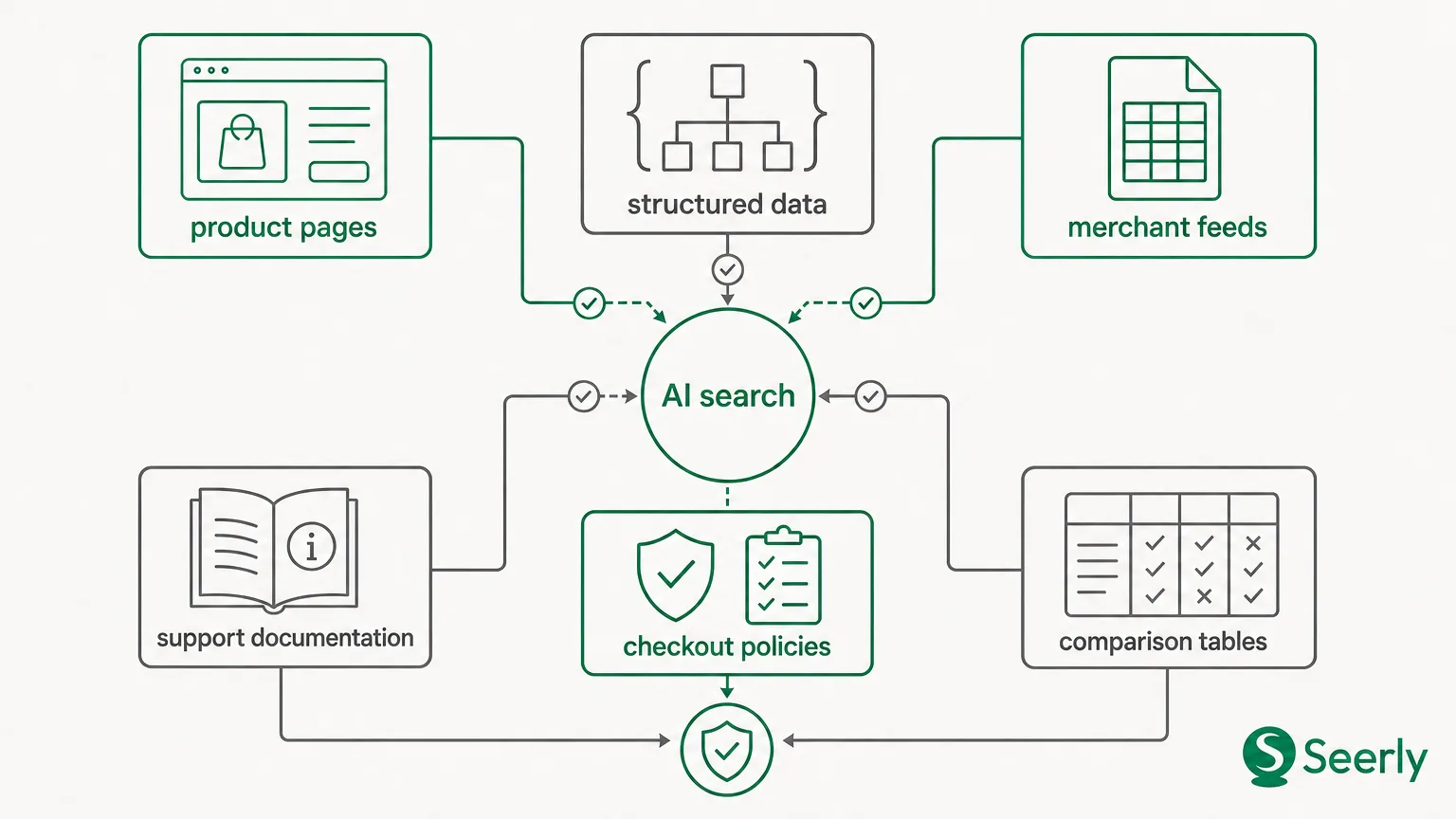
That distinction matters because implementation time is limited. SEO leads and technical marketers do not need another hype cycle around “AI hacks.” They need a prioritization model that separates what improves interpretability from what actually earns retrieval, summarization, and citation. In practice, markup schema is best understood as a support layer. It can make page structure, entities, and key attributes clearer to systems that parse the web, but it cannot compensate for weak content, thin evidence, or low trust signals.
For teams building AI-ready websites, the useful question is not “Will schema guarantee citations?” It is “Will schema reduce ambiguity and make our strongest pages easier to parse, validate, and extract from?” That is where the real value sits, and that is why this topic continues to surface in active strategy debates across AI search discovery work.
The myth and the reality: does schema markup help AI citations?
The myth is simple: add more schema markup and AI systems will cite the page more often. That belief persists because structured data has long been associated with search enhancements, rich results, and cleaner machine-readable signals. It feels intuitive to assume the same relationship applies to answer engines. But the reality is more conditional. AI systems do not cite pages just because structured data exists; they cite pages they can retrieve, understand, trust, and use to answer a prompt well.
Markup schema can still help, just in a narrower way than many marketers expect. If a page clearly identifies its organization, product, FAQ content, video, article type, and other structured elements, parsing becomes easier and ambiguity drops. That may improve the page’s retrieval readiness because the machine-readable layer better matches the visible content. But if the page itself is vague, repetitive, unsupported, or poorly organized, schema will not transform it into a citable source.
This is similar to a broader shift in search. Pages increasingly need to serve not only blue-link ranking systems but also answer-layer systems that extract compact facts and compare sources. Seerly has written about how AI search optimization helps SaaS buyers find the right product, and the same principle applies here: visibility depends on usefulness, clarity, and trust signals working together, not on a single technical tag.
What schema markup actually does on a page
Schema markup is structured data added to a page so machines can interpret certain elements with more precision. In plain English, it tells systems what a piece of content is, not just what it says. A human reader can infer that a block of text is an FAQ, a product description, or a company profile. Markup schema makes that explicit.
For example, a software company can use schema to identify itself as an organization, define its name, website, logo, and social profiles, and connect those attributes consistently across pages. A product or software page can describe the offering, category, provider, and key details in a structured way. An FAQ block can show that a set of visible question-and-answer pairs is meant to be interpreted as FAQ content. A video can be identified as a video object with a title, description, and thumbnail. None of that rewrites the page, but it reduces guesswork during parsing.
That is why markup schema still matters for SEO and AI readiness. It gives search systems a cleaner map of the page’s components and relationships. When implemented accurately, it reinforces visible signals rather than competing with them. When implemented poorly, however, it can create mismatch: the markup claims one thing while the page says another, which weakens trust instead of strengthening it.
This is also why validation matters. Structured data should not be treated as a hidden SEO layer that can “tell” machines something the page has not earned. The most effective implementations simply translate existing page meaning into a more machine-readable format. If your team needs a practical validation workflow, Seerly’s guide on using a rich result test to make pages easier for AI engines to parse is a useful companion to schema QA.
Where schema supports AI readiness, and where it does not
A useful way to evaluate markup schema is to separate its real influence from its limits.
What schema can influence
Schema can support cleaner parsing. If a page includes distinct sections for product details, FAQs, reviews, organization data, or video content, structured data helps systems identify those components with less ambiguity. That matters because AI summarization often depends on consistent extraction of facts from a page, especially when the content is being compared with other sources.
Schema can also improve entity clarity. A recurring problem on B2B sites is that machines are not always sure whether a name refers to a brand, a product, a feature set, or a broader category. Well-aligned schema can reduce that confusion by identifying the organization and related software or service entities more explicitly. This does not guarantee citation, but it can improve the odds that the right facts are connected to the right entity.
Finally, schema can tighten alignment between visible content and machine-readable signals. If your on-page copy states what the product does, who it is for, and what differentiates it, structured data can reinforce that structure. That makes the page more retrieval-ready because important claims are easier to detect and interpret consistently.
What schema cannot do
Schema cannot make weak content citable. If a page lacks a direct answer, a strong summary, supporting evidence, and differentiated claims, no amount of structured data will solve the underlying problem. AI systems need substance to summarize. Markup schema does not create substance; it only labels what already exists.
Schema also cannot fix weak authority. If your page is one of many saying roughly the same thing, and there are stronger competing sources with clearer expertise or better corroboration, structured data alone will not close that gap. Answer engines still rely on broader relevance and trust judgments.
Most importantly, schema cannot force inclusion in AI products. There is no supported mechanism by which markup schema guarantees a mention in ChatGPT, Perplexity, or Google AI Overviews. That is why teams should resist turning schema into an overclaimed AI tactic. As Seerly has argued in its analysis of featured snippet rules versus AI answer rules in Google ranking, answer-layer visibility follows a different logic than older SEO shortcuts.
Which schema implementations matter most for a B2B software brand
For a SaaS company, the best schema strategy is selective and accurate, not maximalist. Most teams do not need every possible type. They need the types that reinforce high-value pages and reduce ambiguity around core entities.
A practical checklist for SaaS teams
Start with organization schema on key pages. Your homepage, about page, and major solution pages should clearly connect the brand name, website, logo, and core identity signals. This helps establish a consistent entity footprint across the site and reduces confusion when systems encounter your brand in different contexts.
Add product or software-related schema where relevant. If a page is specifically about a platform, product line, or software category, structured data can help identify that page more precisely. The goal is not to decorate every feature page with excessive markup, but to ensure that your most commercially important pages are machine-readable in a way that matches the visible page intent.
Use FAQ markup carefully and only where the FAQ is genuinely useful on-page. FAQ sections can support extraction because they present direct question-and-answer pairs, which align well with how answer engines process user intent. But they are only helpful if the questions are real, the answers are concise, and the content is visible on the page. Manufactured FAQ blocks written only for markup usually add noise.
Keep claims aligned. If your page says the platform helps with AI search discovery, brand reputation, or visibility rankings, the markup should support those same ideas without exaggeration. The strongest schema implementations act like a mirror of the page, not a second version of it.
A worked example: overhyped schema vs useful schema
Consider two software comparison pages targeting the same category.
The first page is “schema-heavy.” It includes organization markup, FAQ markup, article markup, breadcrumb markup, product markup, and video markup. On paper, it looks technically advanced. But the actual content is weak. The introduction is generic, the product claims are broad, the page does not explain who the tool is for, and the FAQ answers are vague. There are no concise fact blocks, no evidence-backed differentiators, and no strong summary section. In this case, markup schema may help a crawler classify pieces of the page, but it does little to make the page citable because the underlying source is not very useful.
The second page uses more modest schema. It includes organization markup, software-related markup for the main offering, and FAQ markup for three real buyer questions. The content itself does the heavy lifting: a clear opening summary, explicit audience fit, a comparison table, short answer blocks under each major heading, and tightly phrased claims that can be extracted cleanly. Here, schema supports a page that is already structured for retrieval. That is the pattern marketers should aim for.
The lesson is straightforward. AI-ready content is usually not the page with the most markup. It is the page where machine-readable structure and human-readable clarity reinforce one another. Schema helps best when it sits on top of strong information architecture, not when it is used as a substitute for it.
What to fix this quarter: a realistic prioritization framework
Teams that want stronger answer-layer visibility should sequence this work carefully. Schema is valuable, but it is rarely the first fix.
1. Improve content clarity first
Start with your highest-value solution pages, category pages, and educational assets. Tighten headings, opening summaries, and direct-answer sections so each page makes its core point quickly. If a page cannot answer a user question clearly for a human, it is unlikely to perform well for AI retrieval either.
2. Add or refine schema second
Once the content is structurally sound, apply markup schema to reinforce the page’s meaning. Prioritize organization details, software or product context, and FAQ sections where they are genuinely helpful. Focus on accuracy and consistency rather than breadth.
3. Validate third
After implementation, validate that the markup matches the visible page content and is free of avoidable errors. Check that entity names, page types, and FAQ pairs are correct, and avoid adding structured data for content users cannot actually see. Validation is where many teams catch the mismatch problems that quietly undermine trust signals.
4. Monitor after recrawl cycles
Do not assume immediate results. Watch how updated pages are recrawled and how their answer-layer visibility changes over time. Look for shifts in citation frequency, prompt coverage, and how consistently your brand or page facts appear in AI-generated answers. This is where proactive monitoring becomes more useful than one-time implementation.
Schema markup deserves a place in an AI readiness workflow, but not as a magic lever. It helps systems understand page structure and entities more clearly. It does not manufacture authority, fix weak pages, or guarantee citations. For most B2B software teams, the winning move is to pair strong page structure with selective, validated schema so your best content becomes easier to parse and easier to trust.
If you want a practical next step, review your highest-value solution and educational pages in Seerly under Actions > Smart Audit, then use the findings to tighten headings, summaries, FAQs, and markup together rather than treating schema as a standalone fix. That is the more reliable path to building AI-ready websites and measuring whether structural improvements actually translate into stronger answer-layer visibility over time.