How ecommerce teams improve product-page visibility in AI search
Ecommerce product pages are often built to convert a shopper who has already arrived. AI search changes the earlier part of the journey: buyers now ask detailed questions before they know which retailer, brand, or product page deserves attention. They may ask which coffee grinder works for espresso, which carry-on fits a specific airline, or which running shoe suits wide feet and wet trails.
That creates a different SEO search challenge. A product page must not only rank for a short keyword; it must provide clear, consistent evidence that an AI-driven search experience can use to assess the product against a buyer’s requirements. If core facts are unavailable, contradictory, or hidden behind interface elements, the page is less useful as a source - even if it has historically performed well in conventional organic search.
So, “Which service can boost ai search rankings for ecommerce product pages?” The useful answer is not a service that promises instant ranking gains. It is an evidence-led AI SEO service that audits, improves, validates, and monitors the product information buyers need to make a recommendation. Better AI-search visibility starts with accurate, complete, consistently structured product evidence.
What product-page visibility means in AI search
Conventional SEO search performance usually centers on position, impressions, clicks, and traffic from a results page. Those signals still matter: Google’s systems discover, crawl, index, and rank pages to help users find relevant information, and use multiple factors to return useful results. But AI-mediated discovery adds more ways a product can succeed - or fail - before a user visits the retailer’s website.
A buyer may receive a synthesized answer that names several products, explains tradeoffs, or links to a small set of sources. In that setting, a page’s visibility is not limited to being first for “best espresso grinder.” It includes whether the product is included when a user asks a narrower question, whether the facts in the answer are accurate, and whether the retailer is represented as a trustworthy source.
Conventional rankings are only one signal
Traditional rankings show where a page appears for a defined query in an SEO search engine. They remain valuable because strong indexing, relevant content, and usable pages create the foundation for discovery. Google’s own guidance emphasizes creating content primarily for people rather than attempting to manipulate systems, which aligns with the need for product information that genuinely helps a buyer compare options.
However, ranking for a broad category term does not prove that a page can support a recommendation. A page may rank for “wireless earbuds” but omit codec support, battery testing conditions, microphone performance, or device compatibility. Those omissions make it difficult to represent the product accurately when someone asks a more specific purchase question.
Inclusion in answer-led research requires usable evidence
AI search experiences often interpret a buyer’s intent as a set of comparison criteria rather than a single keyword. “What is the best waterproof hiking boot for winter day hikes?” implies material performance, insulation, traction, weight, fit, price, and availability. A product page becomes more useful when those facts are explicit, internally consistent, and easy to locate.
That is why ecommerce teams should assess product-query coverage, not merely a small list of head terms. The objective is to establish whether a product can credibly appear across the questions it actually answers. A practical content model should also reflect how answer engines reuse clear, original source material, rather than relying on generic descriptions copied across the category.
Source appearances and accurate representation are distinct
Being cited or linked as a source is valuable, but it is not the entire outcome. A retailer might appear in an answer while the system surfaces an outdated price, an incorrect compatibility claim, or a vague description that makes the product indistinguishable from competitors. That can damage trust at the exact moment a customer is deciding.
Accuracy is therefore a visibility metric. Teams should test whether important product facts are surfaced correctly in representative buyer questions, including price context, stock status, fit, technical requirements, and return conditions. This matters as search behavior evolves: Pew Research Center found that users clicked a traditional search result on 8% of visits with an AI summary, compared with 15% without one. When fewer shoppers click through, the information presented before the click carries more commercial weight.
Audit the facts buyers need to compare
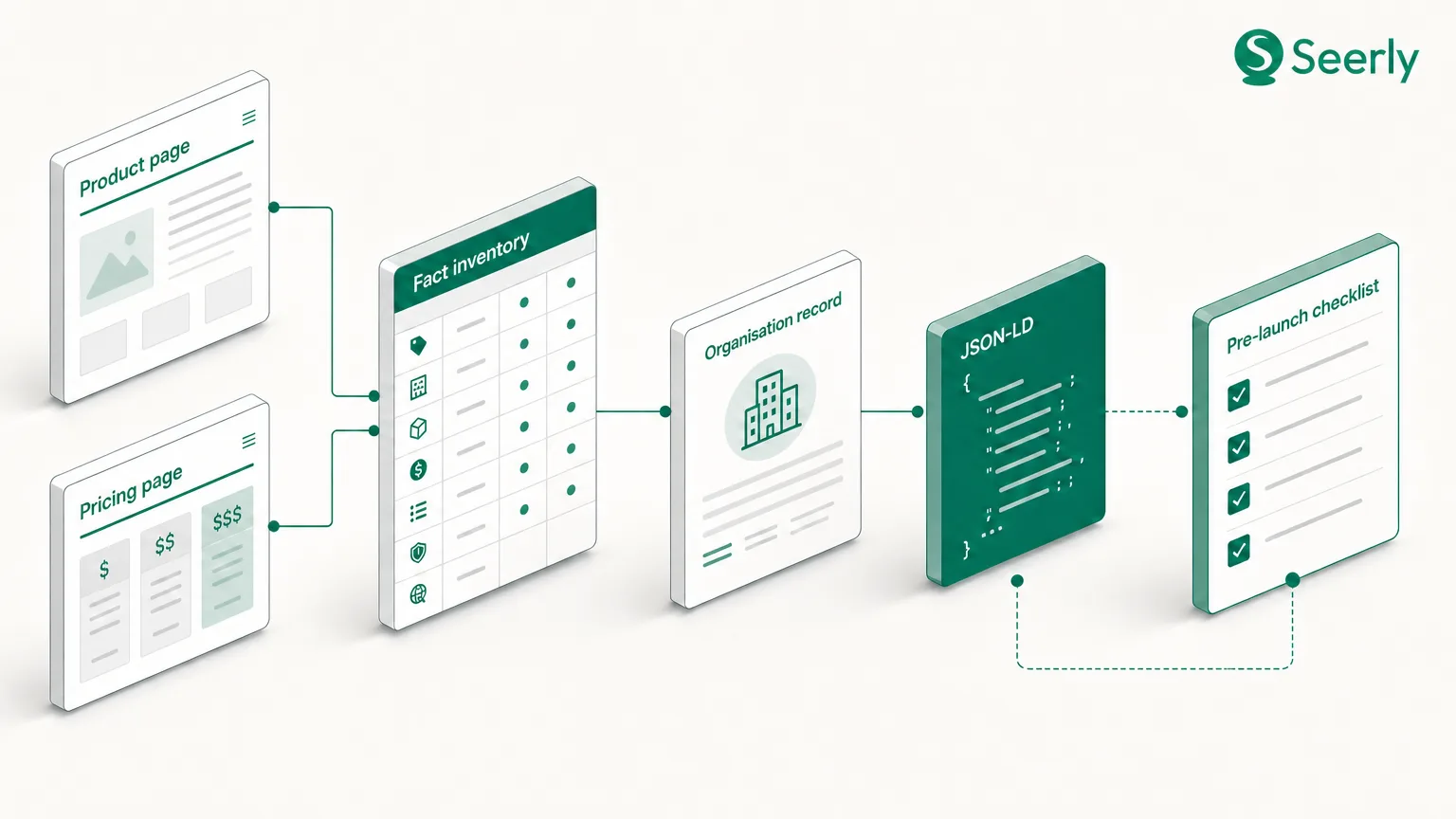
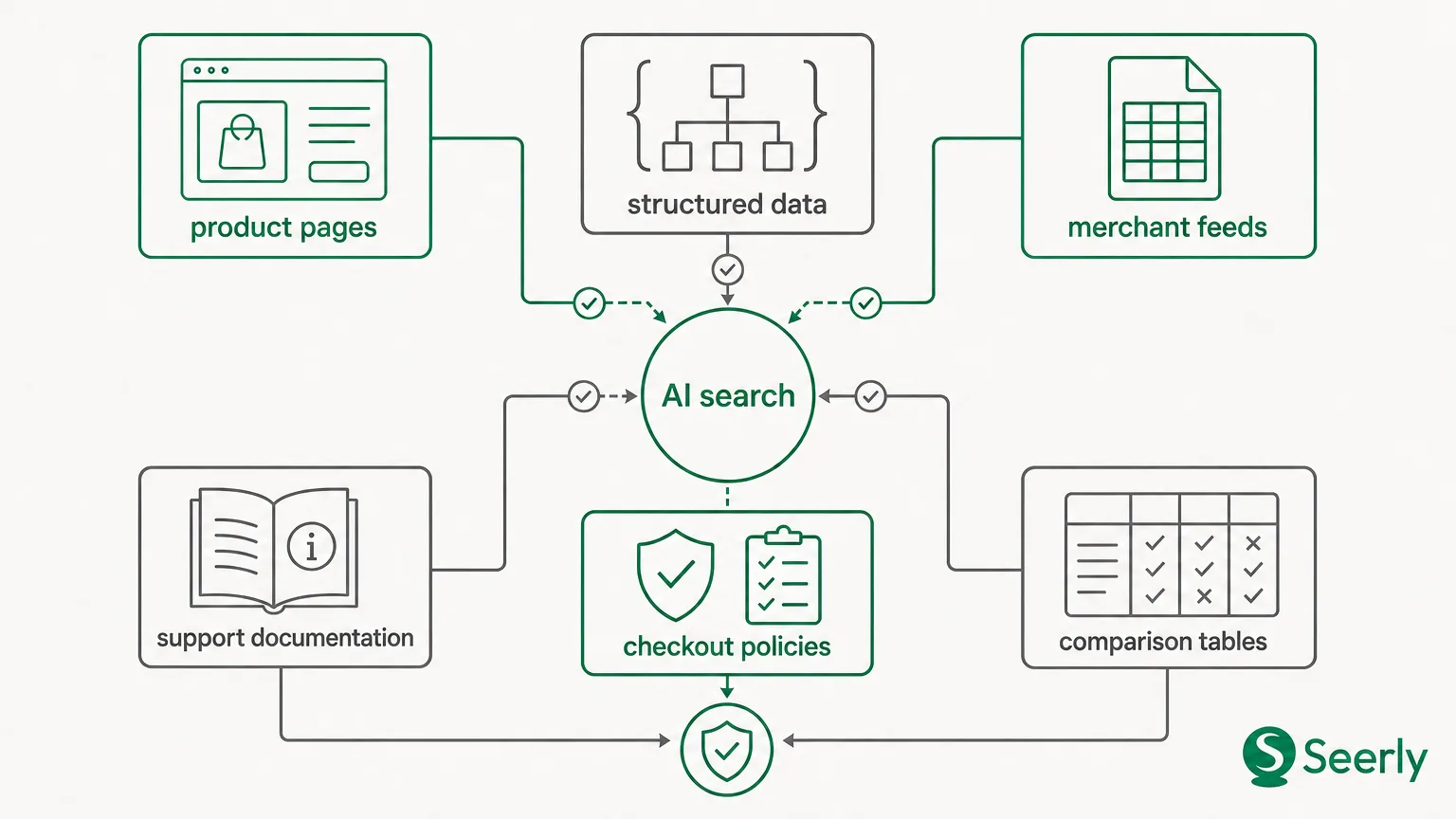
Before investing in an AI-search optimization service, audit one priority category and identify whether each product page supplies the evidence a buyer needs. The audit should compare on-page copy, product information management data, structured data, merchant feeds, support documentation, and checkout policies. The goal is not to add words for their own sake; it is to remove ambiguity and conflicts.
Use the following checklist for every priority SKU, beginning with the products that generate the most revenue, margin, organic demand, or customer-service questions.
Confirm specifications and variant-level details
Document the specifications that determine whether the product solves the buyer’s problem. Depending on the category, that may include dimensions, materials, power requirements, capacity, ingredients, durability ratings, care instructions, performance conditions, or included accessories. State whether each fact applies to every variant or only to a specific model, color, size, or configuration.
A common weakness is placing critical detail only in a downloadable manual, image, or expandable interface. The page may look complete to a shopper, yet leave a crawler or answer system with limited usable context. Bring decision-critical specifications into clear, accessible page content and keep them aligned with the feed and schema fields.
Make availability and pricing context unambiguous
Buyers need more than a price. They need to know the currency, whether the shown amount reflects a sale, whether a membership is required, which variants are in stock, and whether a product is available in their market. When those details vary by location or selection, explain the conditions rather than presenting an apparently universal claim.
Conflicts are especially damaging here. A category page that says “from $99,” a product page that says “$129,” and structured product data that supplies a third value create weak evidence. An AI-ready website should make one current source of truth visible across systems and flag changes that require revalidation.
Explain returns, compatibility, and constraints
Return windows, shipping restrictions, warranty coverage, and compatibility are often decisive in ecommerce recommendations. A buyer considering a phone case needs device compatibility; a buyer considering skincare needs ingredient and usage constraints; a buyer considering replacement parts needs model and generation information. Make these facts specific enough to answer the actual question without forcing the customer to contact support.
Do not rely on broad reassurance such as “easy returns” or “works with most devices.” Instead, specify the policy conditions and supported models, then link to the authoritative policy or compatibility guide. This reduces avoidable uncertainty for both shoppers and search systems evaluating the page.
Substantiate differentiators and proof
Product claims need evidence. Explain what differentiates the product, who it is for, how the claim was tested where applicable, and what tradeoff a buyer should understand. Reviews, expert testing, certifications, comparison tables, and clear first-party usage guidance can all strengthen the page when they are authentic and relevant.
Avoid copying undifferentiated manufacturer language across dozens of pages. Google’s guidance asks site owners to provide helpful, reliable, people-first content, which is a useful standard for product merchandising as well. A page that offers original details and transparent limitations is more credible than one that repeats promotional superlatives.
Add category-level context without duplicating product copy
Product pages should answer “Is this item right for me?” Category pages should help answer “Which type of product should I consider?” Supporting guides should answer “How do I make this decision?” All three assets need connected facts, but they should not repeat the same description with minor edits.
The category layer can explain selection criteria, terminology, and meaningful filters. It also gives individual product pages a relevant context that helps users understand the alternatives. For a deeper technical review, use a process for making pages easier for AI engines to parse with structured data checks, while remembering that markup supports clarity rather than guaranteeing enhanced search treatment.
What an AI SEO service should actually do
A credible service should not sell a guaranteed place in an AI answer. Search systems are dynamic, prompts vary, competitors change, and no outside provider controls the final output. Google explicitly states that there are no secrets that automatically rank a site first, so an instant-ranking promise is a procurement warning sign.
Instead, evaluate a provider according to the work it performs and the evidence it delivers. The right engagement should improve your website’s readiness, provide a defensible measurement framework, and leave your team with durable assets and documentation.
Validate product data and technical accessibility
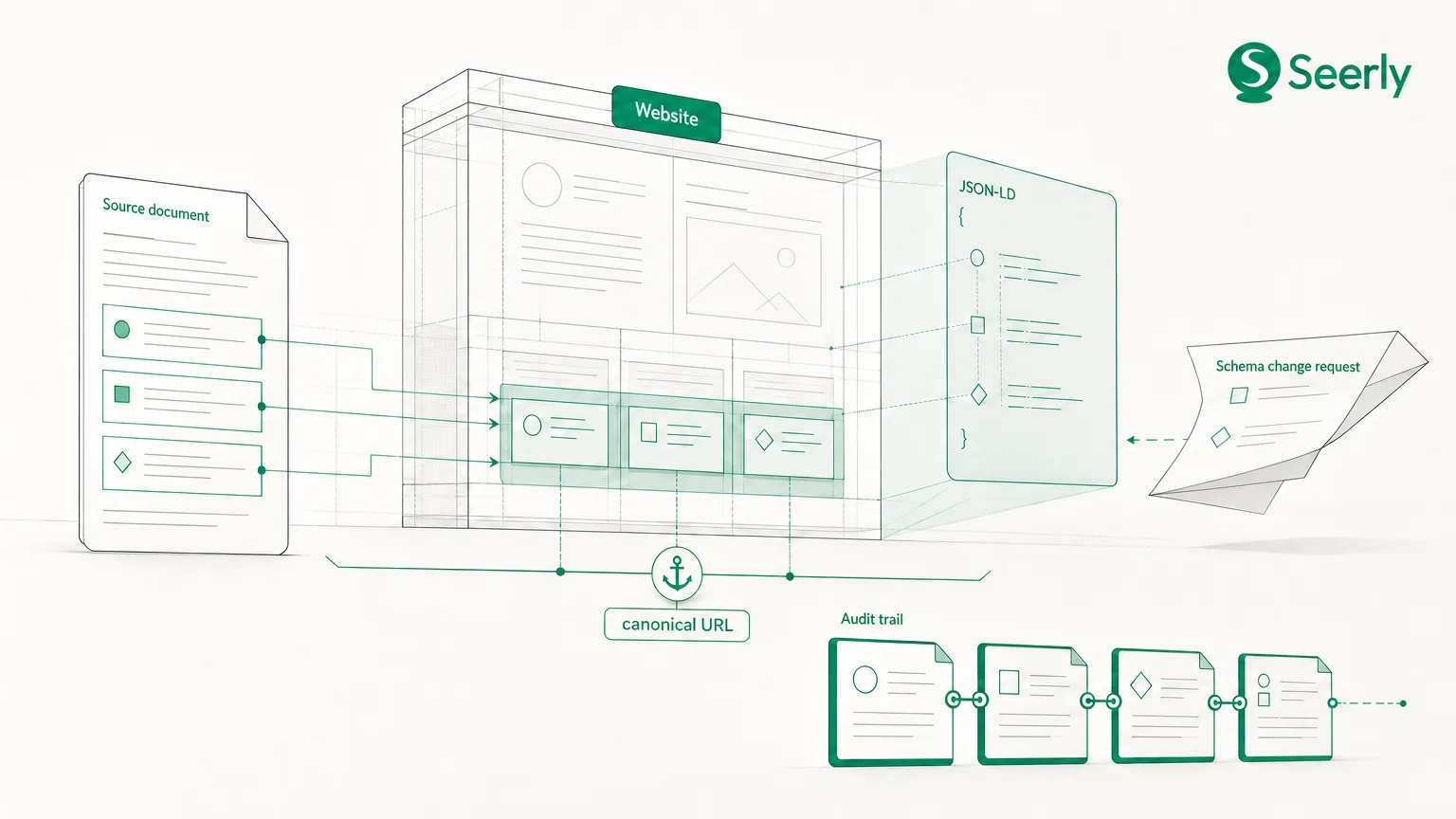
A service should reconcile product facts across product pages, structured data, feeds, variant records, and policy pages. It should identify conflicts in identifiers, availability, pricing, descriptions, images, and specifications, then provide a prioritized remediation plan. This is where SEO, merchandising, engineering, and product-information teams need a shared workflow rather than disconnected recommendations.
Technical review should also cover crawlability, canonicalization, indexability, internal linking, rendering, pagination, and duplicate content risks. The work must follow foundational guidance such as Google’s technical requirements for appearing in Search, not treat AI visibility as an excuse to neglect search fundamentals. If pages cannot be reliably accessed and understood, stronger product copy alone will not resolve the issue.
Improve the content that supports buyer decisions
The provider should map real buyer questions to the right page type: product, category, comparison, buying guide, FAQ, or policy page. It should then identify missing evidence, unsupported claims, vague language, and places where the page does not distinguish between variants. Recommendations should cite the source data or business owner responsible for confirming each factual change.
This is more rigorous than generating large volumes of descriptive text. Strong AI SEO support defines what information is missing, why that information matters for a purchase decision, and where it should live. It also protects brand voice by making pages more precise instead of flattening them into interchangeable search copy.
Check structured data and compare the competitive evidence set
Structured data checks should confirm that page content and markup agree, that essential product properties are populated where appropriate, and that errors are resolved. Structured data is not a ranking switch, but it can make product attributes more explicit for search systems. Validation should be part of a broader quality-control process, not a one-time implementation exercise.
Competitor analysis should go beyond keyword overlap. Ask which competitors appear for representative buying questions, what factual evidence they publish, which content format they use, and where their claims are clearer than yours. The outcome should be a gap analysis that shows opportunities to improve your own evidence - not a plan to imitate competitors’ language.
Require reporting that connects actions to evidence
Monthly reporting should show what changed, why it changed, and what changed afterward. That includes page-level data fixes, content revisions, structured-data status, prompt or question coverage, source appearances, and shifts in competitor representation. It should distinguish observation from causation, particularly where revenue attribution is incomplete.
A trustworthy provider will also make the work portable. Your team should retain access to audit outputs, question sets, implementation tickets, content briefs, data definitions, and reporting history. If the methodology cannot be inspected or the improvements disappear when the contract ends, the service is difficult to verify.
How product pages, category pages, and guides work together
Consider a fictional retailer selling home espresso equipment. Its priority category is burr coffee grinders, and the commercial goal is to help buyers choose between entry-level, single-dose, and premium models. The retailer should not force one product page to answer every possible question in the category.
The category page can explain why burr type, grind range, retention, noise, dosing workflow, and espresso capability matter. It can present filters for budget, machine type, and use case, while giving buyers a transparent overview of the tradeoffs. A buying guide can then answer informational questions such as “What grinder do I need for espresso?” or “Conical versus flat burrs for home use?” using original testing notes and selection logic.
Individual product pages should deliver transactional detail: exact dimensions, burr type, compatible use cases, included accessories, current price, stock status, warranty, return terms, and a concise explanation of who should buy the model. A comparison page can address product-versus-product decisions, such as whether the quieter model’s higher price is justified for apartment use. Internal links should connect these pages based on buyer progression, not simply to distribute authority.
This structure gives each page a clear job. The guide establishes decision criteria, the category page organizes the available choices, and the product page supplies verified purchase evidence. For teams refining this model, Seerly’s guidance on building citation-ready pages for answer engines provides a useful framework for making important claims clear, traceable, and easy to verify.
Measure progress before revenue attribution is complete
Revenue is the commercial outcome, but it often lags behind implementation and is influenced by price, inventory, seasonality, promotions, and channel mix. Ecommerce leaders need earlier signals that indicate whether product-page improvements are increasing discoverability and representation. Establish a baseline before changes are released, then measure the same defined question set and page group over time.
Track product-query coverage and fact accuracy
Build a prioritized library of buyer questions across discovery, comparison, and purchase stages. Track whether your products, category pages, or guides appear for those questions, and record whether the answer correctly represents product facts. Coverage should be segmented by category, product tier, market, and intent rather than rolled into one vanity score.
Accuracy deserves its own review. A page appearance that surfaces the wrong model, outdated availability, or incomplete compatibility information is not a win. Log inaccuracies, identify the source conflict, fix the underlying information, and retest after the relevant systems have had time to refresh.
Monitor source appearance and competitive inclusion
Measure how frequently your domain or product pages appear as a source across the defined question set, alongside the competitors included in the same responses. This reveals whether your category is becoming more visible and whether competitors are winning because of stronger evidence, better information architecture, or broader brand authority. It also helps teams avoid treating a single favorable response as proof of sustained performance.
Use conventional organic data alongside AI-search monitoring. Search impressions, rankings, clicks, indexed pages, and rich-result eligibility provide important diagnostic context. The broader opportunity remains substantial: industry research reported that AI search visits were growing rapidly in 2025, but growth does not remove the need to monitor how buyers actually encounter and interpret your product information.
Review conversion quality, not only volume
When visits do arrive, assess whether they are better informed. Look at engagement with specifications, comparison tools, reviews, size or fit guidance, add-to-cart behavior, return rates, and support contacts related to missing information. A lower-volume audience with fewer pre-purchase questions and stronger conversion quality may be more valuable than a larger audience landing on an ambiguous page.
Create a shared dashboard for SEO, merchandising, analytics, and customer experience teams. Seerly can support proactive monitoring of category questions, competitor visibility, and source representation, giving teams a clearer view of whether their AI-ready website is earning stronger trust signals over time.
Questions to ask before buying AI-search support
How long should results take?
Technical fixes and content updates can often be implemented quickly, but discovery, indexing, and changes in answer-led visibility operate on timelines outside a provider’s control. Expect an initial audit and remediation roadmap early in an engagement, followed by ongoing measurement rather than a fixed date for ranking outcomes. The provider should explain what can be delivered directly, what depends on your team, and what must be observed over time.
What evidence should we request?
Request a sample audit, a prioritized issue list, example deliverables, data definitions, and a clear description of how visibility is tested. Ask to see how the service records factual inaccuracies, distinguishes a source appearance from a favorable recommendation, and documents changes made to the site. Evidence should be specific enough for your internal SEO and merchandising teams to challenge, approve, and implement.
Who owns the improvements?
Your business should own corrected product data, revised copy, structured-data documentation, implementation tickets, and reporting outputs. A provider may supply a platform and methodology, but your product evidence should not be locked behind an opaque service relationship. Ownership matters because product information changes constantly with inventory, assortment, pricing, and policy updates.
How do we distinguish methodology from a vague claim?
A methodology defines inputs, checks, actions, measurement rules, and limitations. A vague claim promises “AI rankings” without naming the buyer questions, product-data sources, page changes, or verification process involved. Choose the team that can show its work and explain uncertainty, not the team that treats a complex search environment as a guaranteed placement product.
Start with one category and make the evidence stronger
The most reliable path to stronger product-page visibility in AI search is not chasing a shortcut. It is building a complete and consistently structured evidence base that helps both buyers and search systems understand what each product is, who it serves, and how it compares. Technical SEO, product data, useful content, and trust signals need to work as one operating system.
Choose one priority product category this quarter. Audit its missing buyer evidence, resolve conflicts between product data sources, map category questions to the right pages, and track how representation changes over time. Then use Seerly to monitor AI search discovery and evolving competitor visibility as your team builds a more trustworthy, AI-ready ecommerce website.