Toxic backlink scores are not proof: a safer escalation checklist
A red “toxic” label can create a very expensive Monday morning. An agency exports hundreds of flagged domains, a client asks whether rankings are in danger, and someone proposes a domain-level disavowal before lunch. The impulse is understandable. Nobody wants to explain later why a suspicious-looking link pattern was ignored.
But a backlink monitor is an early-warning system, not a verdict engine. A score can spot strange signals at scale: thin sites, repeated anchors, sudden link growth, or pages that look built for placement. It cannot establish the thing that matters most: whether the links reflect conduct that violates Google’s policies and creates a credible reason to act.
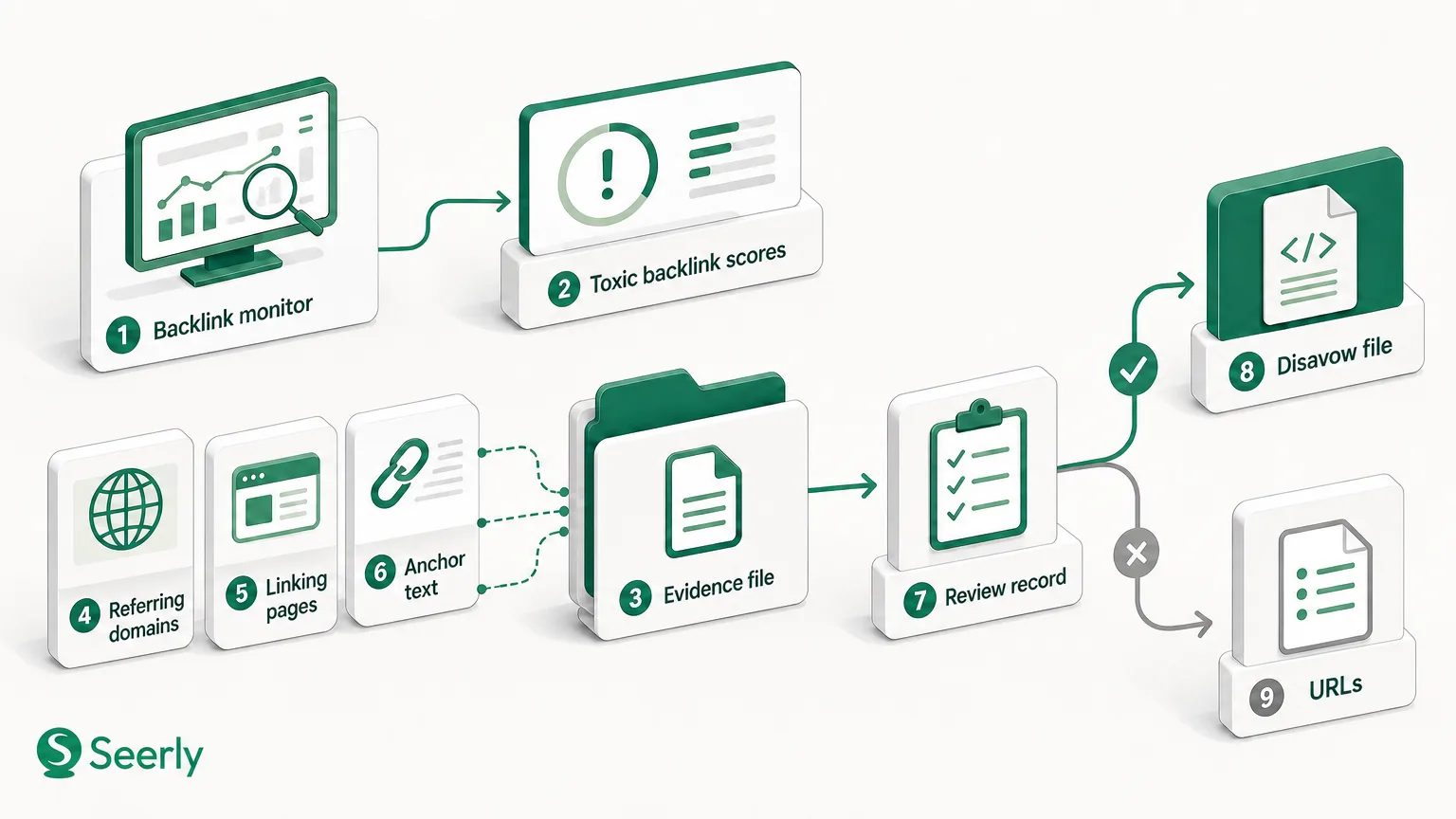
That distinction changes the workflow. Instead of treating every toxicity report as a cleanup list, marketing teams need an evidence file, a decision route, and a documented owner for each recommendation. The aim is not passive monitoring. It is disciplined escalation.
Working definition: A toxicity score is a third-party estimate based on selected signals. It is useful for prioritising review, but it is not proof of a policy violation, search impact, or the need for a domain-level disavowal.
What a backlink monitor can and cannot tell you
The myth is simple: a low-quality-looking inbound link automatically puts a site at risk. The fact is less dramatic and more useful. Google states that links can affect its view of a page or site when they result from paid links or other link schemes that break its spam policies, while its systems also work to prevent third parties from harming a site through unwanted links. Google’s own disavow guidance says most sites do not need the tool.
That does not mean every ugly link deserves a shrug. It means appearance alone is weak evidence. A dormant directory, an irrelevant blog, or an auto-generated page may deserve a closer look, yet none of those observations proves that your team bought, placed, directed, or benefited from a link scheme.
The way I see it, a score is closer to a smoke alarm than a court ruling. Smoke alarms should be taken seriously. They should not prompt a fire crew to demolish the kitchen without checking whether someone burned toast.
Link attributes matter too. Google has published clear guidance on qualifying paid and user-generated links with rel values, which gives reviewers a policy reference point that a vendor score lacks. Start with the question, “What conduct does this pattern suggest?” If the answer is only “the tool dislikes these domains,” the investigation has not reached an action threshold.
Build an evidence file before calling a pattern harmful
A useful evidence file turns vague concern into a reviewable recommendation. It should record what the team saw, why it may matter, and what remains uncertain. That final part gets skipped when people are rushing. It shouldn’t be.
For every cluster your backlink monitoring tools flag, collect the following:
-
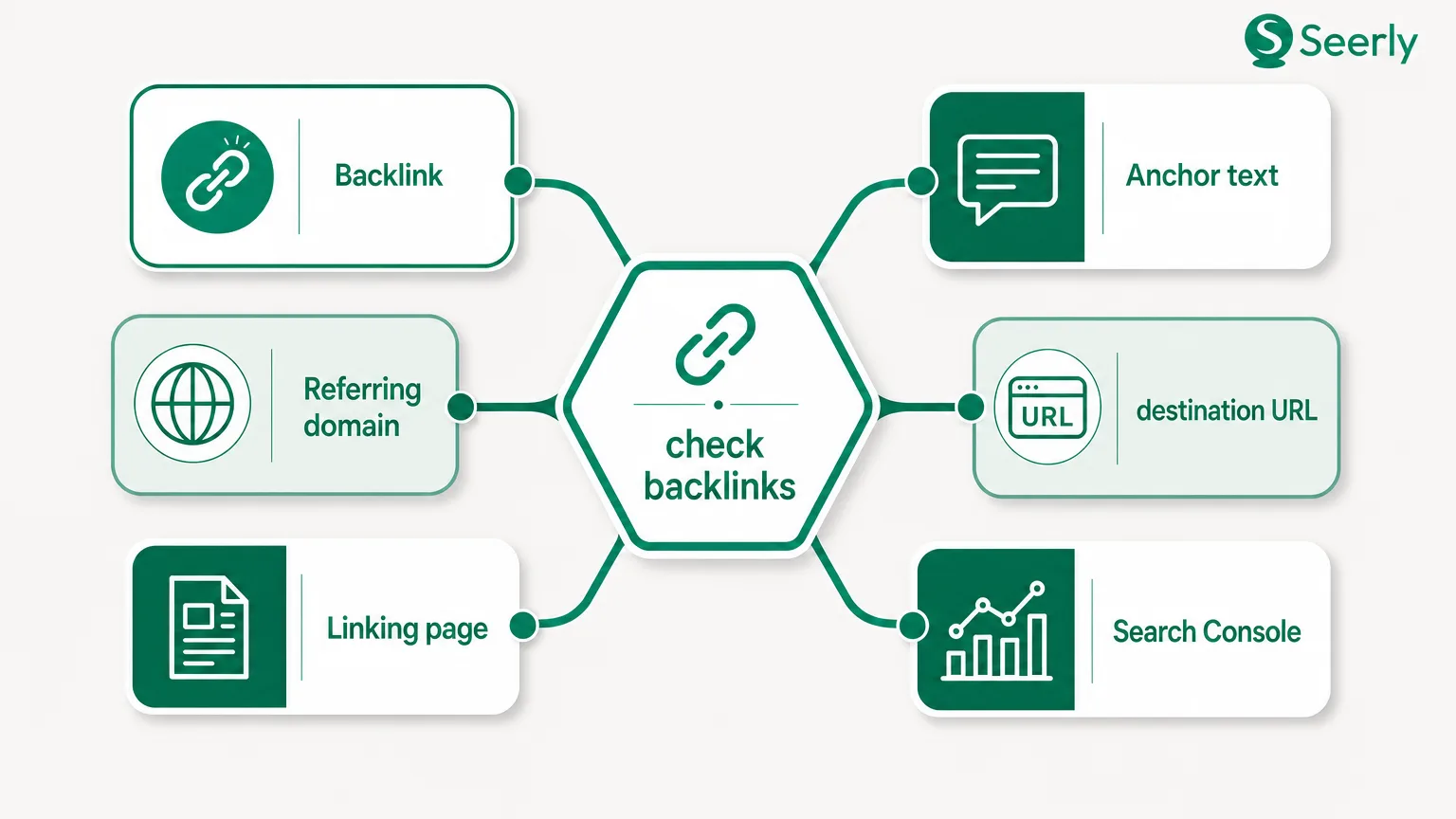
Source pattern: Record the referring domains, linking-page templates, publication dates, language, subject matter, and ownership clues. A few unrelated pages are different from a repeated network pattern using the same page layout and outbound-link style.
-
Placement or payment signals: Look for sponsored-post pages, rates, “write for us” language, identical author bios, or evidence that the referring site sells links at scale. None is automatic proof on its own. Taken together, they may point to a relationship worth tracing.
-
Anchor-text repetition: Check whether a narrow commercial phrase appears at odd frequency, particularly across unrelated sites. Repetition matters more when it coincides with similar placement dates and destination pages.
-
Relationship to the affected pages: Identify the pages receiving links and what they were designed to rank for at the time. If a campaign, former supplier, affiliate arrangement, or old content push explains the link cluster, document it rather than guessing.
-
Historical context: Check when the domains first linked, when pages appeared or disappeared, and whether the pattern lines up with a site migration, PR activity, vendor change, or acquisition. Link inventories decay over time. Ahrefs’ study of link rot found that lost links are a normal part of the web, so a changing profile is not misconduct by default.
-
Documented policy concern: State the specific concern in plain language. “Possible paid placement without proper qualification” is a claim that can be investigated. “Toxic score of 87” is only a measurement from a third party.
A checklist does not predict search impact. It gives an agency enough material to explain why a pattern should be ignored, remediated, or escalated. Big difference.
The three routes after backlink monitoring
At this point, the decision should become boring. Boring is good. It means the team follows evidence rather than panic.
-
No action and continued observation.
Use this route when links look poor but the evidence of a problematic relationship is weak or absent. Keep the pattern in the review record, note the reason for inaction, and set a date to recheck it. A backlink monitor earns its keep here by preserving history, so the next reviewer does not reopen the same question from zero. -
Outreach or direct remediation.
Use this route when the team finds a clear relationship to a placement that needs correction. That might involve asking a publisher to remove a paid link, add an appropriate attribute, or correct an old agency arrangement. Keep copies of outreach, replies, and the final page state. Ownership matters, because a request from a business that caused the placement is far more credible than random cleanup mail. -
Documented escalation.
Use this route only when the file supports a serious concern and direct remediation has not resolved it. The recommendation should name the domains or URLs in scope, explain why scope is limited or broad, record who reviewed it, and preserve the evidence used for the decision.
Mass action based on tool scores creates workload without creating better judgment. Worse, it can sweep legitimate editorial links into an irreversible-looking process just because their sites have weak metrics or unusual publishing patterns. Link data is messy. Pages disappear, domains expire, redirects get repurposed, and crawlers do not see the whole web at the same moment.
When a referring page vanishes, do not confuse a lost link with proof of a harmful one. A focused lost referring-page investigation can separate normal web churn from a placement pattern that requires attention. Honestly, that small pause often saves a whole lot of needless cleanup.
If disavowal is warranted, treat the file like production work
A disavow file is not a dumping ground for suspicious domains. Google’s requirements are plain: submit one URL or domain per line, use the domain: prefix to target a domain or subdomain, and keep the upload within 100,000 lines and 2 MB. Small formatting mistakes can turn a careful review into a finicky operational problem.
Before anyone uploads a file, run a second review. Ask who owns the decision, what evidence supports each entry, and whether the recommendation targets a page or an entire domain. Domain-level entries have wider scope, so they need stronger reasoning than a single bad placement page.
Use a versioned file name with a date and reviewer initials. Keep the source export, screenshots or saved page copies where permitted, outreach history, and a short rationale in the same review record. Then log what changed from the prior version. Future teams will need that trail when someone asks why a legitimate-looking domain was included six months earlier.
I personally prefer a two-person check for any domain-level entry. One reviewer compiles the record; another reviews scope and evidence without seeing the original tool score first. That small bit of separation can expose score-led thinking before it turns into policy-led action.
Link review should expose gaps on your own site, too
Sometimes a toxicity report points away from the backlinks and toward the site receiving them. If reviewers struggle to explain what a destination page sells, who is behind it, or where its claims came from, the problem is not solved by deleting off-site signals. The page itself needs clearer evidence.
Start with first-party material that a reader can verify: accurate service descriptions, named team or company details, terms that match real delivery, and source material behind factual claims. Keep product facts consistent across pages. A publisher, customer, or reviewer should not have to stitch together basic information from stray landing pages and old PDFs.
That work also makes link reviews easier. When destination pages have clear purpose and well-maintained facts, reviewers can distinguish a strange external placement from a legitimate mention of real work. For software teams, publishing verifiable product facts with schema markup can make claims easier to inspect and maintain.
The point is not to turn a backlink cleanup exercise into a huge website rebuild. It is to ask a sharper question: if someone arrived through this link, would the destination page give them enough reliable context to understand the business? If not, fix that. A disavow file cannot do it for you.
Frequently asked questions about backlink monitoring tools
Should we disavow every domain with a high toxicity score?
No. Use a high score to sort review priority, then inspect source patterns, placement evidence, anchor repetition, ownership history, and any documented policy concern. A score without corroborating evidence does not justify a domain-level action.
When should an agency request link removal?
Request removal or correction when the team can tie the link to a known problematic relationship, such as a paid placement, former vendor work, or a controlled publisher arrangement. Record the request and the outcome. Generic removal outreach to unrelated sites often becomes busywork.
Can backlink monitor software prove a ranking problem?
No tool can prove causation from a link score alone. It can track discoveries, changes, lost pages, anchors, and referring domains. The team still needs to connect those observations to real evidence before making a claim about risk or action.
What belongs in a review record?
Include the suspected pattern, URLs or domains reviewed, screenshots or notes, relevant dates, owner, decision, rationale, and next review date. If action occurs, attach outreach records and the version of any submitted file.
Keep the alarm, change the response
The useful habit is not “disavow less” or “trust every tool.” It is to make every escalation explainable. Log the suspected pattern, evidence, owner, decision, and review date in one record before anyone acts.
Then pair off-site monitoring with an on-site check. In Seerly, use Foundations > Smart Audit > Readiness Check to find clarity and evidence work that should sit beside backlink review. If a score vanished from the dashboard tomorrow, would your evidence file still support the same decision?
Learn more at Seerly.