Parallel Discoverability: How to Check Whether Your Brand Shows Up Across AI, Search, Maps, and Social
Rankings used to be a workable proxy for visibility. If your category pages moved up in Google, your team could reasonably assume discoverability improved. That model no longer holds. Buyers now encounter brands through AI answer engines, map results, business listings, review sites, recommendation threads, and social mentions before they ever click a website. In that environment, a strong organic position can coexist with weak first impressions elsewhere.
This is why bing places matters more than many teams assume. Not because Bing Places alone determines local performance, but because it represents one of several structured surfaces that shape how a brand is described, trusted, and surfaced across connected ecosystems. For growth leads, SEO managers, and demand-gen operators, the real job is no longer rank tracking in isolation. It is monitoring parallel discoverability: whether your brand appears accurately and credibly wherever buyers look for confirmation.
The practical outcome of this article is simple. You will leave with a five-surface audit model, a lightweight monitoring workflow, and a reusable scorecard you can apply across AI, search, maps, review sources, and social proof environments.
The Shift: Why Rankings No Longer Explain the Whole Discovery Journey
Search behavior has fragmented faster than many reporting systems have adapted. A prospect may ask an AI assistant for “best payroll software for distributed teams,” open a map result to verify a local office, skim third-party reviews, and then search the brand name directly. At no point is a single blue-link ranking enough to explain what shaped that decision.
This is the core challenge behind search-everywhere optimization. Discovery now happens in parallel across surfaces with different rules, data sources, and trust signals. A business may have solid web visibility but weak entity consistency in listings, outdated descriptions in directories, and almost no third-party proof supporting recommendation-style queries. When that happens, the brand does not simply rank lower. It appears less credible.
Bing Places fits into this broader stack because it is one of the structured business data sources teams can directly control. If your address, categories, hours, services, and brand description are inconsistent there, that inconsistency can ripple into map experiences and search-connected representations. In other words, monitoring Bing Places for business is not a side task. It is part of maintaining clean discovery infrastructure.
The Five Surfaces Every Brand Should Monitor
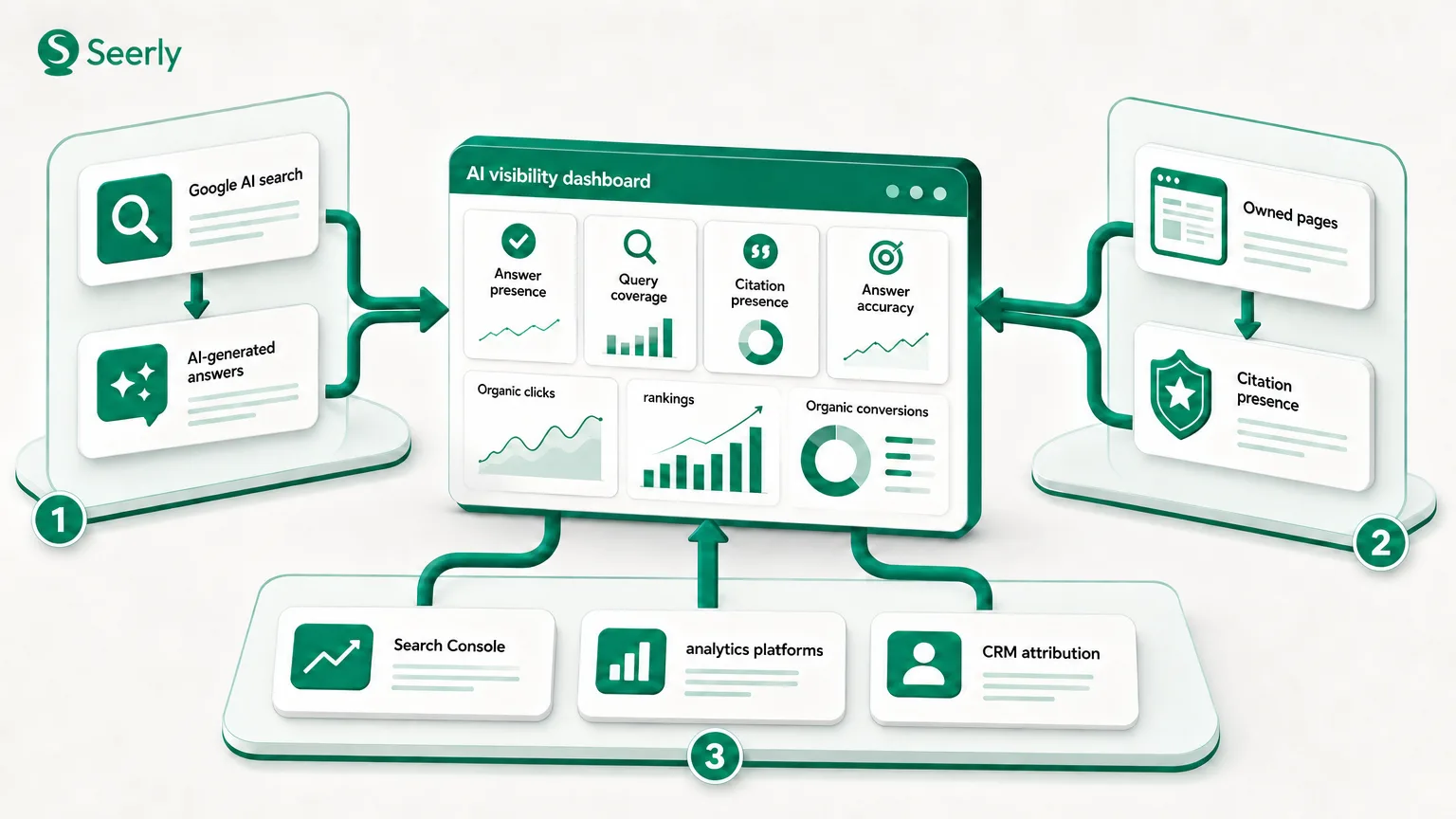
A useful operating model starts by separating visibility into five distinct surfaces. Each one answers a different buyer question, and each one can fail independently.
1. AI answer engines
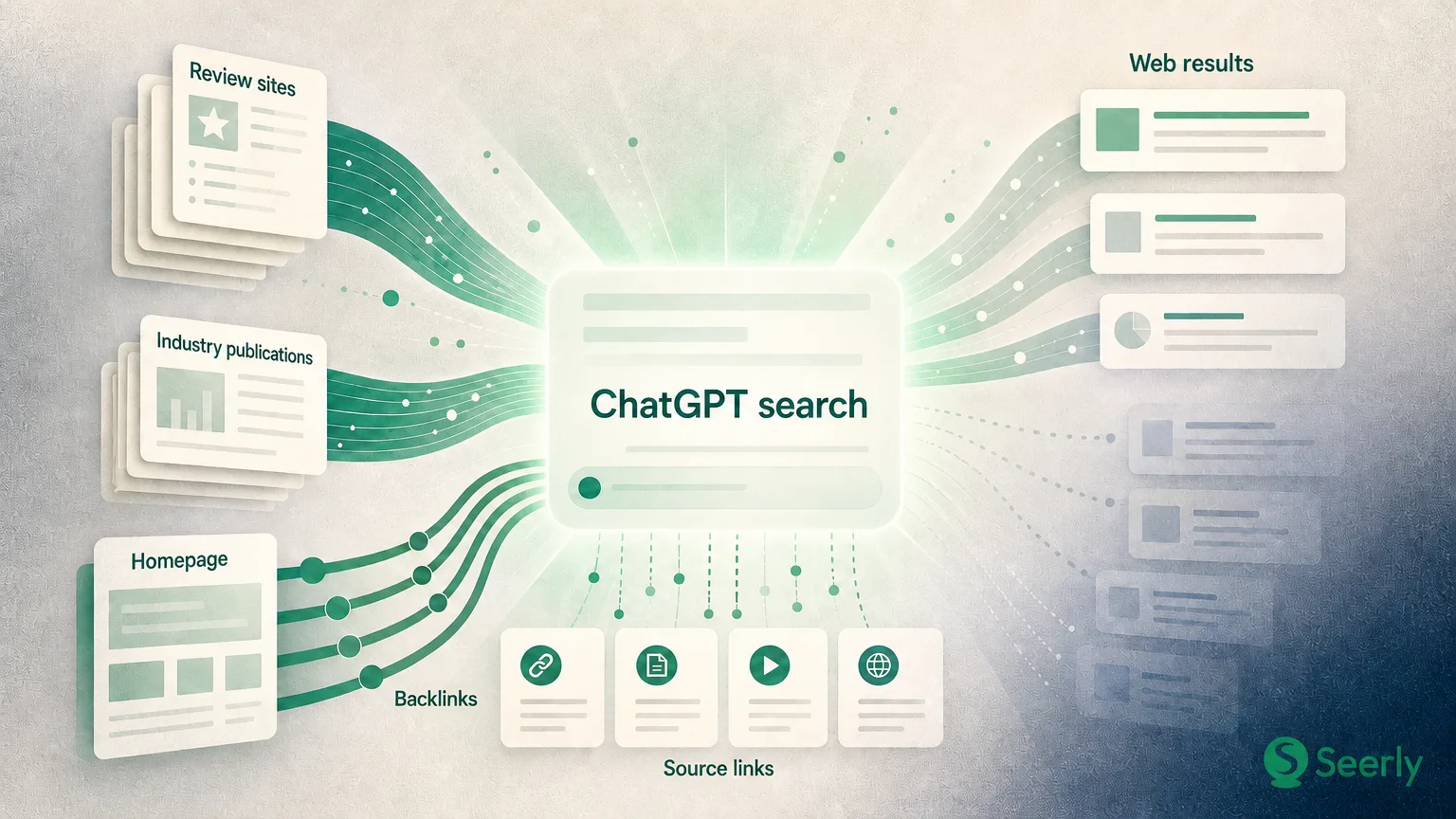
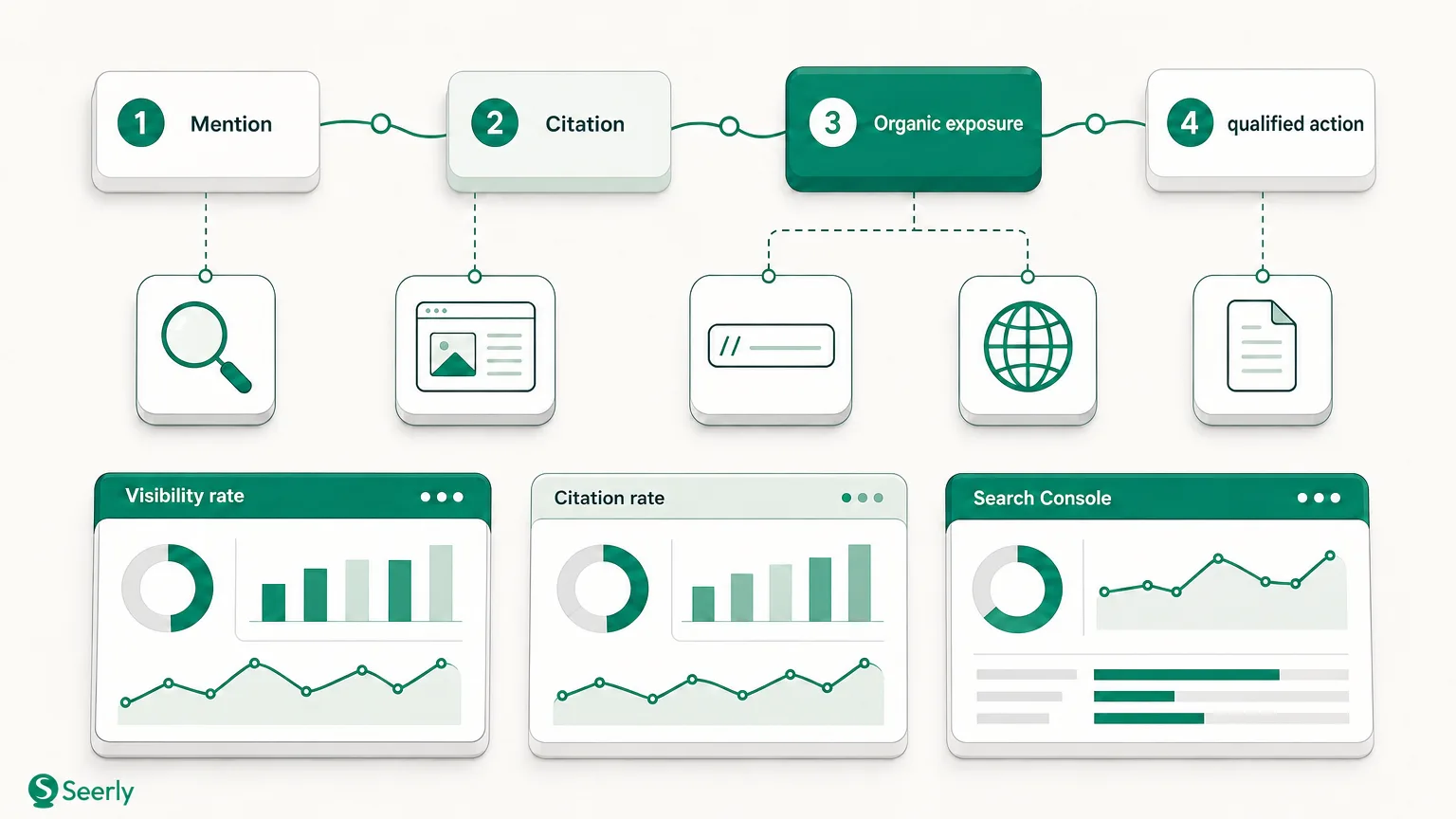
AI engines increasingly compress the research process into direct answers. They synthesize descriptions, compare brands, and recommend vendors based on a mix of site content, structured signals, and third-party references. That means your team needs to check not just whether you are mentioned, but whether you are represented correctly and whether the supporting proof is strong enough to sustain that mention.
The failure mode here is subtle. A brand may appear in an AI answer but with outdated positioning, incomplete location data, or weak differentiation. If your product messaging changed recently and AI answers still use an older category description, that gap becomes a trust issue, not just a messaging issue. Seerly’s guidance on how AI search optimization helps SaaS buyers find the right product is especially relevant here because AI discovery is often shaped before a site visit happens.
2. Organic search results
Classic search still matters, but it now works as one layer in a larger system. Your brand should monitor branded queries, category queries, and recommendation-style searches to see how titles, snippets, comparison pages, and SERP features frame the company. Organic results remain a major control point for demand capture, yet they no longer tell the full story on their own.
The key is to stop treating ranking position as the only metric. You also need to assess message alignment. If your homepage ranks well but the snippet emphasizes an outdated product angle, or if third-party pages outrank your core use-case pages for important branded-plus-category terms, that creates friction that simple rank reporting will miss.
3. Map and listing ecosystems
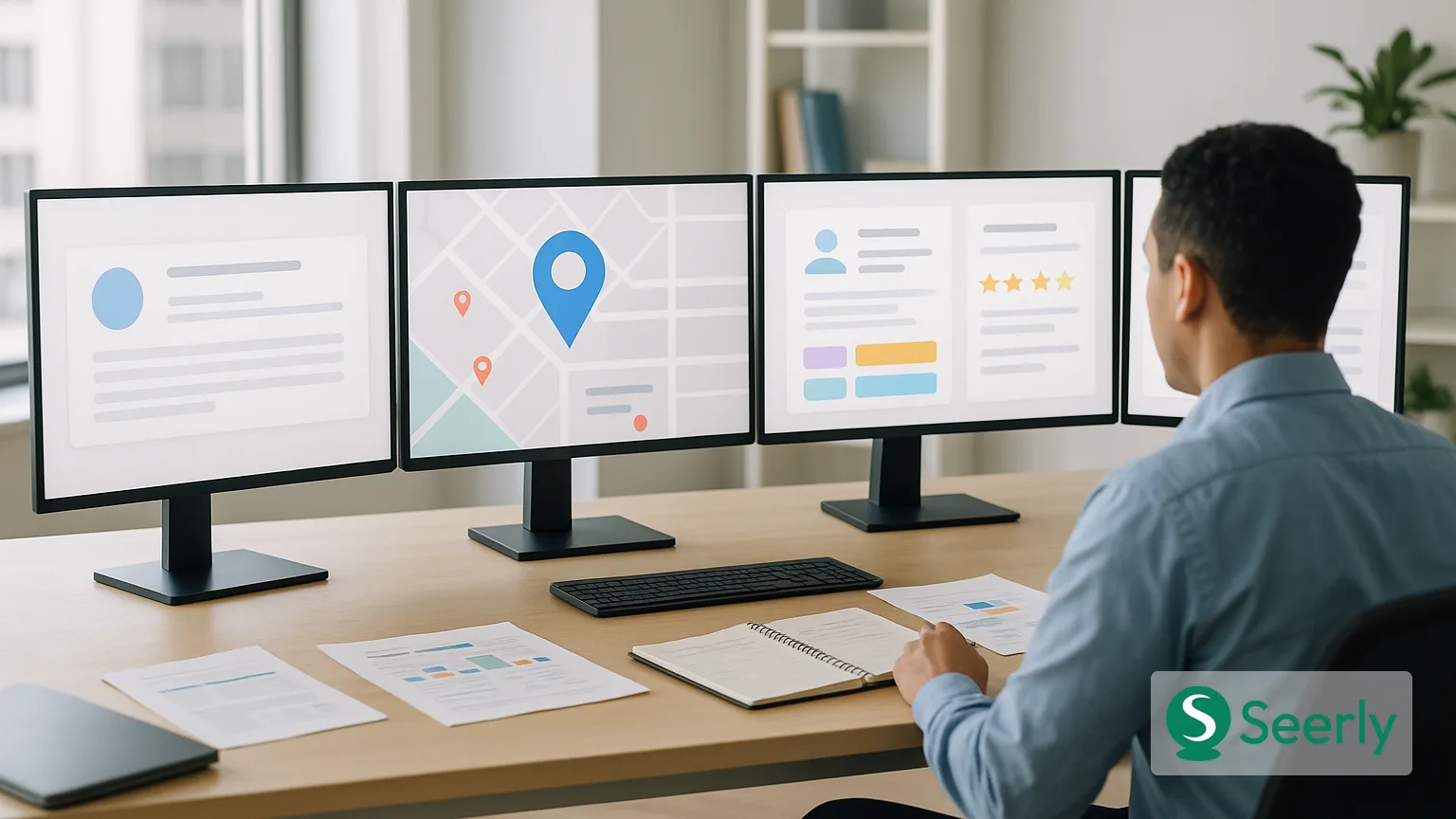
This is where bing places becomes especially important. Map and listing ecosystems answer practical buyer questions: Are you real? Are you local? Are your hours accurate? Do your categories reflect what you actually do? Even for businesses that are not footfall-driven, listings influence legitimacy and context.
A complete Bing Places profile supports local business visibility by reinforcing entity consistency. Your business name, address, phone number, website, service categories, images, and description should all match your broader brand reality. If one listing says you are a “marketing consultant,” another says “software company,” and your site presents you as an enterprise platform, your discovery signals are fragmented. That can affect how users and engines interpret your brand.
4. Review and directory sources
Reviews and directories do two jobs at once: they validate and they summarize. Buyers use them for social proof, while answer engines and search systems may use them as corroborating evidence. That makes consistency and freshness critical. If your listing data is complete but your reviews are stale, sparse, or contradictory, recommendation-style queries become harder to win.
This is also where citation consistency matters operationally. Teams should compare brand descriptions, categories, and core claims across major profiles. Small differences can accumulate into major ambiguity. For AI-ready discovery, third-party proof should support the same positioning your site and listings present.
5. Social mention environments
Not all discovery starts with search. Many buying journeys begin with a peer mention on LinkedIn, a Reddit thread, a niche community, or a founder recommendation on social. These environments often shape the language people later use in search and AI prompts. If your brand is being discussed with the wrong comparison set or old product framing, that distortion can spread across other surfaces.
Social mention monitoring is therefore not just a brand awareness exercise. It helps teams understand whether market language, sentiment, and use-case associations are aligned with current positioning. In a parallel discoverability model, social is an upstream signal source.
A Simple Monitoring Workflow for Weekly, Monthly, and Change-Based Reviews
Most teams do not need a complex governance program to improve visibility. They need a recurring workflow with clear owners and specific checks.
Weekly checks
Start with fast-signal monitoring. Review branded searches, core AI prompts, and your Bing Places listing for obvious changes. Confirm that business hours, primary category, phone number, and homepage URL are still correct. Look for changes in branded SERP snippets, recent reviews, and any new social mentions that could influence how prospects describe you.
Weekly review works best when it focuses on drift detection. You are not auditing the entire web every seven days. You are checking whether high-visibility surfaces still reflect the current brand accurately and whether any new negative or misleading signals have appeared.
Monthly checks
Once a month, run a deeper cross-surface audit. Compare your site description, Bing Places profile, review-directory summaries, and recurring AI-generated descriptions. Check listing completeness, image freshness, category alignment, and citation consistency across major profiles. If your business has multiple locations, confirm that each location has consistent naming conventions and correct landing page associations.
This is also the right cadence for recommendation-style testing. Ask whether third-party proof supports queries such as “best B2B analytics software for mid-market teams” or “top local agency for franchise SEO.” If the answer engines mention competitors more often because external proof is stronger or more current, that is a discoverability gap you can act on.
After major changes
Product launches, rebrands, acquisitions, pricing changes, office moves, and category repositioning all require immediate post-change monitoring. This is where many teams underperform. They update the site and assume the market will catch up. In practice, listings, directories, and AI answers often lag.
After a major change, verify three things quickly: the new description appears on owned surfaces, listings such as Bing Places reflect the update, and third-party sources are not reinforcing the old version. If AI mentions continue using outdated language, your response should be to strengthen source consistency rather than wait passively. Content clarity, structured page updates, and improved parseability all help, which is why how to use a rich result test to make pages easier for AI engines to parse is a useful companion process.
Why Bing Places Still Matters in an AI Era
The common objection is straightforward: if discovery is shifting toward AI, why spend time on a business listing? The answer is that AI systems do not operate in a vacuum. They draw from the broader web environment, and structured business data remains one of the clearest ways to state who you are.
Consider a multi-location B2B services firm that recently specialized its offering for healthcare clients. Its website now reflects that focus, but its Bing Places profile still uses a generic category and an old description. Several directories repeat the old language, and reviews mention the prior service mix. When a prospect searches traditionally, the mismatch is visible but manageable. When that same prospect asks an AI engine for firms serving healthcare operators in a specific region, the brand may be mentioned vaguely, miscategorized, or omitted in favor of competitors with tighter cross-surface consistency.
That example illustrates why Bing business setup is not just local SEO administration. It is one controllable trust signal in a larger discovery graph. Keeping Bing Places complete and current helps reduce ambiguity. It will not solve every visibility issue, but it supports clearer representation across search-connected environments.
Three myths worth dropping
The first myth is that Bing Places only matters for restaurants, retailers, and local storefronts. In reality, any business with a physical presence, service area, or local credibility requirement can benefit from accurate listing data.
The second myth is that a Google Business Profile makes other listings negligible. It does not. Different surfaces serve different users and systems, and discoverability resilience comes from consistency across them.
The third myth is that listings are separate from AI visibility. They are not identical, but they are connected through shared entity and trust signals. Teams that ignore listing quality often create avoidable ambiguity upstream.
For brands working on stronger AI-ready content, how to write pages answer engines can quote without flattening your brand voice complements listing hygiene by improving how your owned content supports those same signals.
A Copyable Cross-Surface Monitoring Scorecard
A useful scorecard should be lightweight enough to maintain and specific enough to trigger action. Use a spreadsheet or project board with the following columns:
| Surface | Owner | Signal Checked | Risk Found | Action Required |
|---|---|---|---|---|
| AI answer engines | SEO or content lead | Brand description in answer output | Old positioning appears | Refresh core category pages and supporting proof |
| Organic search | SEO manager | Branded snippet and category rankings | Outdated snippet message | Update metadata and strengthen landing page relevance |
| Bing Places | Local or web ops owner | Hours, category, description, URL, images | Incomplete listing and old description | Update profile and align with site messaging |
| Review sites | Customer marketing or ops | Review freshness and profile consistency | Sparse recent proof | Launch review request workflow and fix summaries |
| Social mentions | Brand or demand gen | Sentiment and use-case framing | Wrong competitor set discussed | Publish clarifying thought leadership and monitor threads |
The real value of this template is accountability. Each surface needs an owner, a specific signal to check, and a defined next action. Without that structure, visibility tracking becomes observational rather than operational.
FAQ
What should a team prioritize first if it has no monitoring process yet?
Start with the surfaces you control most directly: your website, your Bing Places listing, and your top review-directory profiles. Establish a baseline description, category language, and contact data, then compare how those appear across branded search and a handful of core AI prompts. The goal is not full coverage on day one. It is to identify the highest-risk inconsistencies first.
How should teams handle inconsistent brand descriptions across platforms?
Choose one canonical version of your short description, one medium-length version, and one category statement, then deploy them systematically across owned and managed profiles. Differences in tone are fine, but differences in positioning are risky. If Bing Places, your website, and your review profiles describe different businesses, users and engines receive conflicting signals.
What should you do when AI mentions lag behind site updates?
Assume the issue is source reinforcement, not just time delay. Update the relevant pages, improve structured clarity, refresh business listings, and make sure third-party profiles support the new message. Then monitor whether the old framing persists in AI answers. If it does, you likely need stronger corroborating signals, not just patience.
Parallel discoverability changes the job of search teams. The question is no longer “Where do we rank?” but “How do we appear across the surfaces that shape trust?” Bing Places belongs in that workflow because it helps define a clean, structured version of your business inside a broader visibility system. Build a baseline across AI, search, maps, reviews, and social, then use Seerly to track where AI answers diverge from listings, search results, and third-party proof so you can fix the highest-risk gaps first.