How brands can become more visible when buyers search with ChatGPT
Buyers increasingly ask AI tools to explain categories, compare alternatives, shortlist providers, and resolve product questions before they ever visit a brand website. For marketing teams, this changes the practical meaning of AI in branding. The question is no longer only whether a brand ranks in conventional search results; it is whether AI-generated answers describe the brand accurately, support claims with credible sources, and include it when a buyer asks a commercially meaningful question.
This matters because visibility without trust can create a false sense of progress. A brand may appear in an answer but be framed as a poor fit, associated with outdated capabilities, or omitted from the comparison that drives the final decision. Research on AI-guided shopping shows that AI is becoming part of the consumer decision journey, while 53% of consumers report distrusting AI-powered search results. That makes factual accuracy, transparent evidence, and repeatable monitoring central to brand management.
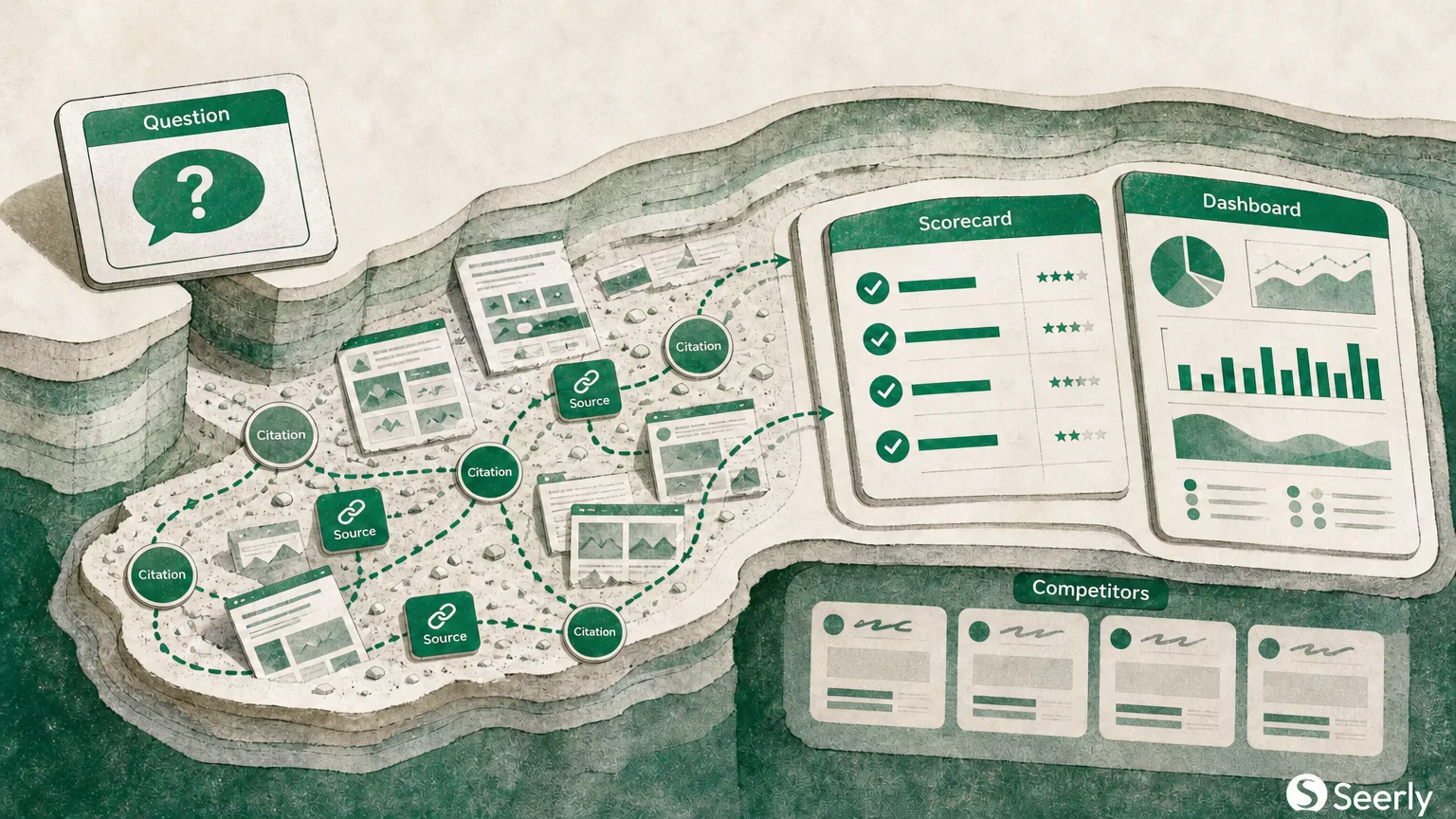
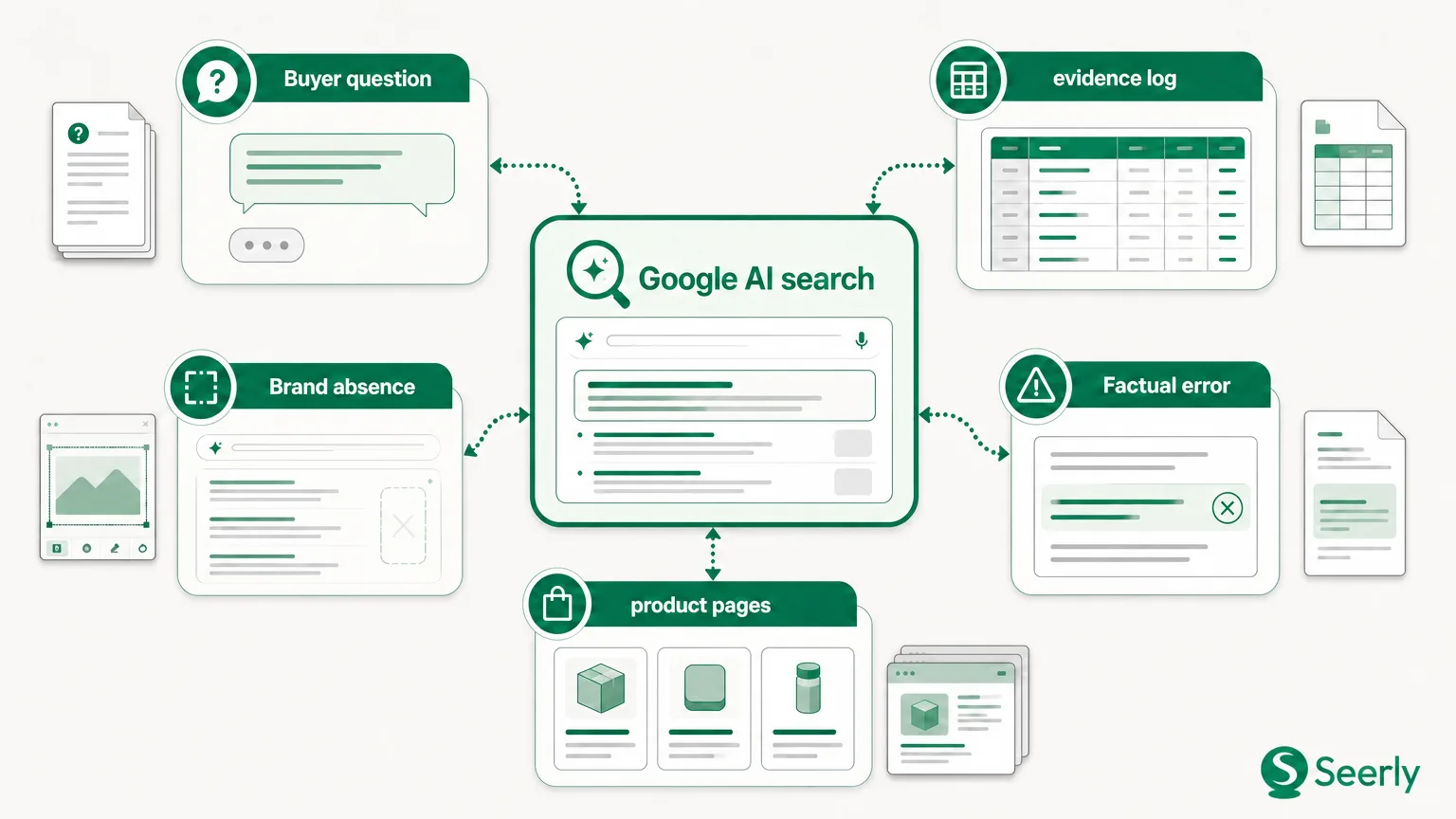
The most useful toolset for AI search visibility connects five activities: monitoring high-value buyer questions, preserving the evidence behind answers, comparing competitive representation, improving the content and website evidence that supports claims, and retesting over time. A dashboard that simply counts mentions cannot provide that full picture.
What does visibility in AI-mediated buyer research actually mean?
AI-mediated buyer research happens when people use systems such as ChatGPT to ask natural-language questions rather than navigating a list of search results. These questions are often specific: “What project management platform works for a 200-person agency?” or “Which CRM supports regional data requirements?” The answer can shape what buyers investigate next, even when it does not lead immediately to a click.
For this reason, AI search visibility should not be reduced to a single score. A brand can be mentioned often without being cited, cited without being presented correctly, or accurately described without being recommended against relevant competitors. Each signal represents a different risk and a different opportunity for a marketing, content, product, or reputation team.
| Signal | What it means | Why it matters | What to review |
|---|---|---|---|
| Mentioned | The brand name appears in an AI response. | Indicates baseline awareness, but not whether the brand is a credible or suitable option. | Answer context, frequency, question category, and whether the mention is positive, neutral, or negative. |
| Cited | A page, document, review, or third-party source is linked or referenced as support for an answer. | Shows the evidence sources influencing representation and reveals gaps in a brand’s source footprint. | Referenced URLs, domains, source type, freshness, and whether the cited material supports the claim. |
| Accurately represented | The answer describes core facts, capabilities, limitations, and positioning correctly. | Protects trust and prevents sales teams from correcting misinformation later in the buying journey. | Product facts, use cases, terminology, pricing or availability statements, and sentiment. |
| Competitively recommended | The brand is included and framed as a viable option in a relevant shortlist or comparison. | Connects visibility with commercial consideration rather than generic recognition. | Included competitors, selection criteria, comparative language, and absent-but-relevant rivals. |
A mention tells you that a model has surfaced your brand. It does not tell you why it appeared or whether the response makes buyers more likely to consider it. A citation, in contrast, gives your team an auditable trail: which page or external source supported the answer, and whether that evidence is current, complete, and trustworthy.
Accurate representation is the brand-management layer. If an answer says a SaaS platform supports an integration it does not offer, or describes an enterprise product as designed for freelancers, the issue is not merely visibility - it is a credibility problem. This distinction is particularly important in an environment where trust has become a central expectation of brands, not an optional communications benefit.
Finally, competitive recommendation is the decision layer. A buyer asking for “the best payroll platforms for multinational teams” is rarely looking for a dictionary definition. They are looking for a shortlist. Teams need to know whether their brand is included, how it is positioned, which competitors are presented instead, and what evidence appears to explain those differences.
Which capabilities should a brand evaluate before choosing a visibility tool?
The right platform should support a disciplined measurement process, not offer a black-box promise of better AI rankings. AI-generated answers can vary by wording, model, location, timing, context, and available sources. Therefore, a product evaluation should focus on the quality and retrievability of evidence, the realism of its question testing, and the usefulness of its reporting workflow.
Use the following buyer checklist when assessing AI-branding or generative engine optimisation platforms.
Prompt performance tracking
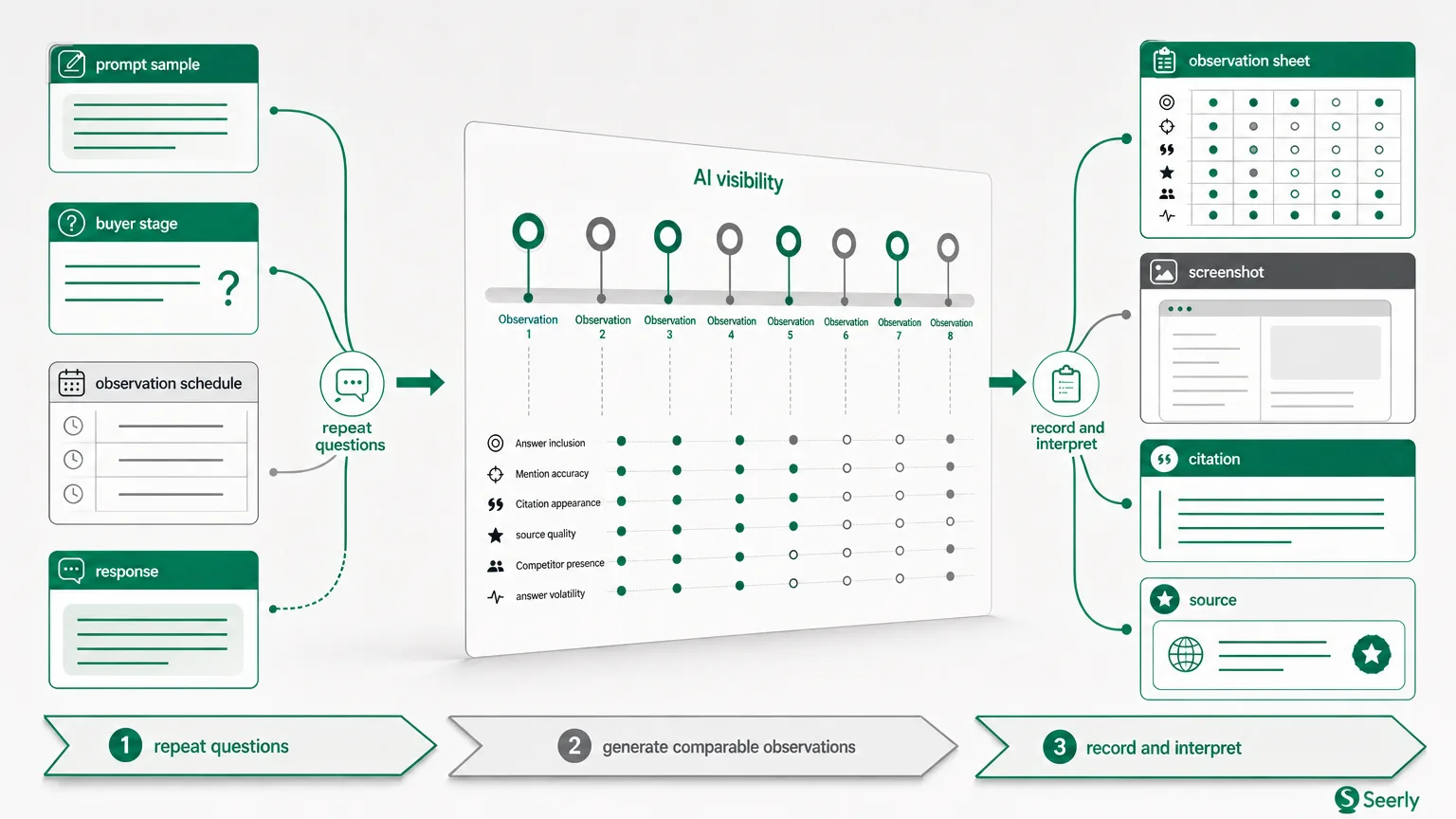
The platform should let teams create, organise, and retest the buyer questions that matter to their business. This includes category discovery questions, competitor comparison questions, product evaluation questions, and post-purchase support questions. Ask to see how it records the exact query, test date, AI provider or model, response, and any conditions that could affect comparability.
Request a demonstration using your own question set rather than a generic sample. A useful system should accommodate variations in buyer language - for example, “best accounting system for a construction firm” alongside “construction accounting software for multi-entity reporting.” That helps teams track intent themes without incorrectly treating one phrasing as the entire market.
Citation capture and page-level evidence
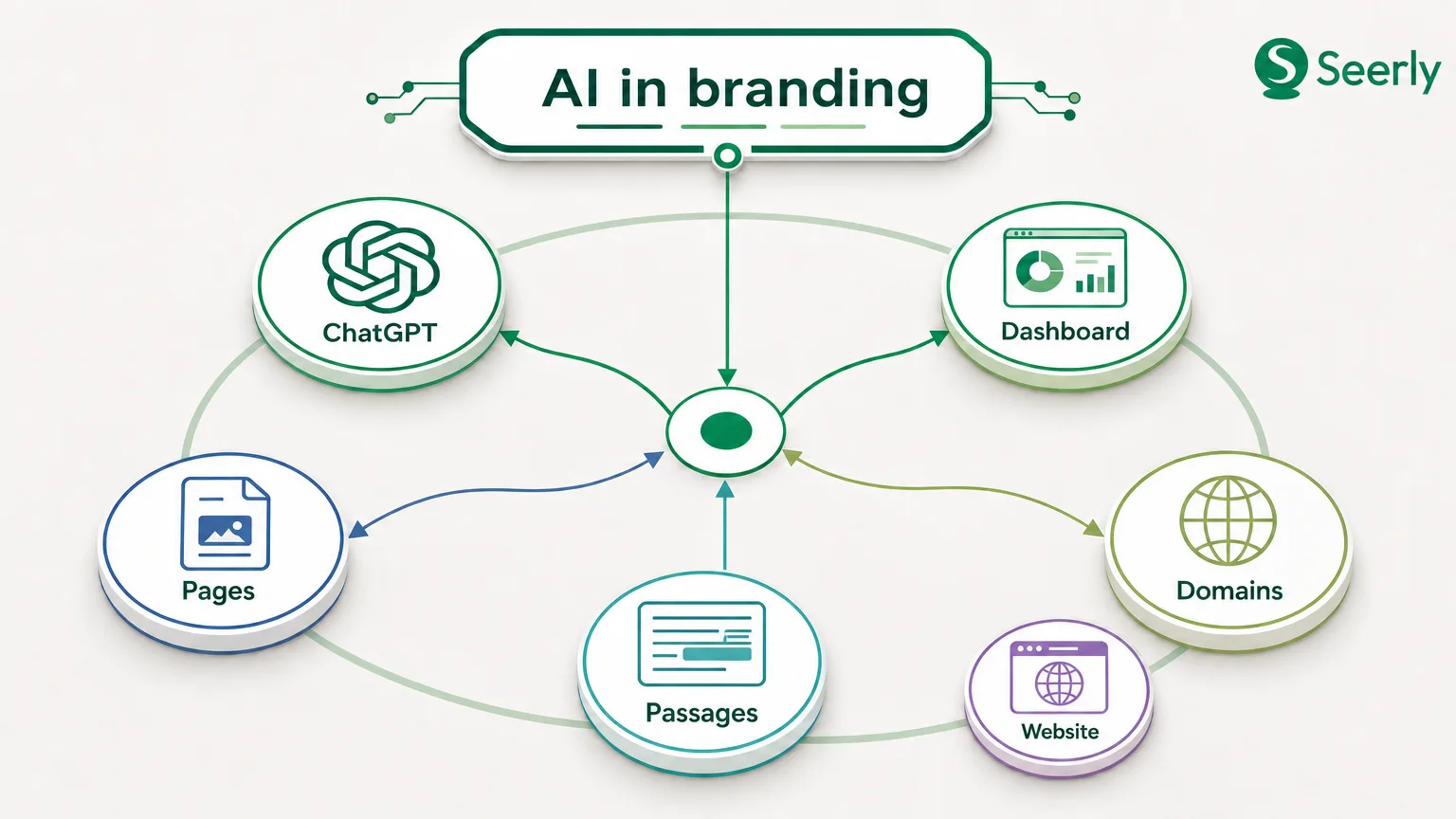
A visibility tool should retain the pages, domains, and passages associated with an answer wherever those sources are available. This is essential because a citation is not automatically a positive signal. A product may be cited from an outdated help article, an old third-party review, or a competitor-owned comparison page that frames the brand unfavourably.
Ask whether the platform can identify the individual page rather than only the referring domain. Page-level evidence lets content and product marketing teams decide what to do next: update documentation, clarify a product page, improve an integration guide, or address an unsupported claim. Clear documentation is especially valuable for product-led brands, and teams can apply similar principles from making product documentation easier to discover and trust.
Representation and sentiment review
Visibility reporting should preserve the words around the mention, not just a binary “present” or “absent” result. Marketing teams need to review whether a brand is called affordable, complex, secure, niche, enterprise-ready, easy to implement, or unsuitable for a particular audience. Those descriptors often shape perception more strongly than the brand name itself.
Ask how the tool distinguishes automated classification from human review. Sentiment labels can help prioritise work, but they should not replace examination of the actual response. A credible platform allows users to see the source evidence and correct the interpretation when a nuanced answer is incorrectly labelled as positive or negative.
Competitor benchmarking and reporting workflows
A practical platform should compare representation across the competitors buyers actually encounter, not only the competitors named in an internal strategy deck. Look for visibility benchmarking by question group, share of inclusion, citation patterns, and answer context. The goal is to identify where a competitor is consistently recommended and what evidence may be supporting that position.
Also evaluate whether the reporting fits the people who must act on it. Agencies may need client-ready exports and campaign-level comparisons, while in-house teams may need owners, issue queues, and links to supporting pages. The output should lead from observation to an accountable action - not produce a monthly chart that no team can use.
How can a team test the questions that influence brand perception?
A defensible programme starts with buyer questions, not an arbitrary list of brand keywords. Build a cross-functional working set with input from sales calls, customer support, product marketing, search data, reviews, and account teams. The objective is to represent the questions that can change consideration, conversion, adoption, or renewal.
Step 1: Group questions by buyer stage
Create four groups: awareness, comparison, evaluation, and post-purchase. Awareness questions explore a problem or category, such as “How can agencies reduce client reporting time?” Comparison questions ask who to consider, while evaluation questions examine specifics such as integrations, implementation, security, or pricing approach. Post-purchase questions test whether AI can direct customers to accurate setup guidance, troubleshooting steps, and support resources.
This structure prevents a misleading aggregate score. A brand may perform well on category awareness but disappear from late-stage questions that indicate buying intent. It also ensures that support and documentation teams are included where inaccurate AI answers could create customer experience and reputation risks.
Step 2: Define the factual representation you want to validate
For each question, write a concise representation standard before looking at results. This is not copywriting for an AI model; it is an internal definition of what a correct answer should include. For example, a workflow software company might define its desired evaluation-stage representation as: “Appropriate for mid-market agencies that need configurable approvals and client reporting; supports named integrations; does not claim to replace a full enterprise resource planning system.”
This step makes analysis more disciplined. Without it, teams can confuse flattering language with accurate language, or interpret any recommendation as success. It also establishes a shared standard among brand, product, content, and agency stakeholders.
Step 3: Record the current evidence
Run the question set and capture the complete answer, the brand’s presence or absence, cited material, competing brands, key descriptors, and factual issues. Record the date and testing context, then tag each result by buyer stage and priority. Avoid declaring victory or failure based on one answer, because AI responses can vary and source availability can change.
For a worked example, imagine a B2B analytics platform monitoring the comparison question: “What are the best customer analytics platforms for subscription businesses?” The team may find that it is mentioned but not recommended in the final shortlist, while two competitors are supported by detailed comparison pages and customer stories. The immediate insight is not “publish more content”; it is to investigate which decision criteria the answer emphasises and whether the brand has clear, independently verifiable evidence for those criteria.
How do content and website evidence affect whether a brand is represented accurately?
No site can force an AI system to produce a specific answer. However, teams can make their own information clearer, more consistent, easier to verify, and more useful to people researching a decision. This is the practical foundation of an AI-ready website: it gives users, crawlers, journalists, partners, and AI systems stronger evidence to assess.
Build a durable evidence layer
Start with clear, maintained product facts. Explain what the product does, who it is for, which use cases it supports, what integrations or requirements apply, and where meaningful limitations exist. Vague claims such as “the leading all-in-one platform” are hard to validate; specific, qualified statements are easier to understand and less likely to be distorted.
Next, support important claims with evidence that can be checked. Depending on the business, this may include public documentation, security material, methodology pages, customer case studies, verified reviews, or transparent policy information. Industry research suggests many organisations are already integrating generative AI into marketing planning, with GenAI appearing in most brands’ marketing plans; that makes governance of public claims increasingly important.
Make comparison and entity information useful
Comparison content should help a buyer make a decision rather than merely attack competitors. Explain the circumstances in which a product is a strong fit, trade-offs to consider, and the capabilities that matter for a particular use case. This gives AI-mediated research - and the buyer behind it - substantive material rather than unsupported promotional language.
Consistency also matters. Use the same brand name, product names, category descriptions, and core factual language across high-value pages, documentation, structured data, and reputable third-party profiles. When entities are inconsistent, teams make it harder to establish a stable, auditable representation of what the company offers.
For ecommerce teams, the same framework applies at the product level: accurate specifications, availability context, product comparisons, and helpful answers to decision-stage questions. Seerly’s guide to improving product-page visibility in AI search provides a useful extension of this evidence-first approach.
How should teams validate whether an improvement changed visibility?
Changes to content, documentation, and external evidence should be treated as testable interventions, not assumed wins. AI-search measurement is observational: a result can change because of your update, an AI provider change, a newly available source, competitor activity, or normal variation. The aim is to document change rigorously and avoid overstating attribution.
Use this validation checklist after making an improvement:
-
Retest the same prioritised question set. Keep query wording, buyer-stage tags, and testing conditions as consistent as possible. Retesting only new queries creates a new baseline rather than showing whether an existing representation changed.
-
Compare evidence, not only mention counts. Review whether the answer’s language changed, whether your preferred factual representation appears, and whether cited sources now include the improved page. A rise in mentions with the same inaccurate description is not meaningful progress.
-
Check competitor movement. A competitor may have gained or lost representation at the same time, which changes the context of your result. Visibility benchmarking should show whether the shortlist itself changed, not merely whether your own brand appeared.
-
Maintain a change log. Record the URL updated, what changed, publication date, related campaign activity, and the hypothesis being tested. This gives teams a credible record for internal reporting and prevents retrospective assumptions.
-
Separate observed change from causation. Report that representation or citation patterns changed after an intervention, but do not claim the update caused the result without sufficient repeated evidence. This level of transparency is especially important when consumer confidence in AI-guided information remains uneven.
Over time, this process turns AI in branding from a speculative initiative into an operating discipline. Teams build a historical record of questions, evidence, improvements, and results that can inform content planning, product messaging, and reputation management.
What questions should agencies ask before recommending an AI visibility platform?
How transparent is the methodology?
Ask how questions are tested, what models or AI providers are covered, how often results are collected, and how variation is handled. A provider should be able to explain what its metrics mean and what they do not mean. Avoid platforms that imply a single score represents universal AI visibility across every user, tool, and market.
What reporting limitations should clients understand?
Agencies should explain that AI responses are dynamic, personalised in some contexts, and not equivalent to conventional search rankings. Confirm whether the platform shows raw answers, citations, timestamps, and test conditions alongside aggregate metrics. Client reporting should distinguish between observed patterns, interpretation, recommended actions, and proven business outcomes.
Which providers and buyer environments are included?
Coverage should match the client’s audience and priorities. A B2B software company may need to monitor different AI experiences and questions than a consumer brand, while regional requirements can affect relevance. Ask whether provider coverage can expand, how historical comparisons work when providers change, and whether the platform reveals gaps rather than hiding them.
Is evidence retained and actionable?
Evidence retention is critical for audits, stakeholder reviews, and agency-client continuity. Confirm that teams can return to a historical answer, see its associated sources, compare it with later tests, and export a usable record. The tool should connect observations to page-level work, not leave a content team guessing what to change.
Who owns implementation and follow-through?
Technology does not replace operating ownership. Before recommending a platform, agencies should establish who owns question selection, representation standards, evidence review, content changes, technical implementation, and measurement reporting. The strongest programmes combine agency strategy with client product knowledge, documentation expertise, and a recurring validation cadence.
Build a baseline before trying to improve it
Brands can become more visible in AI-mediated buyer research by becoming easier to verify, clearer to compare, and more disciplined about measurement. The goal is not to chase a guaranteed answer from ChatGPT or any other AI system. It is to understand how high-value buyer questions currently represent the brand, strengthen the evidence that supports an accurate representation, and validate changes over time.
Start by creating a baseline of your highest-value buyer questions and recording the evidence behind every important answer. Then use Seerly to monitor visibility, citations, competitor representation, and changes over time - so your team can turn AI search visibility into measurable, evidence-led growth.