SEO Optimization Tools Still Matter - But Only If They Help You Produce Pages AI Systems Can Actually Reuse

Marketers still need SEO optimization tools. They just need to judge them by a tougher standard: do they help people write clearer, better-supported pages, or do they only reward score-chasing?
A funny thing happened in a lot of marketing teams over the past year. The weekly SEO report still showed rankings, crawl health, and page scores. But the actual conversation changed. People started asking why a page with a green score and a polished brief still wasn't getting picked up in answer surfaces, while another page with less polish kept showing up in summaries, comparisons, and assistant responses.
That gap matters more than most teams want to admit. If you're running a lean content program, you can't afford to keep feeding time into recommendations that make software happy but leave readers confused. And if you're an agency operator, the old pattern of "fix the score, publish the page, move on" is getting harder to defend when AI Overviews may cut organic clicks by 38% in some cases. The reporting stack didn't disappear. The standard for what counts as useful did.
I’ve found that this is the real question behind most searches for seo optimization tools. People aren’t only asking which platform has the cleanest dashboard or the biggest keyword database. They’re asking which outputs still deserve attention. Which alerts lead to stronger pages? Which recommendations help a page become easier to quote, compare, trust, and reuse?
That’s where the conversation gets more practical. Some tool functions still pull a lot of weight. Others are drifting into vanity metrics with better branding. And the teams that sort the two apart early will waste less time.
What are SEO optimization tools still good at?
Definition: SEO optimization tools are software products that review pages, keywords, structure, and site signals to help teams improve discoverability and page quality. The useful part isn’t the score itself. It’s the diagnostic output behind the score.
The old categories still matter. They just matter for a different reason now.
Technical checks still save you from dumb losses
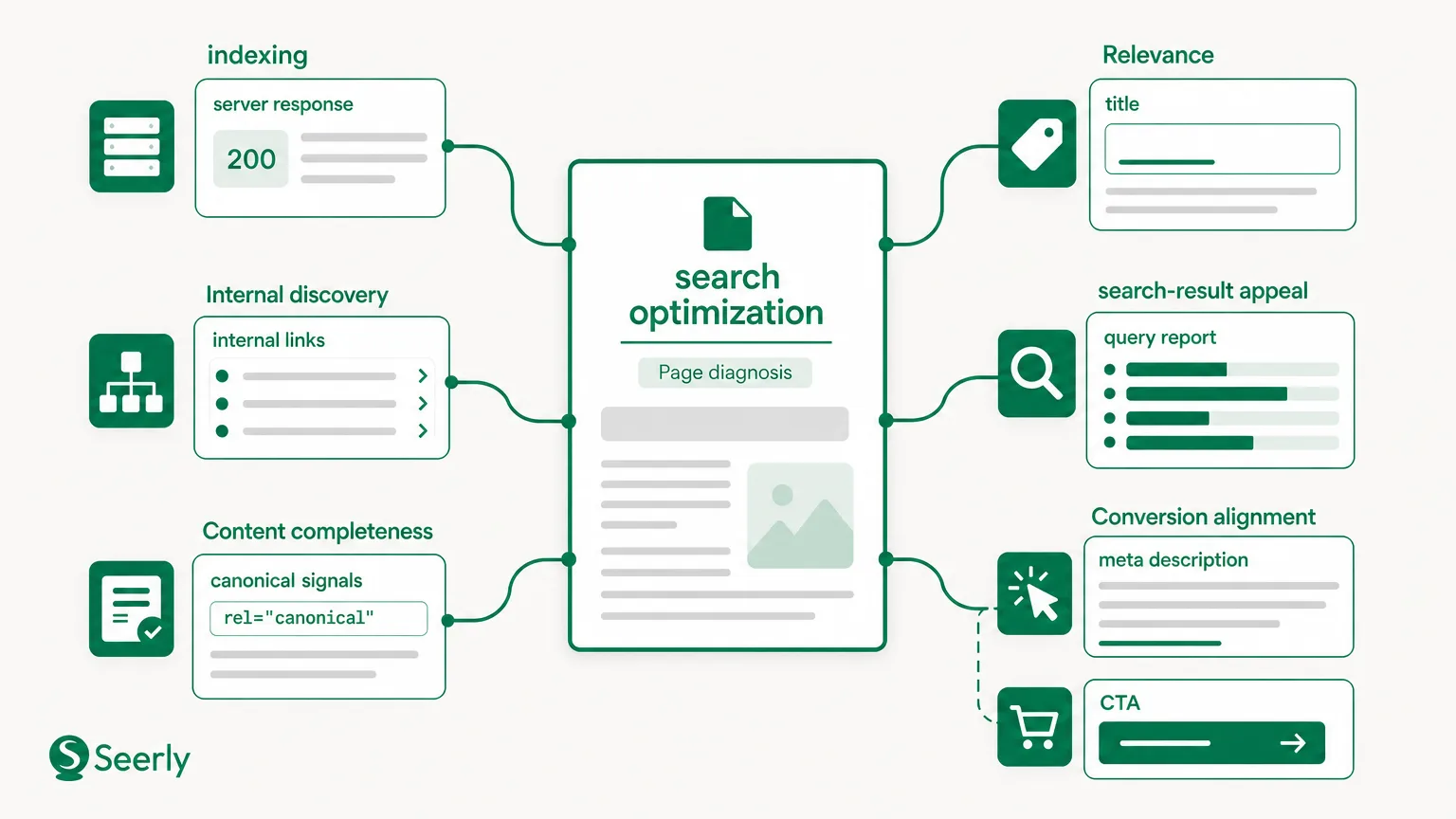
Start with the boring stuff, because boring stuff still breaks results. Crawl issues, canonicals, redirect chains, noindex accidents, and sluggish templates can keep strong content from being seen or trusted. No assistant, search feature, or human reader is impressed by a page that loads awkwardly, collapses on mobile, or points to three conflicting versions of the same URL.
Plenty of teams underrate this because technical reports feel detached from writing quality. They’re not. A clean technical layer makes every other content improvement easier to surface. And the market still reflects heavy reliance on software for this work, with multiple industry roundups showing wide adoption of SEO platforms across in-house teams and agencies, including usage patterns summarized in SEO tools statistics and broader tool adoption data.
So yes, keep the crawlers. Keep the site auditors. Keep the alerts that catch template mistakes before 500 pages inherit them. That’s still money well spent.
Content structure review can improve readability, if you ignore the theater
Content scoring systems get mocked a lot, sometimes for good reason. Still, I wouldn’t throw them out wholesale. A structure review can quickly reveal thin sections, missing topic coverage, clumsy heading order, or pages that bury the answer under six paragraphs of throat-clearing.
The catch is obvious. A page can hit every term target and still read like it was assembled by committee during a fire drill. That’s the trap. Tools help most when they point out missing clarity, not when they push writers into repetitive wording or swollen copy.
The way I see it, a useful structure report should trigger editorial questions like:
- Is the answer visible in the first screen?
- Do headings match real searcher questions?
- Did the page explain the product before pitching it?
- Would someone skimming find the comparison points fast?
That’s a very different use case from "raise the score from 74 to 88."
Internal linking reports are still underrated
If I had to pick one classic feature that still gets too little respect, it’s internal linking. Not glamorous. Still powerful.
A strong internal link map helps search systems understand how pages relate. Just as important, it helps human readers move from broad education to product detail without getting lost. When optimization tools identify orphan pages, weak anchor text, or missing links between adjacent topics, they’re doing work that directly improves comprehension.
At Seerly’s writing on tracking AI search visibility, you can see why that matters: monitoring isn’t only about impressions. It’s about whether pages connect cleanly enough for people and machines to follow the logic of your site.
SERP benchmarking still gives useful context
You still need to know what the page is competing against. Not to copy it line by line. To see the pattern.
SERP benchmarking helps teams notice things like answer-first intros, repeated comparison formats, table usage, FAQs, and query variants that dominant pages cover explicitly. A lot of search engine optimisation tools are still helpful here because they compress review time. Instead of opening twenty tabs and pretending that’s a process, you get a sharper read on what the market already expects.
And yes, there’s growing pressure to widen that view beyond standard rankings. If your current toolset stops at blue links and never shows how your page appears in answer-style experiences, you’re already missing part of the picture. That’s one reason I’d pair legacy software with newer monitoring, such as the ideas discussed in this Seerly piece on how AI search optimization helps SaaS buyers find the right product.
Where tool scores stop helping
I’ve seen this pattern enough times that it now feels obvious. One page gets a glowing software score. It includes the target phrase in headers, body copy, image alt text, and maybe the author’s bloodstream. Another page has a lower score but starts with a direct answer, names trade-offs plainly, backs up claims, and uses examples a buyer could lift into an internal memo. Guess which one feels more reusable?
The score-led page often looks "optimized" only inside the tool. Outside that sandbox, it can feel padded, vague, and weirdly cautious. The language circles the topic without saying anything concrete. Definitions run long. Claims float without proof. Comparisons sound scrubbed clean by legal review. A machine summary system has very little sturdy material to grab.
And that’s the shift. Ranking-era software trained teams to chase correlation signals. Reuse-era content work asks a different question: can another system confidently extract, condense, and restate the page without tripping over fluff or ambiguity?
Honestly, I think a lot of teams already know this. They feel it when they review drafts. A page can look perfect in Clearscope or another optimizer and still feel slippery. Not wrong, exactly. Just unhelpful. That gut reaction matters.
Research around information retrieval keeps circling the same point from different angles: structure, relevance cues, and explicit signals help systems identify useful passages. Even newer work around answer generation and retrieval-backed systems keeps reinforcing that grounded, clearly organized content gets reused more easily, which you can see in recent retrieval and generation research. Tool scores can hint at that. They can’t replace it.
The four outputs that matter now
If your team keeps any content scoring workflow, tie it to these four outputs. Miss them, and the page may still "pass" software while failing the real test.
1. A clear answer summary
A good page should state the answer early, in plain language, without making the reader dig through scene-setting. That opening summary becomes the anchor for everything that follows. It also gives search systems a compact unit of meaning to work with.
Bad version: broad intro, abstract promises, delayed answer.
Better version: two or three sentences that define the issue, state the recommendation, and note the main trade-off.
Short. Concrete. Reusable.
2. Prompt-aligned subheadings
People don’t search in neat taxonomy terms anymore. They ask messy questions. They compare options. They ask for examples, downsides, and differences. Good subheadings reflect that behavior.
Instead of vague headers like "Features" or "Benefits," use headings that match likely prompts: "Which recommendations should you ignore first?" or "When does a content score stop meaning anything?" Those are easier to scan, easier to quote, and easier to map to user intent.
Point being, headings now do more than organize prose. They frame extractable answers.
3. Source-backed claims
A page full of unsupported assertions looks thin, even when the writing is smooth. If you make a non-obvious claim, give it support. That could mean original reporting, a product screenshot, customer evidence, or a credible outside source.
For example, if you want to argue that reporting habits need to change because rankings no longer explain performance shifts, you can point to field reporting on why rankings can rise while traffic still falls. Now the claim has bones.
4. Comparison-ready examples
This one gets overlooked. Systems love usable contrasts. Buyers do too.
If your page says a tool helps with "content quality," that’s fog. If it says, "Act on recommendations that clarify the answer, add proof, or fix internal links. Ignore requests to repeat a phrase five more times," now you’ve given the reader a choice framework. A comparison table, side-by-side bullets, or before-and-after excerpt can do more work than three extra paragraphs of theory.
A worked example: fixing one product page without obeying every recommendation
Let’s say a team manages a solution page for analytics software. The page targets a high-intent query. It already ranks decently. The optimization tool gives it a 79 and recommends four things: add more instances of the target term, increase word count by 600 words, include competitor mentions, and expand related questions near the bottom.
Now pause. Which of those actually improve the page?
What I’d act on first
I’d review the first screen. Does it answer what the product does, who it helps, and why someone would pick it over a spreadsheet or dashboard plugin? If not, rewrite that section first.
Then I’d inspect headings. Suppose the page currently uses generic H2s like "Overview" and "Capabilities." I’d replace them with reader-shaped prompts: "What problem does this replace?" and "How does it compare with manual reporting?" That change often lifts clarity fast.
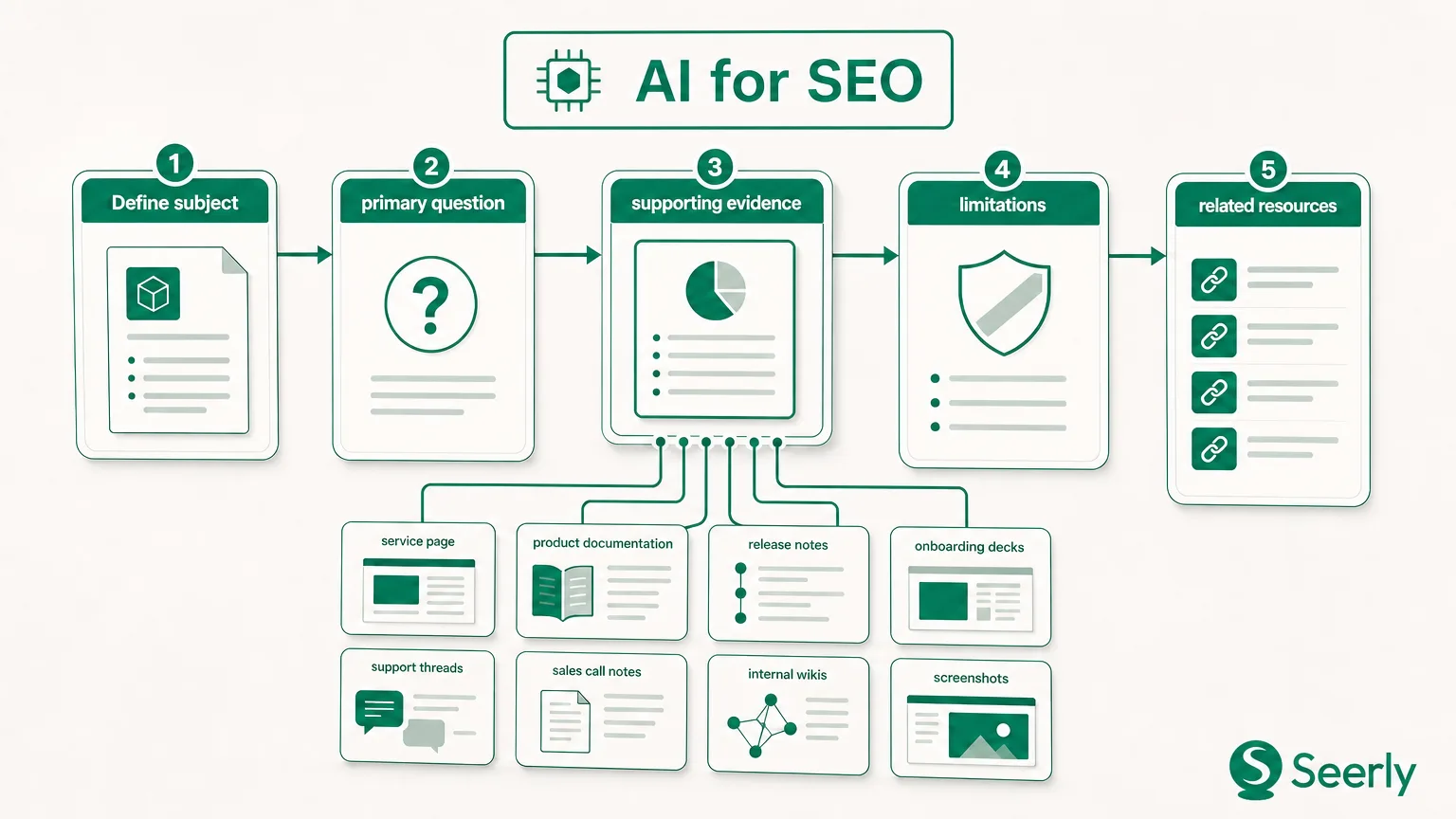
After that, I’d check evidence. Are there product screenshots, benchmark claims with support, or a real example of a team using the workflow? If not, add one. At Seerly’s article on content that gets cited in AI answers, you can see the same principle from a content angle: pages become more reusable when they carry concrete proof and direct answer formatting.
What I’d probably deprioritize
Now for the awkward part. I might ignore the suggestion to force six more uses of the target phrase. I’d also resist padding the page by 600 words unless the missing length corresponds to missing substance. More copy won’t rescue a page whose answer is muddy.
Competitor mentions? Maybe. Only if buyers truly compare those names on-page and your team can discuss trade-offs honestly. A tossed-in comparison line for score purposes usually reads fake.
Expanding bottom-of-page questions can help, but only if those questions cover real objections. If they’re filler like "What is analytics software?" on a page meant for active buyers, skip it.
The process I’d use
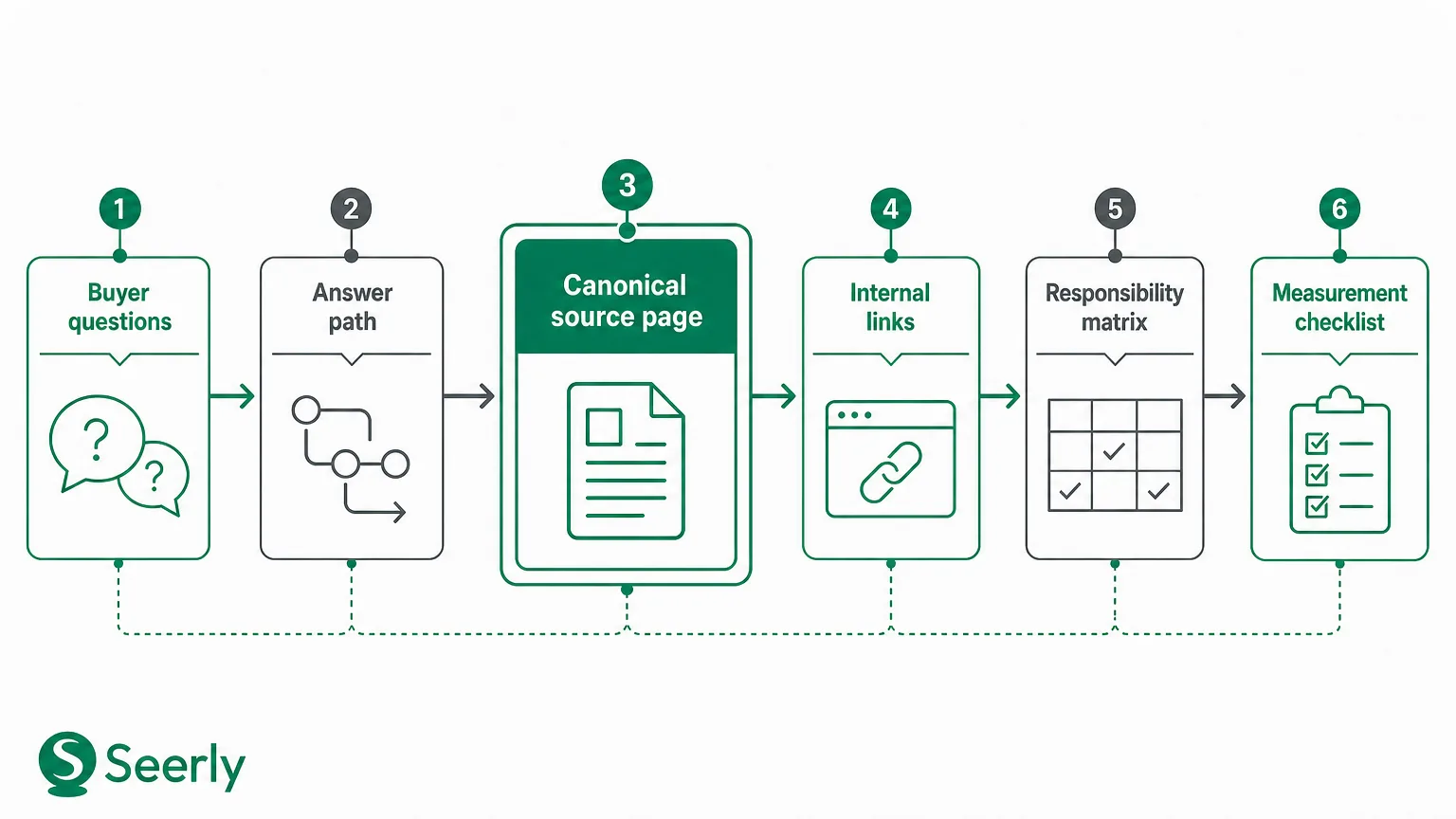
- Check extraction value first. Can someone quote the opening answer as-is?
- Fix heading intent. Turn category labels into question-led sections.
- Add proof. Support product claims with examples, screenshots, or cited benchmarks.
- Strengthen linking. Connect the page to related guides, use cases, and comparisons.
- Review tool suggestions last. Keep the ones that improve clarity. Drop the rest.
That order matters. Teams often do the exact reverse.
Keep, supplement, or retire parts of the stack
A lot of software decisions get stuck because nobody wants to say the quiet part out loud: some reports survive because they’re familiar, not because they help. So use a blunt three-bucket framework.
Keep
Keep any tool output that catches crawl issues, improves heading clarity, reveals internal link gaps, or shows genuine SERP patterns. Those functions still help teams make informed decisions. They reduce blind spots.
Supplement
Supplement tools that stop at rankings and page scores. Add a layer that tracks how content appears in answer-style experiences, how often key passages surface, and which page formats get reused. If your reporting doesn’t include that view, it’s incomplete. The discussion in Seerly’s article on what competitor intelligence tools should actually help you see is useful here, because the same principle applies: don’t confuse available data with useful data.
Retire
Retire any workflow step that exists only to raise an internal score with no clear editorial payoff. I’m not 100% sure every team is ready to cut those habits fast, but they should at least label them honestly. If a recommendation doesn’t improve readability, proof, formatting, or navigation, why keep paying attention to it?
Not ideal for the old dashboard culture. Still true.
FAQ: practical questions teams keep asking
Are SEO optimization tools still worth paying for?
Yes, if they help you catch technical issues, improve structure, and find internal link opportunities. No, if your team treats the score as the end goal.
Should teams replace classic optimization software with AI-era monitoring?
Usually not replace. Add. Most teams still need crawl data, SERP benchmarking, and on-page diagnostics. They also need a newer layer that shows whether content gets surfaced and reused in answer-driven experiences.
What’s the biggest mistake with search engine optimisation tools right now?
Using them as writing judges instead of diagnostic assistants. Software can spot gaps. It can’t decide whether a paragraph actually says something useful.
How often should you act on content score recommendations?
Only after an editor checks whether the recommendation improves clarity or evidence. If it only increases repetition, skip it.
Do longer pages perform better in AI-influenced search environments?
Sometimes, but only when the extra length adds examples, proof, or clearer comparisons. Empty length still feels empty.
A lot of teams don’t need a bigger stack. They need a stricter filter.
Review your current workflow. Pull up every tool report your team touches in a normal month. Then ask one blunt question: does this help us produce pages AI systems can confidently cite and reuse, or does it only help us chase a score?
Learn more at seerly.app