Guide to AI Search Optimization: Tracking Visibility in AI-Driven Search
Why AI Search Optimization Matters
You write an article, optimize for SEO, then relax. But hold on - users increasingly skip traditional search results and consume answers from AI models directly. Case in point: by mid‑2025, AI Overviews appeared in more than 25% of Google results; by early 2026, about half of U.S. Google searches featured AI-generated summaries. When those summaries pull information from other sources, traffic to your site drops - even if your content is solid.
Think of it this way: someone asks ChatGPT where to find detailed brand analytics and your site is featured. They get what they need without clicking, but you're still visible. That means visibility now spans beyond "did they click" to "did they cite you." According to recent data, ChatGPT prompts amount to billions daily, and AI Overviews are reshaping the roles platforms play in discoverability.
So optimizing for AI search isn’t optional - it’s table stakes. In this guide, you’ll learn what AI search optimization (ASO) actually means, how it differs from traditional SEO, which metrics matter today, and how to put together a tracking system that works - then act on it so your content doesn’t get left behind.
What Is AI Search Optimization?
AI Search Optimization means adapting your content so AI systems like ChatGPT, Google Gemini, Perplexity, or Claude surface, reference, or cite it when answering users.
It builds on traditional SEO. You still want good copy, titles, and links; but with ASO, you layer in structured data, Q&A formatting, concise definitions, and trustworthy citations.
Two key branches stand out:
- Answer Engine Optimization (AEO). Focuses on writing conversational Q&A formats so your content serves as direct answers. Think FAQs, natural language, short responses - text AI can easily lift and repurpose.
- Generative Engine Optimization (GEO). Centers on structuring content so AI systems choose it when generating summaries. Schema markup, clear headings, statistics, and quotes help AI identify relevant sources.
ASO isn’t hype. One study found GEO tactics like citing sources and embedding statistics increased visibility by 30-40% in AI-generated responses.
Core Metrics: What to Track
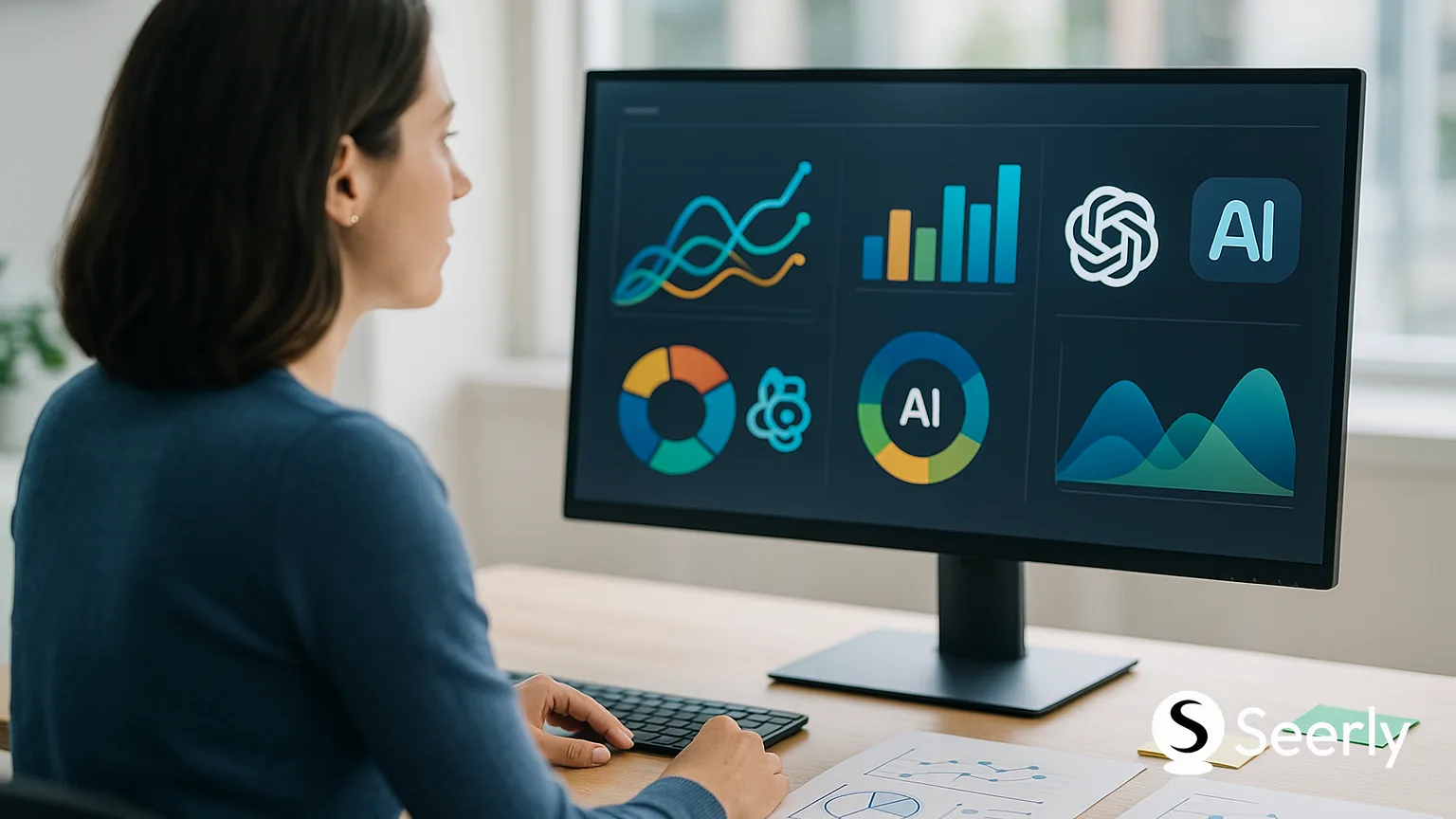
Traditional KPI dashboards won’t catch AI visibility. You need new metrics that reflect how content serves AI users. Here are the essentials:
1. Brand Mention Rate
Measures how often your brand appears in AI responses for a set of prompts. If you test 100 queries and your brand shows up in 34, your mention rate is 34%.
2. Share of AI Voice (SoAV) or Share of Answers (SoA)
Calculates your mentions versus all competitors. If you appear 34 times and competitors total 100, your SoAV is 25%. Many brands start with 10-15%, aiming for 25-45% to be dominant.
3. Citation Share
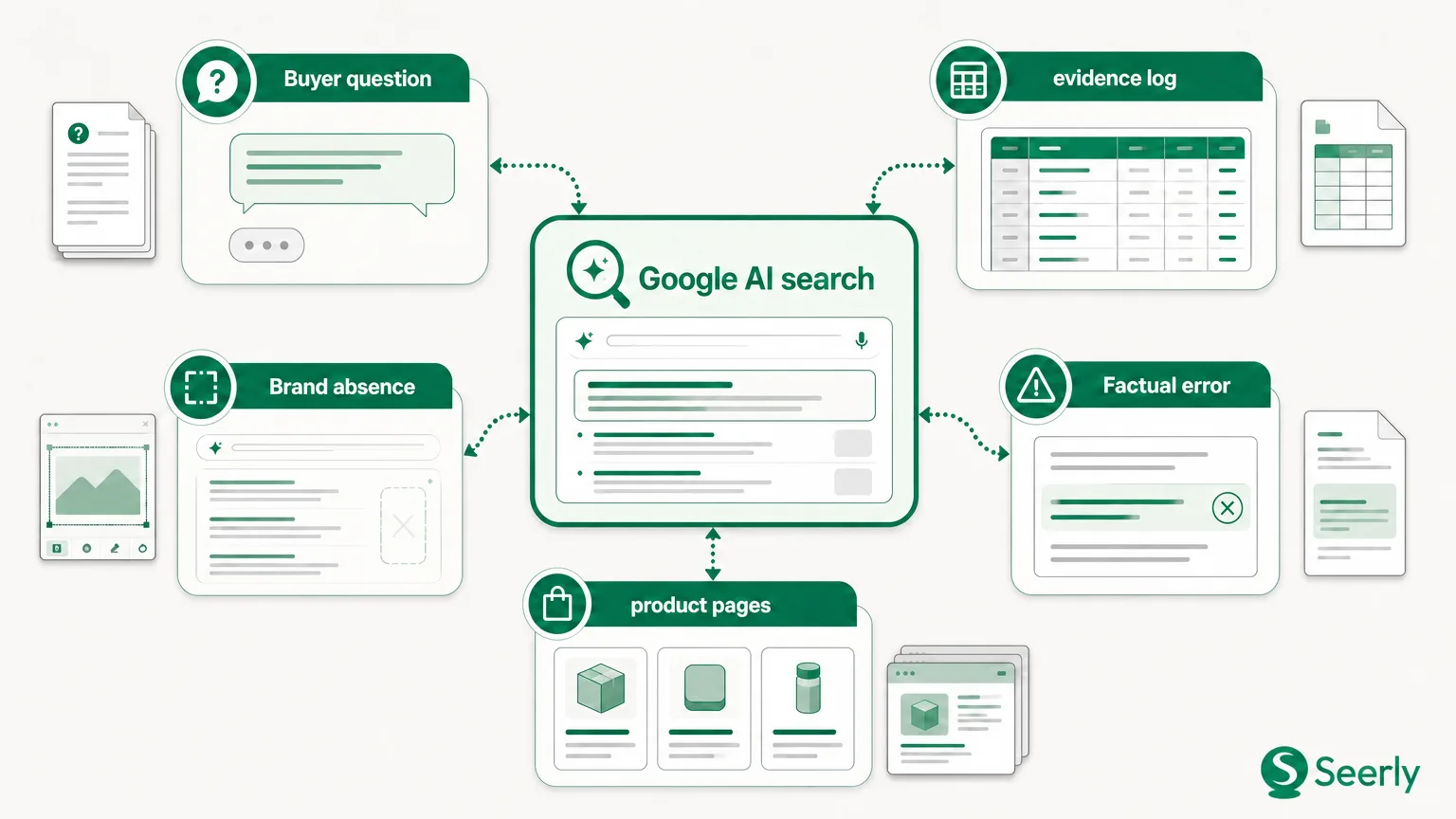
Counting how often AI systems explicitly cite your content versus competitors or fail to cite at all helps pinpoint structural or topical gaps.
4. Sentiment and Answer Quality
Appearing isn’t enough - how AI describes you matters. Some tools score sentiment or message tone. A score of 70 suggests generally favorable portrayal.
5. AI Referral Traffic
You can measure how often AI-generated answers drive users to click through. Set up custom channel groups in GA4 for chat.openai.com, perplexity.ai, gemini.google.com, etc., to isolate AI-driven visits.
Tracking Visibility: Approaches & Strategies
Platform-Wide Tooling + Manual Audits
Use AI visibility tools like Semrush AI Visibility Index or custom dashboards - but don’t rely completely on them. Pair tools with weekly audits using a prompt bank of 20-30 common queries - run them across ChatGPT, Gemini, Perplexity, Copilot, Claude. Track mention rate and SoAV manually to catch nuances before tools do.
Avoid Common Pitfalls
- Tracking only one AI engine hides ~60-70% of visibility.
- Only ~20% of brands maintain presence across five identical prompt runs.
- Traffic from AI referrals often gets misclassified - GA4 needs custom filtering to capture it accurately.
Build a Dashboard
Collect and visualize these metrics:
- Brand mention rate
- SoAV vs competitors
- Citation share percentage
- Sentiment scores
- AI referral clicks/visits
Track trends weekly. Use prompt buckets by topic, funnel stage, or query type to spot where visibility slips or grows.
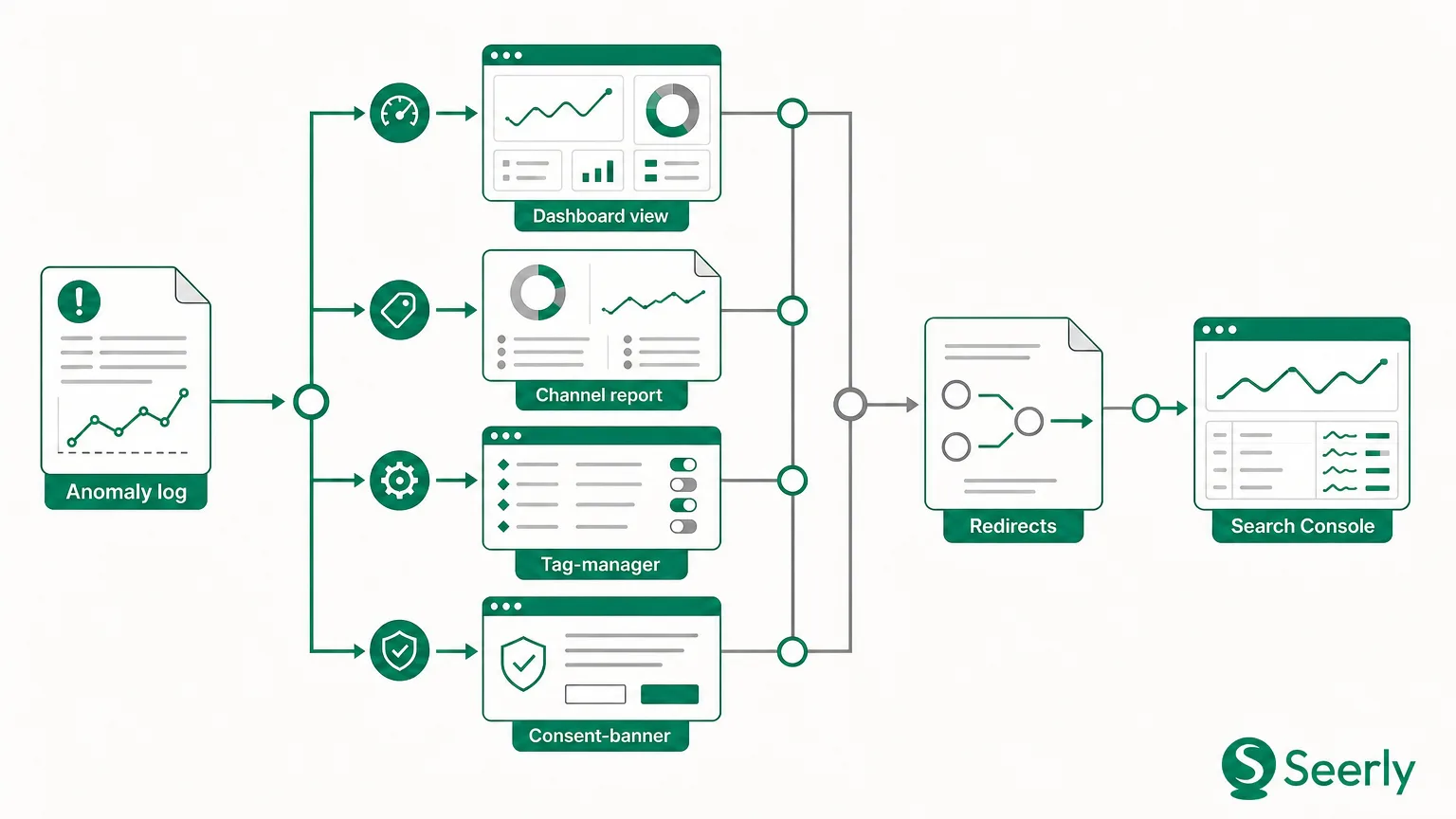
How to Act on Visibility Data
Numbers mean little without action. Track to improve.
Refresh High-Impact Content
Fix Structure & Schema
If citation share lags, add schema markup (FAQ, Article, Product). Structured FAQ pages get up to 2× more citations in AI answers.
Expand Coverage Where Competitors Lead
Use share of voice data to find queries where you’re invisible but competitors dominate. Could be long-tail topics like “how to measure AI visibility metrics” - starting simple Q&As there can widen footprint.
Improve Description Tone
If brand sentiment is low, update AI-facing content with clarity, citations, stats. Plain, factual language trumps cleverness in AI readability.
Track AI Referrals in Context
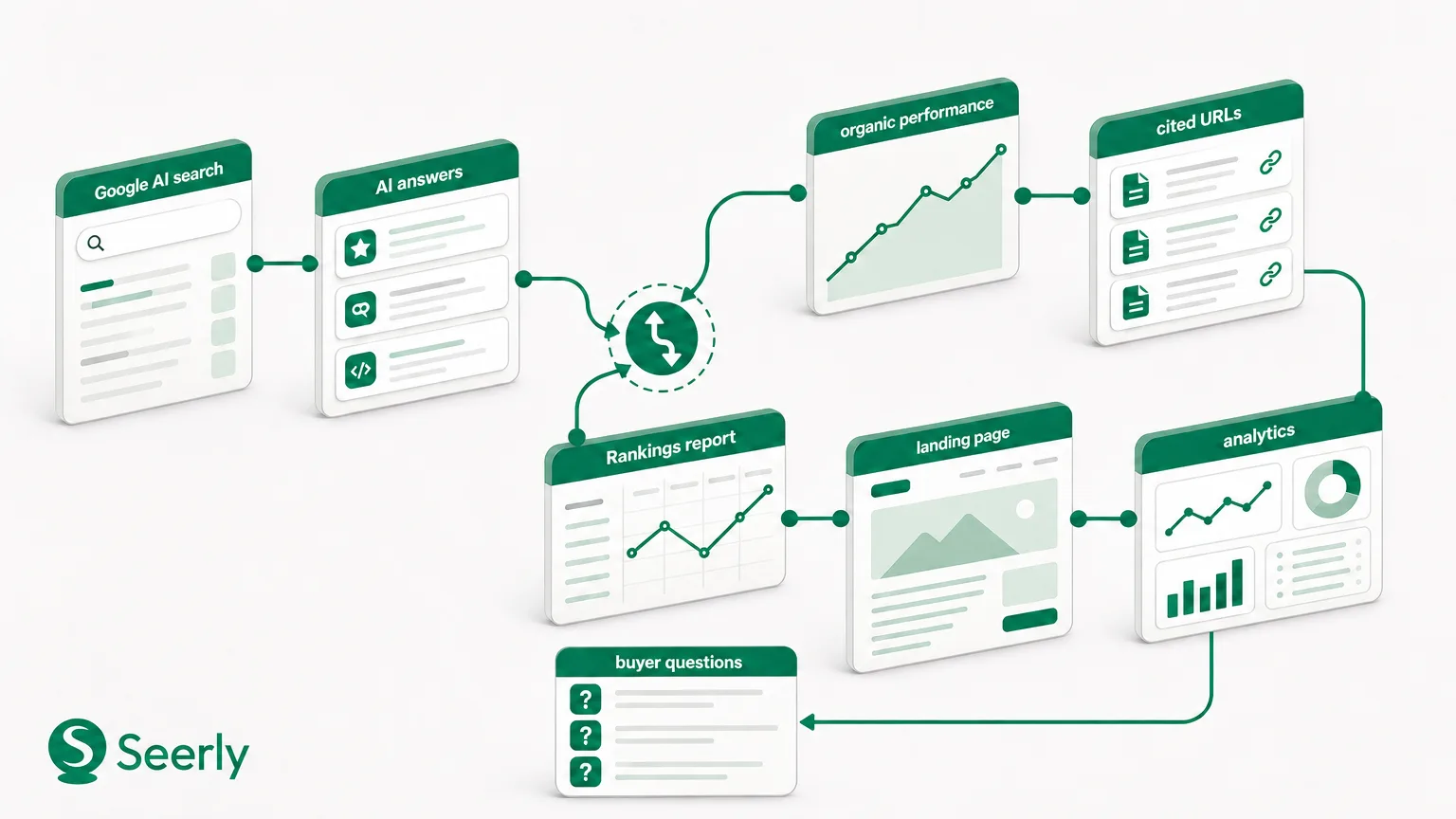
Matching AI exposure and traffic helps you connect visibility to leads or conversions downstream. Track both to spot early correlations.
Internal Resources Worth a Look
Seerly has posts to help you deepen your grasp:
- Layers of architecture for proactive AI visibility: Beyond Dashboards: Five‑Layer Architecture for Proactive AI Search Visibility
- How LLMs cite sources: LLM Citation Mechanics Behind AI Search Visibility
- Practical ways to lift visibility: 7 Proven Ways to Improve AI Search Visibility
Frequently Asked Questions
What’s the difference between SEO, AEO, and GEO?
SEO focuses on ranking through keywords and backlinks. AEO formats content to answer user questions directly. GEO ensures content gets picked as sources for AI-generated summaries.
How many prompts should I test weekly?
Use at least 20-30 prompts per topic. Track mention rate, share of voice, and citation share over time to build statistical confidence.
Is AI visibility tracking unreliable?
It’s noisier than SEO because AI answers vary. Still, manual auditing and prompt averages help surface patterns worth acting on. Start with tracking and refine as data grows.
Will AI visibility replace SEO?
No. AI-driven discovery often drives downstream interest. Relevance in AI search and organic traffic still reinforce each other. SEO remains essential for depth and authority.
Seerly built its tools with tracking and actionable insights top of mind. If you want to build your own AI visibility dashboard or explore how Seerly can help, check out Seerly’s AI Visibility Solutions.