How to detect thin evidence on AI-generated pages before it weakens search positioning
A page can sound polished, answer common questions, and follow every on-page SEO convention - yet still offer readers little reason to trust it. This is the central risk of publishing AI-assisted content at speed: fluency can conceal an absence of original proof, clear ownership, and practical specificity.
For search engine positioning, the question is not whether a draft involved AI. Search systems evaluate many signals, while Google’s published guidance consistently emphasizes content created to help people, demonstrate experience, and provide real value beyond what is already available. People-first content should offer substantial value and leave readers feeling they have learned enough to achieve their goal. A team that checks evidence before publication is therefore less likely to create pages that look complete but fail under closer inspection.
This article provides a practical review process for SEO leads, content managers, and web teams. Use it to identify thin evidence before a page enters the publishing queue - not after visibility, conversions, or trust signals begin to decline.
Distinguish fluent copy from useful evidence
Fluent copy is easy to generate. It has a confident tone, familiar SEO language, neat headings, and broad statements that appear plausible. Useful evidence is harder because it requires a verifiable connection between a claim, the conditions behind it, and a source that readers can inspect or a qualified person who can stand behind it.
Consider this generic landing-page copy:
Our platform helps marketing teams improve AI search visibility with better insights and faster decisions.
The sentence is smooth, but it does not explain what the platform measures, what “better” means, who the platform is for, or how a team should use the information. It could describe dozens of products, and it gives a potential buyer no basis for assessing the claim.
Now consider a revised version:
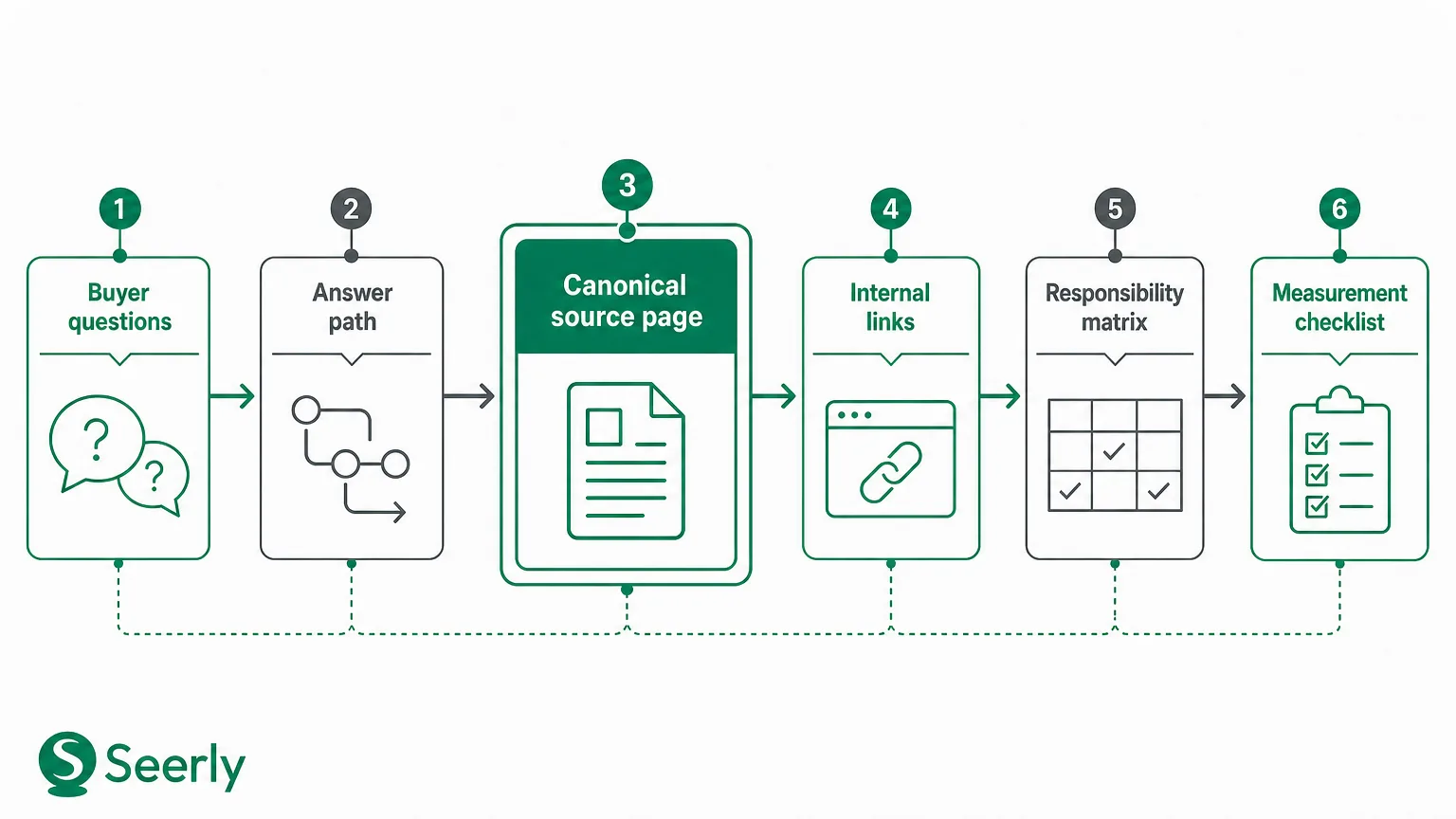
Marketing teams can use weekly visibility benchmarks to compare how often their brand and competitors appear for a defined set of buyer questions, then assign content, product, or reputation actions to the teams responsible for each gap.
This version makes a narrower claim. It identifies the user, the mechanism, the relevant comparison, and the intended outcome. A product owner can verify whether the workflow exists; an editor can request a screenshot; and a reader can decide whether this addresses their need.
That distinction matters because search engines must first discover and process pages, then apply ranking systems designed to surface useful results. Google explains that ranking uses multiple systems and signals rather than a single quality score. A polished page with no distinct information may be technically accessible, but it has a weaker case for being the best result for a specific search.
Turn broad assertions into reviewable claims
For every important sentence, ask four questions: What exactly is being claimed? Under what conditions is it true? Who can verify it? What would a reader use to make a decision?
A vague statement such as “our service delivers better results” should become a measurable or bounded assertion. If no measurement exists, describe the process instead of implying an outcome. For example, “our specialists review implementation data monthly” is more accountable than “we continuously optimise performance,” provided a named team can confirm the review process.
This approach supports search engine positioning improvement because it gives pages a clearer informational advantage. Instead of competing on generic wording, the page competes on decision-useful details that are difficult to reproduce without direct expertise.
Find the evidence gaps that matter
Thin evidence is rarely one obvious error. More often, it is a pattern of omissions across a page: statistics with no source, comparisons with no criteria, examples that could have been copied from any competitor, and claims that no one inside the business owns.
Use the following diagnostic checklist during editorial review:
-
Unsupported claims: Highlight promises, performance statements, superlatives, and statements about customer behaviour. Each should have a source, a clearly stated limitation, or a rewrite that describes a factual capability rather than an unverified result.
-
Missing methodology: Check whether a metric explains its population, period, definition, and collection method. A percentage is not persuasive if readers cannot tell whether it comes from a customer survey, a product dataset, an industry study, or an isolated example.
-
Vague comparisons: Watch for “faster,” “leading,” “more accurate,” and “best-in-class.” A comparison needs a benchmark, named criteria, or a narrower explanation of the difference; otherwise, it is marketing language rather than evidence.
-
Absent ownership: Identify the person or function responsible for validating each important claim. If the copywriter cannot name a product manager, analyst, legal reviewer, or subject-matter expert who can approve it, the claim should not be presented as settled fact.
-
Recycled examples: Search the draft for examples that could apply to nearly any industry or business. Replace them with a first-hand workflow, an annotated interface image, a real decision framework, or a source readers can independently assess.
Evidence gaps can also undermine a page’s usefulness in AI search experiences. Pages that explain how information was produced, where claims originated, and what a recommendation applies to offer stronger material than pages built from generalisations. For a related framework, see this guide on what AI search systems need from original content before they reuse or recommend it.
Review claims before the page is published
An evidence review should happen while a page is still editable, not after technical SEO checks or final approval. Treat it as an editorial gate with a simple record of each material claim and the decision made about it.
Use a five-step claim review
First, copy the draft into a shared document and highlight every statement that asserts a fact, outcome, comparison, process, or recommendation. Do not limit this to numerical claims. “Customers prefer,” “teams save time,” and “this is the right approach” all make assertions that may need support or qualification.
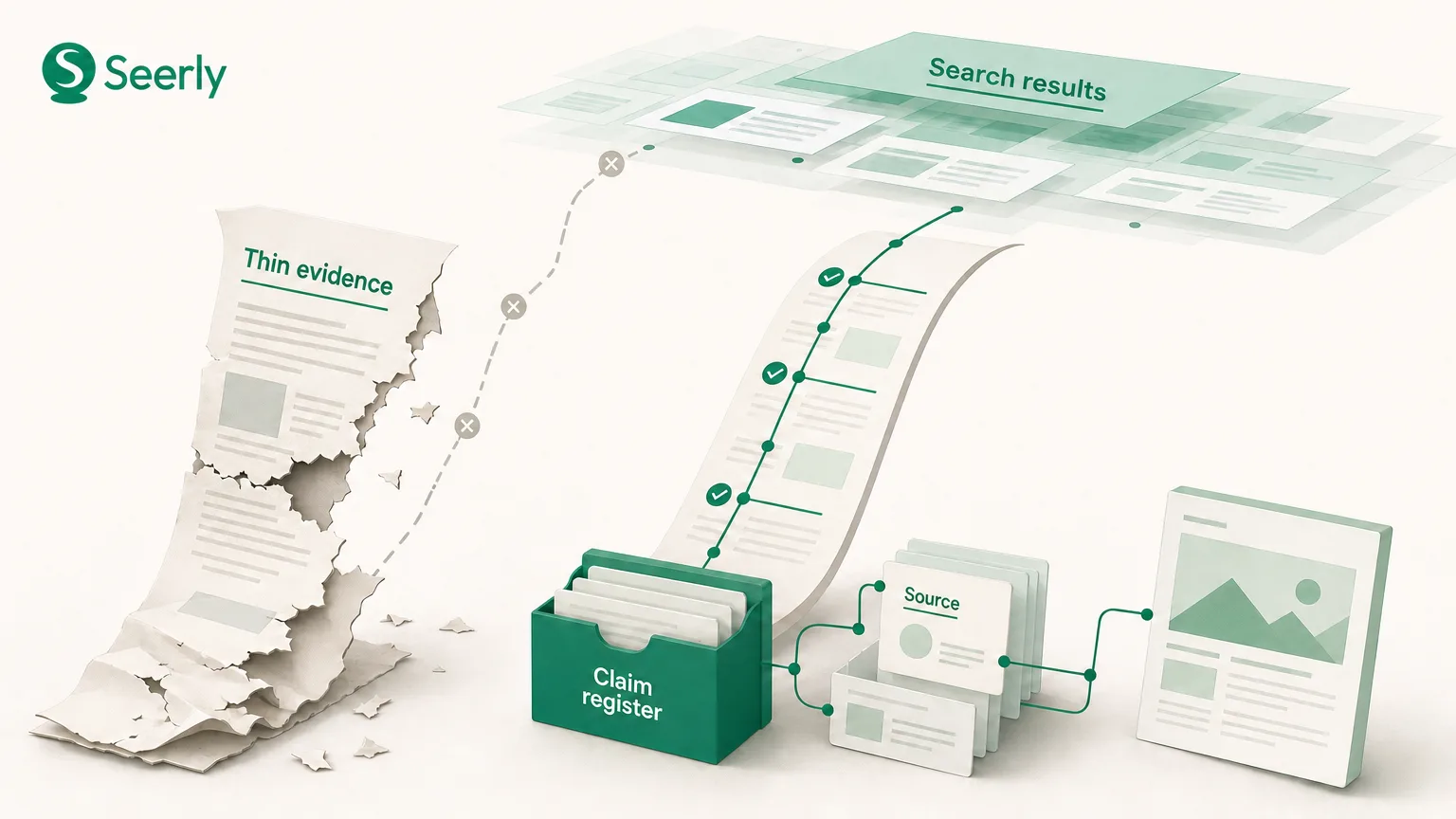
Second, create a claim register with five columns: the claim, its importance to the page, evidence available, accountable owner, and editorial decision. Importance can be high, medium, or low. High-importance claims include core product promises, financial implications, legal or compliance statements, and advice that could influence a buyer’s decision.
Third, assign each highlighted statement one of four decisions: source, demonstrate, qualify, or remove. Source it with a reputable external publication or internal dataset that can be explained. Demonstrate it through a product image, process walkthrough, or original example; qualify it by narrowing its scope; or remove it if the team cannot support it.
Fourth, ask the subject-matter owner to confirm not only accuracy but context. An accurate statement can still mislead if it omits a prerequisite, edge case, or relevant definition. This is especially important when an AI-assisted draft has combined details from several documents into one confident sentence.
Finally, record the revision in the content brief or CMS. This creates a reusable editorial trail: future writers know where claims came from, reviewers know who approved them, and teams can update pages when evidence changes. Search performance data from Google Search Console can then help teams investigate how pages appear and perform in Google Search, but it should validate a sound publishing process rather than replace one.
Preserve one clear search purpose
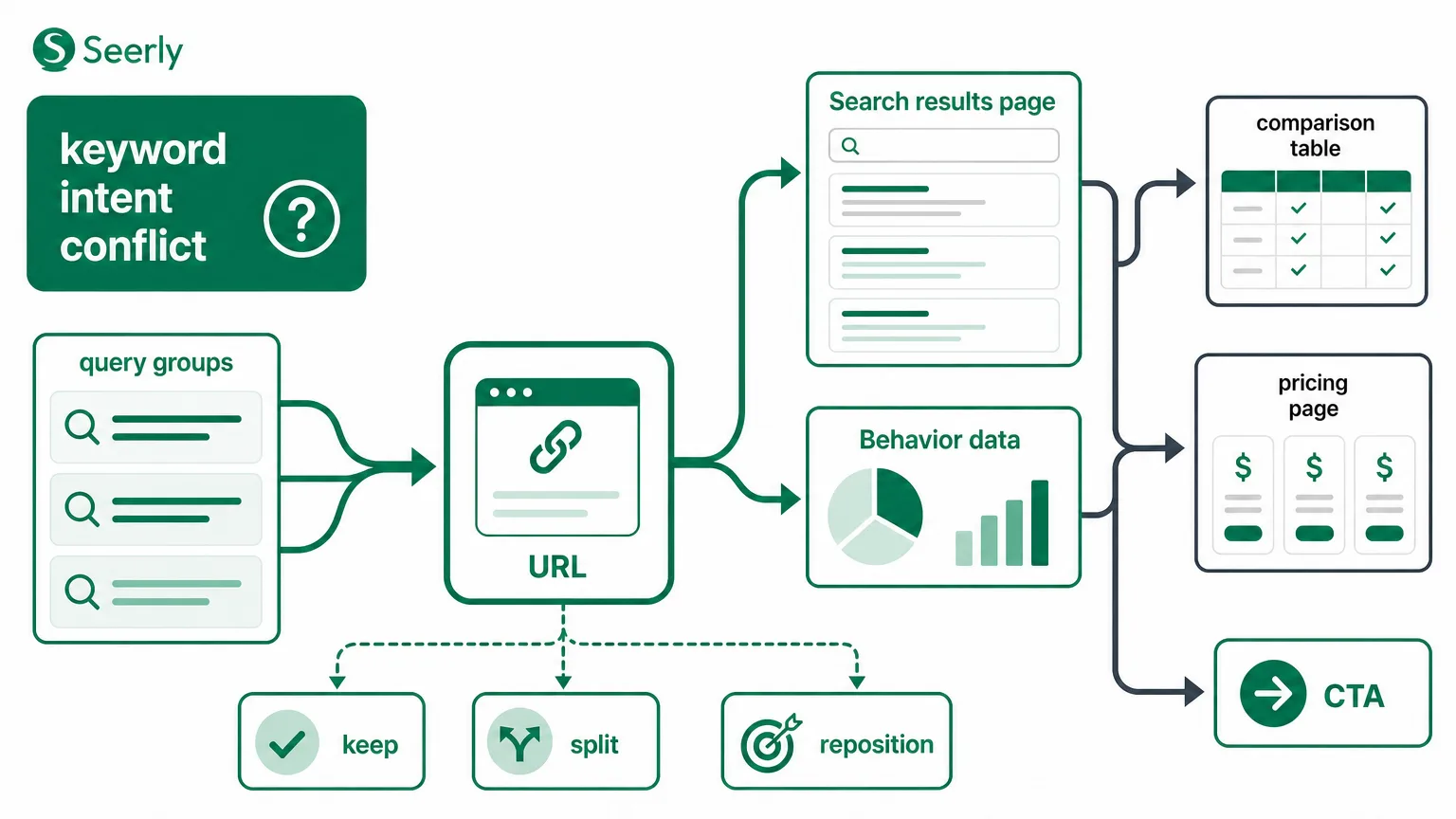
Evidence alone will not rescue a page that tries to serve every possible reader. A common AI-content failure is intent blending: one page starts as a product overview, adds a beginner’s guide, includes a comparison, and ends with broad thought leadership. The result may contain many keywords but no coherent reason for a particular searcher to choose it.
| Page with a clear purpose | Page with blended intent |
|---|---|
| Answers one defined need: “How should a SaaS team audit unsupported claims before publishing?” | Tries to explain AI content, sell a platform, compare tools, define SEO, and offer a checklist in one generic page |
| Uses evidence selected for that decision | Adds broad facts that do not change the reader’s next action |
| Has a specific success outcome and owner | Has many calls to action but no clear job to complete |
Before approval, write a one-sentence page purpose: “This page helps [specific reader] make [specific decision] by providing [specific evidence or process].” If the team cannot complete that sentence without vague terms, the draft probably needs a sharper scope.
Clear purpose also helps editors decide what to remove. A page about claim validation does not need a general history of machine learning or a lengthy list of every ranking factor. Search engines use systems intended to connect people with relevant information, and Google describes search as a process of crawling, indexing, and ranking content to return useful results. Relevance begins with a page that has a defined job.
Add proof without turning the page into a research report
Evidence does not mean covering a page with citations, charts, or lengthy methodology notes. The appropriate format depends on the claim and the reader’s decision. Aim for the smallest piece of proof that makes the statement understandable and reviewable.
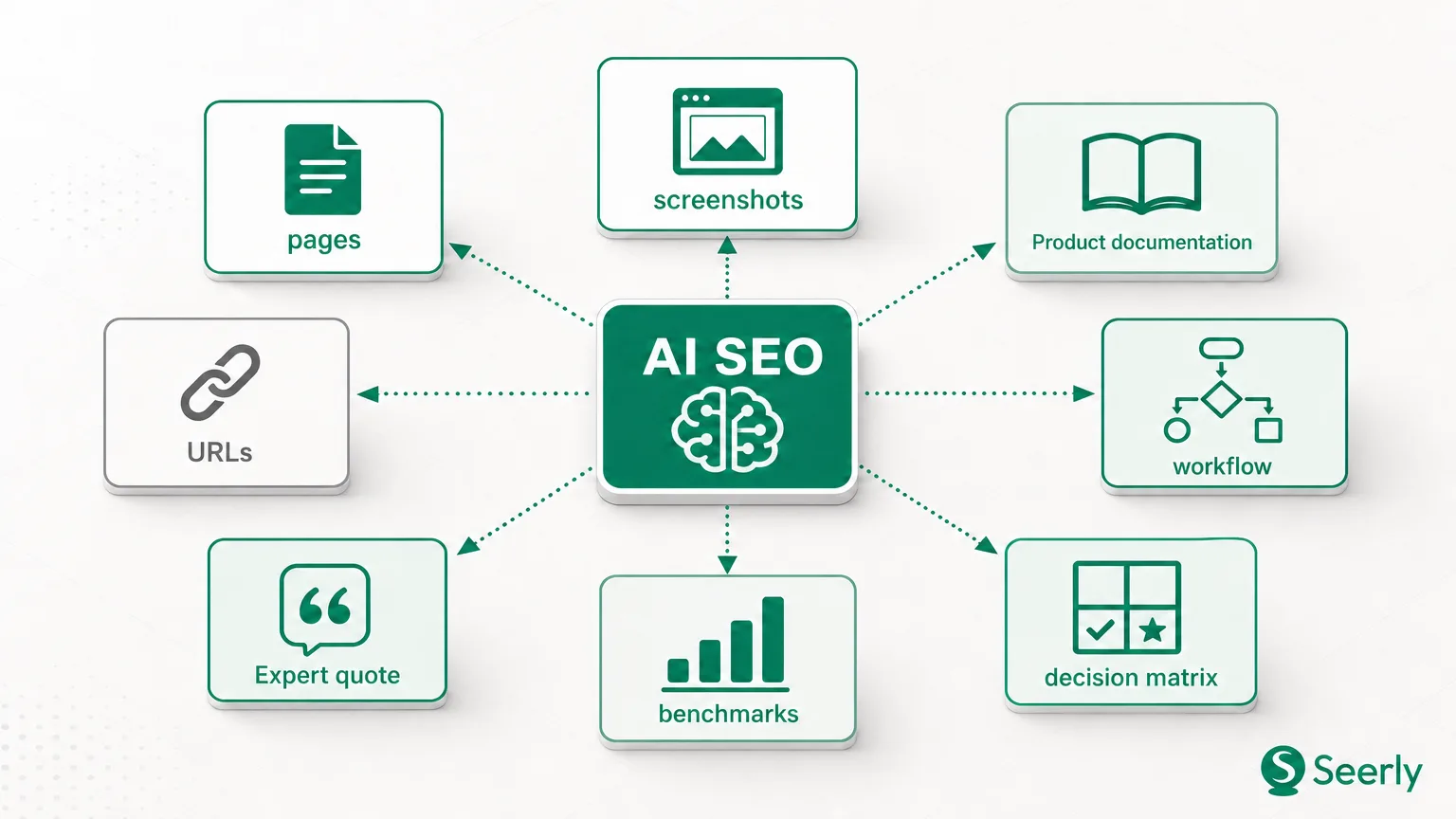
A process explanation is useful when a page describes how a service works. Show the sequence, inputs, review points, and output rather than asserting that the process is “comprehensive.” Original screenshots work well for software pages when they show a real workflow, labelled fields, or the information a user can expect to see.
Decision criteria are effective for comparison and buying content. Explain which factors should matter, why they matter, and where one option may not fit. Definitions can clarify specialised terms, but they should be written in the context of the task at hand rather than copied from a glossary.
Cited source material is most valuable for industry facts, standards, or externally verifiable benchmarks. Use sources close to the underlying evidence and state what they do - and do not - prove. For example, site experience is not a substitute for useful information, but Core Web Vitals provide field metrics for loading, interactivity, and visual stability, which can help teams diagnose whether page experience is creating an avoidable barrier.
For teams working with search engine positioning software, evidence review should be paired with measurement rather than replaced by it. Visibility data can reveal where pages are not appearing or where brand representation is inconsistent. It cannot make a generic claim specific or establish expertise that the published page never demonstrated.
Set a publish-or-rework threshold
The final decision should be explicit. Publishing a page that lacks support for a minor background statement is different from publishing one whose core recommendation cannot be defended. Establish a threshold that protects readers and prevents weak pages from accumulating across the site.
Publish when the page has a single defined purpose, its high-importance claims have been sourced or demonstrated, a qualified owner has reviewed subject-specific statements, and the reader can identify the next step. Rework when the central promise depends on unsupported outcomes, the page combines multiple incompatible intents, or its examples remain generic after review.
Do not publish yet when the required expertise does not exist internally or the evidence is unavailable. In that situation, consolidate the useful portion into an existing, stronger page, commission original research, or remove the item from the queue. A smaller library of credible, maintained content is more valuable than a large volume of pages built around claims no one can substantiate.
Frequently asked questions
Is AI-generated content automatically thin content?
No. AI assistance can speed up outlining, drafting, editing, and repurposing, but it does not supply first-hand experience, a documented methodology, or accountable approval on its own. The quality question is whether the final page contains distinct, accurate, supportable information that serves a clear reader need.
How many sources should an AI-assisted page include?
There is no useful universal number. A page needs enough evidence to support its material claims, not a quota of links. A practical process guide may depend primarily on an expert-owned workflow and original screenshots, while an industry-analysis page may require multiple authoritative sources and clear methodology.
When should a team consolidate rather than update a weak page?
Consolidate when two or more pages address the same reader decision with overlapping, shallow information. Choose the page with the strongest evidence and clearest purpose, migrate any unique useful material, then redirect or retire the weaker version according to the site’s technical process. This reduces duplicate effort and makes ownership clearer.
Make evidence review part of publishing
Search engine positioning is strengthened before publication, when teams still have time to test claims, narrow scope, and add proof. Waiting for a traffic decline turns a preventable editorial problem into a more expensive diagnostic exercise.
Select one planned AI-assisted page this week. Run the evidence checklist with its subject-matter owner, record every source, demonstration, qualification, and removal decision, then publish only when the page has a clear purpose and defensible claims.