The automation boundary in AI visibility management
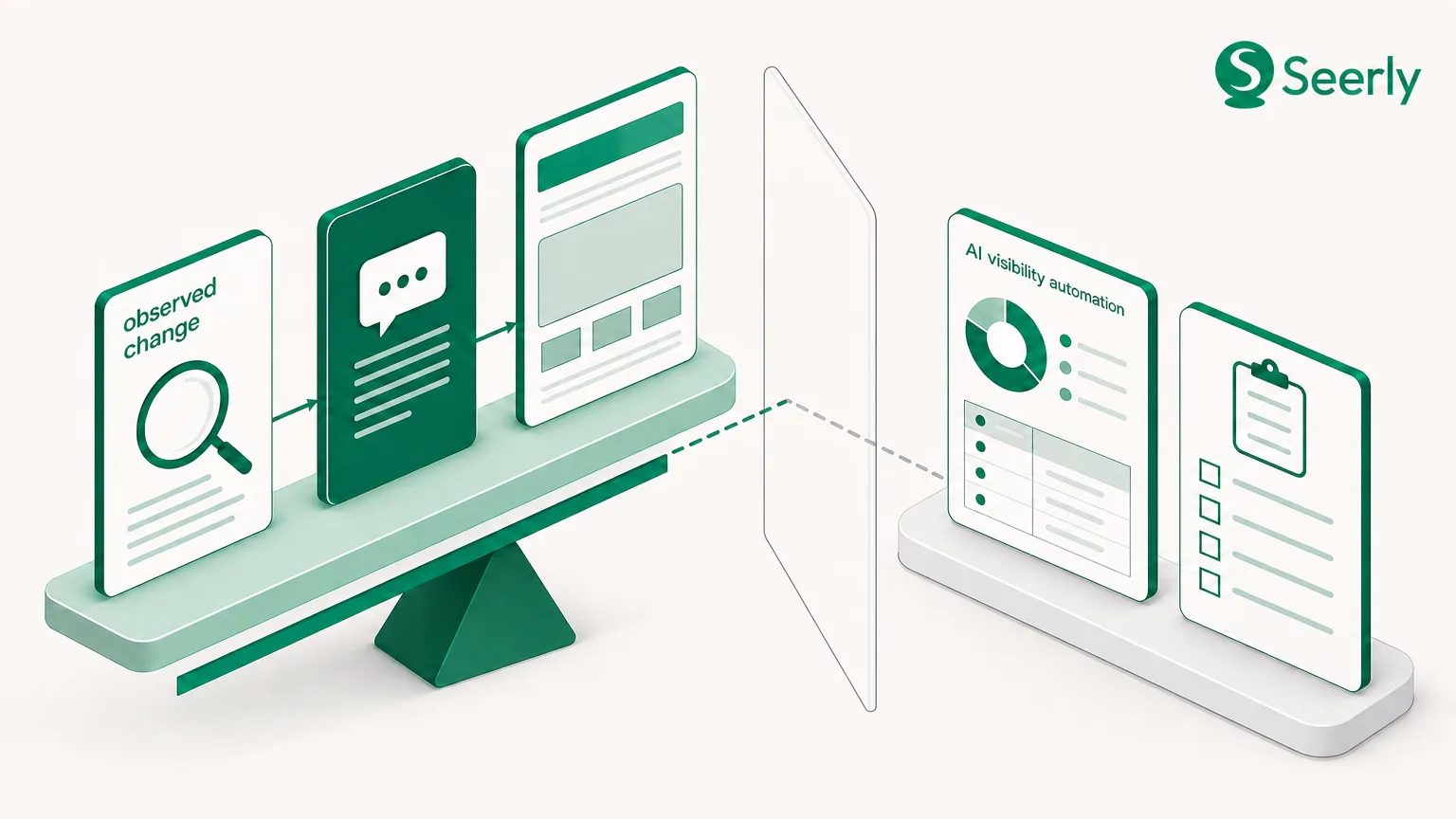
AI visibility automation should shorten the path to a human decision, not pretend to replace one.
An alert arrives before the morning client call: an AI answer now describes a product as unsuitable for business use. Yesterday’s captured answer didn’t contain that warning. The agency lead wants to know whether it’s inaccurate, the brand manager wants to know who saw it, and someone asks the dangerous question: “Can’t the platform just fix it?”
A monitoring system can help assemble an answer. But detecting a change and correcting an external answer are different jobs, with different owners. Confusing them turns a useful alert into an implied promise that nobody can keep.
The commercial concern isn’t imaginary. In Pew Research Center’s March 2025 browsing analysis, users clicked a traditional search result in 8% of visits with an AI summary, compared with 15% without one. Those observations don’t establish that summaries caused the difference, or measure reputation damage. They do explain why brand managers care about what appears before a website visit.
My position is straightforward: automate the observation work aggressively, but keep reputation-sensitive decisions under human control. For agency leads, that boundary should appear in the service agreement and the reporting workflow. For brand teams, it should be clear before an uncomfortable answer reaches an executive’s inbox.
What does AI visibility automation actually mean?
Myth: a platform spots an unfavourable answer and automatically repairs the brand’s representation. Fact: a responsible system repeats checks, identifies changes, preserves evidence, and routes issues for review. Those capabilities reduce manual work without granting control over an external service.
AI visibility automation is the scheduled collection and comparison of AI answers, supported by evidence records and review routing. It is not automatic correction of answers published by third-party systems.
Even changes to your own website have limits. Google states that meeting its requirements and following its guidance doesn’t guarantee crawling, indexing, or serving in AI features. Updating a factual page can be justified without promising that an AI answer will change.
The way I see it, “mitigation” needs a named object. Are you correcting an outdated product page, requesting a publisher correction, or monitoring an unresolved claim? A vague promise to “mitigate visibility issues” hides those distinctions.
Which checks belong on autopilot?
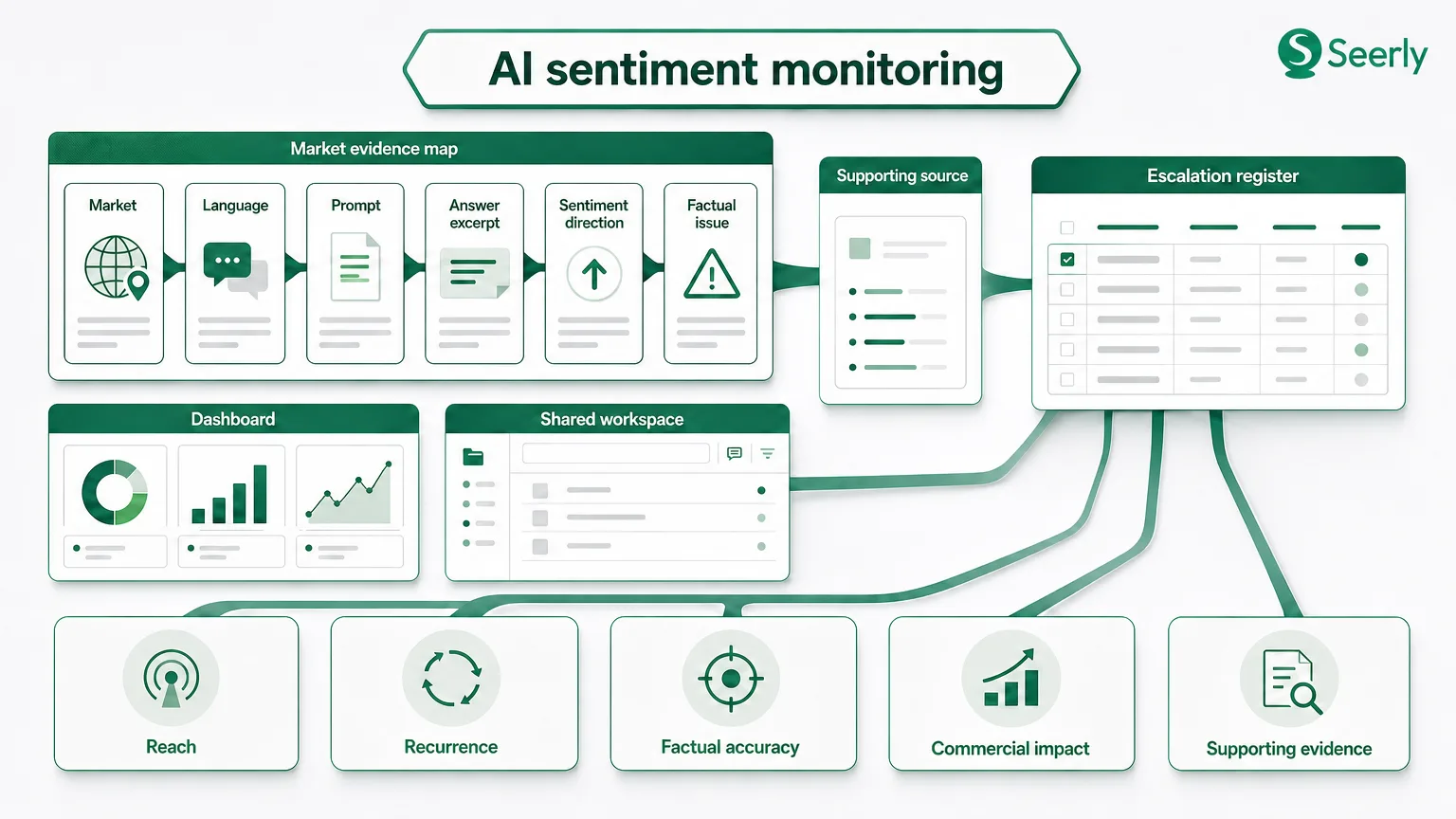
A weekly report says your competitor gained visibility. Before anyone commissions new content, the team needs to see which prompts changed and what the answers actually said. Seerly’s weekly Visibility documentation connects movement to the underlying prompts; that connection matters more than an isolated score.
A responsible capability checklist should cover the following work. Treat each output as a review aid, with enough context to challenge it.
- Recurring prompt checks and response comparisons. Schedule a defined prompt set across selected services, recording language and available configuration details. Preserve each full response before comparing it with earlier captures. Flag changed claims separately from cosmetic wording differences.
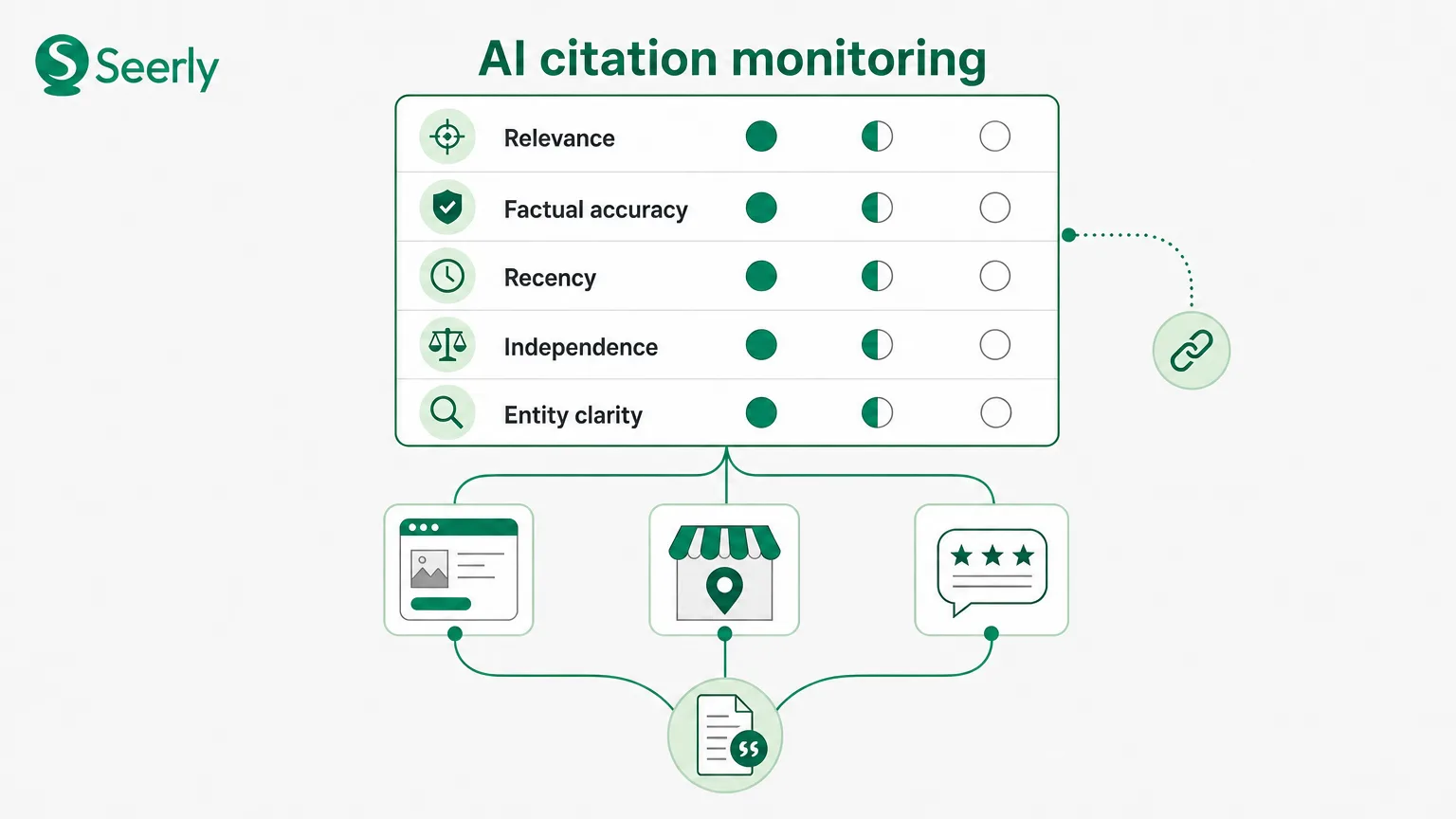
- Mention classification and cited-source capture. Label apparent brand mentions, recommendation status, and sentiment as provisional classifications. Save visible source links alongside the relevant answer passages, including cases where no citation appears. A negative label isn’t proof of an inaccurate statement.
- Competitor comparison. Compare brands within matched prompts and collection windows. Keep the denominator visible, including failed checks and excluded responses. Otherwise, a change in the sample can masquerade as a change in market position.
- Alert creation and owner routing. Apply agreed review thresholds, then create a record containing the triggering evidence. Route product claims to a product owner and sensitive allegations to the appropriate reputation or legal reviewer. Track acknowledgement so an alert doesn’t disappear into a shared inbox.
Look, automation earns its place when it makes inspection easier. A notification without its underlying answer is just another request for someone to start investigating from scratch.
An alert is not permission to act
A detected difference is an observation. A confirmed factual error is a reviewed conclusion. Publishing a correction is an authorised action, and each step carries more risk than the previous one.
Before taking action, someone must validate the answer against current product records or other authoritative evidence. They must assess materiality: does the wording affect a buying decision, or merely omit a minor feature? They also need to inspect source quality, checking whether a cited page actually supports the claim and whether its information remains current.
The higher-risk boundary starts where the team changes something outside the monitoring record. Editing public content, challenging a third-party publisher, or contacting customers should never follow solely from a machine-generated severity label. People must decide whether the evidence justifies intervention and approve the wording.
I personally prefer a visible “no action” decision to a rushed content change. Sometimes the answer is accurate, even when the brand dislikes it. Sometimes the relevant problem belongs to the product, not the marketing page.
After detection: a four-stage response model
A warning about a discontinued feature might deserve a routine content review. A false statement about product safety might require immediate escalation. Use the same evidence discipline for both, while setting review deadlines according to possible harm.
- Detect. The monitoring system captures the exact prompt, full answer, collection time, and service identity. It records visible citations and the comparison that triggered the alert, noting configuration details where available. The monitoring analyst owns intake, with the record marked observed change, not “confirmed incident.”
- Verify. An analyst checks the passage against current records and inspects its cited sources. A product specialist or other subject expert resolves factual questions; repeat checks can test recurrence without establishing how many people saw the answer. Record the conclusion as confirmed, unconfirmed, or unresolved, with the supporting evidence.
- Decide. The accountable brand or client lead chooses the response, consulting legal or communications reviewers when appropriate. Options include continued monitoring, correcting owned information, or submitting a documented third-party correction request. Name an approver and explain why the proposed action fits the evidence.
- Document. The case owner records the decision and any completed action, preserving links to supporting material. Keep the original observation separate from the verified finding, then add approval details and a follow-up date. If a later answer changes, record that observation without assuming the intervention caused it.
What should the decision log contain? At minimum, retain an observation ID, verification status, evidence references, named decision owner, rationale, approval, and next review date. Without that separation, “we saw different wording” can quietly become “we resolved a reputation incident.”
Three fictional cases, three different responses
The following scenarios are hypothetical, not customer accounts or reported results. Their purpose is to test the boundary under different kinds of pressure. None assumes that an intervention changes a future answer.
An absent mention: investigate before escalating
A project-management product disappears from one answer about software for small design studios. The system logs the omission and notes which competitors appeared instead. With no false claim or other evidence of harm, the analyst assigns a routine review rather than opening a reputation incident.
Next, the reviewer checks repeated captures and the prompt’s buying criteria. The content owner may inspect whether the website explains relevant capabilities clearly, using a prompt-level visibility gap analysis to inform that investigation. Absence alone doesn’t prove that a new page is necessary, much less that publishing one will secure a mention.
An inaccurate claim: verify promptly, then correct the right record
An answer says a fictional accounting product lacks data export, while current documentation confirms that export exists. The analyst saves the exact passage and asks the product owner to check availability across plans and regions. Urgency rises because the statement could affect a purchase decision.
After confirmation, the team investigates whether outdated owned content or a third-party page supports the error. A content owner can propose an approved clarification; a publisher correction request needs its own evidence and reviewer. The log can mark the factual error as confirmed while leaving external answer correction unresolved.
A negative recommendation: check whether the criticism is fair
An AI answer advises against a fictional collaboration tool for organisations requiring a particular compliance certification. The brand dislikes the recommendation, but its compliance owner confirms that the certification is absent. The sentiment is negative; the factual basis is sound.
Here, the appropriate response is not to manufacture reassuring copy. The team records the limitation and refers the underlying requirement to product leadership. An external clarification needs approval only if the answer overstates the limitation or introduces another unsupported claim.
Language that makes the boundary visible
“Continuous protection” sounds reassuring until a client asks what happened between scheduled checks. “Automatic reputation repair” is worse: it confuses a workflow with control over someone else’s output. Honestly, I’d reject both phrases in a scope document.
Use a messaging checklist that makes the service inspectable. Product pages should state what runs; client reports should separate observations from conclusions. Internal updates should name the person deciding what happens next.
- Specify frequency and coverage. Say “scheduled checks of the selected prompt set,” followed by the actual cadence and supported services. Don’t call weekly sampling real-time monitoring.
- Describe the evidence. Explain that alerts contain captured answers and available source links. Note missing citations or incomplete collection context.
- Name the limits. State that monitoring covers sampled responses, not every conversation. Describe content changes as attempts to improve the information available, without promising downstream correction.
- Make approval explicit. Say who validates a claim and who approves public changes. Keep automated draft reports distinguishable from reviewed client communications.
Questions worth settling before the next alert
Can automation correct an inaccurate AI answer?
A monitoring platform cannot guarantee correction by an external AI service. It can collect evidence and route a proposed response. A person must validate the claim and approve any intervention.
Does a negative answer always need remediation?
No, because an unfavourable answer may accurately describe a limitation. Review factual support and materiality before deciding what to change. “No action” is a legitimate outcome when the rationale is documented.
Before adding another alert, write down every alert your team already receives. Assign a human decision owner to each, then specify the evidence required before remediation begins. Use that document to assess your AI search visibility monitoring: does it accelerate review, or merely multiply notifications? Make the automation boundary explicit before the next alert asks someone to cross it.