AI Citation Gap Analysis: How to Find (and Close) the Gaps in Your AI Search Visibility
What an AI citation gap actually is
Run the same question through ChatGPT, Gemini, Claude, and Perplexity, and you'll notice something a classic rank tracker never shows you: your brand doesn't just rank lower in some answers, it's completely absent from them. No mention, no citation, nothing to optimize because there's nothing there.
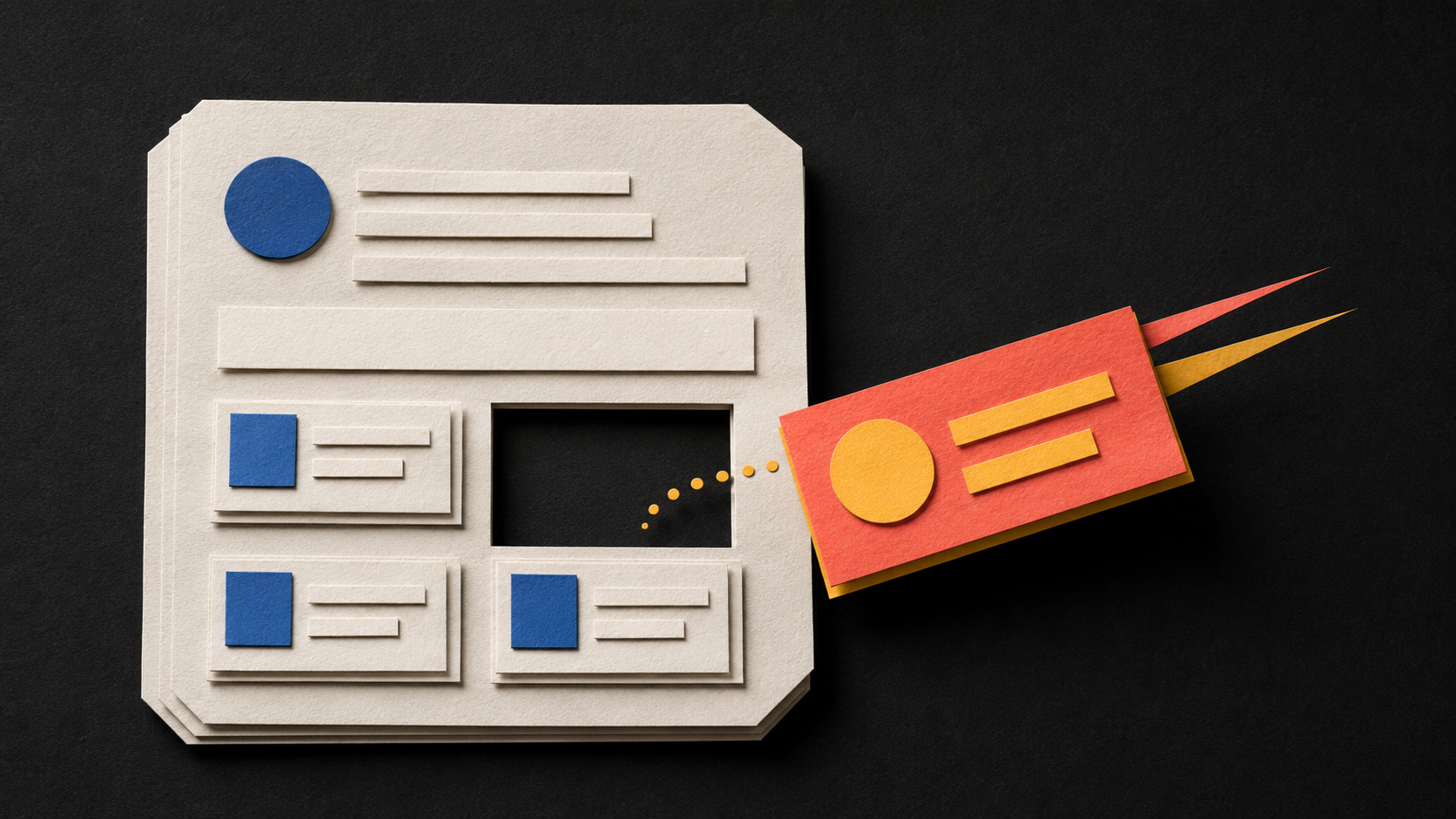
That's a citation gap: a topic where your brand has zero share of voice on a specific AI platform. It's different from a keyword gap in one important way. A keyword gap tells you a term you don't rank for. A citation gap tells you a question your buyers are already asking an AI model, where the model currently has no reason to mention you at all.
The distinction matters because the fix is different too. Missing a keyword usually means "add a page." Missing a citation usually means someone else is already answering that question well enough that the model reaches for them instead of you, and the fix starts with figuring out who that is and why.
Why your existing content-gap tool won't catch this
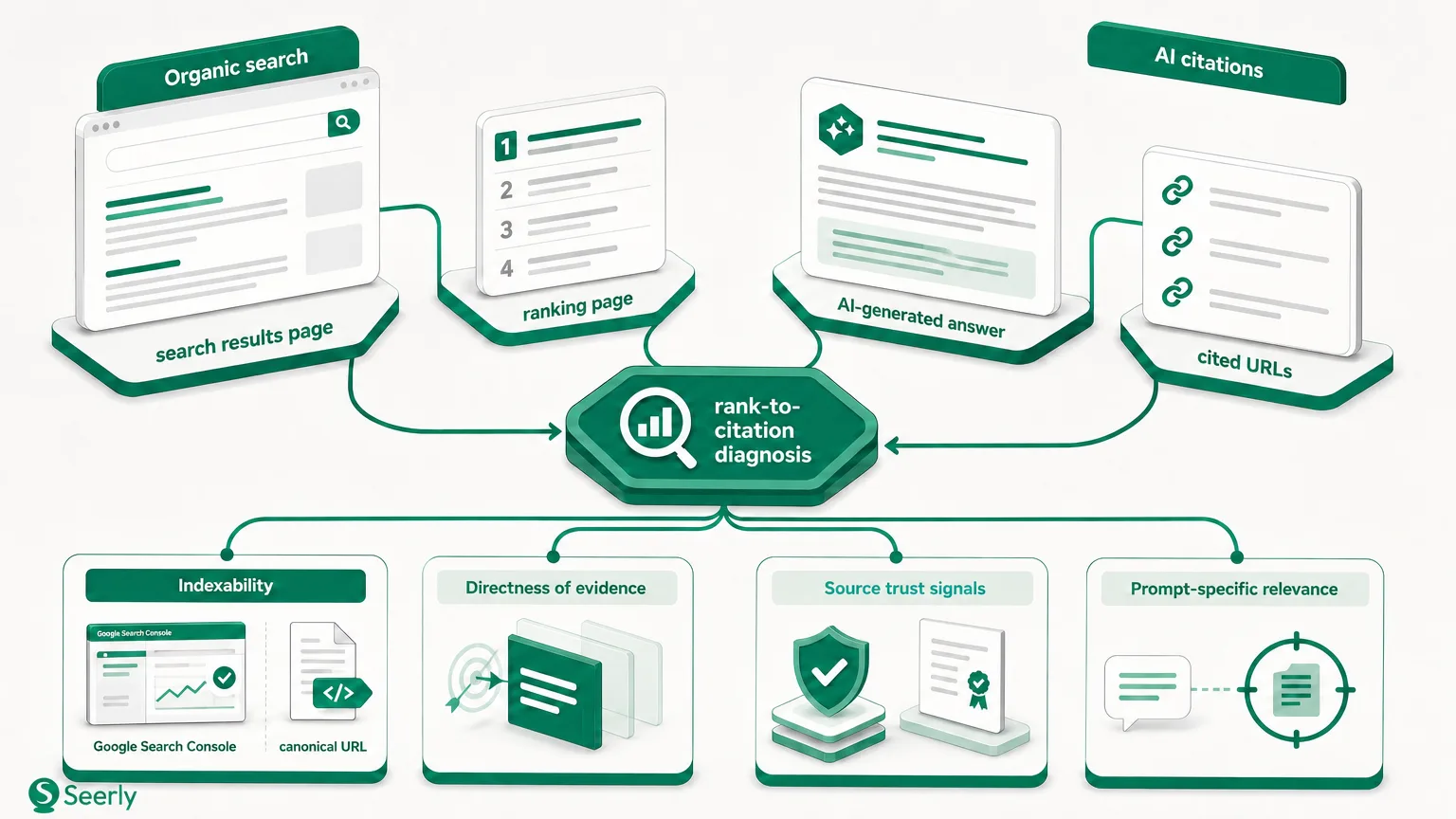
If you're running Semrush's Keyword Gap tool or Ahrefs' Content Gap report and calling it done for AI search, there's a structural problem: those tools are built on organic rank, and organic rank increasingly isn't what AI models cite from.
BrightEdge tracked this directly across twelve months of daily measurement: only about 17% of sources cited in Google AI Overviews also rank in the organic top 10, a number that stayed flat in the 16-17% range for six straight months (source). The pages winning in AI answers are, for the most part, not the pages winning in organic search. A gap analysis built entirely on rank position is looking at the wrong evidence.
It gets more fragmented once you look across platforms. Profound's citation-pattern research found Wikipedia makes up nearly half of ChatGPT's top-10 cited sources, while Reddit makes up almost half of Perplexity's, with Google AI Overviews spread more evenly across community and video platforms (source). Each engine is pulling from a meaningfully different pool of sources. A gap that's closed on ChatGPT can be wide open on Perplexity, and you'd never know it from a single-platform check.
A four-step framework for finding your gaps
You don't need a platform to do the first version of this by hand. Here's the actual sequence.
1. Find where you're absent, by topic and by platform
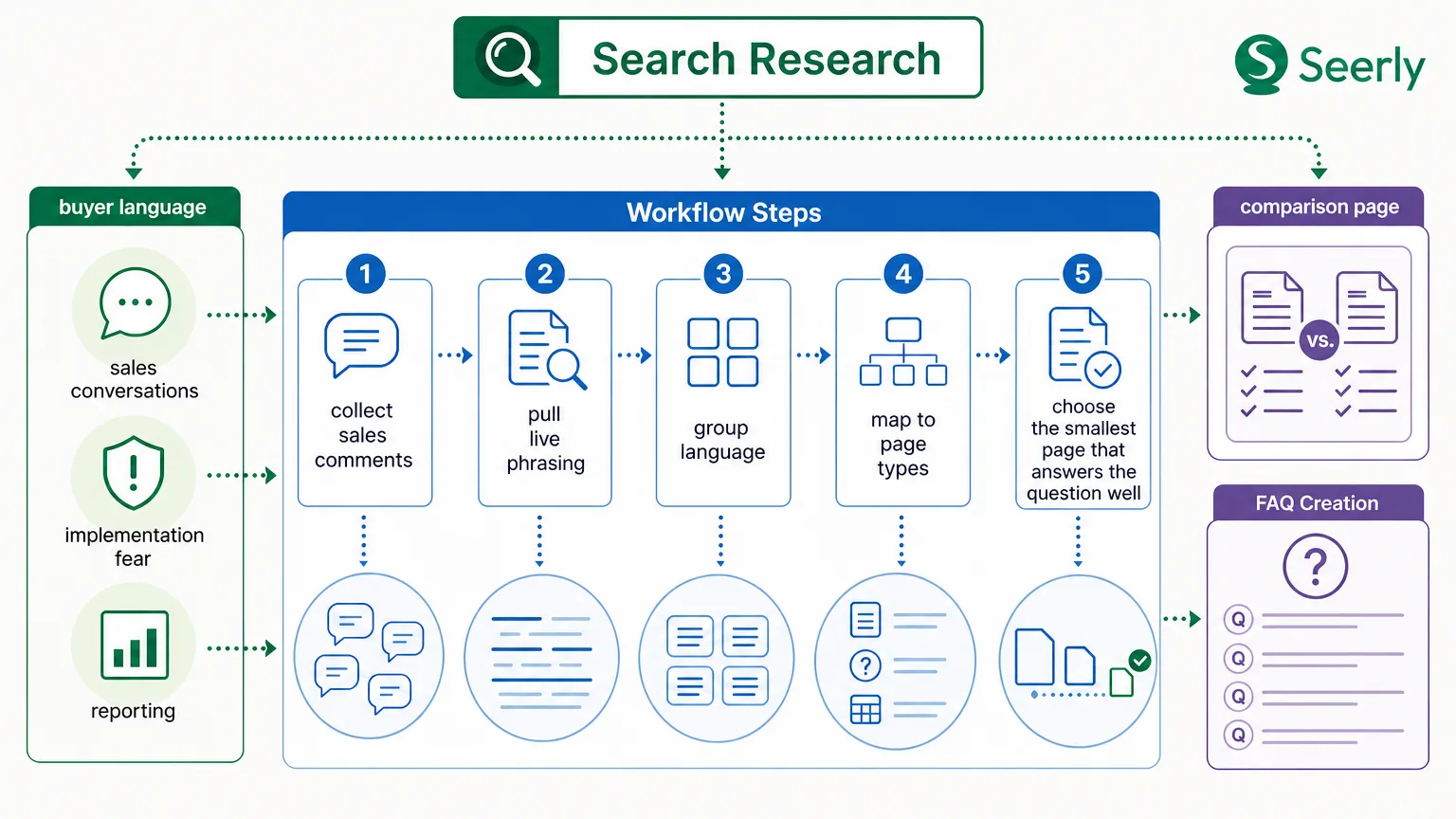
Pick the questions your buyers actually ask, not just your target keywords, and run each one against every major AI platform you care about: ChatGPT, Gemini, Claude, Perplexity, Google AI Overviews. For every topic, log whether your brand was mentioned at all, per platform. Don't average across platforms into one score; a topic can be fine on one engine and invisible on another, and collapsing that hides the exact problem the framework above just explained.
2. See who got cited instead
For every topic where you're absent, note the URLs the model actually cited. Sort them into two buckets: a direct competitor's page, or a third party (a review site, a directory, a marketplace, a forum thread). This one step tells you more about the shape of the problem than any keyword list will, because a competitor's product page and a third-party directory listing call for completely different responses.
Worth knowing before you build a PR strategy around this: earned, non-paid media accounts for 82-84% of what AI models cite, according to Muck Rack's own research analyzing over a million AI-cited links (source). But a companion release from the same study found something PR teams should sit with: the overlap between the journalists a PR team pitches and the journalists AI models actually cite is only about 2% (source). If your plan for third-party gaps is "pitch more journalists," check that you're pitching the ones actually showing up in AI answers, not just the ones on your usual list.
3. Pull the keyword pattern that repeats, not the keyword pile that's biggest
Once you have the citing pages for a gap, don't just union every keyword they use into one big list, that reproduces the same problem as citation-gap analysis without citations: a pile of terms with no signal about which ones matter. Instead, look for keywords that show up across multiple different citing domains for that topic. A term that three different competitor pages all use is a much stronger signal than a term one page repeats five times.
And don't let keyword volume be the thing you optimize for. The Princeton GEO research paper, presented at KDD 2024, found that adding statistics, source citations, and quotations lifted AI citation visibility by 30-40%, while keyword density had minimal effect on whether content got cited at all (source). Evidence density beats keyword density. If your content brief is a list of terms to hit a target count, it's optimizing for the wrong thing.
4. Write from the question, not just the keywords
The keywords tell you the vocabulary a page needs to use to be a plausible citation candidate. They don't tell you what the page actually has to say. For that, go back to the exact prompt that returned no mention of you, in the customer's own phrasing. That's the closest thing to a content brief you'll get without writing one yourself: it's the literal question your content is obligated to answer.
How often to re-run this
Not once a quarter. AirOps' 2026 State of AI Search research found that only about 30% of brands stay visible from one AI answer to the next, and just 20% stay visible across five consecutive runs (source). Visibility in AI answers is volatile by default, not just when something changes on your end. A gap you closed last month can reopen this month without you touching a single page, which means a one-time audit tells you less than you'd think. Treat this like uptime monitoring, not like a keyword ranking you check twice a year.
Want to see this automated end to end?
Everything above is the manual version of a pipeline we built and run in production. We wrote up the full engineering breakdown, including a version of it we shipped first that measured the wrong unit, and why moving from "keyword cluster" to "individual citation" as the atomic unit of evidence is what made the recommendations actually actionable: From Analysis to Action: Turning AI Visibility Gaps Into a Content Roadmap.
Frequently Asked Questions
What's the difference between a citation gap and a keyword gap?
A keyword gap is a term you don't rank for in organic search. A citation gap is a topic where an AI platform never mentions your brand at all, regardless of whether you rank for the related keywords. You can have strong organic rankings and still have a wide-open citation gap, because AI models cite from a different, and increasingly non-overlapping, pool of sources.
Do I need to check every AI platform separately?
Yes. Provider fragmentation is real and well documented, ChatGPT and Perplexity in particular draw from largely different source pools. Checking only one platform will tell you that platform's story, not your overall AI visibility.
Is this the same as GEO or AEO?
Citation gap analysis is a component of both. Generative Engine Optimization (GEO) and Answer Engine Optimization (AEO) are the broader disciplines of getting cited and getting your answers surfaced; citation gap analysis is the specific diagnostic step of finding where you currently aren't showing up before you decide what to fix.
How many prompts do I need to test to trust the results?
Enough to cover the actual questions your buyers ask across every topic you care about, not just your primary keywords, per platform. A handful of prompts per topic will show you obvious gaps; a broader, recurring set run on a schedule is what lets you tell a real trend from normal run-to-run noise.
Seerly runs this entire pipeline automatically, prompt visibility tracking, citation classification, and recurring keyword extraction, and turns it into a ranked list of actions instead of a dashboard you have to interpret yourself. If you want to see your own gaps, check out Seerly's AI Visibility platform.
Sources
- AI Overviews at the One-Year Mark: Presence, Size, and What They're Citing - BrightEdge, Feb 2026.
- AI Platform Citation Patterns: How ChatGPT, Google AI Overviews, and Perplexity Source Information - Profound, 2026.
- Earned media still drives 84% of AI citations - Muck Rack, 2025-2026.
- Earned Media Still Drives Generative AI Citations as Press Release Visibility Grows - Muck Rack, official wire release, Dec 2025.
- GEO: Generative Engine Optimization - Aggarwal et al., Princeton/Georgia Tech/Allen Institute for AI, KDD 2024 (peer-reviewed).
- The 2026 State of AI Search - AirOps × Kevin Indig, 2026.