Video transcripts as evidence assets for AI search discovery
Your most useful webinar may contain a precise explanation, an important qualification, and a convincing product demonstration - yet its landing page offers only a title and a play button. Viewers who watch the recording can understand the expertise. Someone assessing the page without watching, however, may struggle to identify what was said, who said it, or whether it remains accurate.
Video’s reach makes this gap worth addressing. Streaming accounted for 40.3% of US television viewing in June 2024, according to Nielsen, but viewing scale does not establish search discoverability. For marketing teams, video SEO optimization needs to address both the recording and the information surrounding it. This article explains how to build a maintainable evidence page that makes video expertise easier to understand, verify, and measure - without promising rankings or AI citations.
Why can valuable video expertise remain difficult to discover?
A viewer interprets speech, slides, demonstrations, and surrounding discussion together. A search system or evaluator may encounter only the page title, a short description, or an isolated passage. Even when a system can process audiovisual content, teams should not assume it will reliably recover every qualification or connect every claim to its source.
Four publishing gaps make that problem harder:
- Audio-only details: Important definitions and limitations exist in speech but nowhere in accessible page text.
- Thin landing pages: A generic introduction does not explain the questions answered or the evidence presented.
- Missing speaker context: Readers cannot distinguish firsthand product knowledge from opinion or secondhand reporting.
- Unclear update ownership: Nobody is responsible for correcting obsolete features, broken references, or superseded guidance.
These gaps affect verification as much as discovery. A claim may be understandable inside a discussion but misleading when separated from its conditions. Publishing the relevant text, attribution, and references gives readers a way to check it without reconstructing the entire recording.
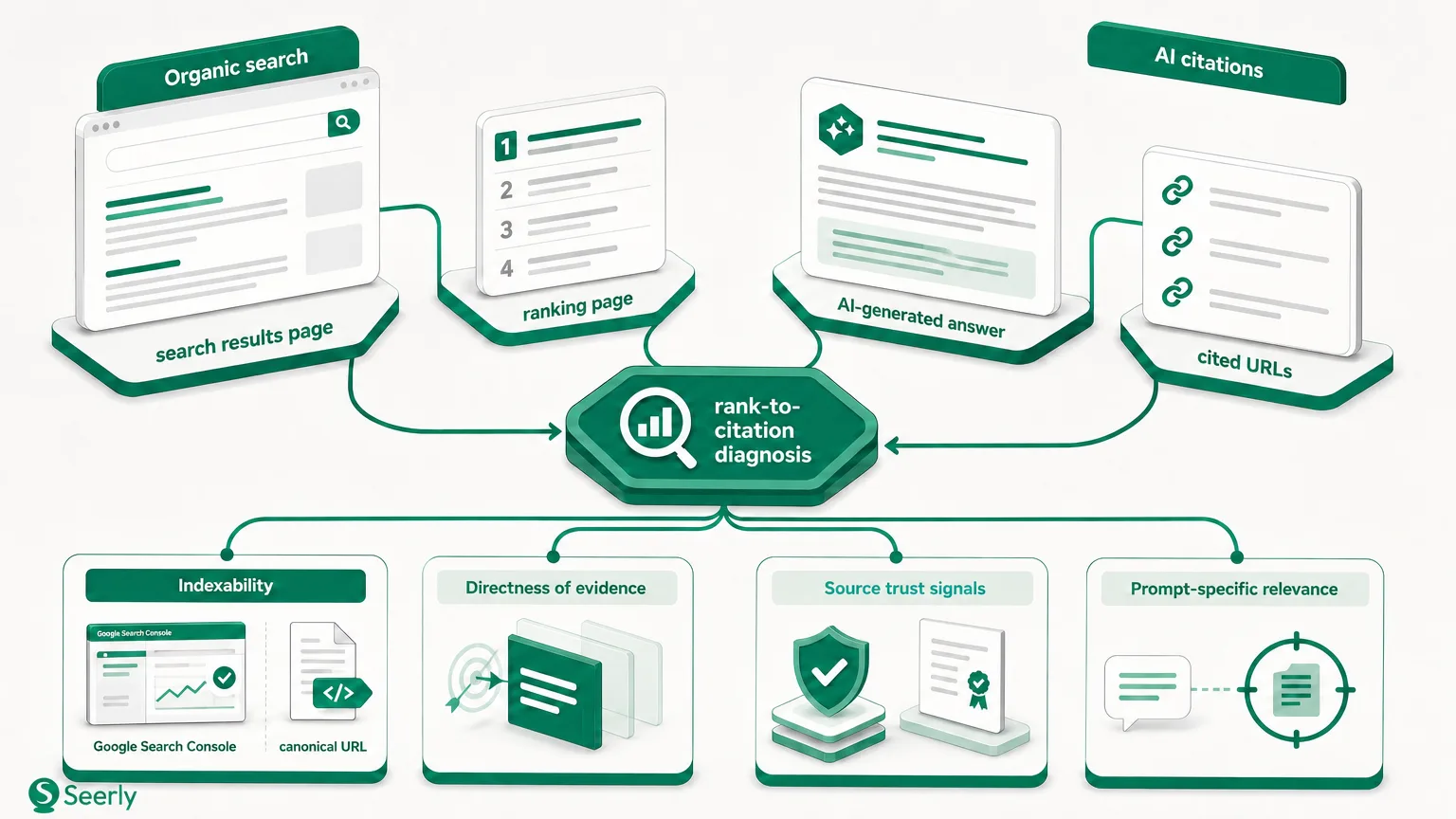
Technical eligibility is a separate concern. Google recommends a dedicated watch page where the video is the main content when seeking video search features. A supporting article can serve a useful written purpose, but adding an embed does not automatically make it an eligible video watch page. Decide whether each URL primarily serves watching, reading, or a clearly organized combination.
What should a video evidence page contain?
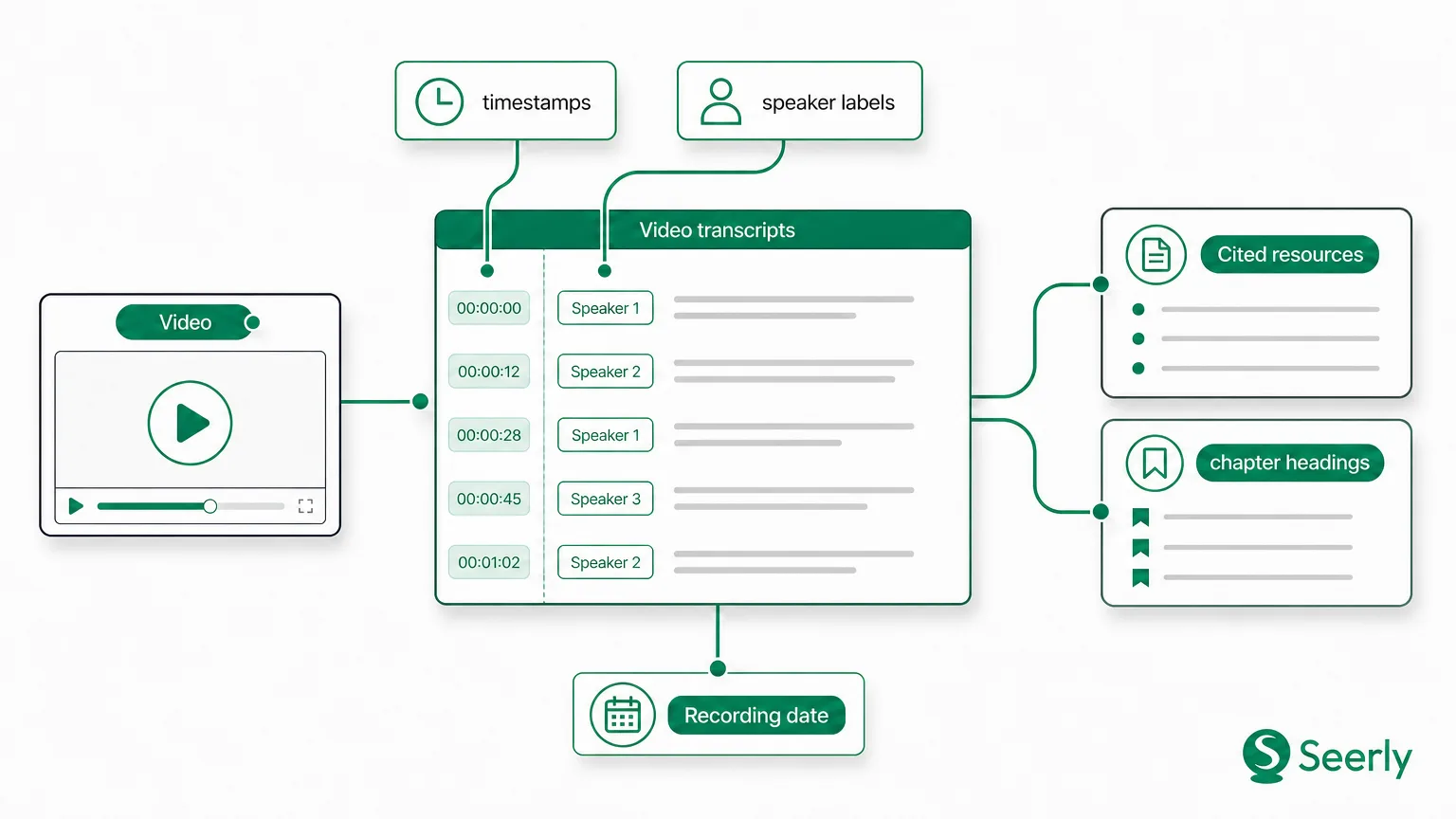
A video evidence page connects the recording to an inspectable written account. It should let readers identify the subject, assess the speaker’s authority, locate specific answers, and inspect supporting material. The transcript is central, but it cannot do all those jobs alone.
| Component | What to publish | How it helps readers |
|---|---|---|
| Descriptive summary | Topic, intended audience, questions addressed, and scope | Establishes relevance before playback |
| Complete transcript | Reviewed text with speaker labels, timestamps, and meaningful visual references | Makes the discussion searchable and inspectable |
| Speaker attribution | Name, role, relevant experience, and relationship to the subject | Clarifies expertise and potential commercial interests |
| Dates | Recording date, publication date, and last substantive review | Separates historical discussion from current guidance |
| Cited resources | Sources supporting substantive claims, linked near the relevant passage | Enables verification without searching independently |
| Chapter navigation | Descriptive chapter headings linked to timestamps and transcript sections | Helps readers reach a specific explanation |
| Key takeaways | Concise conclusions that preserve important limitations | Supports assessment without requiring a full viewing |
| Video-page relationship | Identify which recording the transcript represents and label editorial additions | Distinguishes original speech from later interpretation |
Review automated transcription before publishing. Check names, technical terms, numbers, negations, and conditional language against the recording. If a speaker explains something through a chart or demonstration, add a clearly labeled visual description rather than presenting editorial text as spoken words. Disclose redactions and substantive edits instead of silently calling an incomplete account a complete transcript.
Make the transcript available as readable page text, not solely as a downloadable attachment. Keep the video prominent on a watch-focused page, and ensure visitors can navigate between chapters and corresponding text. Assign an owner and a review trigger, such as a product release, changed source, or scheduled content review.
For technical implementation, Google documents VideoObject properties and key-moment markup. Structured data should accurately describe the visible recording; it does not replace supporting evidence or guarantee enhanced presentation. Treat these elements as part of a broader approach to video discovery through transcripts, metadata, and page context.
YouTube video SEO optimization complements this owned-page work rather than replacing it. Keep titles, descriptions, chapters, and reviewed captions consistent with the recording and link to the evidence page where appropriate. A compelling title cannot substitute for audience usefulness: YouTube describes recommendations as using signals including clicks, watch time, surveys, shares, likes, and dislikes.
How do you turn one webinar into several answerable assets?
Consider a fictional thirty-minute expert session titled “Choosing an approval workflow for a growing content team.” Its first segment defines approval roles, its middle compares sequential and parallel review, and its final segment explains exceptions and implementation questions. This is a publishing example, not a customer case study or evidence of performance.
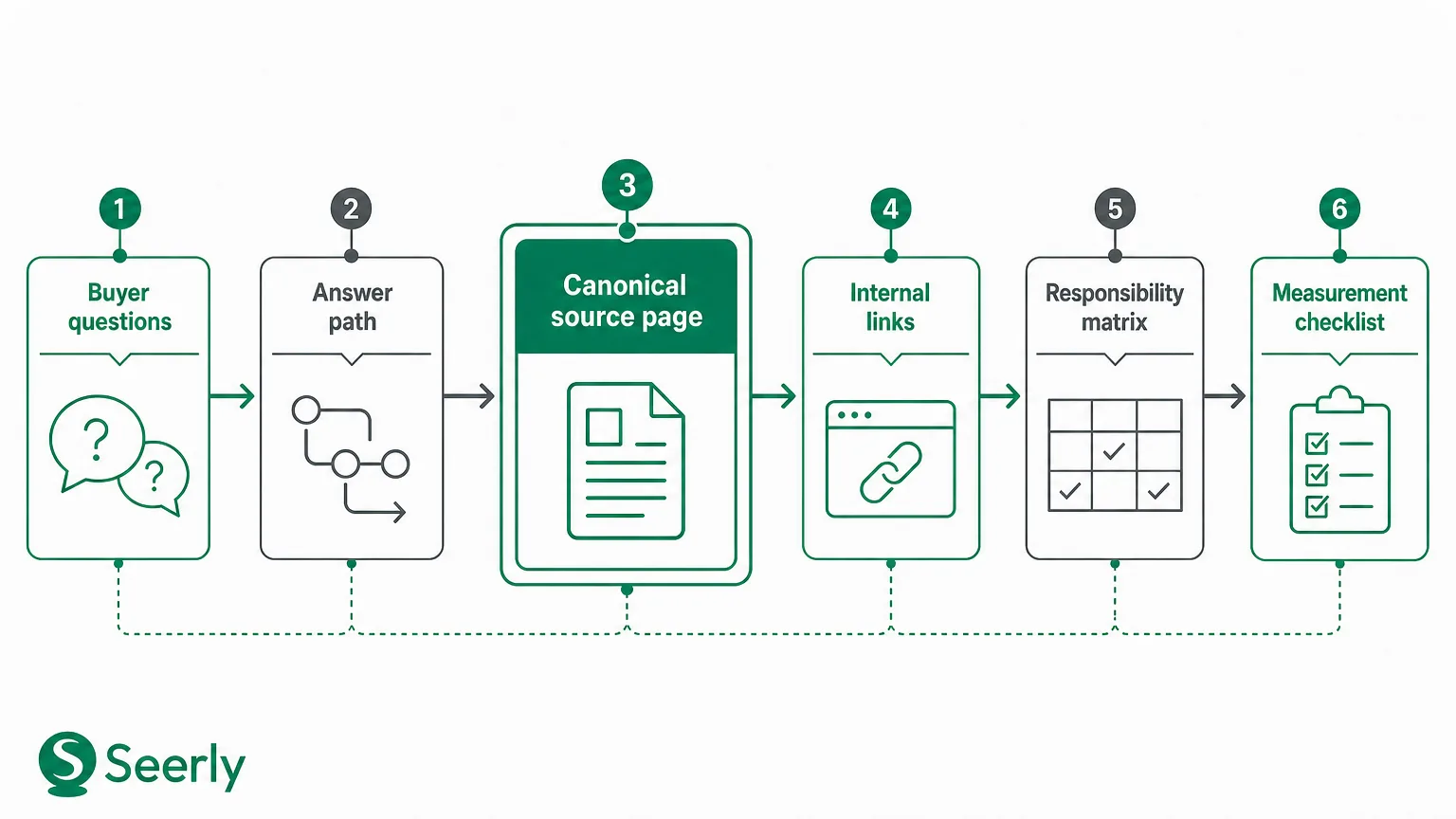
Start by reviewing the transcript and tagging each substantive passage by question, claim, qualification, and source. Then create assets with different reader purposes rather than repeating the same summary across several URLs. Each asset should retain a clear connection to the recording.
| Asset | Material drawn from the session | Reader question it answers |
|---|---|---|
| Transcript-led landing page | Full discussion, chapters, speaker context, references, and review date | “What did the expert explain, and where?” |
| Short decision guide | Comparison of approval approaches and their conditions | “Which workflow fits our constraints?” |
| FAQ section | Questions raised during the session, with bounded answers | “How should we handle a specific exception?” |
| Follow-up article | A deeper explanation of one unresolved implementation issue | “How do we apply this recommendation?” |
The decision guide might explain that parallel review is worth considering when reviewers assess independent aspects of a draft. It must also retain the qualification that dependent decisions may require a sequence. Removing that condition would turn a bounded recommendation into an unjustified universal rule.
Build the FAQ from questions genuinely covered by the fictional session, not from answers inserted into the expert’s mouth. The follow-up article can add new analysis, but it should distinguish that analysis from the original recording and provide its own support. Link derived claims to the relevant transcript section so an editor can check their meaning efficiently.
Use a simple extraction rule: preserve the claim, its conditions, its source, and its date together. If the destination cannot accommodate those elements, narrow the claim or omit it. When the source discussion changes, review the derived assets too.
Which video claims need stronger evidence before publication?
Not every statement needs the same approval process. A general definition poses a different risk from a product capability claim or a promised business outcome. Review effort should increase with specificity, commercial significance, potential harm, and the likelihood that the information will change.
| Claim category | Appropriate source support | Approval | Maintenance |
|---|---|---|---|
| Low-risk educational statements | Reliable references for disputed or non-obvious facts; clear labeling of opinion | Editorial or subject-matter review | Revisit when guidance or underlying sources change |
| Product claims | Current documentation or a reproducible demonstration, including relevant plan and version limits | Product owner or qualified technical reviewer | Check after releases and packaging changes |
| Performance claims | Documented method, baseline, sample, conditions, and limitations | Technical review and legal or compliance review where appropriate | Retest when conditions change; remove unsupported comparisons |
| Customer-outcome claims | Customer-supplied evidence, permission, scope, timeframe, and attribution limitations | Customer authorization and relevant internal review | Reconfirm permission and continued accuracy |
For example, an explanation of sequential approval is educational. A statement that a platform supports a particular approval rule is a product claim and should match current functionality. A statement that the platform makes approvals faster is a performance claim requiring a defined comparison and supporting evidence.
Customer outcomes require especially careful handling. Never convert an anecdote into a representative result, invent a testimonial, or imply that another organization will achieve the same outcome. If an approved outcome appears in a recording, the written page should retain the timeframe, relevant conditions, and limits on attribution.
A transcript records that a statement was made; it does not prove the statement is true. When evidence is missing, qualify the statement, obtain support, or add a transparent correction. Keep an internal claim register linking sensitive passages to their evidence, approver, and next review trigger.
How should teams measure whether video is contributing to discovery?
Measurement should separate visibility, consumption, and business contribution. A page impression is not a video view, and a video view is not evidence that a transcript influenced a purchase. Establish a baseline before updating the page, then record publication dates and other changes that could affect interpretation.
| Measurement area | What to record | Interpretation boundary |
|---|---|---|
| Page impressions | Search impressions, clicks, query themes, and landing URL | Exposure does not establish content consumption |
| Video engagement | Starts, watch time, completion, and chapter interactions where available | Viewing does not independently demonstrate discovery impact |
| Transcript-page engagement | Section navigation, source clicks, and meaningful engagement events | Scroll depth alone does not prove understanding |
| Assisted conversions | Evidence-page visits appearing before defined conversions | A recorded touchpoint is not proof of causal influence |
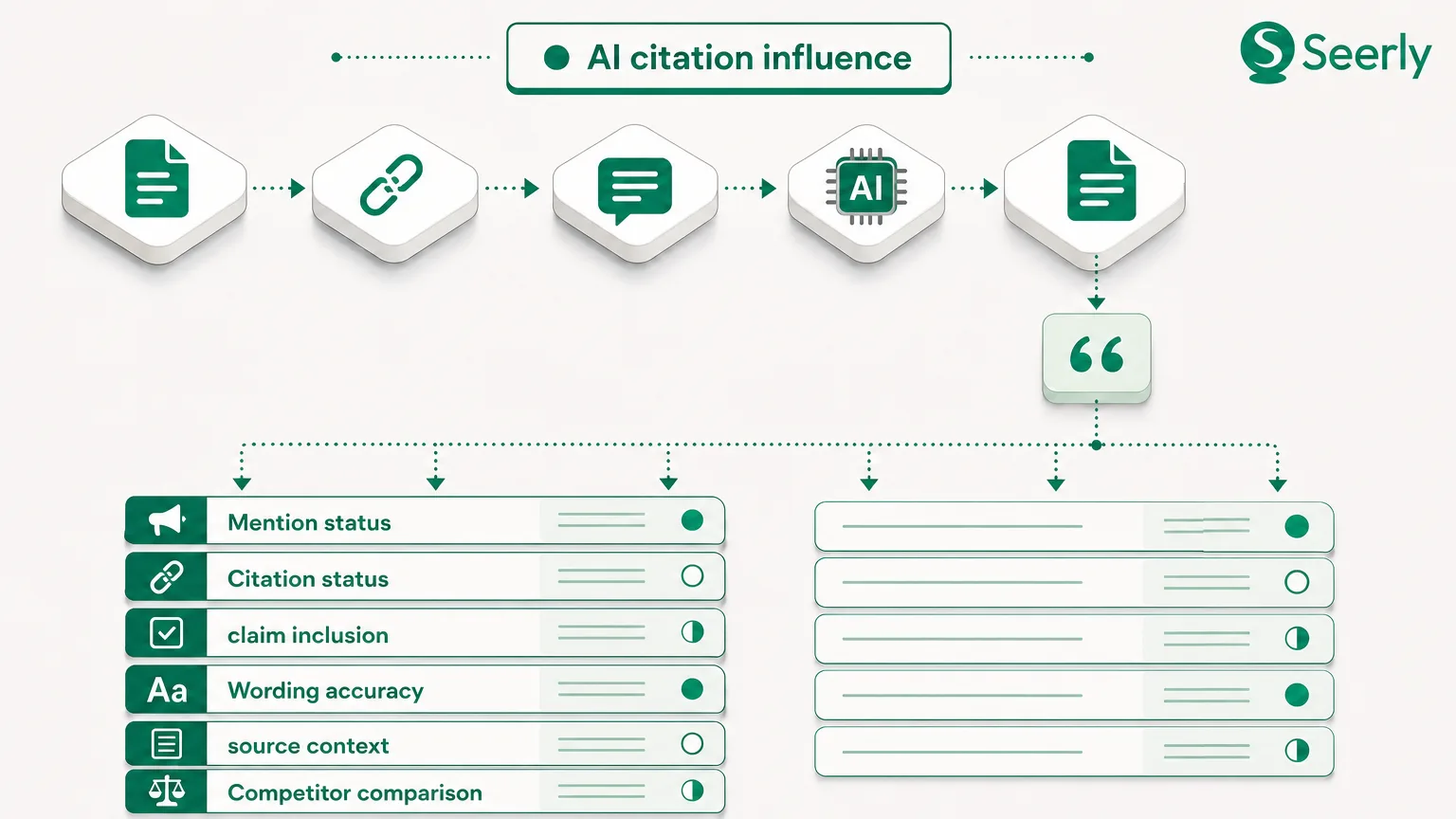
| AI-query relevance | Whether monitored answers address target questions accurately | Relevance is separate from brand presence |
| Mentions or citations | Brand mentions, linked page, attribution accuracy, engine, and test date | Results apply to the monitored sample, not all usage |
| Prospect questions | Recurring questions from sales calls, forms, and support conversations | Changes may reflect audience shifts or other campaigns |
For AI-query testing, use a stable set of buyer questions and document the engine, date, wording, and observed answer. Repeat tests rather than treating one response as a durable finding. Recurring visibility reviews can help organize observations, but sampling limits should remain explicit.
Annotate campaigns, distribution activity, site changes, and product announcements alongside the metrics. If engagement and assisted conversions rise after publication, report that they increased during the same period - not that the transcript caused the increase. Documenting correlation honestly gives teams a better basis for further testing.
Start with your highest-value recording
Choose one webinar, demonstration, interview, or expert video that answers an important buyer question. Audit its page for missing text, context, sources, dates, and ownership, then publish or improve the evidence page. Add the asset to your recurring visibility and content-performance review.
The strongest next step is not producing more video by default. It is making existing expertise easier to locate, evaluate, and maintain beyond the play button. A transcript becomes a useful discovery asset when it belongs to a complete page experience - not when it is treated as proof, or published without context.