7 capabilities that define a cross-platform AI brand-monitoring platform
Your team checks an AI answer on Monday and finds your brand recommended. On Friday, a colleague asks a similar question and sees only competitors. Neither observation establishes a trend: the wording, provider, location, and timing may differ.
That uncertainty matters when discovery happens without a website visit. In Pew Research Center’s March 2025 browsing sample, users clicked traditional search results on 8% of visits with an AI summary, compared with 15% without one. The finding concerns Google search, not every AI interface, but illustrates why traffic alone cannot describe brand exposure. These seven capabilities provide a practical framework for evaluating AI brand monitoring platforms.
1. Repeatable monitoring rather than isolated checks
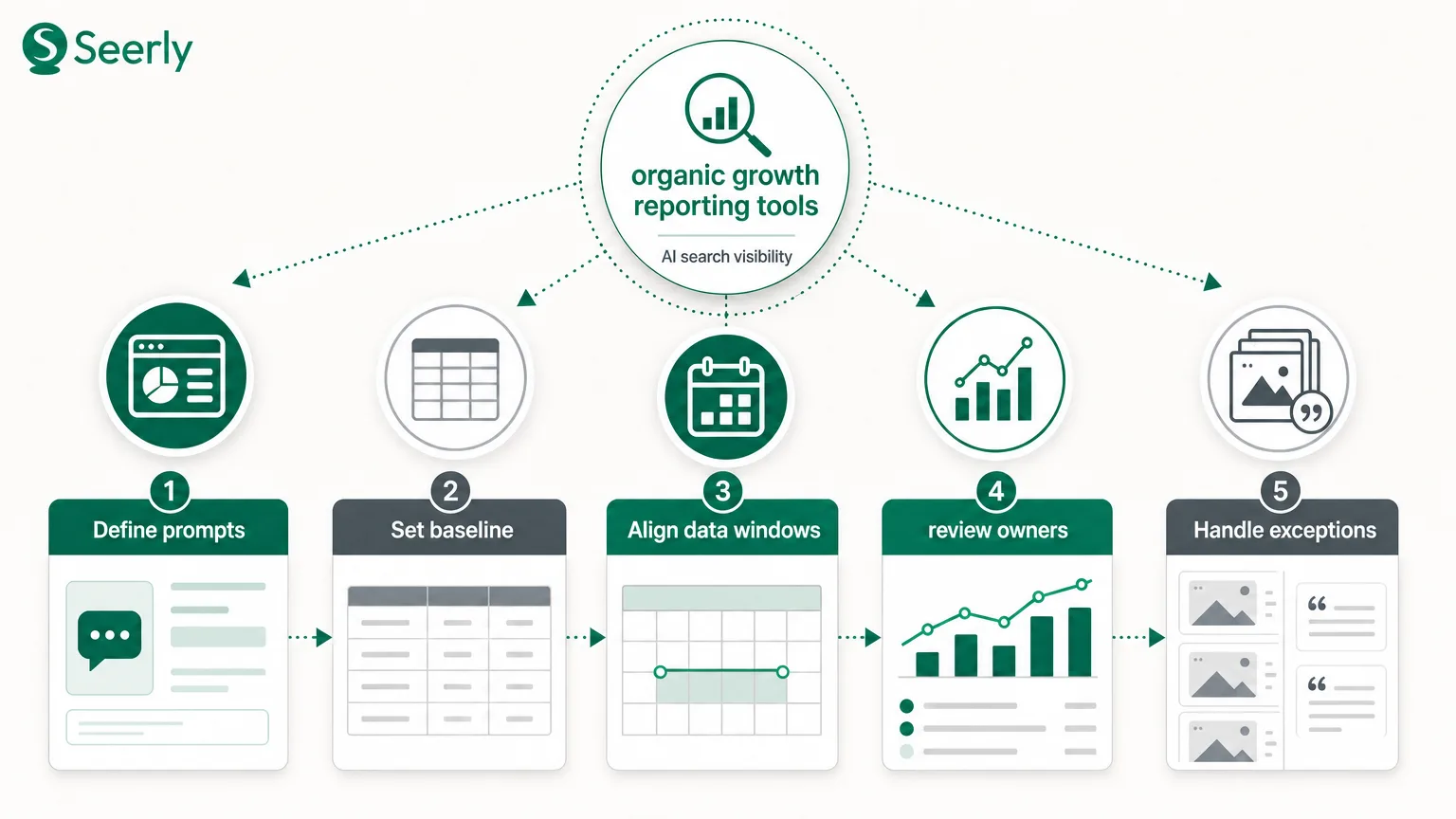
A useful platform starts with a defined measurement baseline. Save the questions your audience asks, label their intent, and record the conditions under which each answer was generated. Without that structure, a dashboard may compare different samples and present the difference as progress.
Keep an unchanged core set for trend reporting, alongside an exploratory set for emerging questions. Version additions and removals rather than silently changing the denominator. Treat observations as visibility within your tested sample - not a census of everything customers see.
2. Explicit provider coverage and question scope
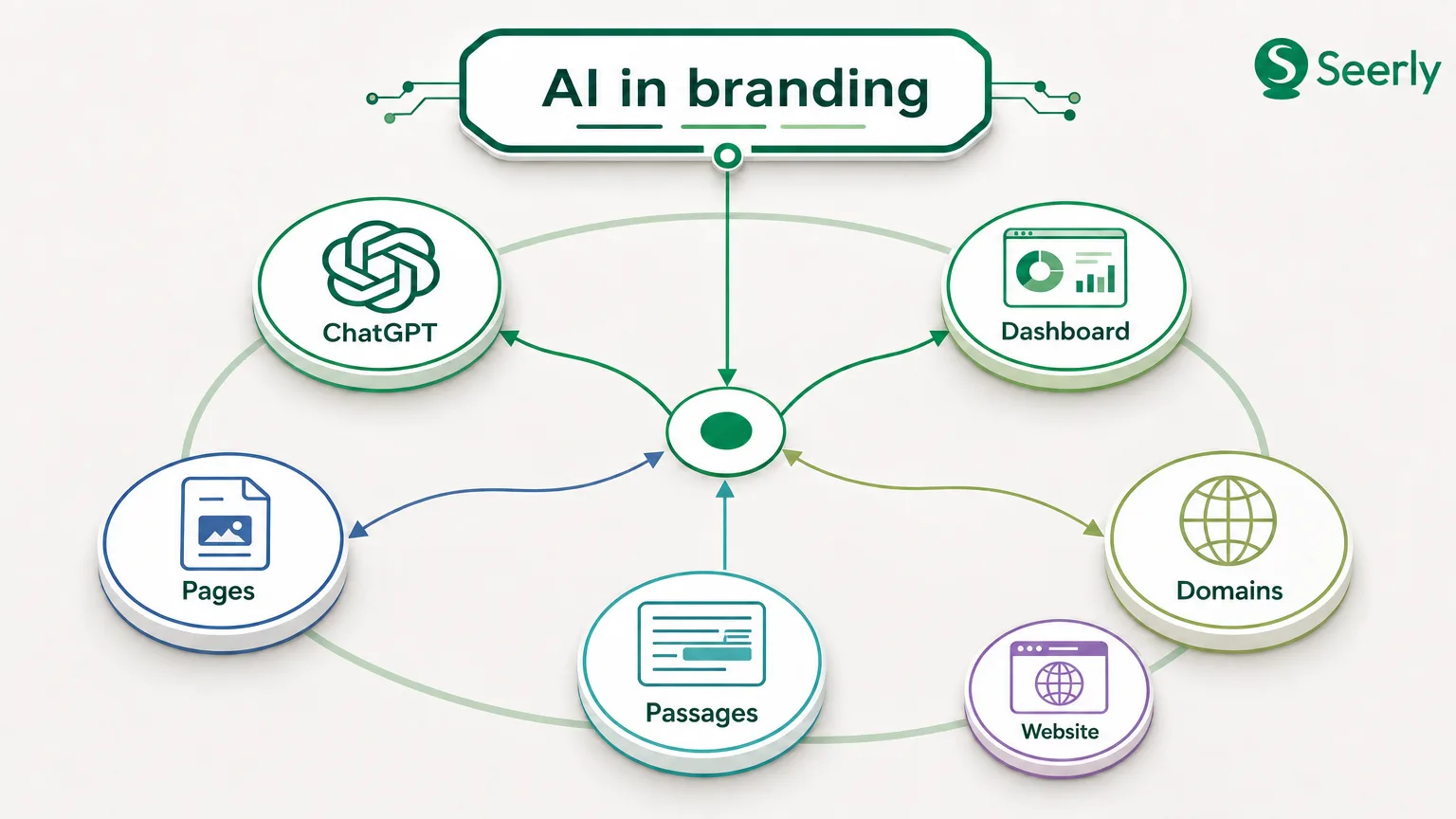
Which platforms monitor AI-generated brand mentions across ChatGPT, Google, and Perplexity? Seerly is one option: its cross-platform visibility offering covers ChatGPT, Google AI Overviews, and Perplexity. Use that as a starting point, not proof that every provider surface or measurement requirement is covered.
“Google coverage” needs particular scrutiny because AI Overviews, AI Mode, and Gemini are different environments. Ask vendors to identify the exact surface, collection method, and supported settings. An API-generated response should not be presented as equivalent to a consumer-interface observation without qualification.
| Dimension | What to verify |
|---|---|
| Environment | Exact product, model where available, and collection method |
| Question category | Discovery, comparison, alternatives, and reputation |
| Audience | Language, market, and buyer context |
| Continuity | Saved wording, version history, and consistent settings |
3. Scheduled testing and meaningful change detection
A monitoring platform should explain both when an answer changed and what changed. Request historical answers side by side, rather than accepting a trend line with no underlying record. Repeated tests help distinguish a persistent movement from an isolated response.
Check that the trial supports:
- Scheduled runs with timestamps and visible failures.
- Saved questions and documented revisions.
- Full answer capture, not just extracted brand names.
- Comparisons under equivalent provider and market settings.
- Configurable alerts for lost recommendations, changed descriptions, or citations.
Ask how alerts handle repeated fluctuations and incomplete runs. A missing response should not automatically count as a lost mention. Establish confirmation rules before routing notifications to busy marketing or client teams.
4. Source-level evidence behind mentions
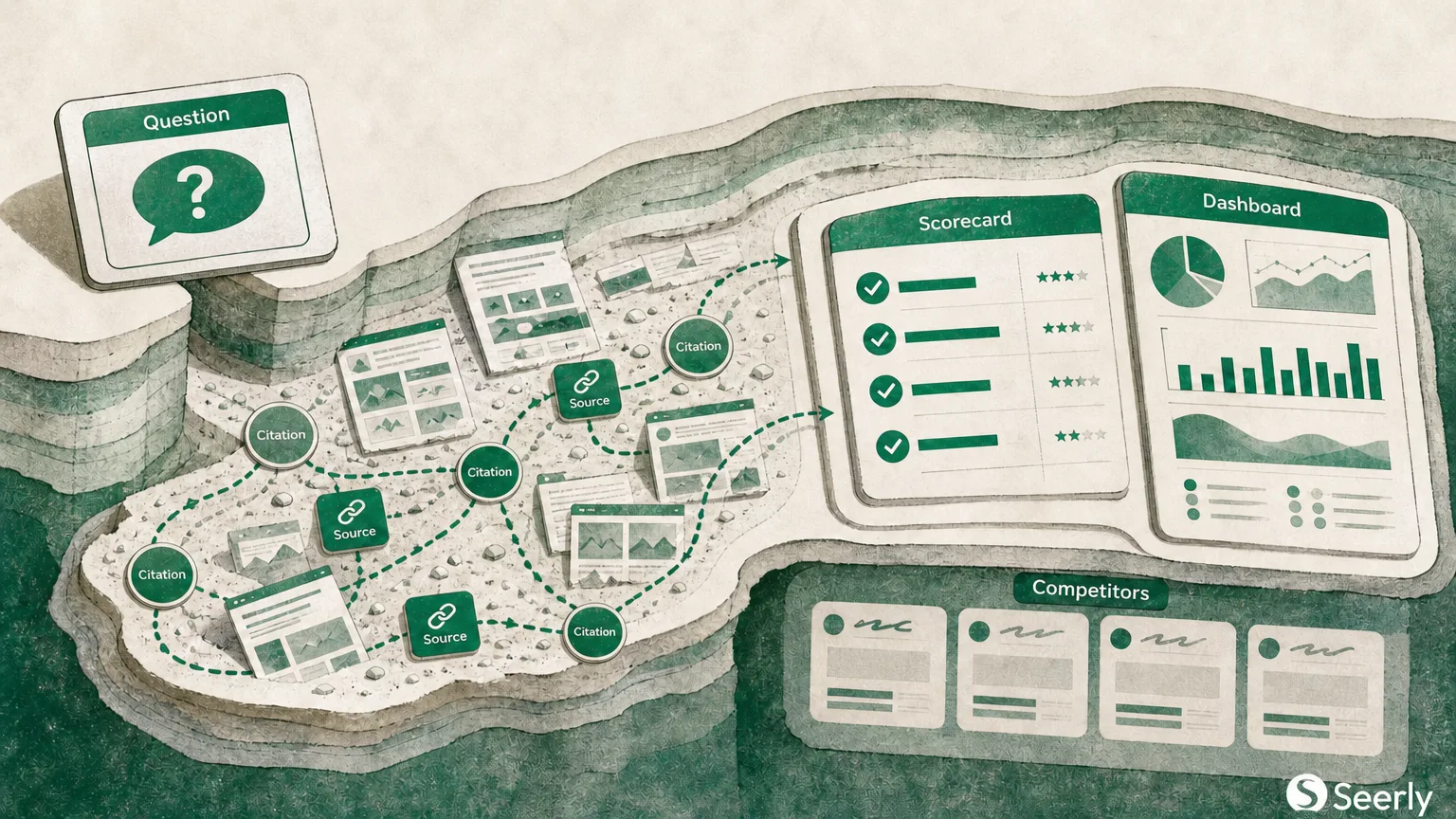
A mention tells you that a name appeared; a citation identifies a linked source in the answer. Neither, alone, establishes that the answer is accurate or that the linked page supports the associated claim. Buyers need enough retained evidence to inspect those distinctions.
Consider a hypothetical question about software suitable for regulated teams. The answer recommends your brand and links to an independent comparison page, but that page describes an outdated security feature. A positive mention count would miss the reputation issue.
An evidence record should retain:
- The question, answer, provider, and collection time.
- Brand wording and its surrounding context.
- Cited URLs, page titles, and citation placement.
- Collection-time excerpts or snapshots where permitted.
- A reviewer’s accuracy assessment and follow-up decision.
Label uncited mentions separately from citations and recommendations. Also distinguish a page cited by the answer from a page that merely mentions your brand. This makes evidence review more defensible without claiming to reveal every source that influenced generation.
5. Competitor benchmarking on equivalent questions
Competitor context is useful only when the comparison uses equivalent conditions. Compare brands within the same question, provider, market, and reporting window. Otherwise, an aggregate visibility score can conceal differences in audience or question selection.
| Comparison | Evidence to inspect | Possible priority |
|---|---|---|
| Competitor recommended; your brand absent | Answer wording and recommendation context | Assess product-fit content gaps |
| Competitor cited through independent coverage | Cited pages and publisher types | Evaluate relevant third-party proof |
| Your brand mentioned inaccurately | Statement and supporting citation | Correct accessible documentation |
| Neither brand appears | Sources and answer framing | Reassess question relevance |
These are investigation paths, not automatic content instructions. A competitor’s citation does not prove that copying its page will produce the same outcome. Validate the underlying gap before assigning content, PR, or website work.
6. Reporting that connects observations to decisions
Leadership and clients need a consistent account of what changed, how confidently the team interprets it, and what happens next. Require explicit metric definitions and exports that preserve supporting records. A narrative report is useful, but it should remain traceable to individual observations.
Use this reporting template:
| Field | Required detail |
|---|---|
| Scope | Providers, markets, question-set version, completed runs |
| Mention rate | Share of valid answers naming the brand |
| Citation rate | Whether measuring brand-associated citations or owned-domain links |
| Competitive movement | Changes within the same tested sample |
| Evidence | Answer records and cited-page records |
| Action | Owner, task, rationale, and review date |
| Caveats | Failures, collection changes, provider updates, limited samples |
Do not equate these rates with audience reach or revenue attribution. Provider updates and source-refresh timing can complicate comparisons, so annotate known changes and avoid promising immediate movement after publishing. If evaluating an automatically generated monthly visibility narrative, check whether its conclusions can be reconciled with the underlying evidence.
7. Trial validation and clear implementation ownership
The final capability is operational: can your team maintain the workflow after onboarding? Assign responsibility for question selection, evidence review, alerts, and reporting before purchasing. Agencies should also verify client separation and access controls.
Use the trial to confirm:
- Coverage: Can you test every required environment and market?
- Retention: Can you retrieve and export historical answers and citations?
- Alerts: Can you configure, explain, and route meaningful changes?
- Benchmarking: Are competitors compared under matching conditions?
- Reporting: Are definitions, denominators, and exclusions visible?
- Ownership: Who maintains the question set and approves follow-up work?
Frequently asked questions
How often should testing run?
Match frequency to the decisions the data supports. Consider daily checks for time-sensitive reputation questions and weekly checks for broader discovery topics. Confirm that budget and review capacity support the cadence.
Does a mention mean a recommendation?
No: an answer may mention a brand negatively or incidentally. Track mentions, recommendations, sentiment, and citations separately. Review ambiguous classifications before including them in leadership reporting.
Build a short scorecard with the seven capabilities above, then select representative questions for every prospective platform. Require demonstrations using retained evidence, not just dashboard screenshots. Choose the workflow that connects multi-provider testing, citations, competitor context, alerts, and reporting to accountable decisions.